Focusrite Scarlett Solo 3rd Gen USB-C Audio Interface

The Focusrite Scarlett Solo 3rd Gen USB-C Audio Interface is an excellent option for creators, musicians, and gamers looking for high-quality recording solutions without breaking the bank. Its top-notch mic pre-amps deliver bright and clear recordings, ideal for podcasting, streaming, or music production. The switchable Air mode enhances the clarity of acoustic instruments, making it perfect for vocal work and instrument tracking.
This interface supports recording and mixing at 24-bit/192kHz, ensuring your audio retains its sonic integrity. Equipped with two high-headroom instrument inputs and Gain Halos, it helps prevent clipping, which is essential for maintaining audio quality during recording sessions. Low-noise balanced outputs and a headphone output ensure clean audio playback, whether you’re monitoring your tracks or streaming live.
The Focusrite Scarlett Solo comes bundled with software like Pro Tools Intro+ and Ableton Live Lite, giving you all the tools you need to kickstart your creative projects immediately. Plus, it’s backed by a three-year warranty for added peace of mind.
Best For: The Focusrite Scarlett Solo 3rd Gen USB-C Audio Interface is perfect for aspiring musicians, podcasters, and gamers seeking reliable, high-quality audio capture.
Pros:
- High-performance mic pre-amps enhance recording brightness and clarity.
- Bundled software like Pro Tools Intro+ and Ableton Live Lite facilitates immediate audio creation.
- Three-year warranty ensures reliability and peace of mind.
Cons:
- Limited input options may not accommodate larger recording setups.
- Absence of MIDI input/output could restrict connectivity with MIDI devices.
- May require additional adapters for certain setups, depending on your equipment.
PIYONE 2X2 Audio Interface for Studio Quality Recording

For creators, gamers, and musicians looking to elevate their audio game, the PIYONE 2X2 Audio Interface is an outstanding choice. This 24-bit/192kHz USB-C interface provides exceptional studio-quality sound, making it ideal for podcasting, streaming, and recording. With seamless plug-and-play connectivity—no drivers required—you can focus on your craft without technical hassles.
The sleek alloy red design features illuminated controls for easy visibility, even in low-light situations. With two versatile combo jacks, the PIYONE accommodates both vocals and instruments, ensuring you capture every nuance. High-performance converters guarantee crystal-clear recordings, making every sound pop.
The zero-latency monitoring feature enables real-time tracking, so you can hear exactly what you’re recording without delay. Additionally, the integrated 48V phantom power supports demanding microphones, making it perfect for professionals and aspiring creators alike.
Overall, the PIYONE 2X2 is a reliable and flexible tool that enhances any audio setup, providing exceptional fidelity for all your recording needs.
Best For: Creators, gamers, and musicians looking for a dependable, high-quality audio interface for various recording applications.
Pros:
- Outstanding audio quality with 24-bit/192kHz resolution for a professional sound experience.
- Simple setup with plug-and-play functionality, no driver installation needed.
- Versatile connectivity with two combo jacks, perfect for both vocals and instruments.
Cons:
- Limited input/output options compared to larger, more advanced interfaces.
- Possible compatibility issues with older devices, even with class compliance.
- Lacks onboard effects or processing, requiring additional software for enhanced sound manipulation.
Whether you’re podcasting, streaming, or recording music, the PIYONE 2X2 Audio Interface is designed to help you get the most out of your audio experience.
M-AUDIO M-Track Duo USB Audio Interface

Tailored for creators, gamers, musicians, and professionals, the M-AUDIO M-Track Duo USB Audio Interface delivers outstanding audio quality and flexibility. With 48kHz audio resolution (equivalent to 48,000 samples per second) and transparent Crystal Preamps, it ensures peak sound for a variety of microphones, including condenser types. The interface features two combo XLR/Line/Instrument inputs with phantom power, making it ideal for recording guitars, vocals, or line signals.
Monitoring is versatile, thanks to a 1/4″ (6.35 mm) headphone output and stereo 1/4″ outputs, along with a USB/Direct switch for zero latency. It also includes MPC Beats Software from Akai Professional, offering essential tools for music production to enrich your creative process.
Best For: Creators, gamers, and musicians looking for an affordable and versatile USB audio interface for high-quality recordings.
Pros:
- High audio resolution of 48kHz for pristine sound quality.
- Two combo inputs with phantom power, suitable for various recording needs.
- Flexible monitoring options with zero latency for real-time performance.
Cons:
- Limited to two inputs, which may not suffice for larger setups.
- Basic software integration may not meet all advanced production needs.
- Plastic build may feel less durable compared to higher-end models.
Whether you’re podcasting, streaming, or recording music, the M-Track Duo is designed to elevate your sound experience, helping you get the most out of your microphone setup.
JOYO Guitar Audio Interface for Phone (MOMIX CAB)

The JOYO Guitar Audio Interface (MOMIX CAB) is a fantastic tool for musicians and creators seeking low-latency monitoring during their recording sessions. This plug-and-play device easily connects to smartphones via USB-C or Lightning ports, enabling real-time monitoring without any delays—perfect for podcasting, streaming, and recording high-quality audio.
Its compact design, measuring just 2.5 inches (6.35 cm) and smaller than a standard key, includes a back clip for easy portability, making it an excellent choice for on-the-go rehearsals and live streaming sessions. The interface delivers a clean guitar signal to the headphone output, ensuring zero-latency monitoring for immediate sound feedback. Although it lacks muting options for the dry signal, it excels in its simplicity, providing a reliable solution for recording dry guitar tracks and practicing with backing tracks.
Best For: Musicians, gamers, and content creators looking for an affordable, portable, low-latency solution for recording and practicing with their smartphones.
Pros:
- Plug-and-Play Functionality: Quick setup without the need for drivers or software, saving you time and effort.
- Compact and Portable: Lightweight design makes it easy to carry and attach to pockets or belts, perfect for creators on the move.
- Zero-Latency Monitoring: Real-time sound feedback ensures you can hear your guitar clearly while recording, enhancing your performance.
Cons:
- No Dry Signal Mute: The inability to mute the dry signal may not suit all recording preferences, particularly for nuanced setups.
- Limited Compatibility: Some devices may require specific settings adjustments, especially for Android users, which could complicate the setup process.
- No Real-Time Effects Processing: Not suitable for real-time software amp simulations or effects, which may limit creative options during recordings.
Whether you’re a guitarist, podcaster, or gamer, the JOYO Guitar Audio Interface (MOMIX CAB) is an affordable and effective tool to enhance your audio experience and elevate your recordings.
Arturia MiniFuse USB Audio & MIDI Interface, MiniFuse 1
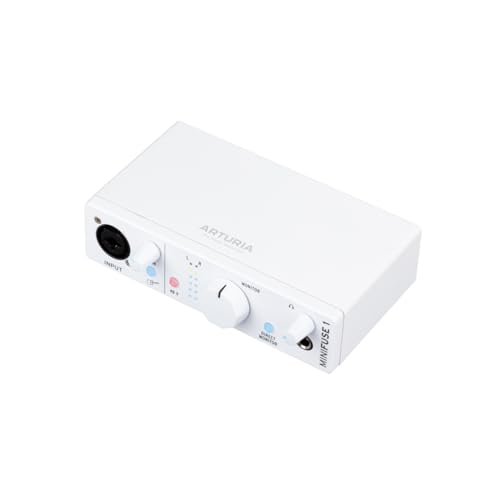
The Arturia MiniFuse USB Audio & MIDI Interface, MiniFuse 1, is a standout choice for creators, gamers, musicians, and professionals seeking affordable, high-quality audio recording. With its exceptional sound fidelity, this compact interface is perfect for guitarists and vocalists alike. It features a combo Mic/Inst/Line XLR input with 48V phantom power, allowing for versatile recording options to suit any project.
Built to last, the MiniFuse 1 boasts a 5-year warranty and has undergone extensive durability testing. It also comes bundled with useful software, including Ableton Live Lite and Auto-Tune Unlimited, making it an excellent resource for both beginners and seasoned pros. Additionally, the loopback feature facilitates seamless integration of voiceovers with in-app audio, making it a fantastic tool for podcasters and content creators.
Best For: The Arturia MiniFuse USB Audio & MIDI Interface, MiniFuse 1 is ideal for musicians, podcasters, and content creators who want high-quality audio recording in a compact and durable design.
Pros:
- Exceptional sound quality, perfect for guitarists and vocalists.
- Sturdy construction with a 5-year warranty and rigorous reliability testing.
- User-friendly software suite, including Ableton Live Lite and Auto-Tune Unlimited, great for beginners.
Cons:
- Limited number of inputs may not meet the needs of larger recording setups.
- No onboard effects processing, necessitating the use of software for sound enhancements.
- Basic MIDI connectivity lacks advanced features found in pricier interfaces.
Whether you’re podcasting, streaming, or recording music, the MiniFuse 1 is designed to help you get the most out of your microphone setup, making it easier to capture exceptional sound.
MAONO PS22 Lite USB Audio Interface for PC for Guitar & Vocals Streaming

For creators, gamers, and musicians in pursuit of exceptional audio quality, the MAONO PS22 Lite USB Audio Interface is a top choice. Designed for recording enthusiasts, it offers high-resolution audio at 24-bit/192kHz (which translates to 24-bit/192,000 samples per second) and features a dynamic range of 106dB, ensuring your recordings sound professional and polished. Compatible with PC, Mac, and iPads, this interface is equipped with plug-and-play functionality, making it easy for anyone to get started without hassle.
Whether you’re a podcaster, voice actor, or guitarist, the MAONO PS22 Lite supports both condenser and dynamic microphones, featuring a 56 dB preamp and 48V phantom power (ideal for powering condenser mics). The included ProStudio Routing Software enhances your live streaming experience, while its compact design (approximately 5.5 inches by 3.2 inches or 14 cm by 8 cm) ensures portability for recordings on the go.
With headphone monitoring and compatibility with various Digital Audio Workstations (DAWs), this audio interface simplifies the recording process for users, regardless of their experience level.
Best For: Creators, gamers, podcasters, and musicians seeking a compact, high-quality audio interface for recording and live streaming.
Pros:
- High-resolution recording at 24-bit/192kHz for professional audio quality.
- Plug-and-play functionality for easy setup with PC, Mac, and iPads.
- Compact design makes it portable and convenient for on-the-go recording.
Cons:
- Limited to USB connectivity, which may not suit all users.
- May require additional software for advanced features, adding complexity for beginners.
- The dynamic light ring might be distracting for some users during recording sessions.
This audio interface is an excellent tool for enhancing your microphone setup, ensuring your sound is captured beautifully for all your creative endeavors.
PreSonus AudioBox 96 25th Anniversary USB Audio Interface
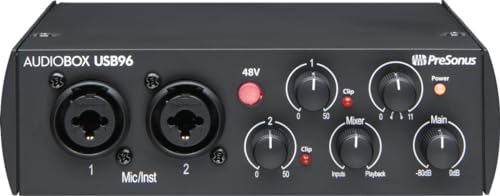
Value-packed and portable, the PreSonus AudioBox 96 25th Anniversary USB Audio Interface is a fantastic choice for creators, gamers, musicians, and professionals seeking an affordable yet high-quality recording solution. This 2-channel USB 2.0 interface features top-notch Class-A mic preamps and supports recording at up to 24-bit/96 kHz (which translates to 24-bit/96,000 samples per second), ensuring excellent sound quality for your podcasts, streams, and music. With two high-headroom instrument inputs and MIDI I/O, it accommodates a variety of devices, making it suitable for diverse recording needs.
The onboard +48V phantom power enables the use of studio condenser microphones, enhancing the audio quality of your recordings. Additionally, the zero-latency monitoring feature provides a seamless recording experience, making it ideal for live sessions. Bundled with over $1,000 worth of software, including Studio One Artist and Ableton Live Lite, this interface offers a comprehensive toolkit for your creative projects, whether you’re podcasting, streaming, or producing music.
Best For: Creators, gamers, and musicians looking for an affordable, portable, and high-quality recording solution.
Pros:
- High-quality Class-A mic preamps deliver exceptional sound for various applications.
- Bundled software valued at over $1,000 offers a robust toolkit for any audio project.
- USB bus-powered design makes mobile recording convenient without the need for extra power supplies.
Cons:
- Limited to 2 channels, which may not be sufficient for larger recording sessions or group podcasts.
- MIDI I/O may be unnecessary for users who don’t work with MIDI devices, potentially complicating setup.
- Compact design may sacrifice some durability for portability, making it less ideal for heavy use.
This interface stands out as a versatile option for anyone looking to enhance their sound capture, making it an exceptional addition to your recording setup.
Factors to Consider When Choosing Audio Interfaces
When choosing an audio interface for your podcasting, streaming, gaming, or recording needs, several key factors should be taken into account to enhance your audio experience.
- Audio Quality: Look for interfaces that deliver high-resolution audio to ensure that every nuance of your voice or instrument is captured clearly. A good benchmark is a sample rate of at least 24-bit/96 kHz.
- Connectivity Options: Consider what types of connections you’ll need. USB interfaces are common and typically compatible with most devices, but if you have specific requirements, check for USB-C, Thunderbolt, or MIDI compatibility. Ensure that the interface has enough inputs and outputs to accommodate your setup.
- Software Compatibility: Verify that the audio interface works seamlessly with your preferred recording software or Digital Audio Workstation (DAW). Many interfaces come bundled with software or plugins that can enhance your production capabilities.
- Portability: If you’re a creator on the go, look for a lightweight and compact design that’s easy to transport. This is especially important for musicians and podcasters who may record in various locations.
- Design and Usability: Consider the layout and ease of use. A user-friendly interface can save you time and frustration, enabling you to focus on your creative process rather than getting bogged down in technical details.
Key Features To Evaluate
Selecting the right audio interface is crucial for creators, gamers, musicians, and professionals aiming to achieve high-quality sound for podcasting, streaming, gaming, or recording. Here are some key features to evaluate:
- Audio Quality: Opt for interfaces that support 24-bit/192kHz recording (about 48kHz in the UK and 192kHz in Australia) to ensure professional sound fidelity.
- Input and Output Options: Look for multiple inputs, including combo jacks for microphones and instruments. Dedicated headphone outputs for monitoring are also essential for real-time feedback during your sessions.
- Phantom Power: Built-in phantom power (+48V) is necessary for powering condenser microphones, which are often preferred for their clarity and richness in sound.
- Zero-Latency Monitoring: This feature allows for real-time tracking without delays, making it easier to record vocals or instruments accurately.
- Compatibility and Software: Ensure the interface is compatible with popular digital audio workstations (DAWs) and includes a robust software bundle. This will streamline your music production process and enhance your overall experience.
Audio Quality Standards
Audio quality standards are crucial for creators, gamers, musicians, and professionals seeking to enhance their recording experiences with affordable microphones. When choosing an audio interface, it’s essential to consider options that support resolutions up to 24-bit/192kHz (which translates to 96kHz in European and Australian metrics). This high-fidelity capability allows for detailed recordings that capture a broad dynamic range and intricate sound nuances.
The quality of mic preamps is another key factor; high-performance models can elevate audio clarity by reducing noise and distortion. Features like switchable Air mode can enhance the tonal character of acoustic instruments, making them sound richer and more vibrant—ideal for musicians and podcasters alike.
Moreover, zero-latency monitoring lets creators hear themselves in real-time, improving performance and making it easier to deliver high-quality content. Lastly, high-quality converters ensure accurate translation of audio signals from analog to digital, preserving sound integrity throughout both recording and playback processes.
Connectivity Options Available
When it comes to enhancing your podcast, stream, or recording session, the connectivity options of an audio interface play a crucial role in your setup’s effectiveness. Whether you’re using a PC, Mac, or mobile devices like iOS and Android, understanding these options can help you make the best choice for your needs.
Many modern audio interfaces feature USB-C connections, which provide efficient data transfer and bus power through a single cable setup. This convenience is especially beneficial for creators who want to minimize clutter in their workspace. For those looking for a hassle-free experience, class-compliant interfaces offer plug-and-play functionality, eliminating the need for complicated driver installations.
Versatility is key in a recording environment, and many interfaces come equipped with multiple input types, including combo jacks that accommodate XLR and instrument connections. This flexibility allows you to capture a variety of sounds, whether you’re recording vocals for a podcast or instrumentals for a music project.
MIDI input and output further enhance connectivity, making it easier for musicians to integrate MIDI controllers into their setups. This capability is invaluable for anyone looking to create layered compositions or trigger virtual instruments in real time.
When selecting the right audio interface, consider how these connectivity factors align with your specific needs, whether you’re a creator, gamer, musician, or professional. With the right tools, you can significantly improve the sound quality of your recordings, ensuring that your audience hears every nuance of your performance.
Remember to explore tutorials, honest reviews, and buying guides to navigate your microphone journey effectively.
Software Compatibility Considerations
When selecting an audio interface, it’s crucial to ensure compatibility with your preferred Digital Audio Workstations (DAWs) to streamline your creative process. Many interfaces come bundled with popular software like Pro Tools, Ableton Live, or Cubase, which can significantly enhance your audio production capabilities for podcasting, streaming, gaming, or recording.
Make sure to choose interfaces that support major operating systems, including Windows and macOS, as well as mobile platforms, to guarantee seamless integration across your devices. Low-latency performance is essential for real-time monitoring and live streaming, particularly when using multiple software plugins.
Additionally, look for interfaces that include software bundles featuring virtual instruments and effects, offering immediate value to your setup. Verifying support for ASIO drivers can also optimize audio processing and minimize latency for Windows users, enhancing your overall production experience.
Portability And Design
When selecting the right audio interface, it’s crucial to consider more than just software compatibility; portability and design are key factors that can significantly enhance your recording experience. For creators, gamers, and musicians, compact designs are essential for easy transport between home studios, live events, and gaming setups.
Lightweight materials are often utilized in these interfaces, making them ideal for those who travel frequently, whether for gigs or content creation. Many portable models come equipped with integrated mounting options, such as clips or straps, allowing for secure attachment to bags or instruments. This feature enhances convenience, ensuring your gear is always within reach.
USB-C connectivity simplifies your setup with single-cable connections, reducing clutter and ensuring high-speed data transfer. This is particularly beneficial for streamers and podcasters who want to keep their workspace tidy while maintaining top-notch audio quality. Furthermore, durable constructions and robust materials ensure these devices can withstand the rigors of travel and frequent use, without sacrificing performance.
Whether you’re podcasting, streaming, or recording music, choosing an audio interface that balances portability and design can elevate your sound quality and overall experience.
Budget and Warranty Options for Audio Interfaces
When exploring audio interfaces, establishing a budget is crucial for creators, gamers, musicians, and professionals who want to enhance their sound quality for podcasting, streaming, gaming, and recording. A budget range of $100 to $300 (approximately CAD 130 to CAD 390, £80 to £240, €90 to €270, or AUD 150 to AUD 450) typically offers essential features and satisfactory audio quality for entry-level models. Many interfaces come with valuable software bundles that can further enhance your setup, helping to offset initial hardware costs.
It’s also vital to assess warranty options. Longer warranties, like five years, provide peace of mind against manufacturing defects, ensuring your investment is protected. Additionally, keep in mind that your budget should account for supplementary costs, including cables and microphones, which may not be included with the interface.
Ultimately, spending a bit more on a reliable audio interface can lead to better sound quality and durability, proving to be a smart investment over time. By making informed decisions, you can elevate your audio setup and capture the best sound possible for your projects.