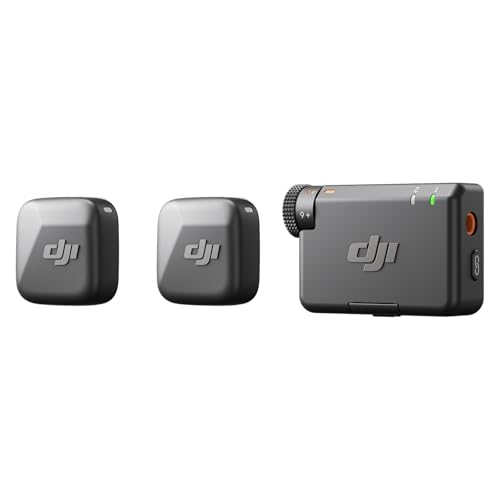
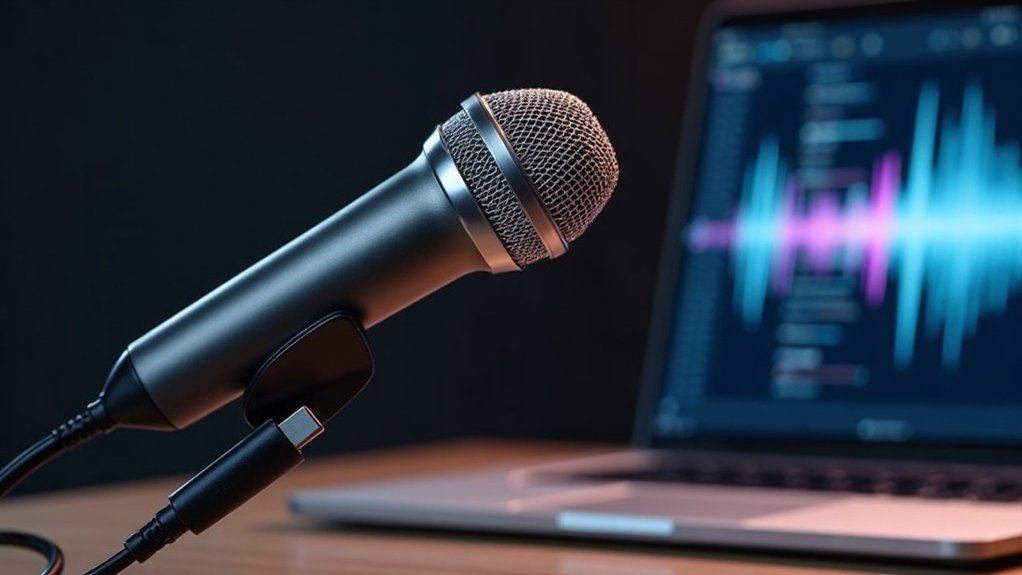
A USB microphone connects directly to your computer, seamlessly integrating a microphone capsule, preamp, and analog-to-digital converter within one compact unit. Understanding how a USB microphone works reveals that when sound waves hit the diaphragm, they generate electrical signals that the preamp amplifies. These signals then undergo analog-to-digital conversion, transforming them into digital data. This streamlined configuration not only simplifies your audio process but also significantly enhances sound quality, making it ideal for various applications such as podcasting, streaming, and gaming. By exploring the intricacies of how these components work together, you can maximize the performance of your USB microphone and elevate your audio experience to new heights.
Key Takeaways
- USB microphones connect directly to computers via USB, integrating all necessary components for easy setup and use.
- They capture sound by converting diaphragm motion from pressure variations into electrical signals, amplified by a built-in preamp.
- An analog-to-digital converter (ADC) transforms these analog signals into digital data for processing.
- Integrated features like low-latency monitoring and headphone amplification enhance audio clarity and user experience.
- USB microphones are versatile and affordable, making them ideal for podcasting, streaming, and home recording.
What’s a USB Microphone and How Does It Work?

A USB microphone is a sophisticated audio input device that connects directly to computers and compatible equipment via Universal Serial Bus (USB). This type of microphone integrates essential components, including a microphone capsule, preamplifier, analog-to-digital converter (ADC), and USB electronics into one seamless unit. Depending on your specific needs, you can choose between dynamic and condenser microphone types. The benefits of using a USB microphone include its easy plug-and-play functionality, which eliminates the need for additional external hardware or drivers. This simplicity allows creators to focus on their audio projects, whether you’re podcasting, streaming, or recording. USB microphones are also cost-effective solutions for high-quality recordings, providing premium sound quality in minutes and eliminating the need for complex setups.
For gamers and musicians alike, a USB microphone provides an all-in-one solution that enhances the audio experience without the hassle. Additionally, many USB microphones are designed to be plug-and-play, making them incredibly user-friendly for immediate use. Overall, understanding what a USB microphone is and how it works can help you make informed decisions about the best microphone for your needs. With its streamlined design and user-friendly features, a USB microphone offers an ideal option for anyone looking to elevate their audio production.
How Sound Waves Are Captured in USB Microphones
Understanding how sound waves are captured in USB microphones is vital for appreciating their functionality.
Sound waves create pressure variations that cause diaphragm motion within the capsule. This motion translates acoustic signals into electrical signals, influenced by the capsule design and its polar patterns. The built-in preamp amplifies these signals, ensuring they are strong enough for processing. Additionally, the fact that USB microphones have a built-in analog-to-digital converter allows for seamless transformation of these signals into digital data. This process is similar to how condenser microphones convert sound, relying on diaphragm movement to generate accurate audio representations.
Frequency response plays a critical role, determining how well the mic captures various pitches while managing ambient noise. The transient response guarantees clarity during rapid sound changes.
Additionally, the proximity effect boosts low frequencies when you’re close to the mic, highlighting the importance of placement.
Together, these elements create a precise representation of your audio source, ensuring that how sound waves are captured in USB microphones can significantly enhance your recording quality, whether for podcasting, streaming, or gaming.
How Internal Amplification Enhances Your USB Microphone
The integrated preamp design boosts mic-level signals by 30–60 dB, ensuring they reach line-level for optimal signal enhancement. This internal amplification elevates the signal above the noise floor, resulting in a better signal-to-noise ratio and improved clarity. Additionally, the USB microphone‘s built-in headphone amplifier allows for direct, low-latency monitoring, enhancing the user experience further. This is crucial because audio interfaces play a significant role in managing these signals effectively.
The integrated preamp elevates mic-level signals by 30–60 dB, enhancing clarity and improving the signal-to-noise ratio for optimal sound quality.
By incorporating low-noise components, these preamps reduce hiss compared to software enhancements, making the sound cleaner and more professional. Furthermore, the PCB design for these microphones often utilizes off-the-shelf components, simplifying assembly and enhancing reliability.
Real-time monitoring becomes seamless, allowing you to balance direct mic input with playback effortlessly. This thoughtful integration not only simplifies your audio setup but also makes it ideal for home recording and streaming, all while delivering exceptional sound quality.
Understanding how internal amplification enhances your USB microphone can help creators, gamers, musicians, and professionals choose the right equipment for their needs.
How Analog-to-Digital Conversion Works?
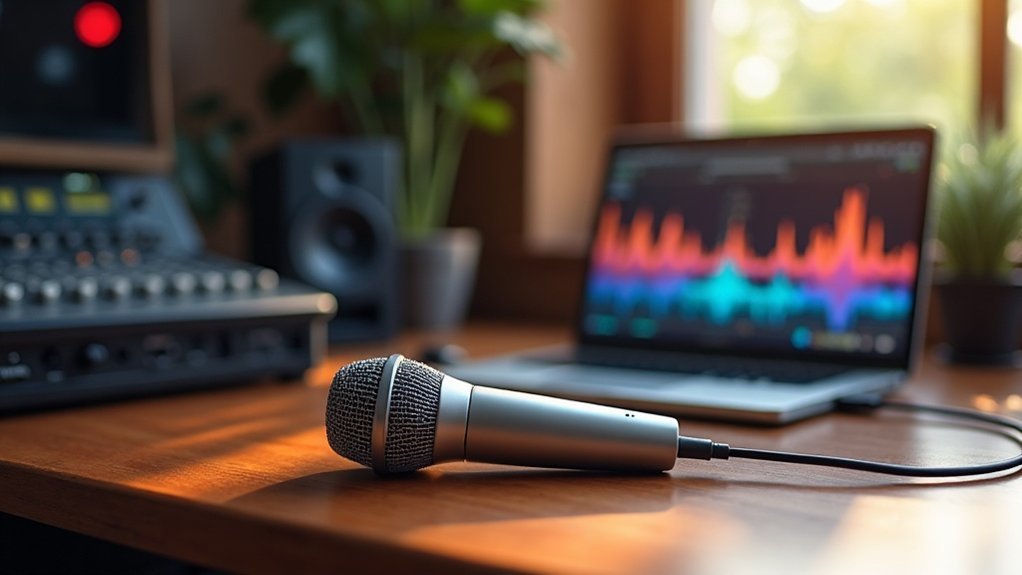
To appreciate how analog-to-digital conversion works, it’s essential to grasp its role in transforming sound waves into digital signals.
The principles of analog-to-digital conversion involve sampling the analog signal at a defined frequency, as outlined by sampling theory, ensuring it’s at least twice the maximum frequency to prevent aliasing. An Analog to Digital Converter (ADC) plays a crucial role in this process by enabling the transformation of variable signals into a binary language. Each sampled value undergoes quantization, where it’s rounded to the nearest discrete level, introducing quantization error. Additionally, the programmable loom concept, which utilized punched cards for pattern programming, showcases early methods of translating information, paralleling the transformation of sounds into digital formats. The application of phantom power is also essential for certain microphones to ensure they operate effectively during this conversion process.
Finally, digital encoding converts these quantized values into binary numbers, making them usable by digital systems.
This process ensures that audio captured by your USB microphone is accurately processed and stored for high-quality output.
Understanding how analog-to-digital conversion works is crucial for creators, gamers, musicians, and professionals seeking to optimize their recording and streaming experiences.
Why Choose a USB Microphone?
Choosing a USB microphone offers several compelling advantages that cater to both novice and seasoned users. With affordability advantages and user-friendly features, these mics simplify your audio experience. When you consider why to choose a USB microphone, you’ll find that they provide exceptional value without compromising on quality. Additionally, their plug-and-play setup allows users to start recording without the need for extensive technical knowledge, making them especially suitable for streaming setups.
| Feature | Benefit | Use Case |
|---|---|---|
| Plug-and-Play | Immediate usability | Quick recordings |
| Compact Design | Easy transport | Mobile setups |
| Integrated Controls | Direct adjustments | Streamlining live sessions |
This combination of convenience, cost-effectiveness, and versatility makes USB microphones an ideal choice for podcasting, streaming, and online teaching. They ensure you get professional sound without the hassle, making it clear why choosing a USB microphone is a smart decision for creators, gamers, musicians, and professionals alike. Additionally, USB microphones are particularly advantageous for quick projects since they require minimal setup, allowing users to start recording almost immediately. So, when you’re looking to elevate your audio game, remember the benefits of opting for a USB microphone.