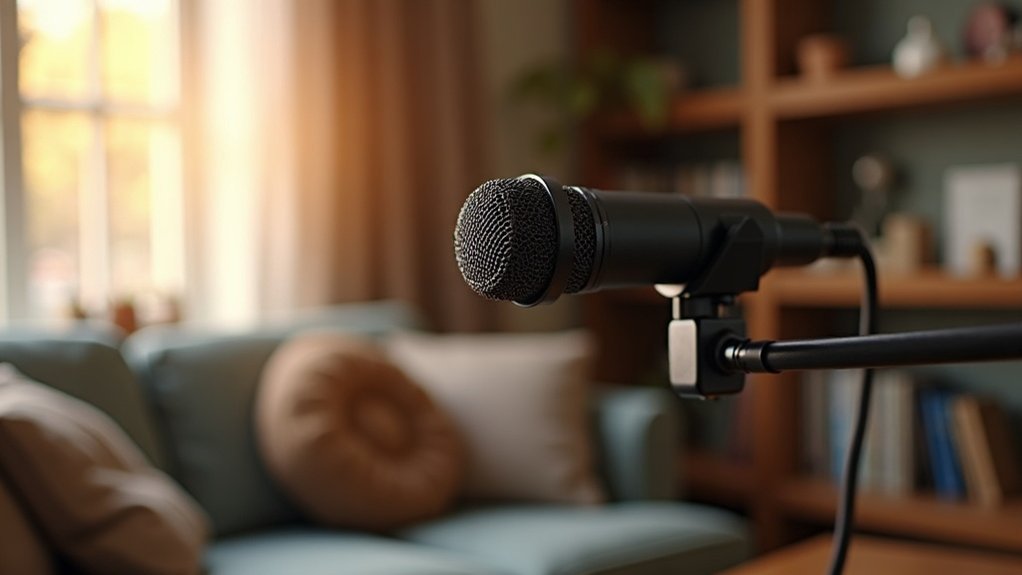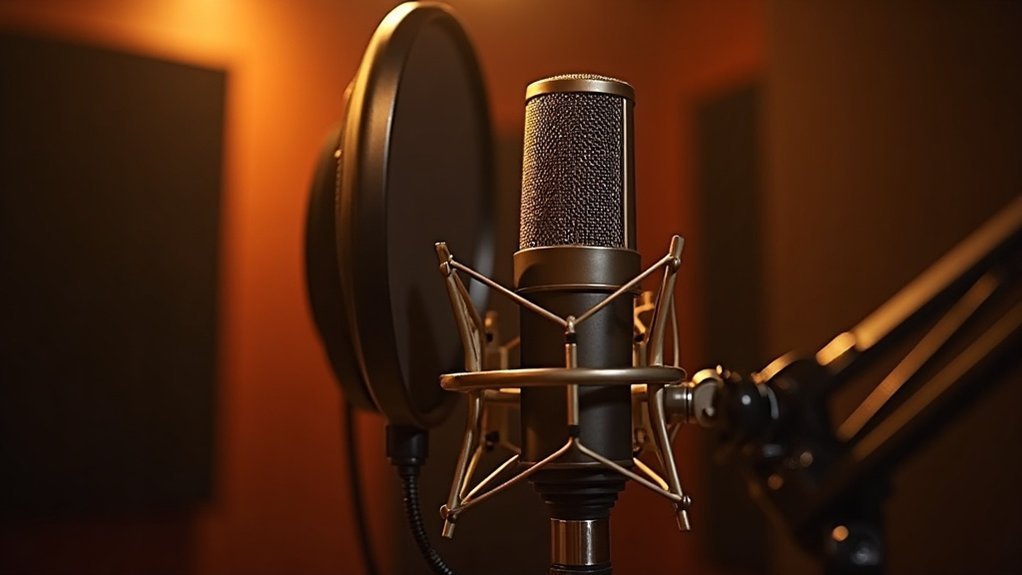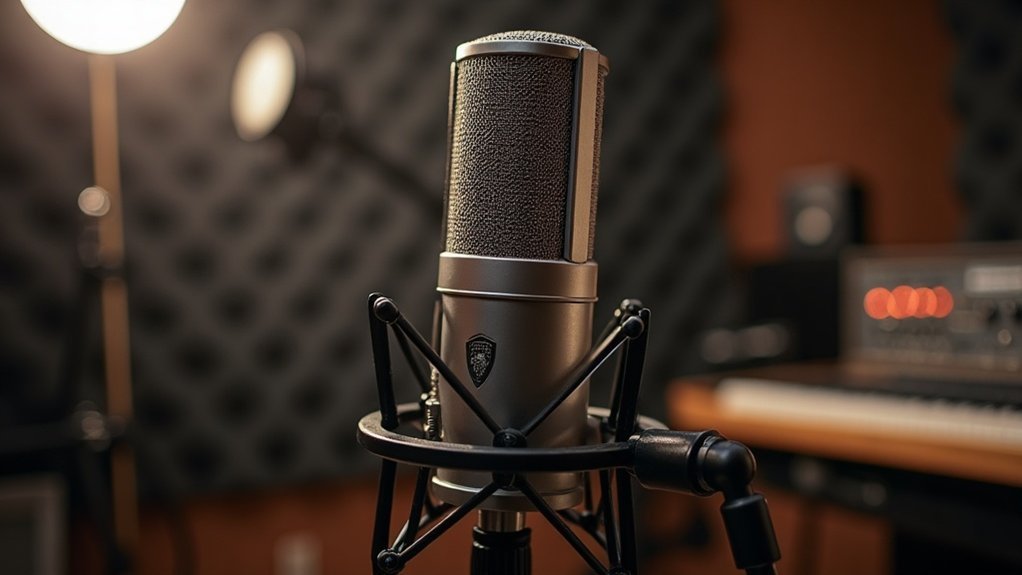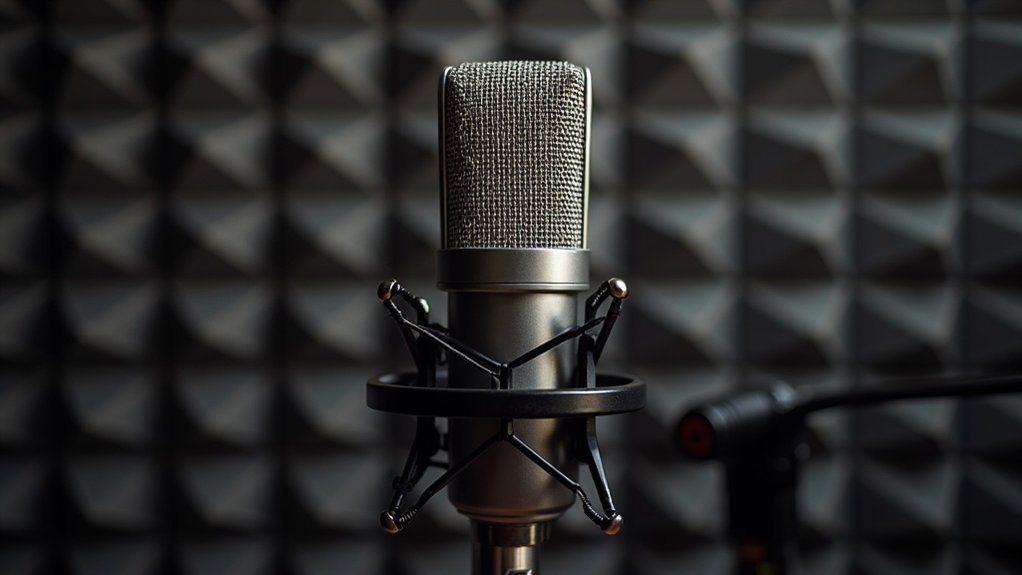

A shock mount isolates your microphone from vibrations using elastic bands, mechanically decoupling it from stand-borne noise. Understanding the difference between a shock mount and a mic clip is essential for creators and streamers optimizing their setup. A mic clip, conversely, rigidly fastens your microphone directly to a stand, transmitting vibrations straight through. The differences between shock mounts and mic clips become especially critical when recording podcasts or streaming gameplay where audio quality directly impacts your audience.
You’ll want shock mounts for condenser mics in studios where sensitivity matters—they capture cleaner audio by blocking low-frequency rumble that degrades your recording. For creators just starting their podcast or gaming stream on a budget, understanding how shock mounts vs. mic clips affects your final output helps you invest wisely. Mic clips work fine for dynamic microphones in live settings where speed trumps isolation, making them popular among musicians performing in unpredictable environments.
Comparing shock mounts and mic clips requires considering your specific use case. Your choice hinges on microphone type—whether you’re using a USB condenser mic for desktop recording or an XLR dynamic mic for stage work—environment, and budget constraints. Musicians recording at home benefit from shock mount isolation, while live performers and streamers often find mic clips more practical for quick repositioning during broadcasts.
Key Takeaways
- Shock mounts use elastic bands for vibration isolation, while mic clips provide direct attachment to stands without isolation.
- Shock mounts are essential for sensitive condenser microphones, whereas mic clips work adequately for less sensitive dynamic microphones.
- Shock mounts reduce low-frequency rumble and stand-borne noise, improving audio clarity in studio and podcast recordings significantly.
- Mic clips prioritize speed and convenience, making them practical for live performances, broadcasts, and quick setup changes.
- Shock mounts justify investment in controlled environments with vibration concerns, while mic clips suit budget-conscious setups with minimal vibration.
Shock Mounts vs. Mic Clips: The Key Differences
While both shock mounts and mic clips secure microphones to stands, the key differences between shock mounts and mic clips lie fundamentally in their approach to vibration management. Mic clips use rigid, direct attachment that transmits stand-borne noise into your microphone—a significant mic clip drawback in controlled environments.
Shock mounts, conversely, suspend your microphone in elastic bands or rubber cradles, mechanically decoupling it from vibrations. Understanding shock mounts vs. mic clips reveals that this isolation quality difference is considerable. Elastic bands in shock mounts allow microphones to move freely, reducing unwanted vibrations that would otherwise affect sound quality. For large, heavy microphones, specialized shock mounts with threads to secure microphones in inverted positions provide more stable mounting options.
Shock mounts mechanically decouple microphones from vibrations, delivering considerable isolation quality that mic clips simply cannot match.
The distinction between shock mounts and mic clips becomes critical depending on your recording context. You’ll find mic clips sufficient for handheld dynamic microphones in live settings where vibration isn’t critical.
However, when comparing shock mounts vs. mic clips for studio work, you’ll prefer shock mounts for studio condenser work, podcasting, and voiceover recording where capturing pristine audio without rumble matters most.
For creators and musicians investing in affordable microphone setups, recognizing these key differences between shock mounts and mic clips helps optimize your recording chain.
Shock mounts vs. mic clips isn’t just about price—it’s about understanding which mounting solution protects your audio quality at every stage of your buying journey, whether you’re streaming, gaming, or producing professional content.
Choose Your Mount: Five Questions to Answer
To select the right mount for your setup, you’ll need to assess three critical factors: your recording environment‘s noise sources, your microphone’s sensitivity level, and your financial constraints.
Each decision point directly influences whether a shock mount‘s vibration isolation justifies its cost and complexity, or whether a mic clip’s simplicity better serves your needs.
Answering these questions systematically will guide you toward the mount that balances isolation performance with practical requirements. Shock mounts suspend microphones in elastic bands, allowing them to move freely and reduce stand-borne vibrations that can compromise recording quality. Mic clips, by contrast, offer a more direct and affordable connection for most microphone types, making them ideal for portable or budget-conscious setups.
What’s Your Recording Environment?
What’s Your Recording Environment?
How do you know whether you need a shock mount or a mic clip? Your recording environment and environmental noise directly shape that choice. If you’re podcasting at a desk, vibrations from table movement travel into your mic—a shock mount becomes essential.
Quiet studio environments benefit most from isolation techniques because low-level rumble becomes audible. Live sound applications prioritize speed, making clips practical. Broadcast setups demand shock mounts for cleaner capture. Suspension mounts using elastic bands or springs provide superior isolation compared to clip-on alternatives in professional settings.
Consider your mic placement too: easily bumped stands require shock isolation, while stable, vibration-free environments work fine with basic clips. Understanding your recording environment helps you avoid common setup mistakes that degrade audio quality.
Whether you’re streaming, gaming, or recording podcasts, assessing what your recording environment offers—or lacks—determines whether isolation equipment pays dividends.
Match your isolation techniques to your actual noise challenges. Even modest improvements to your recording environment yield professional results without premium gear.
Creators and gamers often overlook how much the recording environment influences microphone performance, sometimes spending more on equipment than on acoustic treatment.
Start by honestly evaluating your recording environment’s strengths and weaknesses before investing in additional accessories.
How Sensitive Is Your Mic?
Your microphone’s sensitivity directly determines whether vibration isolation becomes necessary or remains optional. How sensitive is your mic? This question fundamentally shapes your isolation strategy. Condenser mics reveal thumps and rumble more readily than dynamic types, demanding shock mounts in studio environments. Dynamic microphones tolerate rigid clips because they’re inherently less prone to capturing low-level mechanical vibration.
Microphone sensitivity levels vary dramatically across mic types. Higher sensitivity amplifies vibration transfer through your stand, making elastic suspension essential for clean recordings. Low-frequency pickup—footfalls, desk knocks, floor resonance—poses the primary concern with sensitive gear. Understanding how sensitive your microphone is prevents costly mistakes in your setup.
| Mic Type | Sensitivity | Vibration Transfer | Recommendation |
|---|---|---|---|
| Condenser | High | Significant | Shock mount |
| Dynamic | Low | Minimal | Mic clip |
| Ribbon | Very high | Severe | Shock mount |
For creators, gamers, musicians, and professionals investing in affordable microphones, mic sensitivity directly impacts recording quality. A condenser’s superior sensitivity makes it excellent for capturing detail but requires proper isolation. When determining how sensitive is your mic, consider both the manufacturer specifications and your recording environment. Dynamic mics offer forgiving performance without extensive vibration management, making them ideal for beginners and mobile setups. Microphone sensitivity ratings should influence your entire mounting decision—from shock mounts to elastic suspension systems—ensuring professional results regardless of budget.
What’s Your Budget Priority?
Your first question addresses budget constraints: does vibration noise genuinely threaten your recordings? If floor traffic, desk taps, or stand bumps contaminate audio, shock mounts justify their added expense within your budget priorities.
Second, consider cost effectiveness relative to your microphone type. Condenser mics reveal mechanical noise; they demand isolation investment. Dynamic mics tolerate basic clips in controlled spaces. Shock mounts work by suspending your microphone to decouple it from physical vibrations that travel through mounting hardware.
When establishing budget priorities for microphones, align your spending with your microphone’s actual noise sensitivity rather than assuming all mics require identical isolation solutions.
Third, evaluate your recording environment‘s activity level. A quiet home studio demands different budget priority allocation than a space adjacent to traffic or household activity.
Fourth, assess your current equipment’s resilience and existing noise floor. Finally, prioritize solutions matching your actual problems rather than purchasing maximum complexity you don’t need.
Your budget priority should reflect whether you’re a podcaster managing tight margins, a gamer streaming on weekends, a musician recording demos, or a professional requiring broadcast-quality isolation.
Each creator profile demands different budget prioritization—some need immediate vibration control, while others benefit more from microphone selection itself. Let your specific recording challenges, not gear reviews alone, drive where you allocate resources within your budget priority framework.
Shock Mounts: When Clean Audio Matters Most
When you’re recording in a controlled studio environment, shock mounts become your primary concern for vibration isolation. You’ll find that shock mounts excel at blocking vibration transmission from your stand, desk, or boom arm directly to your microphone. This isolation matters most when you’re capturing vocals or acoustic instruments where unwanted rumble compromises sound quality.
Shock mounts are your primary defense against vibration noise when recording vocals and acoustic instruments in any studio environment.
For creators and musicians investing in affordable microphones for recording, shock mounts represent one of the most cost-effective upgrades you can make. Condenser microphones, being particularly sensitive to structural vibrations, benefit greatly from shock mount suspension-based isolation. A quality shock mount prevents low-frequency noise before it reaches your capsule, helping you avoid extensive post-recording editing regardless of your budget.
Whether you’re setting up a podcasting station, gaming streaming setup, or home recording studio, understanding how shock mounts work ensures cleaner takes from your first session.
You’re investing in cleaner audio, not just equipment—a shared priority among serious recording professionals and budget-conscious creators who demand pristine sound without breaking the bank.
Mic Clips: When Simple and Secure Is Enough
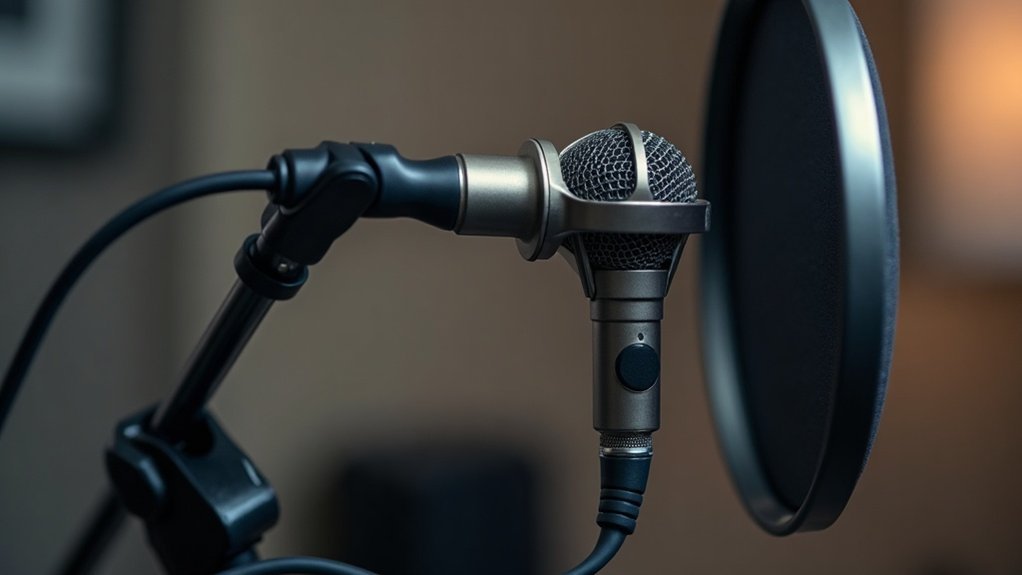
While shock mounts isolate vibration, mic clips serve a fundamentally different purpose: they hold your microphone firmly in place on a stand or mounting surface. You’ll appreciate mic clip stability when you need quick attachment without complexity. These straightforward accessories prevent shifting and slipping, supporting hands-free operation across live performances, broadcasts, and studio sessions. Their simple design enables fast setup changes between locations, making them ideal for creators, gamers, musicians, and professionals prioritizing practical solutions.
When simple and secure is enough, durable clips with proper fit reduce movement-related noise and maintain consistent positioning throughout your session. Unlike complex mounting systems, the best mic clips deliver reliable performance without unnecessary features or expense—perfect for podcasters on a budget, streamers managing multiple setups, and musicians needing dependable gear. Drum mic clips specifically enable precise positioning 1–3 inches from the drum rim, which is essential for optimal snare and tom applications. Quality mic clips also contribute to professional audio setups by indicating a commitment to high-quality sound and enhancing the overall visual appeal of your equipment. Whether you’re recording your first podcast or managing a professional broadcast, quality mic clips offer the straightforward functionality that matters.
| Use Case | Benefit | Setup Time |
|---|---|---|
| Live Performance | Reliable positioning | Seconds |
| Podcast Recording | Consistent placement | Minimal |
| Studio Work | Fixed microphone position | Quick |
| Drum Mounting | Reduced stage clutter | Fast |
| Interviews | Hands-free operation | Instant |
For creators seeking affordable microphone solutions, mic clips represent an honest value proposition: essential stability at minimal cost, making them indispensable for honest reviews, comparisons, and setup tips across every stage of your buying journey.
Budget, Setup, and Durability: What You’re Really Trading
Because you’re balancing cost, convenience, and audio quality, understanding the budget, setup, and durability tradeoffs**** you’re making truly matters.
Budget considerations pull you toward clips—they’re cheaper and require minimal assembly. Shock mounts demand more investment, and setup efficiency takes a hit with elastic suspension adjustments. However, when evaluating budget, setup, and durability across your equipment, you gain vibration isolation and mechanical resilience that clips simply can’t match. Quality shock mounts can reduce transmissibility by up to 95% in critical frequency ranges, ensuring your microphone captures clean audio without environmental interference.
The budget, setup, and durability equation becomes clearer when you consider real-world impact. Better shock mounts reduce handling noise and desk vibration, saving post-production editing time that directly affects your streaming or podcast workflow. Not all shock mounts fit microphones properly, as many are designed for condenser mics, which can lead to grip and stability issues if you choose incompatible models.
Entry-level shock mounts offer solid value when mechanical noise threatens your recordings—a critical consideration for creators operating on tight budgets.
Your choice between budget considerations, setup complexity, and durability benefits depends entirely on your environment and workflow. Upfront simplicity with clips means recurring frustration with noise issues.
Investing in proper shock mount setup and durability delivers long-term audio control that protects your content quality across every recording session. For podcasters, streamers, and musicians working with affordable microphones, this tradeoff between initial cost and sustained performance often determines whether your setup remains viable for years or becomes a bottleneck to your production quality.
Which Mics Benefit Most From Shock Mounts?
Now that you’ve weighed the cost-benefit analysis of shock mounts versus clips, you’ll want to know which mics benefit most from shock mounts.
Condenser microphones benefit most from shock mounts—their high sensitivity makes them prone to picking up handling noise and vibration. Large-diaphragm models are especially vulnerable to mechanical rumbles, making shock mount implementation critical for creators and podcasters seeking professional audio. This sensitivity is due to the condenser microphone design, which uses a capacitor to convert sound waves into electrical signals.
Studio applications like voiceovers and podcasting demand vibration isolation because desk taps transfer easily through stands. Understanding which microphones benefit most from shock mounts helps you avoid wasted investment on gear that doesn’t need them.
Directional patterns, particularly figure-of-eight designs, amplify low-frequency pickup, so these mics especially stand to benefit from quality shock mounts. Spider shock mounts with elastic suspension systems are particularly effective at minimizing vibrations for these sensitive microphone types.
Dynamic microphones need less intervention; the Shure SM7B exemplifies this durability and reduced need for isolation.
For affordable microphones used in streaming and recording, identifying which mics actually benefit most from shock mounts ensures your budget goes toward gear that genuinely improves your setup.
Matching shock mount types to your microphone’s characteristics guarantees peak audio clarity and professional results, whether you’re podcasting, gaming, or recording music.