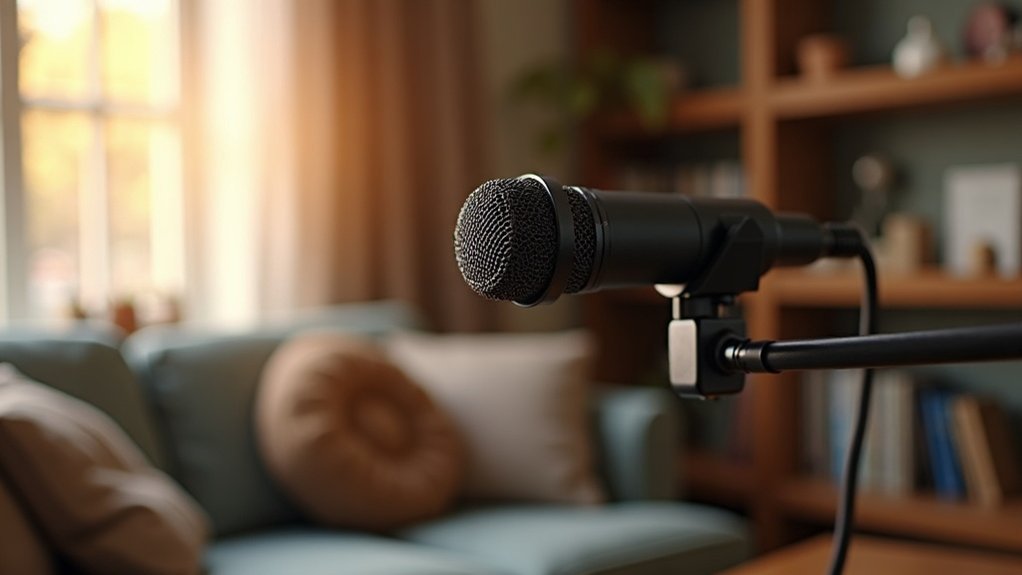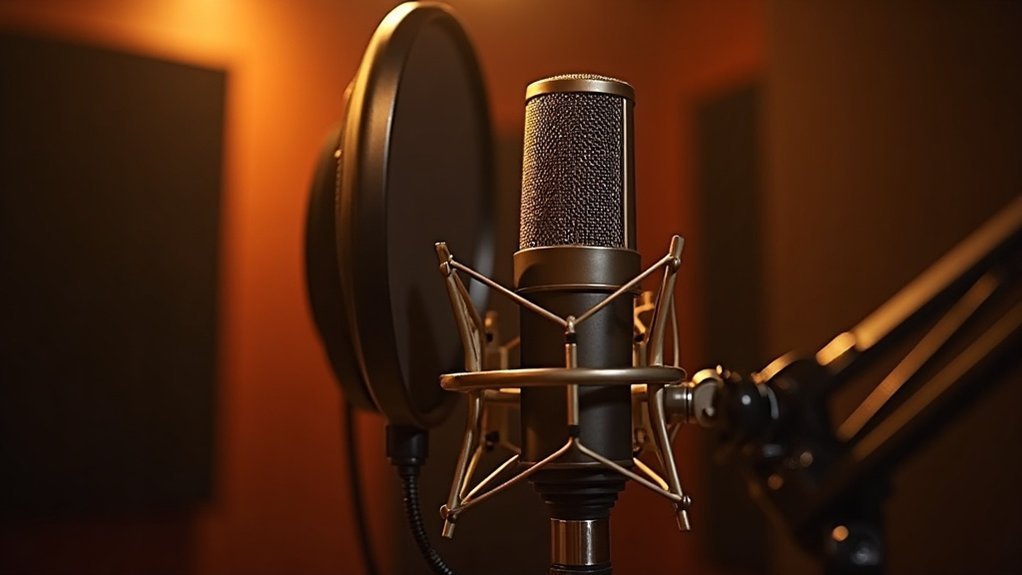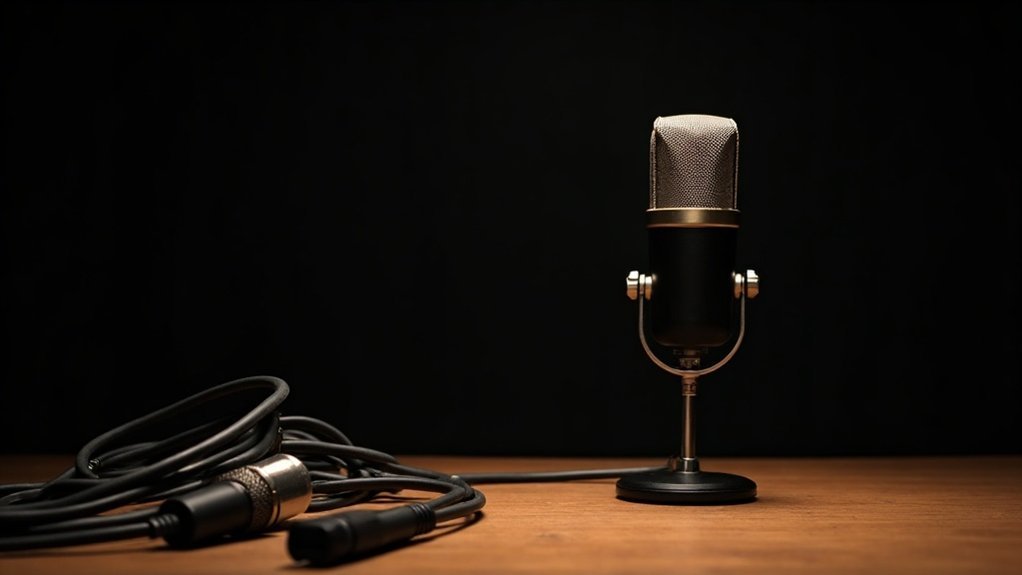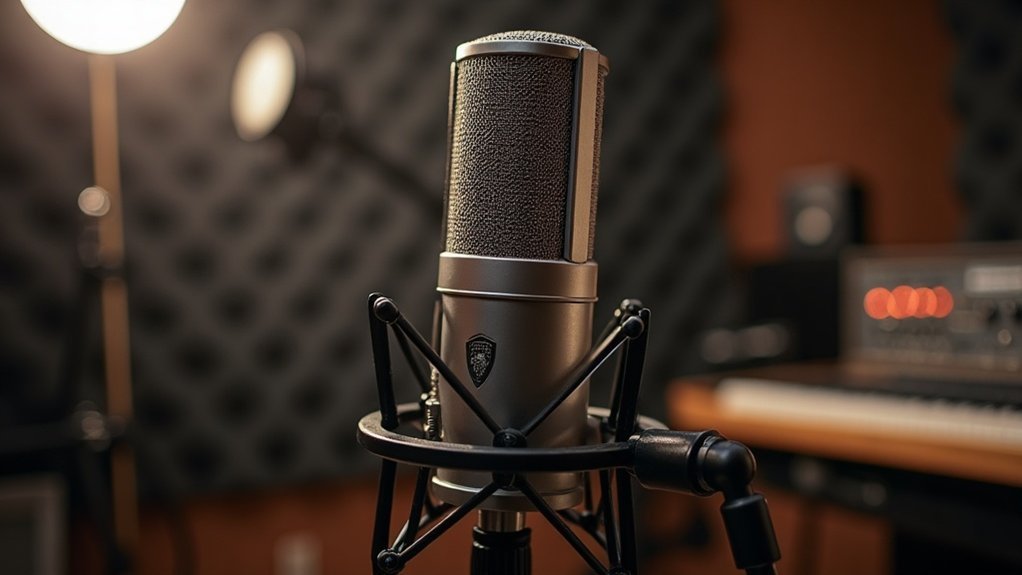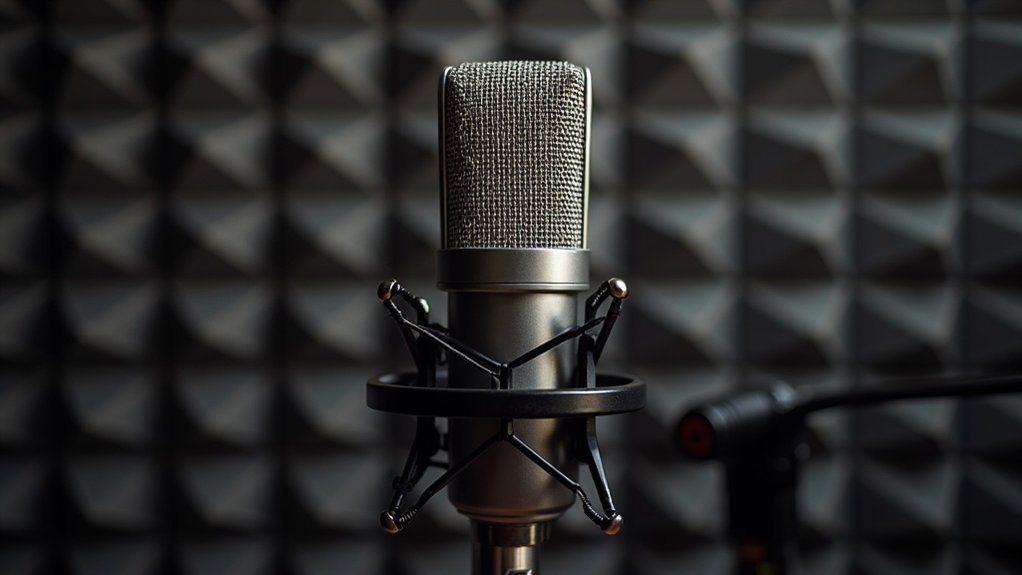

A condenser microphone is a high-fidelity device that converts sound waves into electrical signals using electrostatic principles. This type of microphone features a diaphragm and backplate that form a capacitor, allowing variations in sound pressure to modulate capacitance. To achieve peak performance from a condenser microphone, you’ll typically need phantom power, often supplied via an XLR connection. These microphones excel in studio settings and live recordings, capturing detailed audio with a wide frequency range, making them ideal for creators, musicians, and podcasters alike. If you want to explore more about the components and uses of condenser microphones, let’s continue!
Key Takeaways
- A condenser microphone converts sound waves into electrical signals using electrostatic principles with a diaphragm and backplate as key components.
- It requires phantom power, typically +48 V, to operate and maintain sound quality.
- These microphones are highly sensitive, making them ideal for capturing quiet sounds and detailed audio in studio environments.
- They excel in vocal recording, orchestral capture, and content creation due to their wide frequency response.
- While offering high fidelity, they are more expensive and sensitive to background noise compared to dynamic microphones.
What Is a Condenser Microphone and How Does It Work?
A condenser microphone is a sophisticated device that converts sound waves into electrical signals using electrostatic principles. This type of microphone employs a diaphragm and backplate to form a capacitor; variations in sound pressure cause the diaphragm to move, modulating capacitance. This process generates a corresponding electrical signal, making condenser microphones suitable for high-fidelity audio applications. Additionally, they are known for their low self-noise, which contributes to the clarity of the recordings.
To function effectively, they require polarization, often supplied by phantom power. The output is initially low-level and needs signal conditioning, ensuring compatibility with mixers and audio interfaces. This unique mechanism is precisely why understanding what a condenser microphone is and how it works is essential for creators, gamers, and musicians. These features make condenser microphones ideal for capturing vocals, instruments, and other nuanced sounds, ultimately enhancing your audio production experience. Additionally, their superior sound quality and sensitivity make them a popular choice for professional audio settings, particularly due to their wide frequency response.
Condenser microphones require phantom power for polarization, producing low-level output that needs signal conditioning for optimal compatibility.
Whether you’re podcasting, streaming, or recording, knowing how a condenser microphone operates can significantly impact your sound quality and overall setup.
Key Components of a Condenser Microphone
In a condenser microphone, the diaphragm’s material greatly impacts sensitivity and sound fidelity, with options like mylar and polyester being common. The backplate functions as the fixed electrode in the capacitor assembly, essential for converting acoustic energy into an electrical signal. Understanding these components will help you appreciate how they influence audio capture and performance. Additionally, the diaphragm and backplate work together to create a capacitive transducer, which is vital for achieving accurate sound reproduction. This design is crucial for capturing high-fidelity audio in various applications, showcasing the microphone’s versatility. To operate effectively, condenser microphones require phantom power, which provides the necessary voltage for their internal circuitry.
Diaphragm Material Types
Understanding these diaphragm material types can help creators, musicians, and professionals choose the right microphone for podcasting, streaming, and recording, especially in contexts where large diaphragm condenser microphones are preferred for their rich tonal quality.
Backplate Functionality Explained
The backplate functionality explained serves as a vital component in condenser microphones, working in tandem with the diaphragm to create a capacitor. Its design significantly influences sensitivity, frequency response, and bandwidth. As sound waves cause diaphragm movement, the distance between the diaphragm and backplate changes, altering capacitance and generating an electrical signal. A well-structured backplate enhances the backplate functionality, enabling precise acoustic tuning, while perforations can control airflow, improving performance and reducing damping effects. This stability ensures accurate signal conversion, which is fundamental for capturing sound. Ultimately, the backplate’s role in forming a reliable parallel-plate capacitor is essential for delivering high-quality audio output in your condenser microphone, illustrating the crucial backplate functionality explained for creators, gamers, musicians, and professionals alike. Additionally, the backplate is crucial for signal amplification requirements, as it helps in optimizing the microphone’s overall performance. The backplate’s design is integral for achieving dual membrane designs, allowing for variable directional patterns that enhance versatility in recording applications. Without phantom power, a condenser microphone may not operate effectively, as the backplate requires proper voltage to maintain its functionality.
Why Sensitivity Matters in Microphone Choice?
Sensitivity plays an essential role in selecting the right microphone for your recording needs, and understanding why sensitivity matters in microphone choice can significantly enhance your audio projects. It directly impacts the noise floor and overall sound quality. High-sensitivity mics excel at capturing quiet sources with reduced preamp gain, making them ideal for applications where clarity is crucial. Conversely, low-sensitivity mics are perfect for handling loud sources, effectively minimizing distortion and clipping. Here’s a quick comparison to help you navigate this important aspect:
| Sensitivity Level | Ideal Use Case | Noise Floor Impact |
|---|---|---|
| High (8-32 mV/Pa) | Spoken word, acoustic | Lower self-noise |
| Low (<8 mV/Pa) | Drums, guitar amps | Higher self-noise |
| Adjustable | Versatile applications | Balanced performance |
| Dynamic | Live sound | Reduced ambient pickup |
| Condenser | Studio recordings | Enhanced detail |
Understanding why sensitivity matters in microphone choice ensures that you select the right microphone for your needs, leading to superior recordings tailored specifically for podcasting, streaming, gaming, and recording. Additionally, higher sensitivity microphones are often preferred in studio settings because they result in improved signal-to-noise ratio. Furthermore, the sensitivity difference between condenser and dynamic mics influences their performance in various environments, making it crucial to consider this factor when choosing the right mic for your project. The microphone sensitivity can also affect the mic’s ability to capture subtle nuances in sound, which is essential for achieving high-quality recordings.
Understanding Phantom Power for Condenser Mics
Phantom power is vital for condenser microphones, as it provides the necessary DC voltage to activate their internal circuitry. Typically delivered through balanced XLR connections, it keeps the audio signal unaffected while powering the microphone. Understanding how phantom power works and its various types will guarantee you get peak performance from your condenser mics. Additionally, knowing the importance of phantom power can help you avoid connectivity issues during recording sessions.
What Is Phantom Power?
While using a condenser microphone, you’ll often encounter the term “phantom power.” This concept refers to the direct current (DC) supply method that powers these sensitive devices through balanced microphone cables.
Phantom power typically ranges from 11 to 52 V DC, with +48 V being the professional standard. Understanding what phantom power is essential for condenser microphone types, as they require this power source for their internal electronics.
This method allows for the simultaneous transmission of AC audio signals without degrading sound quality. It’s important to note that dynamic microphones don’t require phantom power, making it crucial to verify compatibility when connecting various microphone types to your audio equipment.
Knowing about phantom power can greatly enhance the performance of your setup, ensuring your recordings are clear and professional. Additionally, phantom power is often provided by audio interfaces or mixing consoles, making it widely accessible for recording setups.
How It Powers Mics
Understanding how condenser microphones are powered is essential for achieving peak performance in your podcasting, streaming, or recording setup. When we talk about how it powers mics, phantom power plays a crucial role; it provides the necessary energy to polarize the capsule, drive impedance conversion circuits, and energize integrated preamplifiers, all while ensuring signal integrity. Additionally, the use of preamps in signal chains ensures that the audio signal maintains its quality throughout the recording process.
| Component | Function |
|---|---|
| Capsule Polarization | Allows diaphragm to respond effectively to sound |
| Impedance Conversion | Lowers capsule impedance for optimal output |
| Integrated Preamplifier | Boosts low-level signals to usable levels |
| Active Filtering | Maintains signal integrity and reduces noise |
With phantom power, you can enjoy stable performance without the hassle of battery issues, seamlessly sharing the same XLR cable for both audio and power. Understanding how it powers mics ultimately leads to better sound quality and reliability, which are essential for creators, gamers, and musicians alike.
Types Of Phantom Power
Condenser microphones rely on specific types of phantom power to function effectively, each with distinct voltage levels and applications. The standard is +48V P48, widely used in professional settings, making it a crucial aspect in understanding types of phantom power.
Lower-voltage options, like P24 and P12, exist but are less common in various recording setups. Understanding phantom voltage is essential for guaranteeing power compatibility with your microphone.
Many condenser mics can handle 48V, but some are designed for lower voltages, which can impact performance. Always check your mic’s specifications to avoid issues and ensure you’re using the correct types of phantom power. This secures ideal sound quality and reliable operation, allowing you to get the most out of your recording setup, whether for podcasting, streaming, or gaming. Choosing the right microphone type is vital for achieving optimal audio quality.
Where to Use Condenser Microphones

Where to Use Condenser Microphones to achieve ideal sound quality? These versatile mics excel in studio applications, capturing lead vocals and acoustic instruments with remarkable precision.
When considering where to use condenser microphones, they stand out as a top choice for voice recording in podcasting setups, ensuring clarity in narration and enhancing e-learning experiences.
In orchestral recording, their extended frequency response makes them ideal for capturing nuanced performances, demonstrating just how effective condenser microphones can be in these settings.
You’ll find them perfect for ambient capture, adding depth to your soundscapes.
Whether you’re in content creation or online education, understanding where to use condenser microphones can significantly enhance your recordings, providing the professional quality you desire—whether in a home studio or during remote meetings. Additionally, unlike dynamic microphones, they are more sensitive to sound and detail, making them suitable for a variety of applications.
Benefits and Drawbacks of Condenser Microphones
These microphones excel in studio applications, delivering high sensitivity for capturing quiet details and producing high-fidelity sound with remarkable clarity. Their ability to reproduce a wide range of frequencies enhances audio realism, making them perfect for vocals and acoustic instruments.
However, it’s important to note that condenser microphones require external power and can be more costly compared to other options. Additionally, their sensitivity to background noise makes them less suitable for untreated environments.
Dynamic microphones, which are often used in live settings like concerts, differ significantly in design and application compared to condensers.
Balancing the pros and cons of condenser microphones is crucial for achieving the best recording results tailored to your specific needs, whether you’re a creator, gamer, or musician.
How to Choose the Right Condenser Microphone for Your Needs?
Selecting the right condenser microphone for your needs begins with a clear understanding of your specific recording applications.
When exploring how to choose the right condenser microphone for your needs, consider these essential factors:
- Intended use: Whether you’re focused on studio vocals, capturing instruments, or enhancing your streaming setup.
- Microphone types: Opt for a large-diaphragm microphone for vocals or a small-diaphragm option for instruments to optimize performance.
- Polar pattern: A cardioid pattern is ideal for focused sound pickup, while an omnidirectional pattern captures the ambiance of a room effectively.
- Sonic character: Decide between transparent tones for clarity or colored tones that add character, depending on your style.
Additionally, evaluate connectivity options like USB or XLR to ensure compatibility with your existing setup.
It’s also crucial to assess your acoustic environment and desired frequency response to align the microphone’s specifications with your recording goals. Understanding polar patterns can greatly influence which microphone will suit your needs best in various recording scenarios.