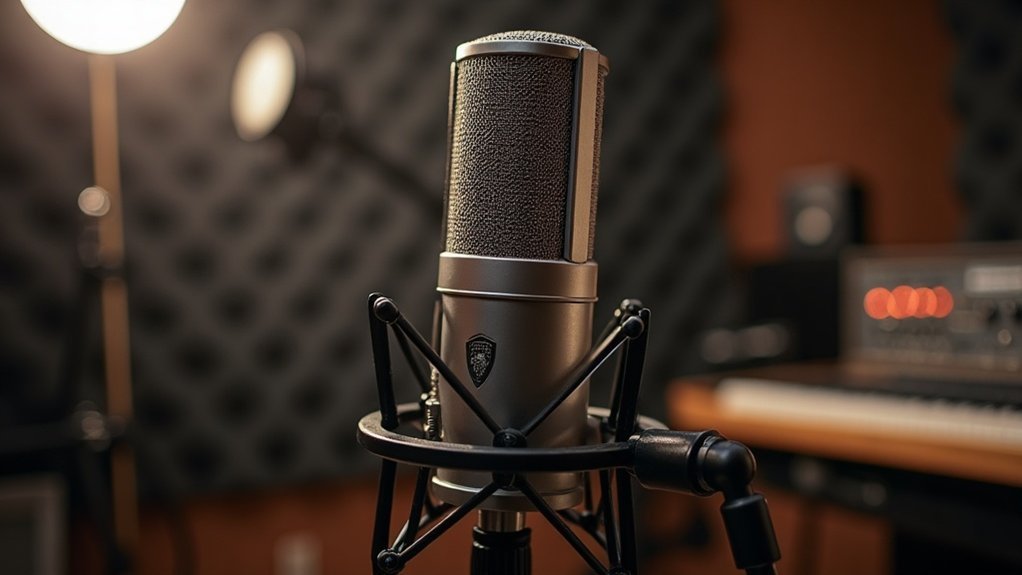

A ribbon microphone works by utilizing an ultra-thin aluminum ribbon that vibrates in response to sound waves. This innovative technology allows the ribbon to move within a magnetic field, generating an electrical signal through electromagnetic induction. The signal captures the dynamics of the sound wave, showcasing the detail and tonal richness that ribbon microphones are known for. With the right transformer, the output is optimized for various audio systems, enhancing their performance in different applications.
Understanding how a ribbon microphone works is essential for creators, gamers, and musicians looking to elevate their audio quality. The unique design of ribbon microphones makes them particularly effective for capturing nuanced sounds, making them a popular choice for podcasting, streaming, and recording. Discover how these elements contribute to their exceptional performance and unique applications in your audio projects.
Key Takeaways
- Ribbon microphones convert sound into electrical signals using electromagnetic induction, as a thin aluminum ribbon vibrates within a magnetic field.
- The ribbon’s movement generates voltage proportional to air particle velocity, capturing an accurate representation of the acoustic waveform.
- A corrugated ribbon design enhances transient response and minimizes coloration, providing a rich and warm sound reproduction.
- Transformers step up the low output voltage of the ribbon, optimizing impedance and protecting against phantom power.
- The bidirectional polar pattern allows for effective sound capture from both sides, making ribbon microphones ideal for various recording applications.
Introduction to Ribbon Microphones: Principles and Application
Ribbon microphones, while often overshadowed by other types, offer unique advantages in audio recording due to their distinctive operating principles and construction. Emerging in the early 20th century, these microphones utilize electromagnetic induction to convert sound into electrical signals. The core element, an ultra-thin aluminum ribbon, moves within a magnetic field, generating a voltage. This design contributes to their smooth frequency response, making them particularly effective for capturing high-frequency details. Additionally, many ribbon microphones require a decent microphone preamp to maximize their performance, enhancing their overall utility in professional settings. The ability to capture rich harmonic content further distinguishes ribbon microphones from their counterparts.
Various ribbon types exist, including passive and active designs, each with unique applications. Their bidirectional nature delivers a natural sound, making them ideal for studio recording, especially in settings where nuanced audio capture is essential.
In the realm of affordable microphones for podcasting, streaming, gaming, and recording, understanding ribbon microphones and their principles and application can significantly enhance your creative projects.
Their elegant design and historical development not only elevate audio quality but also provide a rich context for their continued relevance in modern audio production. By exploring the principles and application of ribbon microphones, creators and professionals can fully appreciate the unique characteristics that make these microphones a valuable tool in any audio arsenal.
How Ribbon Microphones Capture Sound Waves
Ribbon microphones capture sound waves through the precise vibration of a lightweight ribbon element that responds to air particle motion.
As the ribbon oscillates within a magnetic field, electromagnetic induction generates an electrical signal proportional to its movement. This process allows for an accurate representation of the acoustic waveform, ensuring detailed sound capture. Active ribbon mics feature onboard electronics that help maintain consistent output levels, making them versatile for various recording situations. This inherent capability to handle low mass allows ribbon microphones to effectively capture fine details and quick transients, enhancing their overall sound quality.
Ribbon Vibration Mechanics
When sound waves interact with the microphone, the ribbon vibration mechanics come into play as the corrugated metal ribbon serves as both the diaphragm and the sensing element, effectively capturing acoustic vibrations. This design leverages ribbon dynamics to enhance performance through:
- Mechanical resonance tuned below the audible band, avoiding unwanted coloration.
- Oscillation behavior that responds to pressure gradient interaction, tracking air particle velocity.
- Transient response capabilities, thanks to low mass and high ribbon elasticity.
- Corrugation effects that optimize stiffness and damping, ensuring clarity in sound reproduction. Furthermore, the microphone’s sensitivity to high frequencies enhances its ability to capture natural sound reproduction in various environments.
These characteristics enable the ribbon microphone to faithfully capture nuanced sounds, making it a valuable tool for audio professionals. Understanding ribbon vibration mechanics is crucial for creators, gamers, and musicians who seek the best in sound quality for podcasting, streaming, and recording. Additionally, the dynamic microphones that became popular in the late 1930s paved the way for various advancements in the field of sound recording.
Electromagnetic Induction Process
Sound waves interact with the ribbon microphone through the core principle of electromagnetic induction, allowing it to convert acoustic energy into electrical signals. This process is crucial for creators, gamers, musicians, and professionals seeking affordable microphones for podcasting, streaming, gaming, and recording. The ribbon design, a thin conductive foil, moves within a static magnetic field created by permanent magnets. As the ribbon vibrates, it cuts through magnetic flux lines, generating a voltage proportional to its motion. This induced signal, an analog of the sound wave, preserves sound fidelity by reflecting amplitude and time variations. An internal transformer steps up the low-level AC voltage, ensuring compatibility with microphone inputs while protecting the ribbon from external electrical fluctuations. Understanding the diaphragm’s role in microphones is essential for anyone looking to maximize their microphone’s potential in various creative endeavors. Notably, the bidirectional polar pattern of ribbon microphones allows them to capture sound from both the front and back, enhancing their versatility in different audio environments. Furthermore, the mass of the ribbon plays a critical role, as lighter ribbons yield higher signal levels, which is vital for achieving optimal performance.
How Signal Generation Works in Ribbon Microphones
In ribbon microphones, signal generation hinges on electromagnetic induction, where a thin aluminum ribbon moves within a static magnetic field. As sound waves cause the ribbon to oscillate, the motion induces a voltage that directly correlates with the ribbon’s velocity. This process transforms acoustic energy into a low-level electrical signal, maintaining the fidelity of the original sound wave. Ribbon microphones are particularly valued for their unique sonic properties, which contribute to their growing popularity in audio recording. Additionally, their design allows them to excel in capturing warmth and richness in sound reproduction, further enhancing their appeal among audio professionals.
Electromagnetic Induction Process
Ribbon microphones operate fundamentally through the principle of electromagnetic induction, where a thin, conductive ribbon serves as the sole moving conductor within a static magnetic field. This design exemplifies inductive principles, ensuring high electromagnetic sensitivity, which is crucial for creators, musicians, and podcasters looking for affordable microphones that deliver quality sound.
Key aspects of the electromagnetic induction process in ribbon microphones include:
- The ribbon moves through magnetic flux lines, generating an electrical signal.
- Voltage is induced perpendicularly to the ribbon motion and magnetic field orientation.
- The geometry maximizes voltage output based on ribbon velocity and magnetic strength.
- Corrugation enhances mechanical stability, ensuring consistent induction behavior.
These factors collaborate to create a reliable, efficient signal generation mechanism in ribbon microphones, making them an excellent choice for streaming and recording.
Understanding the electromagnetic induction process is essential for anyone looking to optimize their audio setup, whether for gaming, podcasting, or professional recording.
Ribbon Motion Response
While exploring how ribbon microphones generate signals, it’s essential to recognize that these devices primarily act as velocity sensors. The concept of ribbon motion response highlights that ribbon motion responds to air particle velocity rather than absolute pressure, classifying them as velocity microphones.
The induced voltage amplitude correlates directly with ribbon velocity, influenced by the pressure gradient across its two faces. This configuration enables the ribbon to track sound’s pressure difference, creating a bidirectional polar pattern.
As sound waves hit, the pressure gradient drives the ribbon back and forth, generating opposite-polarity signals from the front and rear. This intricate relationship between ribbon motion and the acoustic environment showcases the fundamental aspects of ribbon motion response, emphasizing how these microphones can effectively capture sound nuances for creators, gamers, musicians, and professionals.
Understanding ribbon motion response is crucial for anyone looking to get the most out of their audio equipment, particularly in podcasting, streaming, and recording contexts.
The Unique Construction of Ribbon Microphones
The Unique Construction of Ribbon Microphones sets them apart in the world of audio capture, harnessing an innovative design that combines functionality with high sensitivity.
Key elements of this unique construction include:
Key elements of ribbon microphones’ unique construction include specialized ribbon materials, innovative diaphragm design, and a strong magnetic structure for optimal audio fidelity.
- Ribbon materials: Extremely thin corrugated metal ribbons guarantee low mass, a hallmark of ribbon microphone design.
- Diaphragm design: The ribbon’s unique corrugation enhances mechanical stability and flexibility, contributing to the distinctive audio quality these microphones are known for.
- Magnetic structure: Strong permanent magnets create a precise magnetic gap for maximum induction, crucial to the performance of ribbon microphones.
- Acoustic behavior: The pressure-gradient configuration allows for an accurate transient response, which is essential for achieving the natural tonal character that ribbon microphones deliver.
This meticulous attention to tension control and sound pressure results in a microphone that audio enthusiasts cherish.
Making the Unique Construction of Ribbon Microphones a vital topic for creators, gamers, musicians, and professionals seeking to enhance their audio experience.
Why Transformers Are Essential for Ribbon Microphone Output
Transformers are essential for ribbon microphone output, as they significantly enhance the low voltage levels generated by the sensitive ribbon elements. Typically, these microphones produce an output around tens to 100 microvolts. A well-designed transformer can step up this voltage by 20–40 times, making the output compatible with standard preamps.
This impedance matching not only optimizes the performance of ribbon microphones but also protects the delicate ribbon from phantom power. Furthermore, by providing galvanic isolation, transformers minimize noise and improve signal integrity, which is crucial for achieving high-quality audio without needing excessive gain.
Proper transformer design is vital for maintaining the unique characteristics of ribbon microphones while ensuring effective signal transmission, highlighting why transformers are essential for ribbon microphone output.
What Makes Ribbon Microphones So Useful?

Understanding what makes ribbon microphones so useful begins with their unparalleled ability to capture sound in a natural and realistic manner. The advantages of ribbon microphones lie in several key sound characteristics:
- The low-mass ribbon element delivers a smooth, even frequency response, which is essential for high-quality audio capture.
- Natural high-frequency roll-off reduces harshness, yielding a mellow tonality that enhances the listening experience.
- The figure-8 polar pattern provides effective isolation from side sounds, making ribbon microphones particularly useful in noisy environments.
- Detailed transient response captures dynamic nuances without distortion, allowing for expressive recordings.
These features contribute to the overall effectiveness of ribbon microphones, making them ideal for a variety of applications.
Whether you’re podcasting, streaming, or recording music, their unique qualities ensure you achieve rich, authentic recordings that resonate emotionally with listeners.
Ultimately, what makes ribbon microphones so useful is their ability to foster a sense of sonic belonging in any setting, providing creators and professionals with the tools they need for exceptional audio experiences.