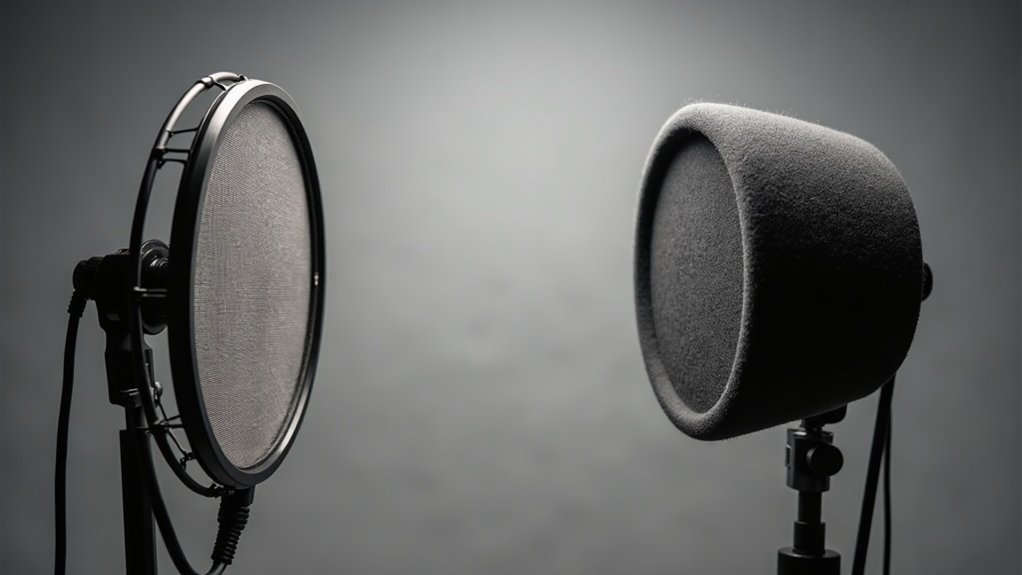
You’ll find pop filters manage plosive bursts through mesh diffusion in stationary vocal setups, while windscreens reduce ambient wind noise via foam enclosure for outdoor environments. Understanding the difference between a pop filter and a windscreen is crucial for creators selecting the right vocal protection tool.
Pop filters preserve vocal detail with high acoustic transparency, positioned 2–6 inches from your microphone, making them ideal for indoor podcasting and streaming setups. Windscreens prioritize airflow protection but soften higher frequencies through full coverage, essential for dynamic outdoor capture and field recording.
The key differences between pop filters and windscreens become apparent when considering your recording environment. Pop filters and windscreens serve distinct purposes: the former targets plosive consonants in controlled spaces, while the latter shields against environmental noise in variable conditions. Your choice depends on recording context—indoor vocals versus dynamic outdoor capture.
For podcasters and streamers working from home studios, a pop filter delivers professional vocal clarity. For musicians recording outdoors or gamers streaming from variable locations, windscreen protection prevents low-frequency rumble and wind artifacts. Understanding which tool targets your specific acoustic challenge reveals why many creators strategically combine both accessories for comprehensive microphone protection across different recording scenarios.
Key Takeaways
- Pop filters use mesh screens to diffuse plosives in stationary indoor setups, while windscreens wrap microphones in foam for outdoor wind noise.
- Pop filters manage plosive bursts from consonants at close distances, whereas windscreens reduce ambient wind turbulence and environmental noise broadly.
- Pop filters preserve vocal clarity with high acoustic transparency; windscreens soften frequencies, prioritizing airflow protection over pristine audio detail.
- Pop filters mount 2–6 inches from microphones for targeted coverage; windscreens fully enclose microphones for mobile and outdoor recording scenarios.
- Pop filters prevent saliva accumulation in studio setups; windscreens provide cost-effective protection in variable weather conditions for unpredictable environments.
How Pop Filters and Windscreens Solve Different Problems
Pop filters and windscreens solve different problems by addressing plosive noise through fundamentally different mechanisms that reflect their distinct roles in recording workflows.
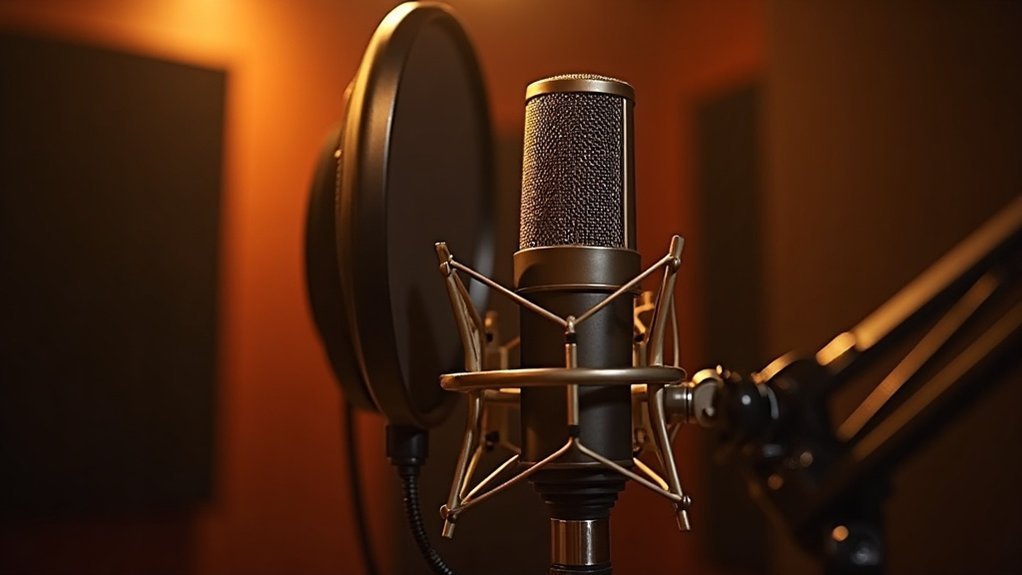
Pop filters diffuse concentrated air bursts into gentler spreads using mesh or nylon screens positioned between your mouth and microphone—ideal for studio vocal recording where you maintain fixed distance.
Windscreens wrap your microphone in porous foam, reducing airflow speed and force through physical coverage. The foam construction in windscreens typically features open cell foam structure with numerous tiny cells that function similarly to dual layer filters by breaking up air blasts multiple times.
Understanding how pop filters and windscreens solve different problems helps you select the right acoustic protection for your setup.
You’ll choose pop filters when controlling plosives in application scenarios demanding vocal clarity—essential for podcasters and streamers recording in controlled studio environments. Pop filters are typically made of mesh fabric or thin metal screens that effectively break up direct airflow.
You’ll deploy windscreens across performance environments where your microphone encounters environmental airflow, mobile use, or outdoor capture where acoustic protection becomes paramount.
Gamers and mobile content creators particularly benefit from windscreens during dynamic gameplay or location recording.
The distinction between pop filters and windscreens solving different problems extends to budget considerations as well.
Pop filters offer affordable plosive control for stationary recording setups, while windscreens provide cost-effective environmental noise reduction for creators working in variable conditions.
Whether you’re building your first podcast studio or upgrading your gaming microphone setup, knowing which tool solves different problems—plosives in controlled spaces versus wind and environmental noise in dynamic settings—ensures you invest in the right affordable microphone accessories for your specific recording needs.
What Each One Actually Stops
While both pop filters and windscreens reduce unwanted air movement reaching your microphone, they’re engineered to stop fundamentally different acoustic problems.
What each one actually stops depends entirely on your recording context. Pop filters intercept plosive bursts from consonants like P, B, T, and D by dispersing forward-moving airflow before it strikes your capsule. Windscreens, conversely, handle ambient wind turbulence through broader foam coverage.
Your setup determines which you’ll need:
Your recording environment and proximity to the microphone determine whether you need a pop filter, windscreen, or both.
- Pop filters: Stop close-mic vocal plosives and saliva spray—critical for indoor podcasting and streaming where proximity to the mic intensifies these issues.
- Windscreens: Reduce outdoor wind rumble and environmental noise—essential for field recording and outdoor content creation.
- Airflow disruption: Both mechanically interrupt air movement differently, so understanding what each one actually stops prevents choosing the wrong accessory.
- Studio vs. field: Pop filters excel indoors for creators recording podcasts and vocals; windscreens dominate outdoors for musicians, streamers, and professionals capturing audio in variable conditions.
Understanding what each one actually stops guarantees you’ll choose the right protection for your recording environment.
Whether you’re a podcaster, gamer, or musician working with affordable microphones, selecting the correct accessory maximizes your audio quality and protects your investment from preventable acoustic problems. Pop filters are particularly important for condenser microphones due to their sensitivity to proximity effects. A pop filter’s primary function in microphone recording setups is to provide a physical barrier between the speaker and the capsule. Nylon mesh pop filters are particularly popular for their affordability and effectiveness at reducing plosive distortion without compromising overall sound quality.
When Should You Choose a Pop Filter?
If you’re recording close-mic vocal sessions—whether podcasts, voiceovers, singing, or streaming—understanding when you should choose a pop filter becomes essential for professional results. A pop filter is your best defense against plosives that’d otherwise require extensive editing. Position it 2–6 inches from your microphone, keeping your voice slightly behind the screen for ideal plosive management strategies.
When to choose a pop filter depends on your recording environment and performance style. This studio environment consideration becomes critical when you’re working with performers exhibiting strong consonant projection or limited airflow control. Your vocal recording techniques improve dramatically when you prioritize capture quality over speed. Pop filters are particularly effective with condenser microphones, which are highly sensitive to plosive sounds and proximity effect distortions.
The decision of when you should choose a pop filter also hinges on your microphone positioning strategy. Stay close to the filter but not directly on it—these performance style adaptations guarantee cleaner takes and professional results. Pop filters also protect microphones from saliva accumulation, which can be corrosive and damage equipment over time.
For affordable microphone setups used in podcasting, streaming, and recording, a pop filter is often one of the most cost-effective upgrades available. Whether you’re a creator, gamer, or musician, determining when you should choose a pop filter can make the difference between requiring extensive post-production editing and delivering polished content on the first take.
When Should You Choose a Windscreen?
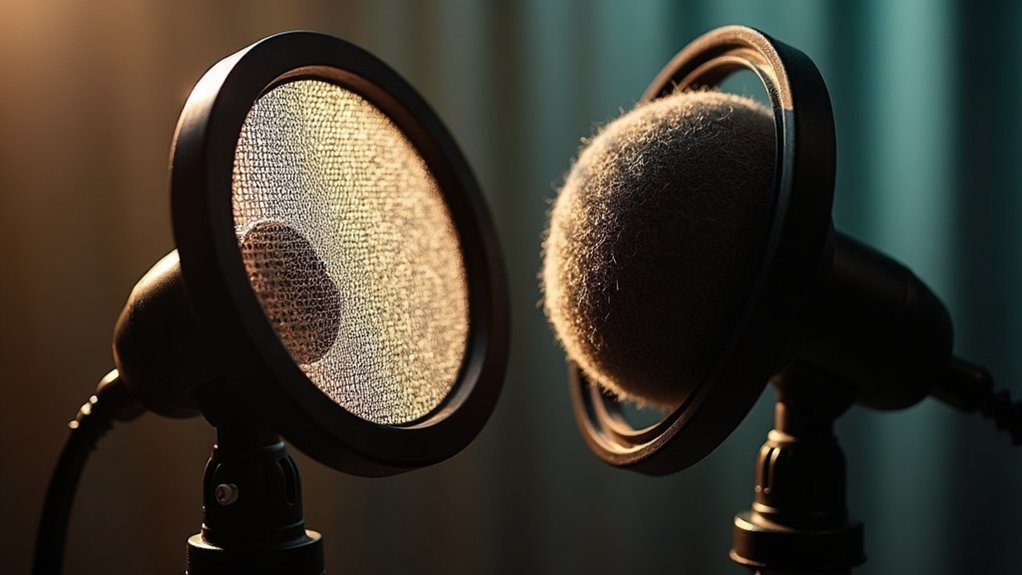
A windscreen becomes essential whenever your recording environment introduces airflow that’d otherwise degrade audio quality. Understanding when to choose a windscreen is critical for content creators, podcasters, and musicians looking to maintain professional audio standards without breaking the bank.
A windscreen becomes essential whenever airflow degrades audio quality—critical for maintaining professional standards on any budget.
You’ll benefit from windscreen protection in these situations:
- Outdoor recording with unpredictable wind conditions, especially for boom-mounted shotgun microphones where gusts create low-frequency rumble—choosing a windscreen here is non-negotiable for outdoor creators.
- Microphone movement during handheld interviews, broadcasts, or mobile rigs where motion through air mimics wind effects; a quality windscreen selection makes the difference between usable and unusable takes.
- Indoor conditions near HVAC vents, ceiling fans, or PC fans generating forced airflow—even streamers and gamers in less-than-ideal setups benefit from windscreen coverage. Professional broadcast-grade foam engineered to specific acoustic tolerances prevents audible colorations while managing plosive energy effectively. Windscreens work by creating a buffer zone that dissipates wind noise energy before it reaches the microphone diaphragm.
- Close-mic vocal work where breath bursts and plosive reduction matter alongside airflow management, making windscreen use essential for podcasters and vocalists.
Match your protective option—foam for light conditions, furry covers for stronger wind—to your specific airflow challenges and mobility requirements. Quality windscreens preserve dynamic range and tonal integrity in ways that digital noise reduction cannot match.
When choosing a windscreen for your affordable setup, consider both your recording environment and your microphone’s sensitivity. The right windscreen selection ensures your budget-friendly microphone investment delivers clean, professional audio across podcasting, streaming, gaming, and recording applications.
Why One Sounds Clearer Than the Other
Once you’ve selected the right windscreen for your environment, you’ll notice that different protective devices produce noticeably different sound signatures—and understanding why one sounds clearer than the other matters when you’re evaluating audio quality for your podcasting, streaming, or recording setup.
Pop filters excel in acoustic transparency because they sit positioned in front of your microphone, diffusing plosives without fully enclosing the capsule. This is why one sounds clearer than the other when comparing these two protective options. Windscreens, conversely, wrap foam around your mic element, dampening higher frequencies and reducing overall sound clarity. You’re trading pristine vocal detail for aggressive airflow protection. Pop filters preserve brightness and directness; windscreens soften detail slightly. Understanding why one sounds clearer than the other helps you make an informed choice for your specific recording environment. Metal pop filters featuring angled mesh design provide superior plosive redirection compared to foam alternatives, making them particularly effective for vocal recording applications.
Your decision hinges on your primary noise problem: targeted plosive reduction for indoor vocals or extensive wind suppression for outdoor recording. For creators and professionals working in controlled studio environments, the clarity advantage becomes immediately apparent. Pop filters work by creating a physical barrier that disperses plosive frequencies before they reach the microphone diaphragm, allowing vocals to remain clear and detailed. Windscreens are especially effective at filtering out background noise like air conditioning sounds and wind, making them ideal for challenging recording scenarios. For gamers and streamers recording outdoors or in noisy spaces, windscreen protection takes priority despite the slight high-frequency rolloff.
| Feature | Pop Filter | Windscreen |
|---|---|---|
| Material | Mesh/fabric | Foam |
| Coverage | Front-mounted | Full enclosure |
| Frequency Response | Bright, detailed | Softened highs |
| Best Use | Indoor vocals/podcasting | Outdoor recording/streaming |
| Acoustic Transparency | High | Moderate |
Should You Use Both?
For typical indoor studios used by podcasters, gamers, and musicians, practical considerations favor choosing one accessory based on your dominant noise problem.
Test single solutions first; stack only when necessary to avoid overcomplicating your affordable microphone setup.