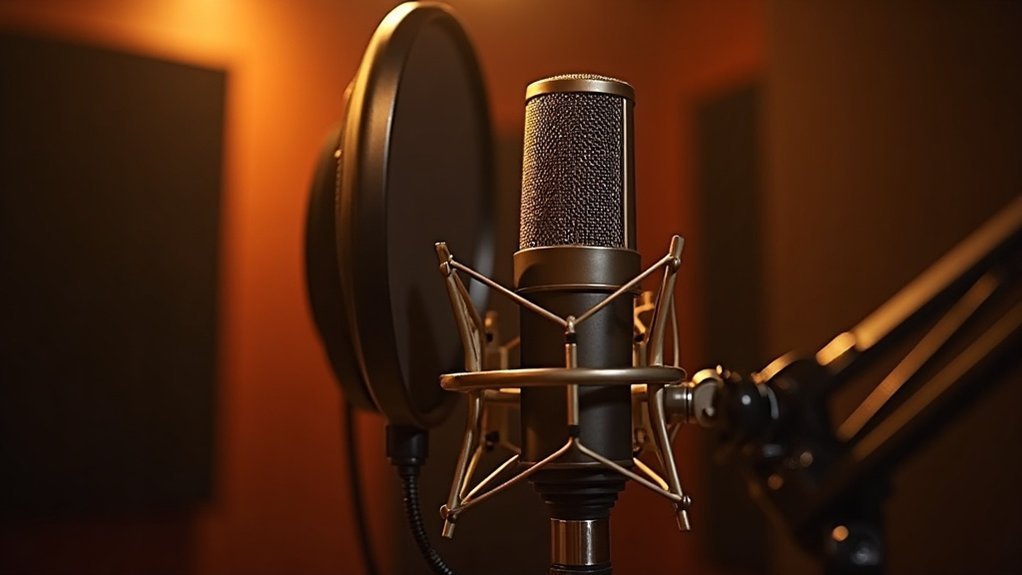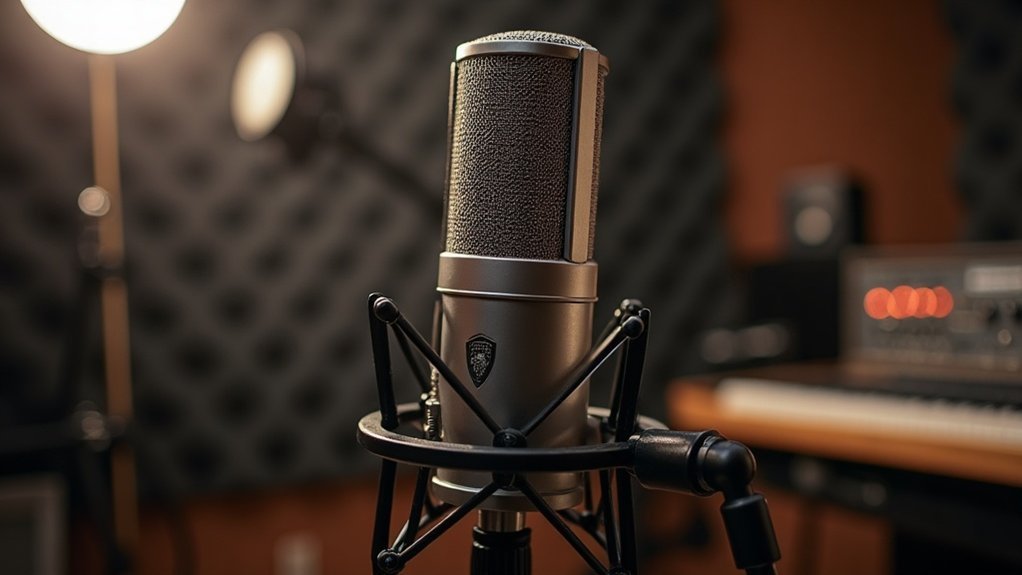
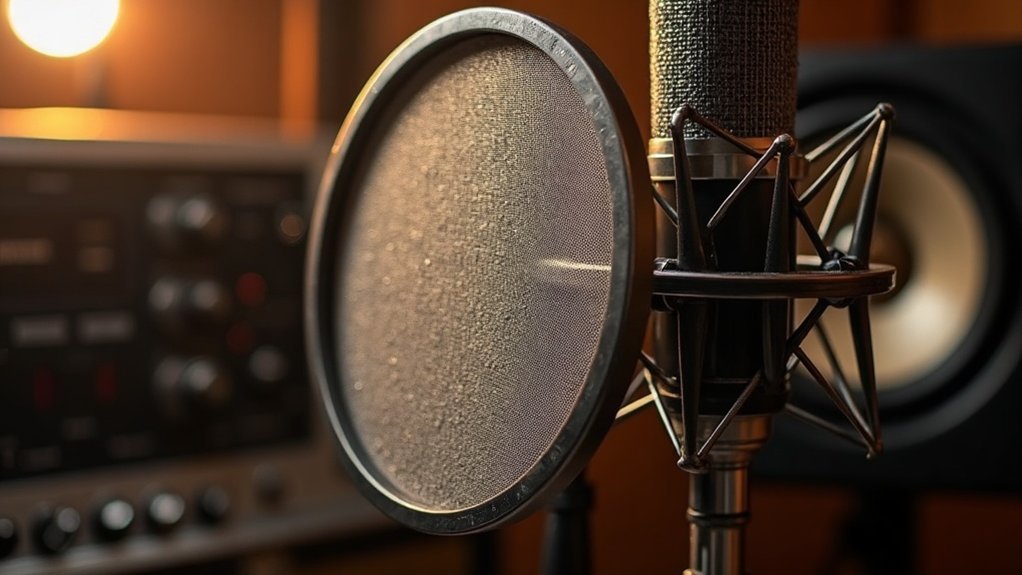
A pop filter works by redirecting airflow to reduce plosive sounds like “p” and “b,” which is essential for clear audio quality. By dissipating the acoustic energy from these bursts, a pop filter prevents distortion while allowing desired vocal frequencies to pass through. Typically made from acoustically transparent materials, this tool not only enhances audio clarity but also protects microphones from moisture. For optimal performance, position the pop filter 2-4 inches from the mic. Want to optimize your recordings further? Understanding how a pop filter works can be a game-changer, and there are key techniques and additional tips that can help you achieve the best sound possible in your podcasting or streaming setup.
Key Takeaways
- Pop filters redirect airflow, minimizing mechanical impacts on the microphone diaphragm to reduce distortion during vocal recordings.
- They utilize acoustically semi-transparent materials that allow sound frequencies to pass while dampening plosive sounds.
- By dispersing acoustic energy, pop filters break air bursts into smaller streams, preventing clipping and enhancing audio clarity.
- Proper positioning of the filter maintains optimal sound quality and minimizes proximity effects that can lead to unwanted bass buildup.
- Regular maintenance, including cleaning and proper storage, ensures the pop filter remains effective and prolongs its lifespan.
Why You Need a Pop Filter for Clear Recordings
The benefits of using a pop filter include significantly reducing plosive consonants like “p,” “b,” and “t,” which can create disruptive pops and low-frequency thumps. This enhancement in recording clarity elevates your vocal tracks, making them sound more polished and professional. Additionally, a pop filter is crucial for reducing plosive sounds, which helps maintain audio integrity and clarity. A well-placed pop filter can also improve overall sound by minimizing unwanted artifacts during recording.
Using a pop filter dramatically reduces plosive sounds, enhancing vocal clarity for polished, professional recordings.
You’ll appreciate the cleaner source audio, which simplifies post-production and reduces the need for excessive EQ adjustments. Additionally, a pop filter protects your microphone from saliva and moisture, thereby extending its lifespan. Best microphones may still capture unwanted noises, making a pop filter even more crucial for maintaining audio integrity.
By ensuring consistent dynamics, a pop filter for clear recordings**** helps maintain a high-quality listener experience, making your recordings not only clearer but also more enjoyable and engaging.
Embracing this tool is a crucial step for any creator, whether you’re podcasting, streaming, gaming, or recording music, as it ultimately leads to superior sound quality.
How Does a Pop Filter Tame Those Annoying Pops?
By redirecting airflow and breaking up sound energy, it minimizes the mechanical impact on your microphone’s diaphragm, preventing low-frequency thumps. This is crucial because controlling plosives is essential for clean vocal recordings. Additionally, the use of acoustically semi-transparent materials in pop filters enhances their effectiveness in reducing unwanted noise. A well-designed pop filter can significantly improve audio quality by ensuring that only the intended sound reaches the microphone.
Proper positioning of the filter guarantees ideal attenuation, allowing your vocal clarity to shine through without interference.
Understanding Plosive Sounds
In the realm of audio recording, particularly for creators, gamers, and musicians, close-miking amplifies these recording challenges, especially with sensitive microphones that may struggle with excessive plosive energy. The result? Distortion and decreased vocal integrity. Additionally, using a pop filter provides a significant improvement in overall recording quality, making it an invaluable tool for any recording setup. Understanding the impact of plosive sounds on recordings can further enhance your audio quality and performance.
Acoustic Energy Dispersion
While recording vocals, managing plosive sounds is essential, and pop filters excel at dispersing acoustic energy dispersion to mitigate these issues. They achieve this through acoustic diffusion, breaking concentrated bursts of air into smaller streams before reaching the microphone. By intercepting transient energy, the filter reduces the impact force on the diaphragm, preventing distortion and clipping. The porous material allows most vocal frequencies to pass while disrupting the disruptive air column. Additionally, using a pop filter helps mitigate proximity effect, which can cause unwanted bass build-up during close miking. This design not only protects the sensitive mic capsule but also guarantees that your recordings maintain clarity and richness, making pop filters an essential tool for any serious audio project. Moreover, a shock mount can further isolate the microphone from unwanted vibrations, enhancing overall sound quality. Thus, understanding acoustic energy dispersion and utilizing pop filters becomes invaluable for achieving professional sound quality in your audio projects, whether for podcasting, streaming, or music recording.
Positioning for Effectiveness
Positioning for Effectiveness
Effective positioning for effectiveness of a pop filter can significantly mitigate those annoying plosive sounds that frequently disrupt recordings. To optimize your setup, consider these key factors:
- Distance Variation: Maintain a distance of 2-4 inches between the filter and mic, and 3-6 inches from your mouth to the filter. Adjust these measurements as necessary based on your room’s acoustics to ensure effective positioning for effectiveness. Proper placement is essential for capturing clear vocal recordings.
- Filter Alignment: Ensure the filter is directly in front of the mic capsule, effectively covering its line of fire to intercept airflow. This alignment is crucial for achieving optimal effectiveness in sound quality. Additionally, using the right materials for pop filters can enhance their ability to reduce unwanted noise.
- Angle Adjustment: Slightly tilt the filter to minimize direct airflow impact. This adjustment enhances acoustic transmission and further reduces plosive sounds during vocal projection, reinforcing the principle of positioning for effectiveness.
Key Materials That Make Pop Filters Effective
Pop filters play a crucial role in enhancing audio quality during recordings, relying on a combination of specialized materials to effectively mitigate plosive sounds.
Key materials that make pop filters effective include fabric mesh, often crafted from woven nylon, which offers acoustic transparency and efficient sound diffusion. Additionally, metal screens contribute durability and precise plosive control, while their rigid structure ensures consistent performance.
Key materials like woven nylon mesh and metal screens enhance pop filters’ effectiveness, ensuring durability and precise plosive control.
Foam layers introduce airflow resistance, absorbing plosive energy effectively. Essential structural components, such as circular frames, guarantee uniform airflow across the filter, further emphasizing the key materials that make pop filters effective. Furthermore, shock mounts can also be used in conjunction with pop filters to further reduce unwanted vibrations and noise.
For those on a budget, DIY solutions using pantyhose can replicate the effectiveness of professional designs.
Regular maintenance tips, including cleaning metal screens, are essential to maintain hygiene and ensure longevity in your recording setup, making it easier for creators, gamers, and musicians to achieve high-quality sound.
Optimal Pop Filter Positioning for Best Results

- Filter Distance: Position the pop filter 2 to 4 inches from the microphone, making sure it’s centered directly in front of the mic capsule for effective plosive control.
- Vocal Positioning: Keep a mouth-to-filter distance of 4 to 6 inches. In untreated rooms, you may need to adjust and get closer for optimal results.
- Airflow Management: Angle the filter slightly to manage airflow and prevent direct blasts from hitting the mic capsule.
By implementing these techniques, you’ll enhance your recording quality while adapting to various room acoustics. Additionally, regular cleaning of your microphone can significantly improve its performance and longevity, ensuring optimal audio quality.
Proper pop filter placement is key to ensuring consistent performance, regardless of the filter material you choose.
Comparing Pop Filters to Other Microphone Accessories
When comparing pop filters to other microphone accessories, it’s vital to understand how a pop filter differs from tools like windscreens, shock mounts, and built-in grilles. A pop filter excels at reducing plosive consonants without affecting tonal quality, making it a crucial component in achieving clarity in recordings.
In contrast, a windscreen primarily dampens wind noise, which is beneficial in outdoor settings, as it serves to protect microphones from wind interference. Shock mounts are designed to isolate the microphone from vibrations, while pop filters focus specifically on controlling airflow to minimize plosives.
Built-in grilles offer basic protection for microphones but fail to eliminate strong plosives, underscoring the importance of using a pop filter for vocal precision. Furthermore, while “dead cats” are effective at blocking wind noise outdoors, pop filters truly shine in studio environments, ensuring that vocal recordings maintain their tonal integrity without alteration.
Each accessory serves a distinct purpose, making the comparison of pop filters to other microphone accessories essential for anyone looking to enhance their audio quality.
Benefits of Using a Pop Filter
Utilizing a pop filter greatly enhances your recordings by ensuring clarity and precision in audio quality.
The benefits of using a pop filter include:
- Reduction of plosives—it disperses fast-moving air, minimizing unwanted thumps and pops that can disrupt your sound.
- Enhanced intelligibility—you get clearer consonants and vowels, making your message stand out, which is crucial for creators, gamers, and musicians alike.
- Improved post-production efficiency—fewer edits and less corrective EQ lead to quicker workflows, allowing you to focus more on your craft.
Additionally, you can still use a microphone without a pop filter, but audio quality may suffer, resulting in less professional recordings.
Incorporating a pop filter into your setup is an essential step for anyone looking to optimize their audio, ensuring that the benefits of using a pop filter are fully realized in every recording session.
Common Mistakes When Using a Pop Filter?

While a pop filter can greatly improve your audio recordings, common mistakes when using a pop filter can negate its benefits.
Improper positioning, such as placing the filter too close or too far from the microphone, leads to ineffective distances and reduced plosive control. Additionally, excessive contact risks arise when you touch the filter during takes, introducing handling noise issues.
Misused pop filters often stem from misconceptions about their function, with some treating them as substitutes for windshields. Furthermore, improper alignment techniques and unstable setups can cause inconsistent protection.
Tips for Maintaining Your Pop Filter
Maintaining your pop filter is essential for ensuring peak performance and longevity. Proper care is crucial for creators, gamers, and musicians alike. To achieve this, follow these maintenance tips for maintaining your pop filter effectively:
- Establish a cleaning schedule: Clean foam filters monthly, and bi-weekly for moderate use. Deep clean every 3-4 months to keep your pop filter in optimal condition.
- Utilize proper drying techniques: Always air dry pop filters in a ventilated area, avoiding direct heat to prevent warping, which can affect your pop filter’s efficiency.
- Adopt smart storage solutions: Store your pop filter in a clean, dust-free environment and detach it from the stand to minimize damage and ensure longevity.
Regular inspection methods will help catch any wear or tear early, making it easier to maintain your pop filter in prime condition.