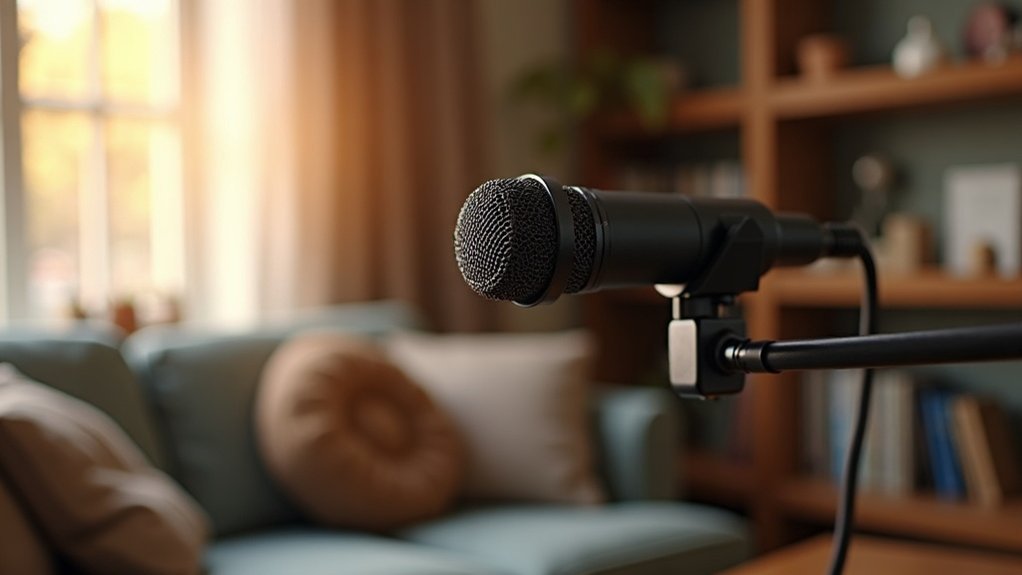
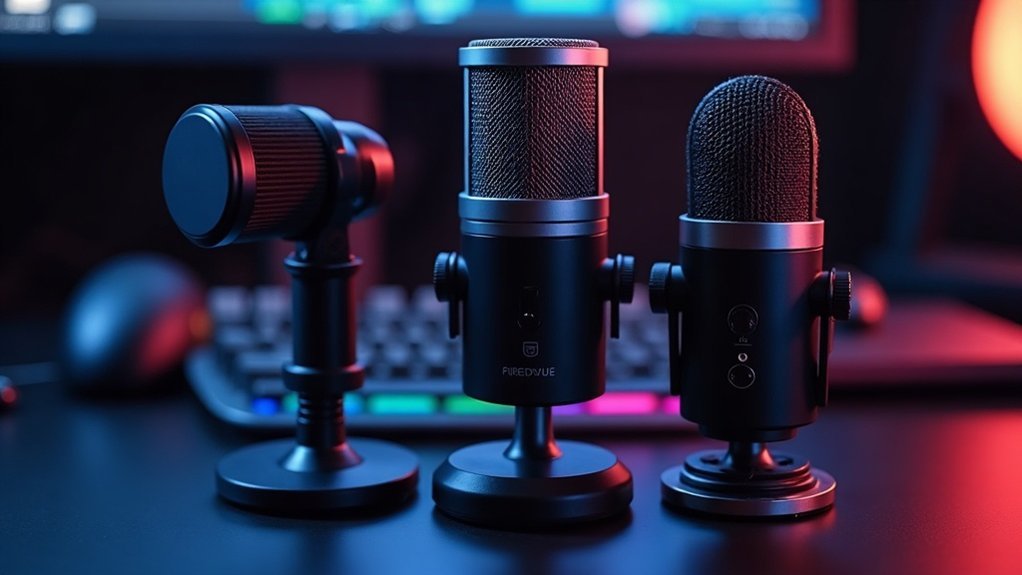
When selecting the best microphone type for gaming, you’ll want a dynamic cardioid USB microphone because it isolates your voice and rejects ambient noise without requiring an external audio interface. Understanding which microphone type is good for gaming is crucial for competitive performance.
Dynamic mics excel in noisy environments with superior voice clarity—essential for competitive callouts. Their passive design delivers rugged performance with directional rejection capabilities that rival expensive soundproofing solutions. This type of microphone for gaming ensures your teammates hear crisp callouts even in chaotic matches.
USB connectivity offers plug-and-play integration with integrated preamps and converters, making the right gaming microphone type accessible even for budget-conscious streamers. The best microphone type for gaming**** combines affordability with performance, eliminating the need for external gear.
However, your ideal microphone choice for gaming depends on your room acoustics, budget, and skill level—factors that’ll shape your best setup. Whether you’re streaming, recording content, or competing, selecting the correct microphone type ensures professional-quality audio that won’t break the bank.
Key Takeaways
- Dynamic cardioid microphones excel in gaming by isolating voice and rejecting ambient noise from keyboards and fans.
- USB dynamic mics offer plug-and-play simplicity, ideal for casual gamers in shared living spaces without external equipment.
- Condenser microphones deliver superior detail in competitive gaming but require treated rooms to minimize background noise interference.
- Cardioid patterns provide professional-grade voice isolation during intense matches, enabling clear team callouts without expensive soundproofing.
- Budget-friendly dynamic USB models under $100 balance noise management and performance for most gaming setups and skill levels.
USB or XLR: Choosing Your Gaming Microphone Connection
When you’re shopping for a gaming microphone, the first decision you’ll face is choosing your gaming microphone connection** between USB and XLR** connectivity—and this choice fundamentally shapes your setup’s architecture, expandability, and ease of implementation.
USB or XLR connectivity each offers distinct advantages. USB advantages include plug-and-play deployment with integrated preamps and converters, delivering solid audio quality for most gaming needs. XLR flexibility enables modular expansion, allowing you to upgrade individual components independently.
When choosing between USB and XLR for your gaming setup, consider setup simplicity, which favors USB for immediate operation, while XLR demands interface configuration. XLR microphones require an external audio interface to convert the analog signal for use with your gaming PC.
Regarding audio quality, both formats perform capably in matched setups. Your upgrade potential matters significantly: USB suits single-source gamers seeking straightforward solutions, while XLR scales for multi-microphone, professional workflows.
The gaming microphone connection choice ultimately depends on your current needs and future ambitions. Assess your gaming requirements, streaming goals, and growth trajectory accordingly to select the connectivity option that best supports your content creation journey.
Dynamic or Condenser: Which Captures Your Voice Best
Why does microphone type matter more than connection choice? When exploring which captures your voice best, microphone design fundamentally shapes your voice capture.
Dynamic mics excel at voice isolation and ambient noise rejection—critical for untreated gaming spaces. They’re passive, rugged, and require more gain but deliver focused, warmer tone. Software advancements have further improved their noise cancellation capabilities, making them even more effective for gaming environments. Dynamic microphones are particularly valued in live performance settings where durability and feedback rejection are essential.
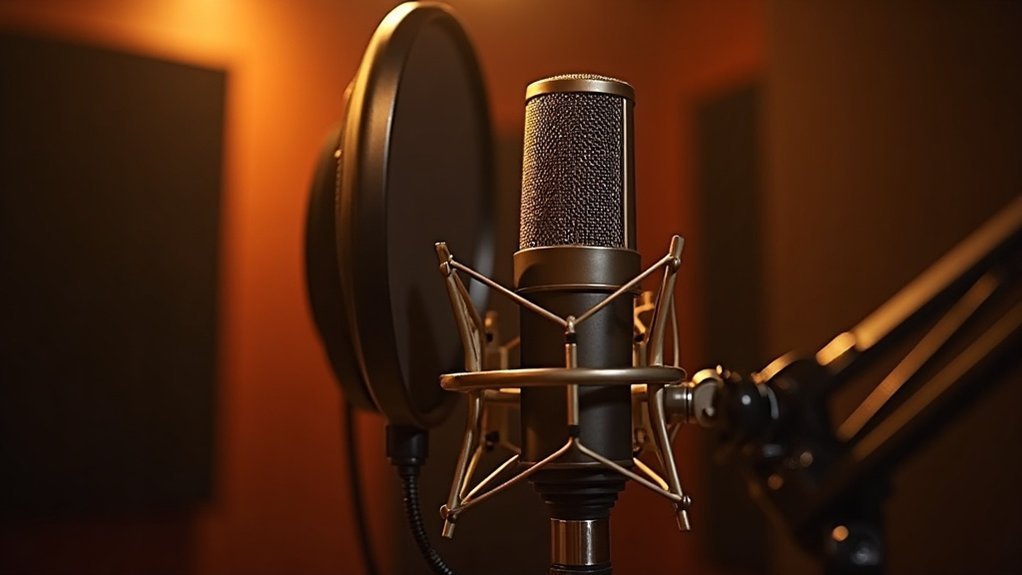
Condenser mics offer superior sensitivity and wider frequency response, capturing vocal detail brilliantly in quiet environments. However, they’re susceptible to ambient noise and require phantom power. The XCM-50 condenser microphone allows flexible positioning between 10-20 cm from the speaker, making it ideal for streamers who want to stay out of frame.
Understanding the distinction between dynamic or condenser microphones helps you make an informed choice for your specific setup. Your decision hinges on room treatment: noisy spaces demand dynamic isolation; controlled rooms benefit from condenser clarity.
For creators, gamers, and streamers working in less-than-ideal acoustic environments, dynamic or condenser—the fundamental question—often tips toward dynamic solutions.
Conversely, musicians and podcasters in treated spaces find that which captures your voice best typically favors condenser performance for its superior detail and frequency response.
Neither’s universally superior—your environment determines the better fit.
Why Cardioid Patterns Win for Gaming Setups
The cardioid’s 131° pickup angle prioritizes frontal vocal sources while attenuating lateral and rear signals by roughly 6dB at 90°. This directional specificity guarantees superior voice clarity in gaming environments where Discord communication demands intelligibility. The sensitivity zones around the microphone capsule are engineered to reject unwanted sounds coming from the sides and back. Cardioid microphones achieve this directionality through external openings and internal pathways that affect how the diaphragm responds to sound waves from different angles. Unlike omnidirectional microphones, which capture sound equally from all directions, cardioid patterns excel at isolating your voice in untreated spaces.
When evaluating why cardioid patterns win, understand that this polar pattern engineering provides professional-grade isolation rather than expensive soundproofing—a critical advantage for gaming setups operating on budget constraints. Competitive gamers and streamers who can’t compromise on communication precision consistently choose cardioid microphones specifically because winning patterns don’t require acoustic panels or room treatment.
The reason cardioid patterns win for gaming extends beyond noise rejection. Their focused pickup ensures teammates hear your callouts with crystal clarity during ranked matches, while background noise stays suppressed.
This makes cardioid the standard choice across affordable microphone options designed for gaming streamers building their first professional setups.
For gaming environments where communication precision matters as much as game performance, understanding why cardioid patterns win transforms your entire broadcast quality without expensive studio modifications.
Budget and Noise: Finding Your Ideal Price Range
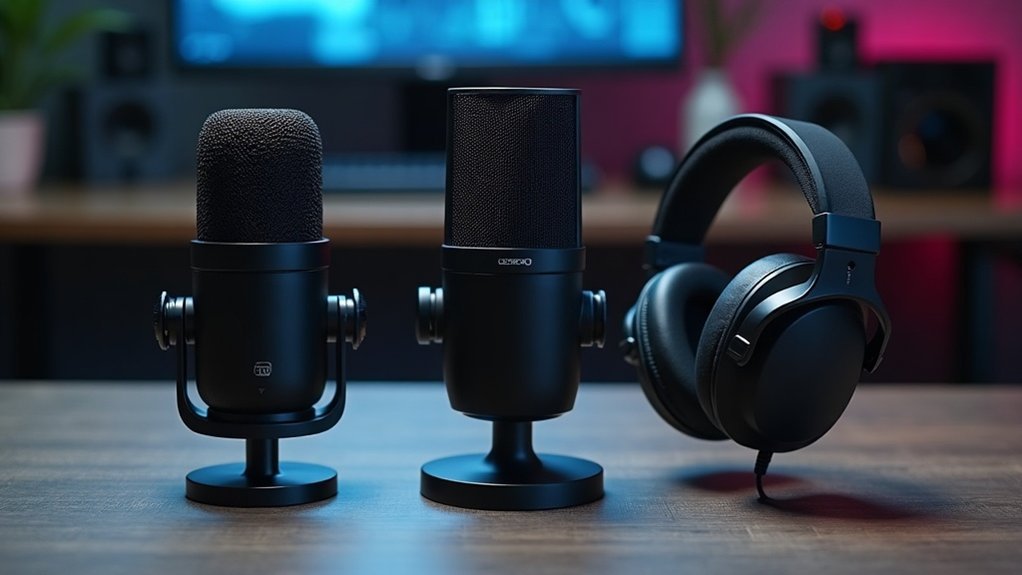
When finding your ideal price range**, the practical challenge shifts to matching microphone cost with your room’s noise profile and setup constraints. Under $100, you’ll find dynamic USB models delivering superior noise management** in shared spaces—dorm rooms, keyboard-heavy setups, fan-laden environments.
Budget and noise considerations become apparent: condensers dominate sub-$50 kits for treated rooms, while dynamics justify higher spend through rejection efficiency. Hybrid USB/XLR options around $55–$80 preserve upgrade paths without immediate interface purchases.
For content creators, gamers, and streamers navigating budget and noise trade-offs, software noise gates and AI suppression extend hardware limitations further. Your streaming setup’s environment dictates tier selection; noisy gaming or podcast recording spaces warrant directional rejection investment over cosmetic features alone. Condenser microphones like the Logitech Blue Yeti excel in controlled environments with their crisp audio detail, making them ideal for treated gaming rooms. The TONOR TC310+ USB Mic offers tap-to-mute control for quick audio adjustments during gameplay sessions.
When finding your ideal price range for podcasting or recording, prioritize rejection efficiency as a core specification rather than aesthetic polish.
The relationship between budget and noise management proves critical across affordable microphone tiers. Whether you’re building a gaming setup, podcast station, or musician’s recording space, understanding how your ideal price range aligns with acoustic challenges separates functional purchases from frustrated returns.
Investment in directional rejection at budget-friendly price points delivers measurable improvements in audio quality for creators working in less-than-ideal acoustic environments.
Select Your Gaming Mic by Room and Skill Level
Selecting your gaming mic by room and skill level hinges on matching acoustic environment and technical proficiency—two variables that dramatically shift specification priorities. In noisy rooms, you’ll prioritize dynamic cardioid mics with USB connectivity; their rejection characteristics counteract poor room acoustics.
Conversely, silent environments justify condensers’ sensitivity, revealing vocal nuance without ambient pollution. Your skill progression determines complexity tolerance: beginners benefit from plug-and-play USB simplicity, while intermediates leverage desktop condensers with external arms for consistency. Advanced users justify XLR systems with dedicated interfaces, optimizing polar patterns and frequency response.
When choosing a gaming microphone by room and skill level, this hierarchical approach guarantees you’re not overspending on capabilities your space can’t leverage or your proficiency requires. Whether you’re selecting a gaming mic for a bedroom, basement, or professional streaming setup, matching these two factors prevents costly missteps. Budget-conscious gamers often find excellent value in options like the Krom Kimu Pro, which delivers professional-grade condenser microphone performance at entry-level pricing.
A beginner in a treated studio space doesn’t need the same specifications as an advanced user in an untreated basement—and that’s precisely why selecting your gaming mic by room and skill level matters. Cardioid capsule design effectively reduces background noise in suboptimal acoustic environments, making it particularly valuable for casual gamers in shared living spaces.
This framework applies across every stage of your buying journey, from initial research through setup optimization. Your gaming microphone selection should reflect both where you’ll use it and how confidently you can troubleshoot settings.
Room acoustics and technical skill level are equally weighted factors that determine whether you’ll achieve broadcast-quality audio or struggle with muddy, inconsistent captures that undermine your streaming or recording efforts.