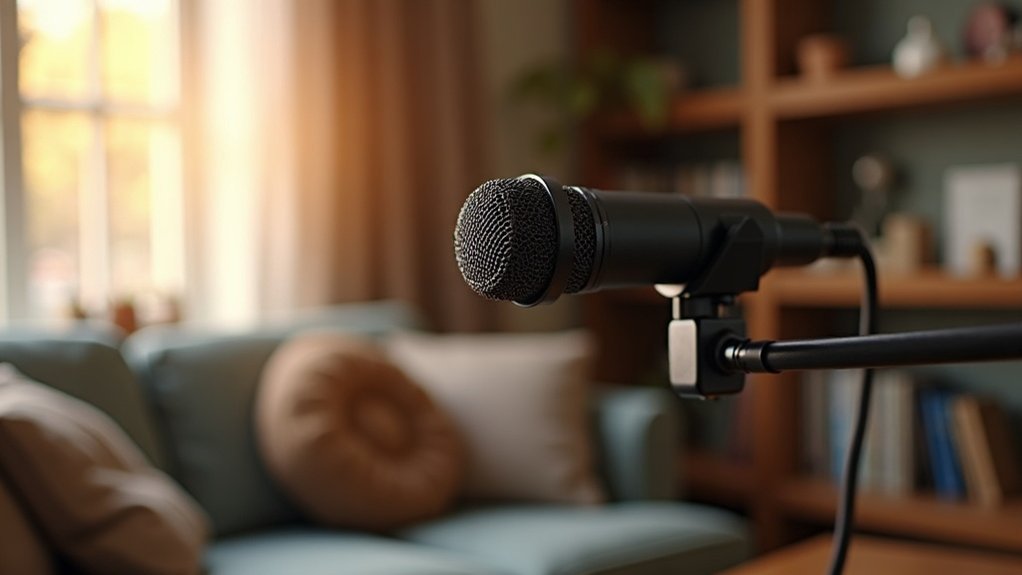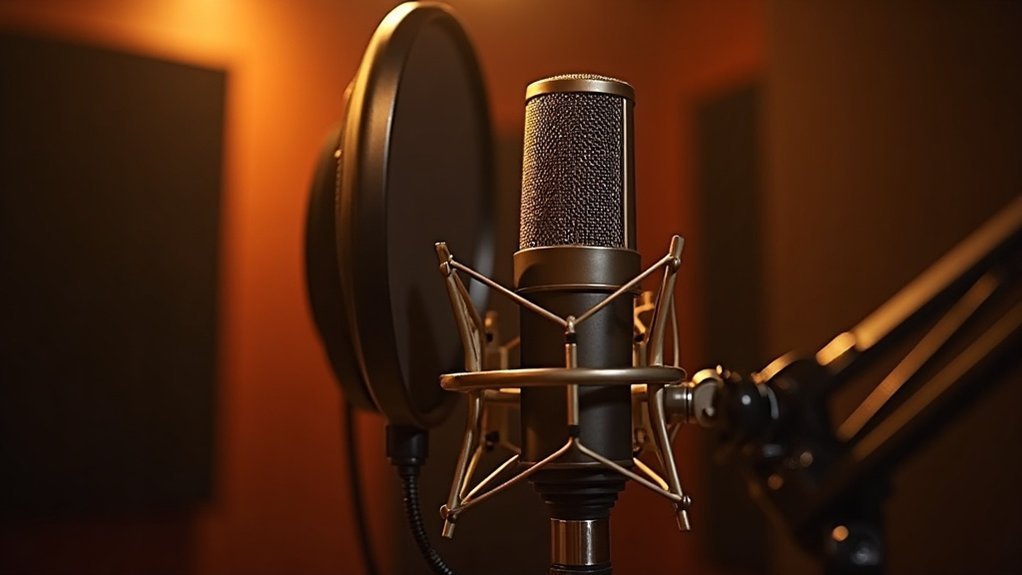
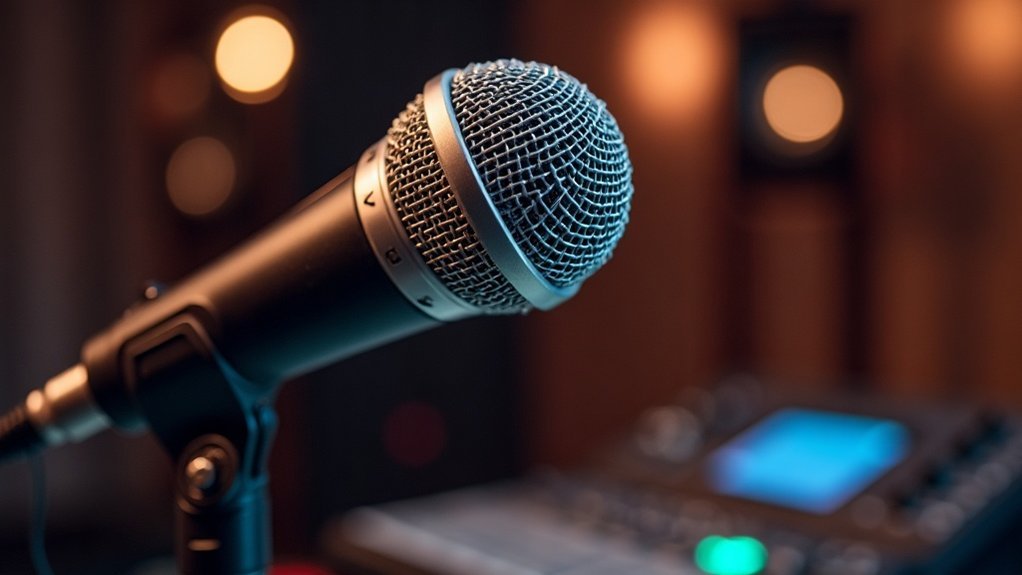
A dynamic microphone is a robust audio device that excels in capturing sound by converting sound waves into electrical signals through a moving diaphragm within a magnetic field. This setup generates voltage proportional to the motion of the diaphragm, requiring no external power source. Dynamic microphones are particularly ideal for live performances and studio recordings, thanks to their durability and ability to handle high sound levels. Whether you’re a creator, gamer, or musician, understanding the functionality of a dynamic microphone can enhance your audio experience. If you want to explore key components and applications further, there’s much more to uncover about how dynamic microphones can elevate your projects.
Key Takeaways
- Dynamic microphones convert sound waves into electrical signals using a diaphragm and voice coil within a magnetic field, requiring no external power.
- They are durable and versatile, making them ideal for live performances, podcasting, and studio recordings.
- Their frequency response is limited, with a roll-off above 12–16 kHz, affecting high-frequency capture.
- Dynamic mics typically have lower output levels, necessitating careful preamp selection to achieve optimal sound.
- They effectively isolate sound, minimizing background noise and room reflections, ensuring focused audio capture.
What Is a Dynamic Microphone and How Does It Work?
When exploring what a dynamic microphone is and how it works, it’s essential to note its operation involves a moving conductor, like a coil or ribbon, positioned within a static magnetic field. This setup generates voltage that’s proportional to the conductor’s motion. As sound waves hit the diaphragm of the dynamic microphone, it vibrates, effectively encoding the audio waveform. This movement induces a low-level analog voltage that mirrors both the frequency and amplitude of the sound. Dynamic microphones operate on the principle of electromagnetism, which is crucial for their functionality. Unlike other types of microphones, dynamic microphones do not require external power, making them more convenient for various applications.
Renowned for their durability and versatility, dynamic microphones are particularly suited for live sound applications, making them a popular choice among creators, musicians, and professionals in need of robust performance. Their ability to handle high SPL levels without distortion is particularly beneficial in high-energy environments.
Renowned for their durability and versatility, dynamic microphones excel in live sound, making them a top choice for professionals and creators alike.
Understanding what a dynamic microphone is and how it works can greatly enhance your decision-making process when choosing the right microphone for podcasting, streaming, or recording.
Key Components of Dynamic Microphones Explained
Dynamic microphones consist of several key components that work together to convert sound into electrical signals effectively. Understanding the key components of dynamic microphones is essential for anyone looking to optimize their audio experience, whether for podcasting, streaming, or recording. The diaphragm, typically made from materials like Mylar, serves as the primary transducer. Its design significantly influences sensitivity and frequency response, which are crucial for capturing clear sound. Dynamic microphones are particularly valued for their live sound performance, making them a popular choice among musicians and audio professionals. These microphones operate using the Moving Coil Principle, which ensures efficient sound conversion.
The voice coil, a finely wound conductor, interacts within a magnetic circuit created by a strong permanent magnet. This interaction generates the electrical signal that is fundamental to the microphone’s function. Additionally, the transformer plays an essential role in matching impedance and enhancing signal efficiency, ensuring that the microphone performs at its best.
Here’s a breakdown of the components:
| Component | Function | Impact |
|---|---|---|
| Diaphragm | Converts sound to motion | Affects sensitivity |
| Voice Coil | Generates electrical signal | Influences output level |
| Magnetic Circuit | Stabilizes magnetic field | Guarantees consistent response |
Moving-Coil vs Ribbon Microphones: What’s the Difference?
When comparing moving-coil and ribbon microphones, you’ll find key differences in their design and construction that affect performance characteristics. Moving-coil mics feature a diaphragm and voice coil, while ribbon mics utilize a thin metal ribbon as both diaphragm and conductor. These distinctions also influence their common use cases, with each type excelling in specific applications based on sensitivity and tonal qualities. Ribbon microphones, traditionally considered a dynamic microphone, are known for their bidirectional polar pickup pattern, which enhances their versatility in various recording settings. Additionally, ribbon mics are typically less durable due to their fragile diaphragms, making careful handling essential during use. The unique charm of ribbon microphones lies in their natural sound reproduction, which often captures the warmth and depth of audio in a way that moving-coil mics may not.
Design and Construction Differences
While both moving-coil and ribbon microphones serve the same fundamental purpose of capturing sound, their design and construction differences significantly impact performance and application. Understanding these design and construction differences is crucial for creators, musicians, and professionals looking to choose the right microphone for podcasting, streaming, or recording. Dynamic microphones, for instance, are often preferred for live sound due to their durability and feedback resistance, which makes them particularly effective in high-pressure environments.
| Feature | Moving-Coil Microphone | Ribbon Microphone |
|---|---|---|
| Transducer Principle | Electromagnetic induction in a coil | Electromagnetic induction in a ribbon |
| Diaphragm Design | Dome or cone-shaped | Flat, corrugated strip |
| Output Levels | Higher, often transformerless | Lower, requires step-up transformer |
| Frequency Response | Limited by heavier mass | Superior due to lower mass |
These mechanical differences in design and construction influence sound wave tracking and impedance matching, ultimately affecting overall audio quality. By recognizing these distinctions, creators and professionals can make informed decisions when selecting microphones tailored to their specific needs. Additionally, dynamic microphones are known for their rugged design, making them ideal for live applications and loud sound sources.
Performance Characteristics Comparison
When examining this performance characteristics comparison, it’s evident that moving-coil dynamics exhibit a colored frequency response with a noticeable roll-off above 12–16 kHz. In contrast, ribbon microphones provide an extended low end and a smoother high-end roll-off, making them suitable for vocal recording applications.
In terms of sensitivity output, moving-coil mics generate a stronger raw signal compared to ribbons, which often require a step-up transformer. Additionally, moving-coil microphones typically feature low output levels, necessitating careful preamp selection to ensure optimal performance. Ribbon microphones, due to their low mass ribbon, respond quickly to transients, making them particularly effective for capturing percussive sounds.
However, ribbons excel in transient response, capturing micro-dynamics with remarkable detail. Their figure-8 polar pattern offers excellent off-axis behavior, maintaining tonal consistency. This aspect stands in stark contrast to the less accurate off-axis response typically seen in moving-coil dynamics.
Common Use Cases
Choosing between moving-coil and ribbon microphones often hinges on specific use cases, as each type excels in different scenarios.
Affordable microphones for podcasting, streaming, gaming, and recording** play a crucial role in this decision-making process. Moving-coil mics shine in live environments, delivering vocal clarity and effective ambient rejection**, making them ideal for concerts and public speaking. They handle high-SPL sources like drums and guitar cabinets, thriving in untreated, noisy spaces.
Conversely, ribbon microphones excel in controlled studio settings, capturing nuanced tones and rich ambience but lack the durability of their dynamic counterparts. For content creation, particularly when considering affordable microphones for podcasting, moving-coil microphones are preferred for their ruggedness and reliability, ensuring clear sound in dynamic situations without sacrificing quality.
Dynamic microphones are often a suitable choice for singing due to their ability to minimize background noise and handle high sound pressure levels effectively.
Choosing the right microphone type based on your specific needs can elevate your audio experience, whether you’re gaming, streaming, or recording.
Advantages of Dynamic Microphones for Live and Studio Use
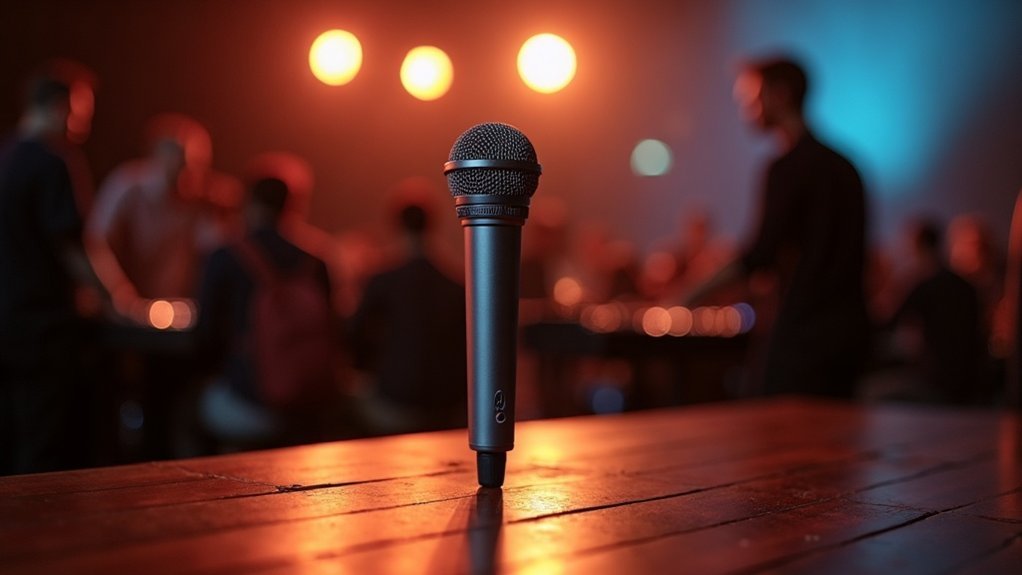
Dynamic microphones offer notable advantages in both live and studio settings due to their durability and robustness, which withstands demanding conditions.
Their ability to handle high sound pressure levels guarantees clarity and precision, even in loud environments.
Additionally, minimal self-noise characteristics make them ideal for capturing clean audio without unwanted interference. Furthermore, dynamic microphones are often favored for their suitability for vocal recording, making them a reliable choice in diverse scenarios.
Durability And Robustness
Dynamic microphones excel in these aspects, offering exceptional performance longevity and stage resilience thanks to their rugged design. Here are some key advantages of their durability and robustness:
- Simplified internal architecture minimizes failure points, enhancing reliability.
- Thick metal bodies withstand drops and impacts, ensuring longevity.
- Environmental resilience tolerates humidity and temperature changes, making them ideal for various settings.
- Long lifespan reduces maintenance demands, allowing you to focus on your craft.
These features guarantee that dynamic microphones endure the challenges of both live and studio environments, emphasizing their durability and robustness. Additionally, their stage resilience allows them to handle high sound pressure levels without distortion, making them a preferred choice for many professionals.
This way, you can concentrate on your performance without worrying about equipment reliability, knowing your microphone is built to last.
Excellent Sound Pressure Handling
Microphones designed for durability naturally align with the demands of high sound pressure levels (SPL) encountered in both live and studio environments. Their excellent sound pressure handling enables you to capture aggressive sounds without distortion, making them ideal for close-miking loud sources like drums and guitar cabinets.
With a high SPL tolerance, you minimize the risk of overload, enhancing clarity and intelligibility in high-volume settings. Additionally, their lower sensitivity reduces unwanted noise, improving gain-before-feedback.
This combination of microphone durability and excellent sound pressure handling simplifies your setup and guarantees consistent, reliable sound in both performances and recordings. This ensures that creators, gamers, and musicians can maximize their audio quality without compromise. Furthermore, dynamic microphones are particularly well-suited for live performance scenarios due to their robust design and sound handling capabilities.
Minimal Self-Noise Characteristics
Self-noise characteristics are an essential factor in microphone performance, especially in live and studio settings. When considering minimal self-noise characteristics, dynamic microphones excel in self-noise reduction, making them ideal for various applications. Here’s why:
- Virtually No Electronic Self-Noise: Their passive design eliminates internal preamps, effectively reducing potential noise sources.
- Low Sensitivity: This feature limits the pickup of ambient noise, allowing for clearer recordings, a crucial aspect of minimal self-noise characteristics.
- Improved Signal-to-Noise Ratio: Close-miking techniques amplify the primary sound source relative to background noise, further enhancing the minimal self-noise characteristics.
- Consistent Performance: Fewer electronic components lead to minimal drift over time, ensuring reliable performance in various environments.
Additionally, understanding self noise is vital for selecting the right microphone, as it can significantly impact audio quality. These minimal self-noise characteristics guarantee that dynamic microphones deliver clarity, even in challenging situations, ultimately enhancing your audio experience for podcasting, streaming, or recording.
What Are the Downsides of Dynamic Microphones?
Although dynamic microphones are popular for their durability and versatility, they come with several downsides that can impact recording quality.
Their lower sensitivity requires higher preamp gain, which can introduce noise and diminish signal integrity. You might notice limited frequency response, especially in high frequencies, affecting audio clarity and sound reproduction.
Additionally, dynamic mics often rely on close-miking techniques, which can restrict mic positioning and make them less effective for nuanced performances. The proximity effect can lead to muddiness, and their slower transient response may mask subtle details.
Dynamic mics often necessitate close-miking, limiting positioning and potentially obscuring subtle details due to proximity effect and slower transient response.
These downsides of dynamic microphones can hinder dynamic range and overall accuracy in your recordings, making it essential for creators, gamers, and musicians to weigh these factors when choosing the right mic for their needs. Furthermore, understanding the differences between cardioid and omnidirectional mics can help you make a more informed decision tailored to your specific recording environment.
Ideal Use Cases for Dynamic Microphones in Audio Production
Dynamic microphones excel in various audio production scenarios, making them a go-to choice for many professionals. Here are some ideal use cases for dynamic microphones in audio production:
- Live Vocals: Perfect for stage performances in loud venues, dynamic microphones offer high SPL handling and effective noise reduction, making them essential in live settings.
- Podcasting Applications: These microphones enhance vocal clarity while suppressing background noise, making them ideal for home studios and podcasting setups.
- Studio Recordings: Dynamic microphones are excellent for capturing instruments like drums and brass, thanks to their impressive transient response, making them invaluable in studio environments.
- Sound Isolation: They’re particularly effective in untreated environments, minimizing room reflections and ensuring focused sound capture for various audio production needs.
Dynamic microphones often feature a cardioid pickup pattern, which helps further isolate the sound source from unwanted noise.
With these dynamic advantages, microphones of this kind are invaluable for musicians and content creators alike, ensuring high-quality audio across different applications.
How to Connect and Power Dynamic Microphones
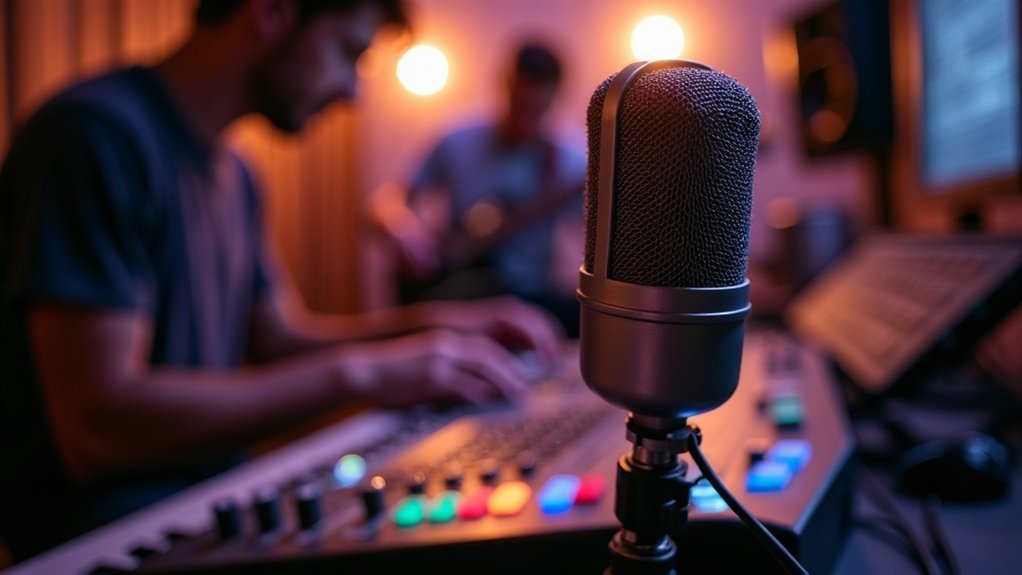
Connecting and powering dynamic microphones is essential for achieving peak audio quality in various setups. To ensure optimal performance, use balanced XLR cables for noise resistance when connecting your mic to a mixer or audio interface.
Proper gain staging is crucial; adjust levels until they approach 0 dB without clipping. Remember, dynamic mics don’t require phantom power, so make sure it’s disabled to avoid any potential issues.
For computer connections, it’s advisable to use an audio interface rather than direct 3.5 mm mic inputs, as the latter can introduce unwanted noise.
Position your mic securely and set your device volumes to minimum during connections to prevent pops and other audio artifacts. Regularly check connections and levels for ideal monitoring options as you explore how to connect and power dynamic microphones effectively.
Additionally, understanding the differences between USB and XLR microphones can help you choose the best setup for your needs. Following these safety precautions will help ensure a smooth setup, maximizing your experience whether you’re podcasting, streaming, or recording.
Tips for Choosing the Right Dynamic Microphone for Your Needs
When choosing the right dynamic microphone for your needs, there are several factors to consider to ensure it aligns with your specific requirements. Here are key points to guide your choice when selecting the right dynamic microphone:
- Use Case: Make sure to match the mic to your primary source—whether it’s vocals, drums, or instruments, the right dynamic microphone will enhance your sound.
- Polar Pattern: Opt for a cardioid pattern for vocals, while a supercardioid may offer tighter isolation for instruments, ensuring you get the best performance from your dynamic microphone. Understanding polar patterns can help you make an informed decision based on your recording environment.
- Sensitivity & Gain: It’s essential to guarantee sufficient gain from your preamp; dynamic microphones typically require around 60 dB, so choose wisely to avoid sound issues.
- Sound Signature: Look for a smooth frequency response that complements your audio style, as this can significantly impact the effectiveness of the right dynamic microphone for your projects.