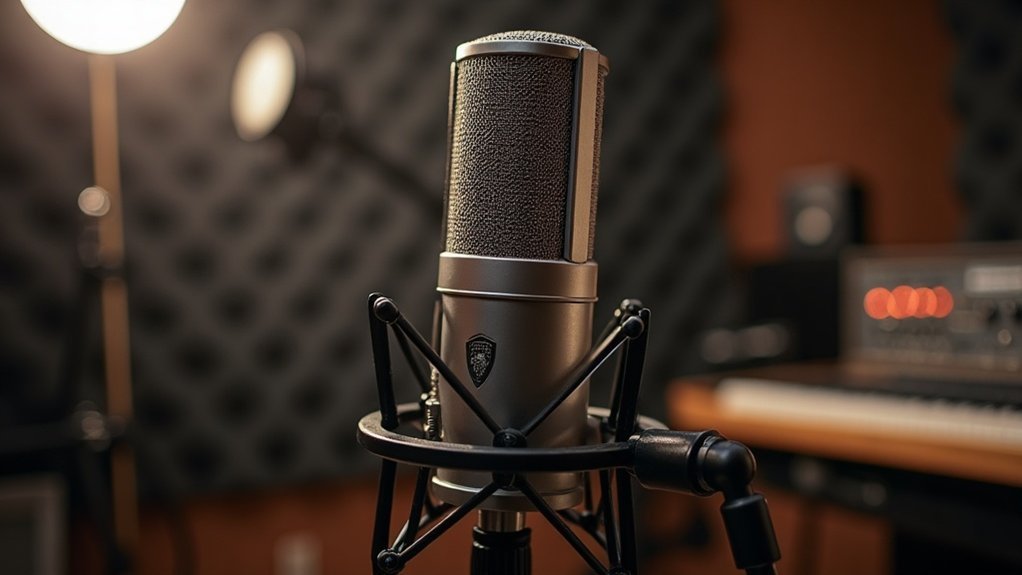
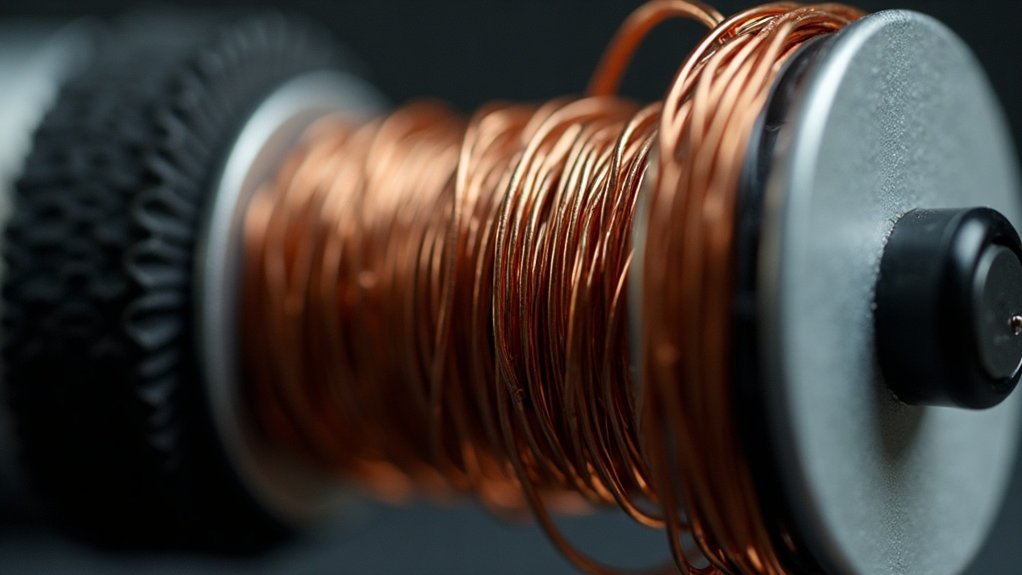
Your dynamic microphone generates its own voltage passively—no external power needed. When sound waves hit the diaphragm, you’re moving a coil through a fixed magnetic field, which induces electrical current via electromagnetic induction. This is precisely why dynamic microphones do not need power, making them ideal for creators on a budget.
This self-generating mechanism eliminates the need for phantom power or batteries. Unlike condensers requiring 48V for capsule polarization and preamp circuitry, dynamics convert acoustic energy directly into usable signal. The reason dynamic mics don’t require power is fundamentally rooted in their electromagnetic design—no external voltage sources, no battery drain, no complicated power supplies cluttering your streaming or recording setup.
For podcasters and gamers seeking affordable options, understanding why dynamic microphones don’t need power helps you avoid unnecessary equipment costs. You can set up instantly without phantom power infrastructure, making these mics perfect for portable streaming rigs or home recording studios. The fact that dynamic microphones require no power means lower operational costs and simpler cable management across your entire setup.
However, certain active variants complicate this straightforward picture. Some modern dynamics incorporate onboard preamps or active switches that do require phantom power or USB connectivity, so always verify specifications before purchasing.
Key Takeaways
- Dynamic microphones generate voltage passively through electromagnetic induction when the diaphragm and coil move in a magnetic field.
- The self-generating output directly represents acoustic motion, eliminating the need for external power sources or amplification circuits.
- Balanced XLR wiring prevents current flow through the transducer, making dynamic mics immune to phantom power interference.
- Unlike condensers requiring external power for capsule polarization, dynamics function entirely through mechanical-to-electrical energy conversion without electronics.
- This passive design simplifies setup, reduces equipment costs, and ensures reliable operation in live performance and budget-conscious applications.
How Moving Coils Generate Signal Without Power
You’re fundamentally operating a miniature electromagnetic generator: acoustic pressure oscillates your diaphragm, your coil translates that motion through the fixed magnetic field, and electromagnetic induction produces your signal. Like velocity transducers used in turbomachinery monitoring, the self-generating output directly represents the rate of motion without requiring conversion or external power sources. The output voltage produced depends on the interaction of magnetic field strength, coil length, and velocity of the moving conductor. This robust design makes dynamic microphones particularly well-suited to live performance environments where reliability and durability are essential.
The mechanics of how a moving coil generates signal without power means no amplification, no batteries, and no external power sources are required—just pure mechanical-to-electrical conversion. This efficiency is why dynamic microphones remain the go-to choice for podcasters and streamers seeking reliable, self-powered recording solutions.
Dynamic microphones convert mechanical energy directly into electrical signals—no batteries, no phantom power, just pure electromagnetic efficiency.
This is precisely how moving coils can generate signal without power: the coil’s movement through the magnetic field induces voltage continuously as long as acoustic energy drives it.
For professionals and content creators setting up recording rigs, understanding this self-generating principle explains why dynamic microphones deliver consistent performance in any environment without requiring phantom power or additional equipment.
Why Phantom Power Won’t Harm Your Dynamic Mic
This balanced wiring topology guarantees no current flows through your transducer, so phantom power doesn’t alter capsule mechanics or signal generation. Your dynamic microphone‘s sound quality stays constant regardless of phantom power presence.
For affordable microphones used in podcasting, streaming, and recording, this design principle is critical. Industry standards specifically prevent interaction between passive coil transducers and DC voltage, meaning phantom power won’t harm dynamic microphones regardless of your setup. However, premium microphones are specifically engineered to resist any potential phantom power damage that budget alternatives might experience. Properly wired dynamic microphones maintain symmetrical wiring which prevents any current flow through the moving coil contacts and housing. Phantom power is typically supplied by audio interfaces and mixing consoles to support microphones that require DC voltage for their preamps or active circuitry.
Whether you’re using budget-friendly options or professional gear, you’re protected by proper balanced XLR architecture.
Understanding why phantom power won’t harm your dynamic mic gives creators, gamers, musicians, and professionals confidence when connecting equipment to audio interfaces or mixing consoles.
The balanced XLR architecture ensures phantom power won’t harm dynamic microphone performance—no tonal compromise, no performance degradation, just transparent operation.
This reliability makes dynamic mics an excellent choice for anyone building an affordable recording setup, whether you’re just starting your podcasting journey or upgrading your gaming streaming rig.
Why Condensers Need Power But Dynamics Don’t
The fundamental difference lies in transducer architecture: your dynamic mic generates voltage passively through electromagnetic induction when its moving coil vibrates in a magnetic field, while a condenser mic’s diaphragm-backplate capacitor must maintain a stable electrical charge to convert sound into a usable signal.
Dynamic mics generate voltage passively through electromagnetic induction, while condensers rely on maintaining electrical charge between their diaphragm and backplate.
Understanding why condensers need power but dynamics don’t is critical when choosing between these microphone types for your recording setup. Your condenser requires external power for three critical functions:
- Capsule polarization—establishing the electric field between diaphragm and backplate
- Impedance conversion—active FET buffering reduces prohibitively high output impedance
- Preamplification—boosting weak capsule signals before transmission down the cable
This is precisely why condensers need power sources like phantom power from your audio interface or mixer. The reason condensers need power fundamentally comes down to their capacitive design, which contrasts sharply with passive dynamic operation. The internal preamplifier within condensers boosts the signal for clarity before it travels down your microphone cable.
Your dynamic’s self-powered design eliminates these requirements entirely. This distinction matters significantly for content creators, streamers, and musicians evaluating microphone options. P48 phantom power standardizes the power supply from mixing desks at 48 volts via standard microphone cables.
Whether you’re podcasting on a budget or setting up a gaming stream, knowing why condensers need power helps you understand cable routing, interface requirements, and overall system compatibility.
For affordable recording solutions, dynamics offer simpler setups without phantom power infrastructure, while condensers deliver superior sensitivity and frequency response once you’ve invested in proper powering equipment.
Can You Use Phantom Power on a Dynamic Microphone?

How does phantom power interact with your balanced dynamic microphone?
You can safely use phantom power on a dynamic microphone—the standard 48V applies equally to pins 2 and 3, preventing coil current flow.
Modern microphone types are engineered to ignore phantom power entirely, making it one of the most misunderstood aspects of affordable microphone setup.
For creators, gamers, musicians, and professionals investing in budget-friendly mics for podcasting, streaming, gaming, and recording, understanding whether you can use phantom power on a dynamic microphone is essential knowledge.
The short answer: yes, but with caveats.
Can you use phantom power on a dynamic microphone safely? Absolutely—when conditions are ideal.
However, miswired XLR cables or defective equipment create dangerous imbalances, risking transformer damage and ruining your recording setup. BBC studios demonstrate that permanent phantom power can be safely maintained in professional environments without incident.
Always verify your specific microphone’s manual before deployment, especially ribbon variants that genuinely require phantom power disabled.
Best practices when using phantom power on a dynamic microphone:
- Connect all gear before enabling phantom power
- Disable phantom power before unplugging cables
- Use quality balanced cabling—this remains non-negotiable
- Dynamic microphones convert sound into electrical energy using a diaphragm and coil, so they naturally resist phantom power interference.
Whether you’re comparing affordable dynamic microphones for your first podcast or upgrading your streaming setup, remember that phantom power won’t improve your dynamic’s tone or output level.
It’s simply benign when properly deployed.
For honest reviews and setup tips, always check manufacturer specifications to confirm your specific model’s phantom power compatibility.
Which Dynamic Microphones Actually Do Need Power?
You’ve likely heard that phantom power won’t harm your passive dynamic mic—and that’s true for the vast majority of models on the market.
However, when asking which dynamic microphones actually do need power, you’ll encounter exceptions in specialized applications:
- Active dynamic mics integrate built-in preamps requiring 48V phantom power for gain staging and impedance conversion.
- Ribbon dynamics with onboard electronics need external power despite their transducer type.
- Inline preamps and wireless dynamics combine passive capsules with active circuitry drawing phantom or pack-supplied power.
Understanding which dynamic mics need power is essential for creators, gamers, musicians, and streamers configuring affordable microphone setups. Dynamic microphones are commonly used in live settings and podcasting due to their durability and ability to handle high sound pressure levels.
Understanding which dynamic mics need power is essential for creators, gamers, musicians, and streamers configuring affordable microphone setups.
You’ll find these power requirements for dynamic microphones clearly documented by manufacturers. Knowing which dynamic microphones require power helps you configure your signal chain correctly and avoid misinterpreting low-output passives as power-dependent models. DC current is sent through balanced XLR cables to deliver the necessary voltage for active components. Most standard dynamic microphones maintain robust construction that allows them to function reliably in various settings without requiring external power sources.
For podcasting, streaming, gaming, and recording applications, this distinction ensures you’re not overlooking critical power specs during your buying journey.
Whether you’re selecting budget-friendly options or professional gear, recognizing which dynamic microphones actually do need power prevents costly setup mistakes and optimizes your audio chain from the start.