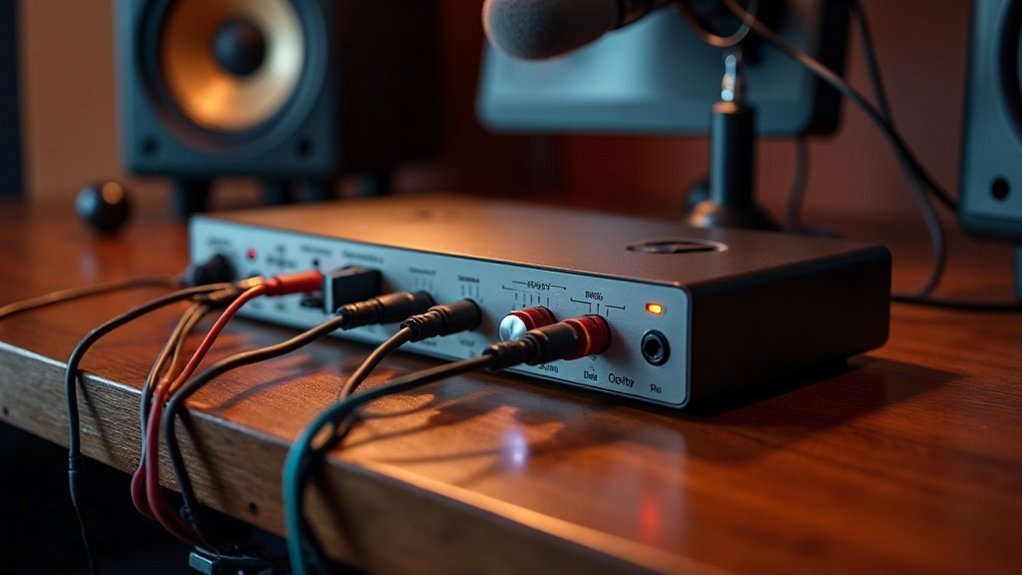
An audio interface is a crucial device that connects your microphones and instruments to your computer, ensuring high-quality sound through precise A/D and D/A conversions. This essential tool mitigates electrical interference and provides important gain control, acting as the central hub for your audio setup. With various connectivity options, an audio interface accommodates different recording scenarios while enhancing overall sound fidelity. Understanding the functionalities of an audio interface will help you optimize your audio workflow and achieve professional recording quality across all applications, whether you’re podcasting, streaming, or producing music. By leveraging the benefits of an audio interface, creators, gamers, and musicians can elevate their recordings to a new level of excellence.
Key Takeaways
- An audio interface facilitates the connection between microphones or instruments and computers, enabling high-quality audio recording and playback.
- It performs essential analog-to-digital and digital-to-analog conversions, ensuring signal integrity and minimizing noise.
- The device acts as a central hub for gain control, monitoring levels, and routing audio signals in various setups.
- Audio interfaces support multiple instruments and provide flexible output options, enhancing compatibility with different software and hardware.
- They significantly improve sound quality, reducing latency and ensuring professional-grade recordings for music and media production.
Understanding Audio Interfaces: Why You Need One for Quality Sound
When you’re aiming for high-quality sound in your recordings, understanding audio interfaces: why you need one for quality sound is fundamental. This hardware device enables seamless audio routing, connecting your microphones and instruments to your computer. It performs essential analog-to-digital (A/D) and digital-to-analog (D/A) conversions, ensuring signal integrity throughout the process. By providing clean input stages and reducing electrical interference, an audio interface delivers superior sound fidelity compared to built-in sound cards. Furthermore, it acts as a central hub, allowing you to manage gain control and monitor levels effectively, which is crucial for achieving professional-grade recordings and peak playback quality. Additionally, it acts as a bridge between your computer and external analog audio gear, enhancing your overall setup. USB audio interfaces are particularly popular for their ease of use and portability. Ultimately, if you’re serious about your craft—whether you’re podcasting, streaming, gaming, or recording—understanding audio interfaces is vital for achieving the quality sound you desire. An audio interface typically includes industry-standard inputs that ensure compatibility with a wide range of professional equipment.
Key Features to Look for When Choosing an Audio Interface
Focus on input connectivity to match your setup, whether you’re working on solo projects or full band recordings. A solid understanding of audio signal flow can greatly enhance your recording process. Evaluate output options, including headphone outs and additional line outputs for flexibility in your creative workflow. Additionally, consider future expansion needs such as digital I/O options like S/PDIF or ADAT.
Focus on input connectivity to suit your setup, whether for solo projects or full band recordings, ensuring flexible output options for your creative workflow.
Prioritize preamp quality to ensure clean audio capture, and look for effective monitoring features like zero-latency options. A good interface should also provide multiple inputs to accommodate various recording scenarios and ensure versatility.
Address compatibility concerns with your DAW and operating system, while also considering software integration for enhanced functionality.
By keeping in mind the key features to look for when choosing an audio interface, you can balance these elements effectively to suit your individual requirements.
How an Audio Interface Enhances Sound Quality?
An audio interface greatly enhances sound quality, making it an essential tool for creators, musicians, gamers, and professionals alike. By providing superior signal conversion, it ensures that recordings closely match the original source.
With high-quality digital conversion, you achieve impressive signal fidelity, capturing the nuances of your sound. In terms of how an audio interface enhances sound quality, noise reduction features play a crucial role, minimizing hiss and interference to create cleaner tracks. Effective gain staging allows for ideal input levels without distortion, while better preamps reveal clarity and detail in recordings. Additionally, improved monitoring accuracy aids in making informed mixing decisions, ensuring that the final product meets professional standards. Enhanced clarity may not compensate for poor-quality speakers or microphones, but it significantly elevates the overall listening experience. Furthermore, latency can greatly impact your performance, as timely audio feedback is essential for maintaining flow during recording sessions.
Latency improvement is another critical factor, enabling real-time performance without distracting delays. Furthermore, multiple input/output options allow for flexible connections to various devices, enhancing the versatility of your audio setup. Together, these aspects of how an audio interface enhances sound quality elevate your audio experience, making every project sound polished and professional, whether you’re podcasting, streaming, or recording music.
Exploring the Various Types of Audio Interfaces

Choosing the right audio interface is key to maximizing your sound quality and workflow when exploring the various types of audio interfaces. Different types cater to specific needs, ensuring that creators, gamers, musicians, and professionals can find the perfect fit for their projects:
| Type | Key Features | Use Cases |
|---|---|---|
| USB Interfaces | Affordable, plug-and-play, 2–20 inputs | Home studios, podcasting, mobile |
| Thunderbolt | Ultra-low latency, high channel count | Professional studios, multitrack |
| Legacy Solutions | FireWire tech, stable but obsolete | Older systems, specific workflows |
| Network Setups | Scalable, up to 64 channels | Multi-room studios, live sound |
Standalone recorders offer independence but typically come with fewer inputs. Hybrid options provide versatile connectivity, ensuring future-proofing for those exploring the various types of audio interfaces. By understanding these variations, you can enhance your audio experience whether you’re streaming, recording, or producing. Additionally, audio interfaces play a crucial role in converting analog signals from microphones and instruments into digital formats for seamless integration with your computer. Many USB audio interfaces are favored for their wide compatibility and portability, making them ideal for home studios and independent musicians. The choice between preamps and audio interfaces can significantly impact your recording quality and workflow.
How Audio Interfaces Are Used in Music and Media?
Audio interfaces are pivotal in how audio interfaces are used in music and media production, serving as a crucial link between analog instruments and digital platforms.
They significantly enhance recording techniques by capturing multitrack recordings, converting analog signals into high-quality digital audio. With studio-grade preamps and low-latency drivers, you can achieve professional quality in both home studios and live performances. This is especially important for high-quality recording, as it ensures that every detail is captured accurately. Additionally, audio interfaces offer superior signal quality that helps to minimize interference and latency, allowing for a more seamless recording experience. The inclusion of preamps in signal chains is essential for maintaining the integrity of the audio signal.
These devices offer essential connectivity for various instruments and support critical listening, ensuring that your mixes translate well across different systems.
By facilitating real-time monitoring and routing for streaming or podcasting, audio interfaces empower creators, gamers, and musicians to produce and perform with confidence and clarity in any media environment.
Understanding how audio interfaces are used in music and media can greatly enhance your production capabilities and overall sound quality.