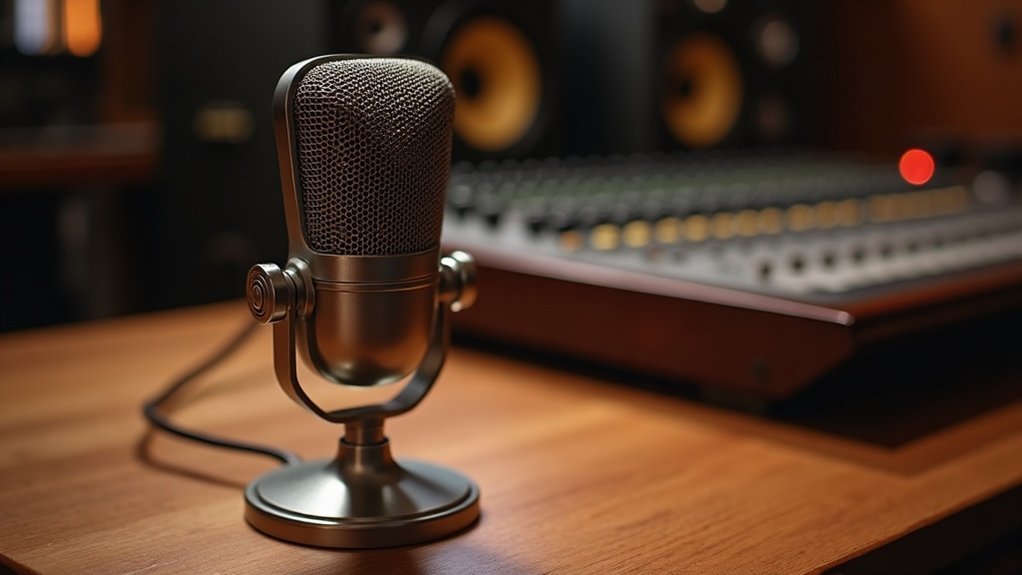
Mic level is the electrical output signal from a microphone, typically ranging from 1 to 10 mV. As the weakest standard audio signal, mic level is particularly sensitive to noise and interference. To ensure high-quality recordings, it’s essential to manage mic level carefully and amplify it to line level, which usually requires a preamp. Additionally, the quality of connections and cables significantly impacts overall performance. By understanding mic level and its intricacies, creators, gamers, musicians, and professionals can achieve peak sound clarity and fidelity in their audio setups. This knowledge is crucial for anyone looking to optimize their microphone’s performance for podcasting, streaming, gaming, or recording.
Key Takeaways
- Mic level is the electrical signal output from microphones, typically ranging from 1 to 10 mV, and is the weakest audio signal standard.
- It requires preamplification to reach line level, which is essential for compatibility with most audio equipment.
- Proper management of mic level enhances the signal-to-noise ratio, crucial for high-quality recordings.
- Factors like microphone placement, gain, and acoustic treatment significantly influence mic level output quality.
- Using balanced connectors and quality cabling helps prevent noise and ensures effective transmission of mic level signals.
What Is Mic Level and Why Does It Matter?
Mic level refers to the electrical signal output from a microphone before any amplification occurs, typically ranging from 0.001 V to 0.01 V (1–10 mV). Understanding mic level is essential in audio engineering, as it’s the weakest standard audio signal, making it susceptible to noise and interference. The importance of mic level can’t be overstated; its low voltage directly correlates with microphone sensitivity—more sensitive mics produce a stronger output. Proper management of mic level ensures a favorable signal-to-noise ratio, which is critical for achieving high-quality recordings. Additionally, microphone level requires preamplification to be compatible with most audio equipment, and this gain adjustment is crucial to avoid noise loss or signal distortion. The microphone gain applied during this process can significantly impact the overall sound quality of the recording.
Mic Level Compared to Other Audio Levels
Understanding mic level compared to other audio levels lays the groundwork for effective audio engineering, especially for creators, gamers, musicians, and professionals. Mic level signals, typically around -60 dBV to -40 dBV, require careful calibration to ensure optimal performance. In contrast, line level, which is about 1 volt, is much stronger and suitable for mixers and recorders. Mic preamps are essential for amplifying mic level signals to reach line level. Additionally, correct input matching is crucial to prevent audio issues and ensure clarity in your setup. It’s important to note that signal integrity is vital for maintaining audio quality.
Instrument level sits between these two, often needing a DI box for compatibility. When discussing mic level compared to other audio levels, it’s crucial to remember that feeding mic level directly into line inputs results in weak signals.
Properly matching these levels in mic level applications guarantees peak performance, preventing distortion and maintaining audio clarity throughout your setup.
Factors Affecting Mic Level Output Quality
When evaluating mic level output quality, several factors significantly influence your recordings. Key considerations include microphone placement and the distance from the sound source; closer proximity can enhance levels but may also introduce unwanted noise. Understanding the role of microphone gain is crucial, as it directly affects how well your recordings capture the intended sound.
Acoustic treatment is another crucial aspect, as a well-treated space minimizes reflections that can muddy your sound, ultimately affecting mic level output quality. Furthermore, the dynamic range of your sound source plays a vital role in determining overall clarity—higher sound pressure levels (SPL) can lead to clipping if not managed properly. Understanding that mic level signals require amplification to reach line level is essential for optimizing your recording setup.
Balancing these elements is essential for achieving ideal gain staging, ensuring your mic captures the full essence of a performance without compromising the quality of the mic level output. Additionally, understanding the difference between mic level and line level is important for optimal signal flow in your recording setup.
How Connectors and Cabling Impact Mic Level Signals
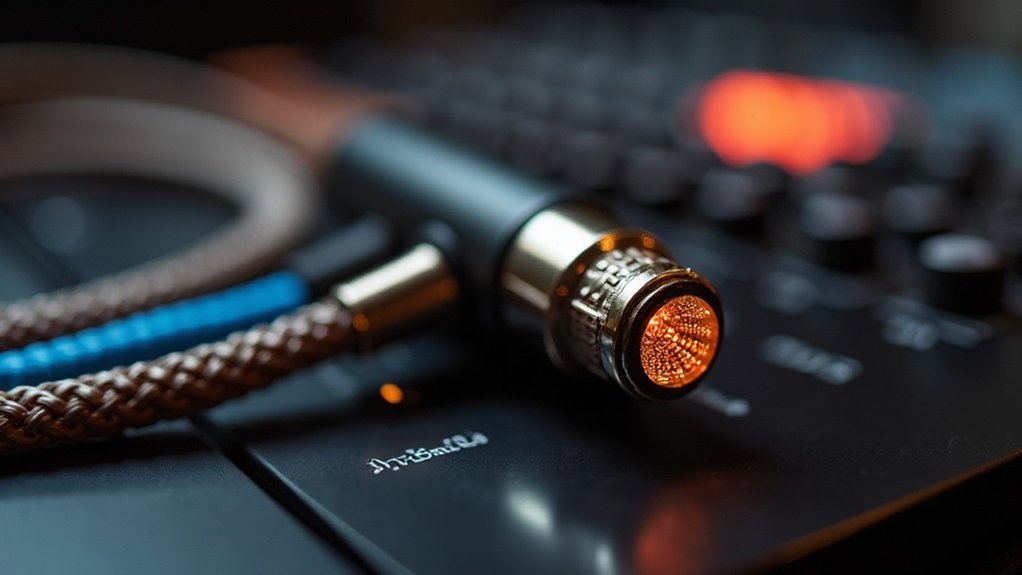
Connectors and cabling impact mic level signals significantly, as improper choices can lead to audio degradation. When discussing how connectors and cabling impact mic level signals, it’s essential to use balanced connector types like XLR, which ensure effective noise rejection. Additionally, proper cable shielding minimizes electromagnetic interference, further preserving sound quality. Consider cable capacitance; low capacitance is crucial as it keeps high frequencies intact, which is especially vital for dynamic microphones. Impedance matching between connectors and equipment is another key factor, preventing level mismatches that can degrade sound quality. Always verify connector compatibility to avoid issues when connecting mic outputs to line-level inputs. Ultimately, the thoughtful selection of cabling and connectors not only enhances signal integrity but also prevents unwanted interference. This ensures your audio remains clear and professional, which is particularly important for creators, gamers, musicians, and professionals seeking to maximize the effectiveness of their microphones in podcasting, streaming, gaming, and recording. Furthermore, understanding signal levels is fundamental to achieving optimal sound quality in any audio setup, as balanced connections help minimize interference and noise over long distances.
How Preamplification Boosts Mic Level Signals
Preamplification plays an essential role in how preamplification boosts mic level signals into strong line level outputs, which is crucial for professional audio applications. Mic level signals typically range from -60 to -40 dBV, far below the required +4 dBu for line level. Various types of preamplifiers are available, but they generally provide 30–60 dB of gain, effectively boosting the signal for optimal gain staging. By enhancing the voltage from 0.001 to approximately 1.2 V, preamps improve the signal-to-noise ratio, ensuring clarity and minimizing distortion. This process of boosting mic level signals is critical for compatibility with mixers, processors, and recording devices, establishing a solid foundation for high-quality audio production. Understanding how preamplification boosts mic level signals can help creators, gamers, and musicians get the most out of their audio setups, as high-quality preamps ensure a clean, low-noise gain. Additionally, connecting mic outputs to mic inputs is essential for maintaining signal integrity and preventing volume issues. Furthermore, a well-designed microphone signal chain can significantly enhance overall audio fidelity, making the most of the preamplification process.
Challenges and Solutions for Mic Level Signals
Mic level signals are fundamental in audio production, but they encounter numerous challenges that can compromise sound quality. To address these challenges and solutions for mic level signals, it’s essential to prioritize noise reduction techniques and maintain proper cable management.
Implementing ground isolation is crucial to mitigate hum and interference, particularly in environments with potential electromagnetic interference (EMI) sources. Achieving effective gain staging is vital; incorrect levels can lead to distortion or inaudible output, highlighting the importance of understanding challenges and solutions for mic level signals.
Utilizing balanced cabling significantly improves hum elimination and ensures better equipment compatibility, which is essential for achieving optimal mic level performance. Furthermore, a high signal to noise ratio can greatly enhance the clarity of recorded audio. By proactively addressing these issues, you can enhance your mic level signals, reducing the risk of degradation and guaranteeing a clearer, more professional sound in your audio projects.
Effective Troubleshooting for Mic Level Issues

When troubleshooting mic level issues, it’s crucial to systematically verify each component of your audio setup. Effective troubleshooting for mic level issues begins with checking your selected input device in Windows sound settings; ensure it matches your intended microphone type.
Next, inspect connection integrity—loose cables can lead to signal interference, which is a common problem in audio setups. Confirm that the ports are functioning properly by testing with a known-good mic, as this is a key part of effective troubleshooting for mic level issues.
Inspecting connection integrity is vital; loose cables can cause signal interference, so test with a known-good mic to ensure proper functionality.
Additionally, raise input levels to 80–100% and confirm phantom power for condenser mics, as these adjustments can significantly impact performance. One common reason for muffled sound is poor microphone placement, which can greatly affect audio clarity.
Finally, don’t overlook the importance of verifying permissions and driver health in Device Manager. By following these steps for effective troubleshooting for mic level issues, you’ll be well-equipped to isolate and resolve any problems that arise in your audio setup, ensuring a smooth experience for creators, gamers, and musicians alike.
Choosing the Best Gear for Mic Level Use
After addressing mic level issues, selecting the best gear for mic level use greatly influences overall audio quality. Your setup should include a quality microphone and an audio interface with a built-in preamp. Here’s a quick comparison of popular options that are ideal for achieving optimal mic level performance:
| Microphone Type | Recommended Use |
|---|---|
| Dynamic Microphones | Voice, podcasting |
| Condenser Microphones | Detailed recordings, requires phantom power |
| Audio Interfaces | Must include mic preamp |
Choosing dynamic mics like the Shure SM7B or entry-level options like the Samson Q2U ensures you achieve clean gain, which is crucial when considering the best gear for mic level use. Additionally, dynamic microphones don’t require external power, making them a convenient choice for various recording setups. Prioritizing compatibility and low noise will greatly enhance your recordings, making them suitable for a range of applications from podcasting to streaming and gaming.