Gain works on a microphone by amplifying weak signals, typically within a range of -30 dB to -70 dB. This crucial process is managed by preamps and plays an essential role in maintaining audio quality throughout your setup. Proper gain settings can significantly enhance your recordings without introducing unwanted noise, while incorrect levels can compromise clarity. For optimal results, aim for average peaks around -12 dBFS to ensure your audio remains clear and vibrant. Understanding how gain works on a microphone will help you optimize your audio workflow, leading to better recordings for your podcasting, streaming, or gaming needs. By mastering the nuances of microphone gain, creators, musicians, and professionals can elevate their sound quality and achieve the best possible results.
Key Takeaways
- Gain amplifies weak microphone signals, typically between -30 dB to -70 dB, impacting overall audio quality and noise levels.
- Proper gain settings prevent clipping; aim for peaks around -12 dB to -6 dB for optimal clarity.
- Gain affects the internal signal structure, while volume controls playback levels, making their distinction vital for quality audio setups.
- Use monitoring techniques like VU meters to maintain optimal input gain and prevent distortion during recordings.
- Common mistakes include excessive gain, inappropriate microphone choices, and confusing gain with volume, disrupting proper gain structure.
Understanding Gain: What It Is and Why It Matters
Gain is essential in audio production, acting as the amplifier for your microphone’s electrical signal. Understanding gain is crucial, as it boosts weak mic-level signals—typically ranging from -30 dB to -70 dB—to usable line-level for further processing. This input stage amplification is controlled via preamps or internal amplifiers, rather than the microphone capsule itself. The gain structure determines how effectively the signal is processed throughout the audio chain.
Understanding gain fundamentals influences how strong the incoming signal is before any adjustments, ensuring devices operate within ideal ranges. Proper gain staging enhances signal quality and maintains an appropriate signal-to-noise ratio, allowing you to achieve clarity in your recordings. Additionally, maintaining proper gain settings is vital for avoiding background noise amplification that can detract from your audio quality.
This understanding of gain not only improves your audio but also fosters a sense of community among audio enthusiasts, making it a vital concept for creators, gamers, musicians, and professionals alike. The gain knob regulates microphone sensitivity and is crucial for achieving optimal recording levels.
How Gain Impacts Your Microphone Signal
Microphone signals are directly influenced by the gain applied during recording, a crucial factor in how gain impacts your microphone signal. Proper gain management is essential for achieving peak audio fidelity, as it affects signal clarity, dynamic control, and noise management. When you apply higher gain, you amplify both desired signals and unwanted noise, which risks distortion and clipping. Conversely, insufficient gain can expose the noise floor, compromising your recordings. The quality of the preamp also plays a significant role in determining how gain impacts different microphone types in various acoustic environments, as high-quality preamps can enhance signal integrity. By understanding these effects of gain on your microphone signal, you can refine your recording techniques for optimal results. Additionally, aiming for peaks around -12 to -6 decibels helps ensure a clean recording without clipping. The use of microphone preamps is vital, as they provide the necessary amplification to elevate mic level signals to line level.
| Gain Level | Effects on Signal | Noise Considerations |
|---|---|---|
| Low Gain | Weaker signal | Closer to noise floor |
| Moderate Gain | Balanced signal | Acceptable noise levels |
| High Gain | Strong signal | Increased self-noise |
| Excessive Gain | Risk of distortion | Clipping and harshness |
Ultimately, grasping how gain impacts your microphone signal allows creators, gamers, and musicians to make informed decisions about their recording setups and achieve the best audio quality possible.
Setting Optimal Gain Levels
When setting optimal gain levels, it’s crucial to consider the specific requirements of your recording environment and the microphone type in use. Target average peaks around -12 dBFS for spoken-word recordings, ensuring clarity and headroom. For dynamic microphones, aim for peaks between -20 dB and -15 dB, while condensers thrive at -30 dB to -25 dB. To achieve these optimal gain levels, utilize gain calibration techniques to monitor audio levels, keeping peaks 10 dB below 0 dBFS to avoid clipping. Understanding microphone gain is fundamental to achieving the best sound quality. Additionally, achieving the right gain involves preventing distortion to maintain audio integrity. The bit depth of your recording can also impact the overall sound quality. Consistent distance from the microphone is essential to maximize the dynamic range, and it’s important to adjust gain after evaluating real-world performance to ensure reliable recordings.
Understanding the Difference Between Gain and Volume
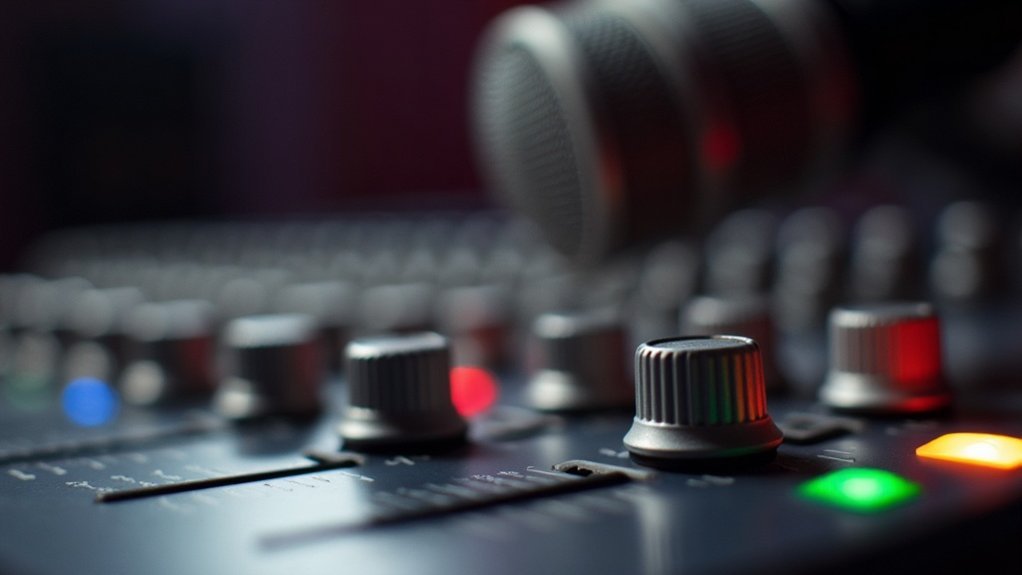
Understanding the difference between gain and volume is essential for optimizing your audio setup, especially for creators, gamers, and musicians. Recognizing the distinction between gain and volume helps you achieve the best sound quality for podcasting, streaming, and recording. Proper gain adjustment is crucial for minimizing background noise and ensuring a clear recording. Additionally, managing mic-level signals effectively ensures that your recordings maintain clarity without distortion.
Gain settings play a crucial role in amplification effects, setting the stage for tone adjustments and potential distortion factors. High gain can enhance tone character but may also introduce noise, impacting your overall audio experience. This is particularly important because signal quality can drastically affect the final output.
In contrast, volume simply alters playback levels without changing the signal’s internal structure.
How to Apply Gain and Volume in Your Recordings
To achieve ideal recording quality, you need to master both gain control techniques and volume adjustment strategies. Start by setting the input gain at your preamp or interface, ensuring it captures a strong signal without clipping. Maintaining proper gain staging is essential to prevent undesirable distortion and ensure clarity in your recordings. Remember that gain affects signal quality and can introduce noise if mismanaged. A higher signal to noise ratio will ensure your recordings are clearer and more professional. Once you have a solid recording level, use volume adjustments solely for monitoring, leaving gain settings fixed during the performance.
Gain Control Techniques
- Set input gain while monitoring VU meters to ensure optimal levels.
- Aim for average peaks around -12 dBFS for vocals, a key aspect of gain control techniques.
- Maintain performance dynamics with peaks below -6 dB to preserve the integrity of your recordings.
- Optimize gain staging across all stages of the signal chain for effective gain control techniques.
- Use test recordings to confirm clarity without distortion, reinforcing the importance of proper gain control.
Volume Adjustment Strategies
Start by using fader techniques to ensure channel balance, keeping audio levels within safe ranges during sound checks. Employ meter types like VU and peak meters for effective peak control, aiming for average peaks around -12 dBFS.
Integrate mixing strategies to maintain consistent dynamics without risking clipping, which is crucial for successful volume adjustment techniques. Utilize clip gain tools in your recording workflow for subtle adjustments before faders, enhancing your volume management process.
Always monitor your tracks to fine-tune volume settings, guaranteeing a polished final mix that resonates with your audience. Additionally, understanding the role of compressors and limiters can further enhance your approach to dynamic control in the mixing process.
Common Microphone Gain Mistakes to Avoid
Misunderstanding microphone gain can lead to significant audio quality issues that are often overlooked. To maintain recording clarity and signal integrity, it’s crucial to avoid these common microphone gain mistakes. Here are some key points to consider:
- Setting gain too high can risk clipping and distortion, compromising overall sound quality.
- Selecting an inappropriate microphone may force you to make extreme gain adjustments, negatively impacting your recordings.
- Confusing gain with volume disrupts proper gain structure, leading to imbalanced audio levels.
- Ignoring feedback prevention techniques, especially in live settings, can result in unpleasant audio experiences.
- Neglecting noise reduction can amplify unwanted background hiss, detracting from your recordings.
By being aware of these common microphone gain mistakes to avoid, you can enhance the quality of your audio, whether you’re podcasting, streaming, or recording music. Additionally, understanding audio clipping will help you recognize when your recordings are at risk of distortion.
Understanding the nuances of microphone gain is essential for creators, gamers, musicians, and professionals looking to optimize their setups.
How to Monitor Your Microphone Gain Effectively
To monitor your microphone gain effectively, start by utilizing visual meter monitoring techniques to track input levels in real time.
Adjust gain during performance based on the meter readings, ensuring you stay within the ideal range of -12 dB to -6 dB FS to prevent clipping.
Consistent checks on your levels will help maintain clarity and prevent distortion, allowing for a cleaner audio output. Adequate headroom in audio is crucial to avoid unwanted artifacts in your recordings.
Visual Meter Monitoring Techniques
Effective visual meter monitoring techniques are essential for achieving ideal microphone gain levels, especially when working with affordable microphones.
Utilizing these methods for accurate signal visualization can greatly enhance your podcasting, streaming, or recording experience:
- LED ladder meters: Keep an eye on the color indicators—green (safe), yellow (caution), and red (clipping)—to ensure optimal performance.
- Digital peak meters: Track levels in dBFS, ensuring they stay below 0 dBFS to avoid distortion.
- VU meters: Strive for an average around 0 VU while maintaining adequate headroom for dynamic sounds.
- Waveform view meters: Verify that waveforms occupy the middle third of the track, which is crucial for effective visual meter monitoring techniques.
- SPL meters: Relate acoustic loudness to gain levels for a more accurate assessment.
Remember to perform regular meter calibration for consistent performance, guaranteeing peak gain settings and preventing distortion. Additionally, understanding the noise floor in your recording environment can help minimize unwanted background noise during recordings.
Mastering these techniques is vital for anyone looking to optimize their audio output using affordable microphones.
Adjusting Gain During Performance
Keep your hand near the gain knob for quick responsiveness to fluctuations in vocal dynamics. Aim for consistent levels, targeting peaks around -12 dB to -6 dB.
When adjusting gain during a performance, it’s vital to monitor feedback management closely; reduce gain incrementally if distortion occurs. Additionally, maintain stable mic handling, using proximity to control volume rather than relying solely on gain adjustments. A well-tuned noise gate can further help in managing unwanted sound and enhancing clarity.
This approach helps you achieve balanced sound throughout your performance, ensuring that your message is clear and engaging. By honing your skills in adjusting gain during a performance, you can enhance your overall audio experience, whether you’re podcasting, streaming, or performing live.
Best Practices for Maintaining Gain Structure in Audio Systems
Maintaining a proper gain structure in audio systems is essential for achieving ideal sound quality and clarity. To guarantee peak performance while focusing on best practices for maintaining gain structure in audio systems, follow these guidelines:
- Start gain staging at the microphone preamp, as this is crucial for establishing a solid foundation.
- Set preamp settings to ensure that signals remain above the noise floor, which is vital for optimal audio clarity.
- Monitor dynamic range to prevent clipping during channel processing, thus preserving the integrity of your recordings.
- Maintain audio consistency by keeping faders near unity, which contributes to a balanced mix.
- Regularly evaluate recording quality throughout the entire signal chain to uphold the best practices for maintaining gain structure in audio systems.
- Ensure that microphones requiring phantom power are properly connected to avoid signal loss and achieve the best sound quality.