Mic level and line level represent different audio signal strengths, and understanding “the difference between mic level and line level” is crucial for anyone working with sound equipment. Mic level typically ranges from 0.001 to 0.01 V, meaning it requires preamplifiers to boost the signal for clarity. On the other hand, line level is significantly stronger, falling between 0.316 V (consumer) and 1.23 V (professional).
In practice, you often use XLR connectors for microphones and 1/4-inch or RCA connectors for line levels. Recognizing the difference between mic level and line level is essential for preventing distortion in your audio setup. By effectively managing these connections, creators, gamers, and musicians can ensure optimal sound quality in their projects. Learn how to navigate these levels to enhance your podcasting, streaming, or recording experience.
Key Takeaways
- Mic level signals range from 0.001 to 0.01 V, while line level signals range from 1 to 1.23 V RMS.
- Mic-level signals are weaker and require preamps for amplification, whereas line-level signals are stronger and can be mixed directly.
- Mic-level connections typically use XLR connectors, while line-level connections often use 1/4-inch plugs, RCA connectors, or 3.5 mm jacks.
- Preamplifiers boost mic-level signals to line level, ensuring clarity and preventing distortion in audio processing.
- Properly matching input types and levels is crucial to maintain audio quality and prevent sound issues.
What Is Mic Level and Why It Matters
Mic level refers to the low-level voltage generated by a microphone as it converts sound into an electrical signal. Understanding mic level and why it matters is vital for achieving high-quality audio in various applications, from recording studios to live performances.
With typical outputs ranging from 0.001 to 0.01 V, mic level represents the weakest common audio signal type. This necessitates the use of mic preamps, which amplify the signal to usable levels while minimizing noise. Proper handling of mic level outputs guarantees clarity and detail in recordings, reinforcing the significance of understanding mic level in audio systems effectively. Additionally, an audio interface can play a crucial role in managing these signals. Mic-level signals require careful management to ensure your audio experience hinges on mastering these essential concepts related to mic level and its critical role in achieving optimal sound quality. Furthermore, mic signals are quiet and can pick up more noise, making pre-amplification crucial for clarity.
Key Differences Between Mic Level and Line Level
When comparing mic level and line level, you’ll notice a significant difference in signal strength and connection types. Mic level signals are much weaker, typically ranging from 1–10 mV, while line level signals measure around 1 V, making them approximately 40–60 dB stronger. Additionally, the connections differ, with mic inputs using balanced XLR connectors and line inputs often utilizing TRS or RCA connectors. Understanding proper amplification is essential for ensuring compatibility between these two levels, as matching levels is crucial for optimal audio performance. The role of impedance is also important, as it affects how well microphones and line-level devices interact within the audio chain.
Signal Strength Comparison
Understanding the differences in signal strength between mic level and line level is essential for effective audio processing, especially when considering how these levels impact creators, gamers, musicians, and professionals. Additionally, incorporating audio interfaces into your setup can further enhance the quality of your recordings.
Here’s a quick voltage comparison that underscores the significance of signal strength comparison:
- Mic Level: Typically ranges from 0.001–0.01 V (1–10 mV), around –60 to –40 dBV.
- Consumer Line Level: Standardized at –10 dBV (~0.316 V), about 30–50 dB stronger than mic level.
- Professional Line Level: Set at +4 dBu (~1.23 V), representing a signal approximately 40–60 dB above mic level.
These differences highlight the substantial gain requirements for boosting mic signals to line level, which is critical in the signal strength comparison for achieving peak performance in audio systems. Additionally, a mic preamp is necessary to effectively amplify the mic-level signal before it reaches line level, ensuring optimal audio quality. Understanding the importance of signal levels can empower you to optimize your microphone setup, whether for podcasting, streaming, or music production.
Connection Types Used
Signal strength differences between mic level and line level necessitate distinct connection types used, each tailored to their respective applications.
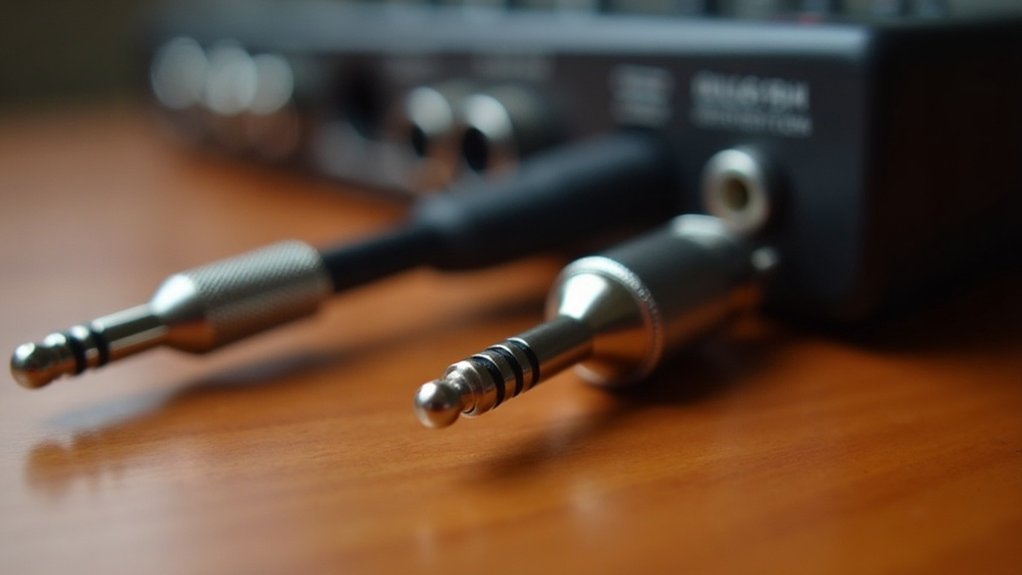
For mic-level signals, XLR connectors are standard, utilizing balanced wiring to minimize noise and reduce electromagnetic interference. Conversely, line-level connections often use 1/4-inch phone plugs, RCA connectors, or 3.5 mm jacks. Understanding the input type selection is crucial for achieving optimal audio quality. Additionally, matching signal levels is key to preventing output sound issues.
While XLR may carry line-level signals, it’s essential to match the input type to guarantee signal compatibility. Always check device labeling rather than relying solely on connector types.
By understanding these connection types used, you can effectively route audio signals, enhancing your setup’s performance and clarity without unnecessary complications.
Whether you’re a creator, gamer, or musician, knowing the right connection types ensures optimal audio quality in your podcasts, streams, or recordings.
Understanding Line Level: What You Need to Know?
To effectively navigate audio systems, you need to understand line level standards and their transmission characteristics. Line level signals, which range from consumer to professional standards, play an essential role in maintaining audio integrity. The strength of line level signals ensures that audio components communicate effectively without introducing unwanted noise. Recognizing these differences helps you avoid common pitfalls like noise and distortion in your setups. Professional line level signals are crucial for achieving optimal sound quality in professional audio environments. Understanding signal chain dynamics is key to maximizing performance and clarity in your audio setups.
Line Level Standards Overview
While exploring audio systems, it’s crucial to grasp the line level standards overview that govern how devices communicate. Understanding these line level standards ensures compatibility and peak performance in various applications.
Key points include:
- Line level characteristics: Typically around +4 dBu for professional equipment and -10 dBV for consumer devices.
- Applications: These standards are found in mixers, recorders, and signal processors, playing a vital role in audio quality.
- Voltage references: In the context of line level standards, 0 dBV equals 1 V RMS, while 0 dBu equals 0.775 V RMS.
Signal Transmission Characteristics
Understanding line-level signal transmission characteristics is essential for optimizing audio performance, as it sits between mic and speaker levels in the gain structure.
Line-level signals, typically transmitted through shielded cables, promote noise reduction and maintain signal integrity. With an impedance-bridging configuration, they optimize transmission efficiency and minimize loading effects, ensuring audio fidelity. Voltage swings around ground avoid DC offsets, enhancing compatibility across devices. Additionally, audio interfaces are crucial in managing these levels effectively, bridging the gap between various equipment in a recording setup.
However, environmental interference can still affect these signals, making proper cable shielding vital. Ultimately, understanding line-level signal transmission characteristics empowers you to achieve clearer, more dynamic audio in any setup, ensuring your sound remains robust and vibrant.
Common Sources and Connections for Mic and Line Levels
Mic and line levels serve distinct roles in audio production, each with specific sources and connections. Understanding common sources and connections for mic and line levels is essential for anyone involved in audio projects. Here’s a quick overview of common devices and their setups:
- Microphones: Dynamic, condenser, and ribbon types output mic-level signals, connecting via balanced XLR for optimal sound quality and noise reduction. Knowing the right connections for mic levels is crucial for clear audio capture.
- Mixers/Interfaces: These provide line-level outputs, essential for audio mixing and processing. Familiarity with common connections for line levels ensures equipment compatibility and smooth workflows.
- Instruments: Keyboards and synthesizers typically output line-level signals, utilizing various connectors to maintain signal integrity over cable lengths. Additionally, understanding XLR microphone connections can significantly improve your audio setup.
Recognizing the distinctions between sources of mic and line levels can enhance your overall setup.
Best Practices for Connecting Mic and Line Levels
Connecting mic and line levels effectively is essential for achieving high-quality audio. Following best practices for connecting mic and line levels ensures you achieve optimal sound performance.
Always match mic-level outputs to dedicated mic inputs, utilizing appropriate gain staging to enhance audio clarity. Conversely, connect line-level outputs to line inputs to prevent overload and distortion, which can degrade your sound quality.
For mic connections, use balanced XLR cables, while balanced TRS or XLR cables are ideal for line connections, especially over longer distances. Additionally, understanding the differences between USB and XLR microphones can help you choose the right equipment for your setup.
If you encounter any level issues, consider using passive attenuators or DI boxes to manage your audio levels effectively. Consistently check input and output specifications to maintain proper gain structure, minimizing noise and maximizing fidelity.
The Role of Preamplifiers in Audio Signal Chains
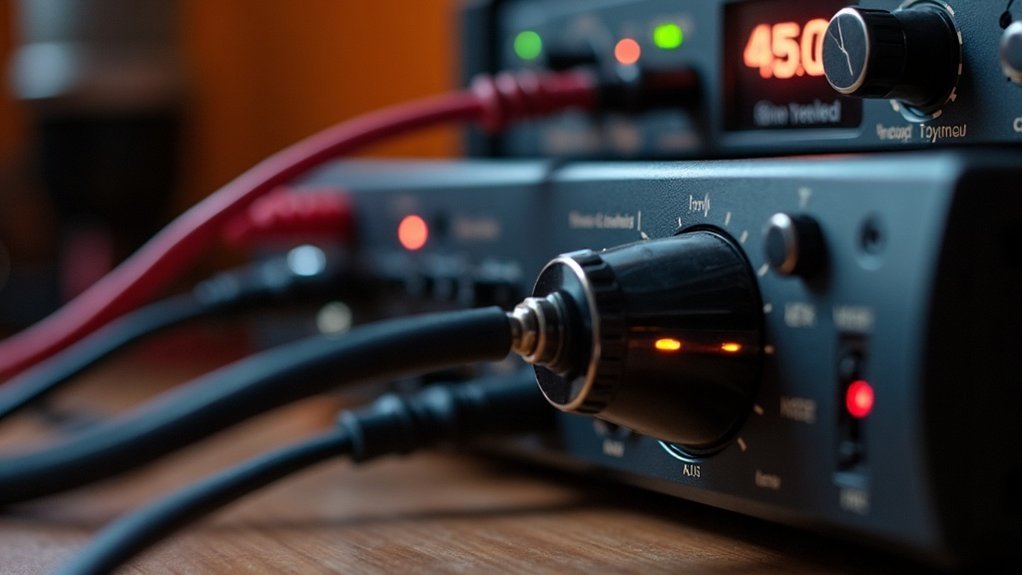
- Elevates weak signals (0.001–0.1 V) to professional line levels (1–1.23 V RMS).
- Guarantees ideal impedance matching for efficient power transfer.
- Maintains a high signal-to-noise ratio (SNR) to prevent distortion.
Understanding the role of preamplifiers in audio signal chains** allows creators, gamers, and musicians to enhance their signal processing. A well-designed preamplifier can significantly improve audio clarity**, making your system more compatible and dynamic. By leveraging the importance of preamps, you can ensure that your podcasts, streams, and recordings achieve the highest quality possible. Additionally, the preamp’s function is crucial in ensuring that the audio signal remains clean and powerful throughout the entire signal chain.
Effective Strategies for Managing Mic and Line Levels
Effective Strategies for Managing Mic and Line Levels are essential to achieving peak audio performance and safeguarding your equipment from potential damage.
Begin with proper gain staging; calibrate levels to ensure strong averages while avoiding clipping. Clear labeling and distinct cabling—XLR for mic level and TRS/TS/RCA for line level—are crucial for effective management of mic and line levels, enhancing signal routing and minimizing mismatches.
Always check the output levels of your devices, particularly when interfacing consumer and professional gear. Metering your signals throughout the chain is vital to confirm that mic and line stages operate within their intended ranges, which effectively reduces noise and prevents overload. Additionally, understanding microphone gain is fundamental to optimizing your recording setup and achieving the best audio quality.