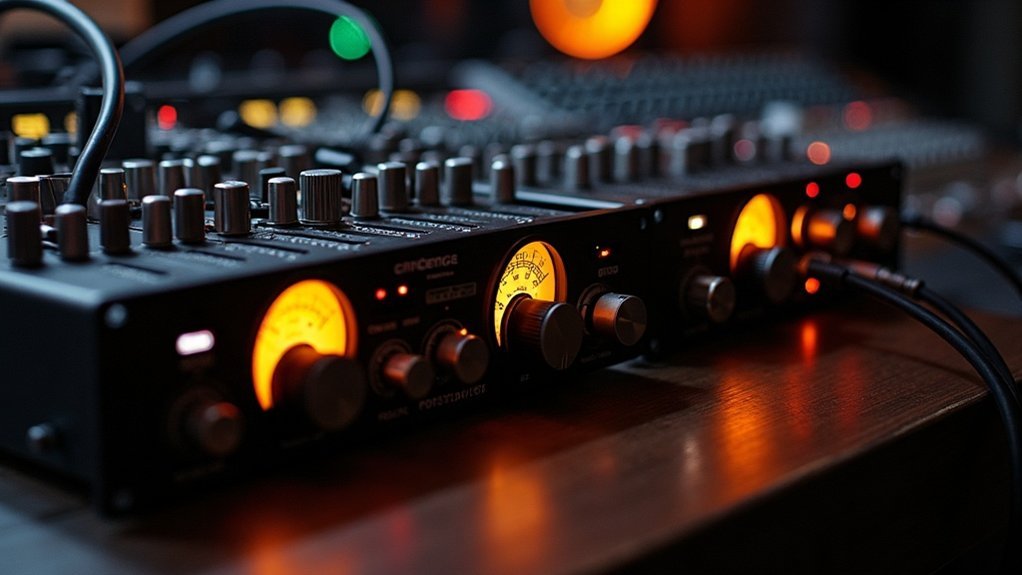
A compressor reduces the dynamic range of audio, allowing for more control over sound levels by applying moderate gain reduction, typically at low to medium ratios. This functionality is essential for creators, musicians, and podcasters who want to shape their mix’s tonal balance. In contrast, a limiter acts as a “brick wall,” enforcing strict peak control with very high ratios, preventing signal peaks from exceeding a set threshold. Understanding the difference between a compressor and a limiter is crucial, as limiters specifically protect against clipping and distortion, ensuring your audio remains crisp and clear. There’s much more to explore about how these tools affect your sound and enhance your projects, especially when considering affordable microphones for podcasting, streaming, gaming, and recording.
Key Takeaways
- Compressors reduce dynamic range and enhance sound texture, while limiters enforce hard peak control to prevent clipping.
- Compressors typically use low to medium ratios; limiters operate at very high ratios for strict peak management.
- Limiters react with fast attack times, whereas compressors can have slower settings for more gradual adjustments.
- Compressors allow some peaks to exceed the threshold, while limiters prevent any signal from surpassing the set threshold.
- Each tool serves distinct purposes: compressors shape sound within a mix, and limiters ensure overall loudness and prevent distortion.
What Is a Compressor?
You’ll encounter different types of compressors, each suited for specific applications, employing various compression techniques to achieve the best sound. The key controls—threshold, ratio, attack, and release—allow you to tailor the effect precisely. As you adjust these settings, you’ll notice smoother performances and a more polished sound. A compressor effectively narrows the gap between the quietest and loudest moments in your audio, promoting listener comfort.
Understanding how to apply a compressor effectively guarantees your audio is consistent and engaging, regardless of the listening environment. This is important because audio compression ensures consistent sound levels across recordings and prevents distortion in louder audio sections. Proper use of a compressor can significantly enhance dynamic range and clarity in your audio production.
Whether you’re mixing vocals or instruments, mastering the use of a compressor is vital for achieving professional-quality audio. This audio processing tool ensures that your recordings are balanced and clear, enhancing the overall experience for your audience—be it in gaming, music, or podcasts.
What Is a Limiter?
A limiter is an essential audio dynamics processor that prevents signal amplitude from exceeding a set threshold, effectively acting as a “brick wall” for peaks.
Its primary function is to control transient spikes while allowing lower signals to pass unaffected, making it vital in various audio applications. Understanding a limiter’s key characteristics—such as its high ratio settings and fast attack times—will help you utilize it effectively in mixing, mastering, and live sound scenarios. A limiter can also enhance overall loudness, contributing to commercial loudness in professional audio productions. Additionally, it serves as the final step in mastering to achieve optimal loudness levels without clipping.
Purpose of a Limiter
- Preventing clipping and distortion: Limiters enforce a maximum level to avoid signal overload, ensuring your audio remains clean and professional. They achieve this by utilizing dynamic range control techniques to manage peak levels effectively.
- Increasing perceived loudness safely: By managing peaks, limiters help achieve commercial loudness without distortion, which is crucial for creators aiming for high-quality output. In many cases, limiters are used to prevent signal amplitude from exceeding a predetermined value. Additionally, limiters provide protection against equipment damage by managing current and voltage spikes.
- Protecting equipment: The purpose of a limiter also extends to safeguarding amplifiers and speakers from potential damage due to sudden transients, making it an indispensable tool in any audio setup.
For musicians, streamers, and podcasters, understanding the *purpose of a limiter* can significantly enhance your audio production quality and equipment longevity.
Key Characteristics and Functions
Limiters function as specialized dynamics processors designed to control audio signals effectively, ensuring they don’t exceed predetermined levels. Characterized by high ratios, typically ranging from 10:1 to infinity:1, limiter behavior focuses on attenuating signal peaks that cross a hard threshold. This results in strong gain reduction that clamps down on transients almost immediately. Unlike compressors, limiters reduce peaks more aggressively, creating a flatter response in the audio signal. By suppressing loud peaks, they help maintain audibility while preventing clipping, making them essential in mastering and finalizing tracks where peak control is vital for achieving professional sound quality. In addition, limiters are often employed as the final stage of mastering to prevent overs from EQ boosts. This is particularly important because limiters are considered an extreme version of compressors, emphasizing their unique role in audio processing. When considering the best options for audio production, understanding the role of limiters in mastering and finalizing tracks is crucial for creators, musicians, and professionals alike.
Typical Applications in Audio
How do limiters fit into typical audio applications? Limiters serve essential roles in various contexts, ensuring your mixes maintain dynamic range without distortion.
In the realm of typical applications in audio, here are some key areas where limiters shine:
- Mastering Chain: As a vital component in the final processing, limiters prevent peaks from exceeding digital full scale. This function is crucial for maintaining dynamic control throughout the mix.
- Safety Net: They act as a protective barrier against clipping when aiming for commercial loudness, a common goal in typical audio applications.
- Creative Applications: Limiters control transients in drums, vocals, and bass, enhancing overall clarity, which is crucial in typical audio scenarios. Additionally, they are often used to ensure that music sounds better when louder. This is especially important in live sound scenarios, where limiters protect against overload.
Using limiters effectively allows you to achieve competitive loudness while preserving the integrity of your audio. This makes them indispensable in both mixing and mastering, reinforcing their importance in typical applications in audio.
Key Differences Between Compressor and Limiter
While both compressor and limiter control audio dynamics, they serve distinct purposes in sound engineering. A compressor reduces overall dynamic range by attenuating louder signals while lifting quieter ones, allowing some peaks to exceed the threshold.
While both compressor and limiter manage audio dynamics, they each have unique roles in sound engineering.
In contrast, a limiter enforces a hard peak control, preventing any output from surpassing its set threshold.
When discussing the key differences between compressor and limiter****, it’s important to note that compressors typically operate at low to medium ratios, while limiters use very high ratios, often described as brick-wall.
Additionally, limiters react with fast attack times, prioritizing peak control, whereas compressors can employ slower settings for musicality.
These key differences make each tool essential for different aspects of audio production and highlight why understanding the distinctions between compressor and limiter is crucial for creators, musicians, and audio engineers.
Choosing the Right Tool: Compressor vs. Limiter
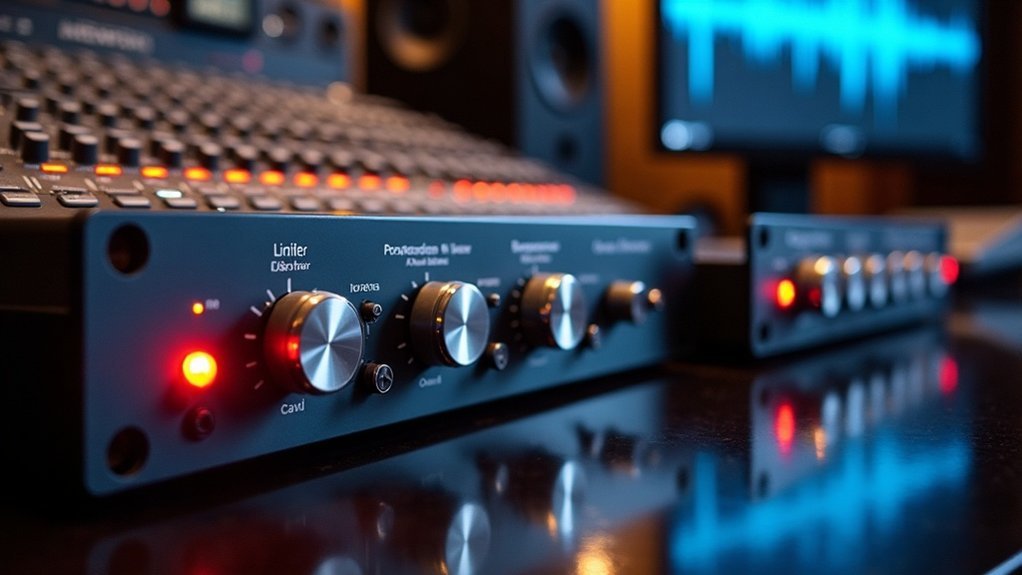
When choosing the right tool: compressor vs. limiter, it’s essential to consider the specific needs of your project. Here are some key points to keep in mind:
- Use a compressor to shape the overall dynamic range and enhance mix balance, making it ideal for creative tone shaping.
- Opt for a limiter when you need strict peak management and want to prevent clipping, ensuring your audio meets loudness compliance.
- Your decision should reflect whether you’re focused on artistic expression or utility tasks.
Remember, your choice impacts the final sound significantly.
Compressors allow for more natural transient behavior, while limiters provide the necessary safeguards against distortion.
Understanding the differences between a compressor and a limiter helps you make informed decisions that align with your musical goals and technical requirements.
Sonic Impact of Compression vs. Limiting
Understanding the sonic impact of compression versus limiting is crucial for achieving your desired audio outcomes in podcasting, streaming, and music production. When considering the sonic impact of compression, it enhances dynamic control and sonic texture, promoting mix cohesion and elevating musicality. Compression shapes transients, contributing to punchier sounds while preserving tonal balance. On the other hand, the sonic impact of limiting primarily focuses on peak management, leading to heightened loudness perception but often at the expense of audio clarity and dynamic range.
| Tool | Purpose | Sonic Impact |
|---|---|---|
| Compression | Dynamic control | Musicality enhancement |
| Limiting | Peak management | Loudness perception |
| Both | Tonal balance | Mix cohesion |
Understanding Attack and Release Settings
Effective control over attack and release settings is essential for shaping the dynamics of your audio. Understanding these parameters allows you to tailor sound to fit your musical context, enhancing your overall audio experience.
- Attack characteristics impact punch perception and transient shaping, balancing articulation and smoothness in your recordings.
- Release dynamics play a crucial role in sustain control and groove alignment, managing how audio breathes and interacts with the overall mix.
- Always consider program dependency; ideal attack and release settings can vary significantly between materials, such as vocals versus drums.
Fine-tuning these attack and release settings guarantees your mix retains definition while enhancing overall musicality.
This attention to detail allows for a cohesive listening experience that resonates with both you and your audience, ensuring your audio stands out in podcasting, streaming, gaming, and recording.
Conclusion: Maximizing Audio Quality With Compression and Limiting

To maximize audio quality, you need to apply compression and limiting with precision.
Proper usage techniques guarantee that you maintain artistic intent while balancing dynamics and loudness.
Proper Usage Techniques
Mastering audio quality hinges on the strategic application of proper usage techniques involving compression and limiting. To achieve the best dynamic range and audio clarity through these proper usage techniques, focus on the following aspects:
- Thresholds: Set for moderate gain reduction (3-6 dB) to maintain natural dynamics while utilizing proper usage techniques.
- Attack/Release Settings: Adjust to preserve punch and prevent distortion; use fast settings for peak management and slow settings for musical flow, embodying proper usage techniques.
- Signal Chain Placement: Implement compressors on individual tracks and limiters at the master bus for mix stability, reflecting the essence of proper usage techniques.
Balancing Artistic Intent
Balancing artistic intent with technical precision is essential for maximizing audio quality. When it comes to compression and limiting, the challenge lies in balancing artistic intent with technical precision while maintaining dynamic range and meeting loudness targets. This ensures that your mixes remain engaging and resonate with audiences.
Over-compression can flatten transients, diminishing punch and emotional impact, so it’s crucial to approach your settings thoughtfully. Use compressors to shape individual elements, reserving limiters for occasional peaks to preserve tonal integrity. Additionally, understanding microphone gain can help optimize your recording levels and prevent unwanted distortion.
Remember, each genre has unique expectations; aligning your processing decisions with these can greatly enhance artistic expression. By carefully managing dynamics, you create a rich listening experience that not only stands out but also honors the essence of your music.
Striking a balance between artistic intent and technical precision allows creators, musicians, and audio professionals to elevate their work without sacrificing the core emotional impact of their sound.