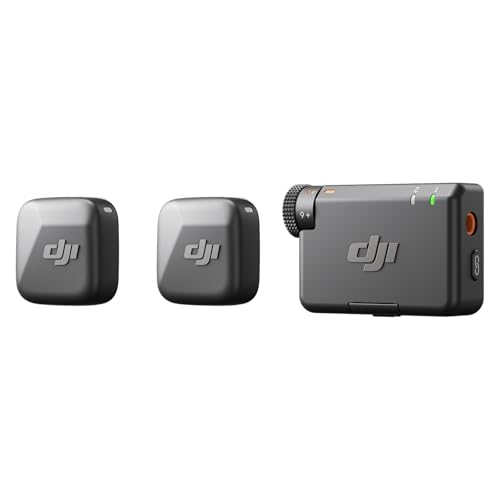
You can use a microphone without a dedicated external preamp, but you’ll need built-in amplification somewhere in your signal chain. Understanding whether a microphone can work without a preamp depends on your specific setup and microphone type.
USB microphones have integrated preamps, so they work independently and can function without additional equipment—making them ideal for creators and gamers seeking affordable, plug-and-play solutions. XLR microphones, however, require either an audio interface, mixer, or external preamp to amplify mic-level signals to line level. When asking “can a microphone work without a preamp,” the answer hinges on whether your microphone has built-in amplification or relies on external gear.
Attempting to use an XLR microphone without preamp amplification results in weak signals, increased noise, and poor audio quality that will compromise your podcasting, streaming, or recording projects. A microphone without a preamp in your signal chain means the delicate condenser or dynamic signals never reach proper levels for clean audio capture.
The type of microphone you’re using determines whether you can skip external gear or need dedicated equipment. For affordable setups, USB microphones eliminate the need for a separate microphone preamp entirely. Professional XLR options, conversely, demand either an audio interface with built-in preamp functionality or a standalone external preamp to properly amplify your microphone’s signal and deliver broadcast-quality results for your content.
Key Takeaways
- Dynamic microphones can function without external preamps if the audio interface provides sufficient gain for your recording needs.
- Condenser and ribbon microphones require preamps to operate properly, as they need phantom power or substantial signal amplification.
- USB microphones have built-in preamps and electronics, eliminating the need for external preamp hardware entirely.
- Without a preamp, mic-level signals (1–10 millivolts) may not reach usable line level, causing noise and distortion issues.
- Skipping a preamp risks ground loops, increased noise floor, and poor signal quality, especially with low-output microphones.
When Microphones Need a Preamp (and When They Don’t)
Since dynamic microphones are largely passive devices, they’ll produce a usable signal without an external preamp—provided your input device already supplies sufficient gain. Understanding when microphones need a preamp is fundamental to building an effective recording setup.
Different microphone types require different power arrangements, and knowing whether your specific mic needs external amplification can make or break your audio quality. Matching preamp impedance compatibility ensures optimal performance and prevents signal degradation across your audio chain.
Different microphone types require different power arrangements—knowing your mic’s amplification needs directly impacts audio quality.
USB mics include built-in electronics, eliminating external preamp needs entirely, making them ideal for creators and gamers seeking plug-and-play solutions. Unlike XLR microphones, which require separate interface connections, USB mics are designed for direct computer connectivity.
Condenser microphones, however, demand phantom power or integrated circuitry to function properly. Ribbon mics typically output low levels, making external preamps essential for signal clarity and minimal noise—a critical consideration for professionals and musicians recording at home.
When microphones need a preamp depends largely on your specific gear and use case. Budget-conscious creators should note that affordable condenser microphones with good sensitivity can work effectively with weaker preamps found in basic camera setups. Your setup’s success depends on matching microphone type to your interface’s capabilities.
For podcasters and streamers, understanding these distinctions guarantees you’ll achieve professional results without unnecessary equipment purchases.
Whether you’re determining if microphones need a preamp for your gaming setup, music production, or podcast recording, this knowledge directly impacts your audio quality and overall investment.
What Preamps Do and Why Microphones Need One
You’re working with a microphone that produces a mic-level signal—roughly 0.001V to 0.1V—which falls far short of the line-level standard (approximately 1.23V) that your mixer or audio interface expects.
A preamp closes this gap by amplifying that weak signal to usable strength, but it does more than just turn up the volume; it captures your audio early in the chain before noise and distortion can degrade the signal-to-noise ratio downstream. Properly designed preamps also isolate your microphone from downstream equipment, preventing interference that could further compromise audio quality. Quality preamps achieve impedance matching to ensure efficient signal transfer between your microphone and the rest of your audio chain. The preamp’s position as the first stage of amplification makes it critical for establishing a strong foundation for all subsequent processing.
Without this initial gain stage, you’d force a marginal signal through your equipment, risking a noisy or distorted output regardless of how much you amplify it later.
Boosting Weak Microphone Signals
Microphones produce extremely weak electrical signals—typically ranging from 0.001 V to 0.1 V, or roughly -30 to -70 dB—that are too quiet for direct recording or processing without amplification.
Boosting weak microphone signals is essential for creators, gamers, musicians, and professionals who want clean, professional recordings. You’ll need a preamp to boost these signals to usable levels. Here’s why:
- Early amplification reduces noise introduced by downstream devices.
- Stronger signals withstand degradation through mixers, interfaces, and converters.
- Proper gain staging guarantees later equipment handles your audio effectively.
- Flat or colored preamp types let you shape your sound while correcting microphone impedance mismatches.
Most preamps deliver 30-70 dB gain, making clean recording possible. A preamp’s phantom power supply also enables condensers and other powered microphone types to operate correctly. Phantom power is essential for supplying the necessary voltage to condenser microphones and active ribbon microphones that require external power sources. Quality preamps maintain signal integrity even at high gain settings above 50 dB, which is crucial for capturing dynamic and condenser microphones at their best.
When boosting microphone signals, you’re not just turning up volume—you’re establishing a foundation for quality audio that translates across podcasting, streaming, gaming, and professional recording applications.
Mic Level Versus Line Level
Mic level characteristics include voltages around 1 to 10 millivolts—roughly 1,000 times weaker than line level standards. Professional line level operates at +4 dBu (1.23 Vrms), while consumer line level sits at -10 dBV (0.316 Vrms). Your microphone outputs mic level; your mixer expects line level. Mic-level signals are typically specified between -60 and -40 dBu and require pre-amplification to reach usable line level. Mixing mic and line levels without proper conversion can cause audio issues ranging from inaudible signals to distortion from high voltage. An audio interface] bridges this gap by converting your microphone’s weak signal into a usable format for recording and playback.
For creators, gamers, and musicians, knowing the difference between mic level and line level is essential for avoiding common setup mistakes. These incompatible voltages mean you’ll experience weak, distorted, or unusable audio without proper amplification bridging the gap between them.
This is why understanding mic level versus line level specifications matters whether you’re podcasting, streaming, or recording music on a budget.
Whether you’re using an affordable USB microphone or a professional XLR setup, the mic level versus line level relationship remains constant. Proper gain staging and using a preamp ensures your signal converts from mic level to line level correctly, giving you clean audio across every stage of your production workflow.
Signal-to-Noise Ratio Impact
Your microphone performance depends critically on preamp selection:
- Low-output mics require substantial gain, and the impact of signal-to-noise ratio becomes immediately apparent—poor preamp choices expose noise more readily.
- Clean 30–60 dB gain preserves signal clarity without degrading audio fidelity, directly addressing SNR concerns. Understanding microphone gain helps you maintain optimal signal levels throughout your recording chain.
- Proper gain optimization keeps your desired signal well above the noise floor, minimizing the negative signal-to-noise ratio impact on your recordings.
- Equipment compatibility guarantees dynamic range capture without unnecessary hiss, ensuring optimal signal-to-noise ratio impact across your entire signal chain.
Effective noise management through sound engineering principles directly mitigates signal-to-noise ratio impact, maximizing recording quality for creators, musicians, and professionals. The weakest link in the chain dominates your overall SNR outcome, which is why preamp quality cannot be overlooked in your signal path. Preamp noise remains constant regardless of gain adjustments, but higher preamp gain improves your overall signal-to-noise ratio by lifting the desired signal further above that fixed noise floor.
This understanding establishes the foundation for professional audio outcomes within your signal chain, whether you’re building an affordable setup for podcasting or investing in streaming and gaming equipment.
USB Microphones: The Exception That Proves the Rule
You’ll find that USB microphones operate fundamentally differently from standard XLR models because they package a built-in preamp and analog-to-digital converter directly into the device.
This integrated design eliminates your need for external amplification or interface preamps—you can connect the USB mic straight to your computer and begin recording without additional gear.
The distinction matters because attempting to add an external preamp to a USB microphone creates unnecessary double amplification and clipping risk, making such additions both impractical and counterproductive to your signal chain.
USB microphones are specifically engineered for recording to computers, allowing content creators and musicians to achieve professional-quality audio without investing in complex external equipment setups.
Built-In Preamp Technology
You’re looking at integrated technology that combines several functions:
- Internal preamp raises low-level capsule output to usable levels
- Analog-to-digital converter transforms the boosted signal into digital data
- USB integration delivers processed audio directly to your computer
- Onboard DSP handles filtering, gating, and compression post-conversion
The advantages of built-in preamp technology**** eliminate the need for external hardware investments.
Modern preamp advancements in models like RØDE’s NT-USB+ prioritize low-noise gain stages, making them ideal whether you’re podcasting, streaming, gaming, or recording professional content. USB microphones simplify the recording process by handling signal amplification and conversion internally, eliminating setup complexity for users of all experience levels.
This integrated preamp technology fundamentally gives you a complete signal chain in one self-contained device.
For those navigating the buying journey, built-in preamp capabilities represent a significant advantage in affordable microphones.
Instead of purchasing separate preamp units, you’re getting studio-grade signal processing already engineered into your microphone.
You’re fundamentally getting a complete signal chain in one self-contained device, streamlining your recording workflow considerably and allowing you to focus on content creation rather than complex setup procedures.
No External Gear Required
While built-in preamp technology streamlines recording setups, USB microphones take this simplification further by eliminating external hardware entirely—a key advantage of choosing no external gear required for your recording solution. You connect directly to your computer via USB—no mixer, no external preamp, no phantom power needed. Your USB mic supplies its own gain stage and analog-to-digital conversion internally, delivering ready-to-use digital signals straight to your DAW. Unlike XLR microphones, which typically require additional audio interfaces and external preamps to function, USB mics handle all signal processing onboard.
| Feature | Conventional Setup | USB Microphone (No External Gear Required) |
|---|---|---|
| External Preamp | Required | Built-in |
| Setup Complexity | High | Minimal |
| Portability | Limited | Excellent |
This beginner-friendly approach combines recording simplicity with user convenience, making USB mics ideal for podcasting and portable sessions where technical limitations matter less than accessibility. For creators, gamers, and musicians just starting out, the appeal of no external gear required can’t be overstated—you eliminate the need for additional equipment investments and complex wiring. Whether you’re streaming, recording podcasts, or laying down demos, USB microphones that require no external gear deliver professional results without the learning curve or financial burden of traditional setups.
Why USB Mics Differ
Unlike conventional microphones that output analog signals requiring external processing, USB microphones integrate the capsule, preamp, and analog-to-digital converter into a single device—which is precisely why they don’t need external gear.
This fundamental difference in how USB mics differ from traditional setups makes them the go-to choice for creators, gamers, and streamers seeking plug-and-play solutions.
This self-contained design creates distinct USB mic advantages:
- Direct computer connection eliminates separate interface hardware
- Shorter signal path reduces noise and complexity
- Built-in gain control shifts amplification into the unit
- Immediate digital audio for recording software
The way USB mics differ extends beyond mere convenience. For podcasters and musicians on a budget, understanding why USB mics differ helps clarify whether this format suits your recording needs.
These differences in USB microphones mean you get streamlined setup—critical for streamers who need minimal downtime between sessions. USB microphones have become increasingly popular for streaming setups due to their all-in-one nature that eliminates the need for external audio interfaces.
However, USB mic limitations exist. You’re bound to one microphone per computer, constrained by internal circuitry quality, and unable to upgrade individual components separately.
The constraints that define how USB mics differ also reveal their trade-offs: you gain immediate portability and simplicity but sacrifice modularity and expandability.
Understanding this distinction in how USB mics differ ensures you make informed decisions when selecting affordable microphones for podcasting, streaming, gaming, or recording.
Recognizing both the advantages and the ways USB mics differ from traditional setups defines their exceptional position in the creator toolkit.
XLR Microphones: Why an External Preamp Usually Matters
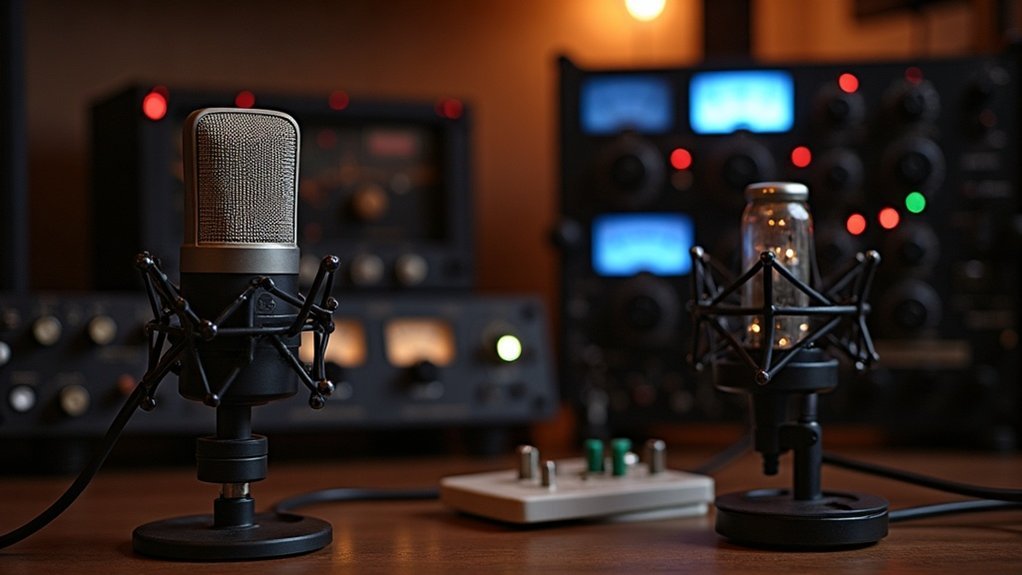
XLR microphones output mic-level signals—roughly 40 to 60 decibels weaker than the line-level signals your recording interface expects. You’ll need amplification to achieve usable recording quality, which is why understanding why an external preamp usually matters becomes essential for creators and musicians alike.
Built-in preamps rarely exceed 60 dB; low-output dynamics and ribbons often demand 70 dB or more for clean gain. This gap is where external preamps deliver tangible benefits: lower noise floors, superior headroom, and microphone compatibility across diverse sources. Unlike condenser microphones that require phantom power to operate their active electronics, dynamic and ribbon microphones rely entirely on preamp gain for signal strength.
External preamps bridge the gain gap where built-in units fall short, delivering lower noise and superior headroom for demanding microphones.
For podcasters and streamers working with affordable XLR setups, recognizing why an external preamp usually matters can mean the difference between amateur and professional sound.
Beyond gain requirements, external preamp options provide sound character shaping—adding warmth, presence, or transparency that transforms your recordings.
When you understand why an external preamp usually matters for your specific microphone, you can make informed decisions that elevate your entire signal chain. Matching preamps to your dynamic needs guarantees tonal shaping happens at the source, reducing processing demands later and improving overall recording quality substantially.
Whether you’re gaming, recording music, or producing content, investing in the right external preamp amplifies both your audio fidelity and creative control.
Built-In Microphone Preamps: Interfaces, Mixers, and Powered Speakers
Most recording setups already include built-in microphone preamps—you’ll find them integrated into audio interfaces, mixers, and some powered speakers. Understanding these built-in microphone preamps is essential for anyone setting up an affordable recording solution.
- Audio interfaces feature built-in microphone preamps that boost mic signals to line level before analog-to-digital conversion, making them foundational for podcasting and streaming setups.
- Mixers provide preamp quality and versatility across multiple channel strips, with some built-in microphone preamps offering superior tonal shaping for musicians and professionals.
- Powered speakers require internal preamp stages if they include mic inputs, though these built-in microphone preamps typically handle basic monitoring rather than primary recording. Many condenser microphones depend on phantom power delivered through these preamp stages to operate effectively.
- Interface comparison reveals that built-in microphone preamps handle standard recording workflows efficiently, eliminating the need for external gear in most budget-conscious setups.
The prevalence of built-in microphone preamps across consumer equipment means you won’t need external preamps unless you’re chasing specific tonal character or additional gain.
Most creators, gamers, and professionals rely on these integrated microphone preamp solutions as their default signal path, making separate units optional rather than essential.
Whether you’re recording podcasts, streaming games, or capturing music, built-in microphone preamps in your interface or mixer typically provide everything needed for honest, quality recordings without breaking your budget.
Why Skipping a Preamp Backfires: Noise, Hiss, and Feedback
Ground loop vulnerabilities emerge, introducing hum and buzz that wouldn’t occur with balanced interconnection and proper preamp buffering. An audio interface typically includes built-in preamps designed to manage these signal-conditioning challenges automatically. Your signal clarity suffers as the noise floor rises relative to desired content, a critical concern for podcasters and streamers relying on budget-friendly microphones.
Skipping a preamp introduces noise that dedicated gain staging prevents, leaving creators, musicians, and gamers struggling with unwanted hiss and feedback.
Feedback prevention becomes harder without a dedicated gain staging buffer, particularly when working with affordable recording setups where every stage matters.
For professional audio—whether you’re streaming, podcasting, or recording music—avoiding the preamp backfire requires understanding that skipping this stage sacrifices both technical precision and operational reliability.
Your investment in quality affordable microphones deserves proper signal chain architecture to maximize performance across every stage of your recording journey.
Does Mic Type Matter? Dynamics, Condensers, and Ribbons
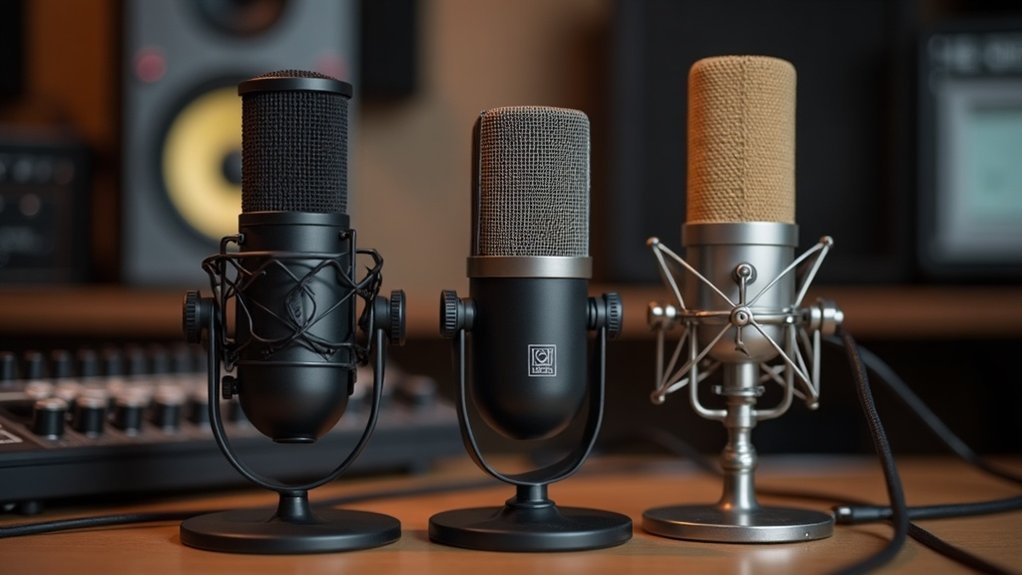
Your choice of microphone type fundamentally determines whether you can operate without a preamp, since different designs have vastly different power requirements and output levels.
- Dynamic microphone advantages include phantom power independence and robust handling of loud sources, making them ideal for live vocals and drums. For creators and streamers prioritizing affordability, dynamics vs. condensers vs. ribbons comparisons consistently show dynamics winning in no-preamp scenarios.
- Condenser microphone limitations require 48V phantom power; they’re impractical without powered equipment despite superior sensitivity. Understanding these microphone type tradeoffs helps podcasters and gamers avoid costly infrastructure investments.
- Ribbon microphone characteristics offer warm tone but demand substantial gain due to low output levels—a consideration when evaluating dynamics, condensers, and ribbons for budget-conscious musicians.
- Microphone application scenarios dictate compatibility: dynamics suit high-volume sources, while condensers require preamp infrastructure. Knowing how microphone types align with your streaming, recording, or gaming setup prevents purchasing mismatches.
Dynamics remain your best no-preamp choice, delivering the versatility that does microphone type matter for affordable, professional-quality content creation across podcasting, streaming, and recording applications.
Should You Buy a Dedicated Preamp? When It Matters and When It Doesn’t
You’ll benefit most from a dedicated preamp when your interface’s gain sits near 90–100%, when audible noise plagues quiet passages, or when low-output dynamics remain too quiet despite normal gain staging. However, most home studios don’t need separate hardware—built-in preamps handle typical recordings fine.
When it matters and when it doesn’t comes down to honest technical assessment rather than gear obsession. Consider upgrading only when clear technical problems emerge: insufficient gain, noise floor issues, or impedance mismatches that your interface can’t resolve. Dynamic microphones operate without batteries because they use electromagnetic induction to convert sound waves into electrical signals, making them a practical choice for budget-conscious recordists.
The question of whether to buy a dedicated preamp shouldn’t drive purchasing decisions based on chasing audio clarity alone—instead, focus on solving real limitations.
For podcasters, streamers, and musicians working with budget-friendly microphone setups, deciding if you should buy a dedicated preamp often means testing your current chain first.
Preamp benefits justify the investment primarily through addressing genuine bottlenecks in your signal path, not through spec sheets or audio engineering theory. Start with what you have, identify actual problems, then invest in dedicated preamp hardware only when those problems become undeniable.