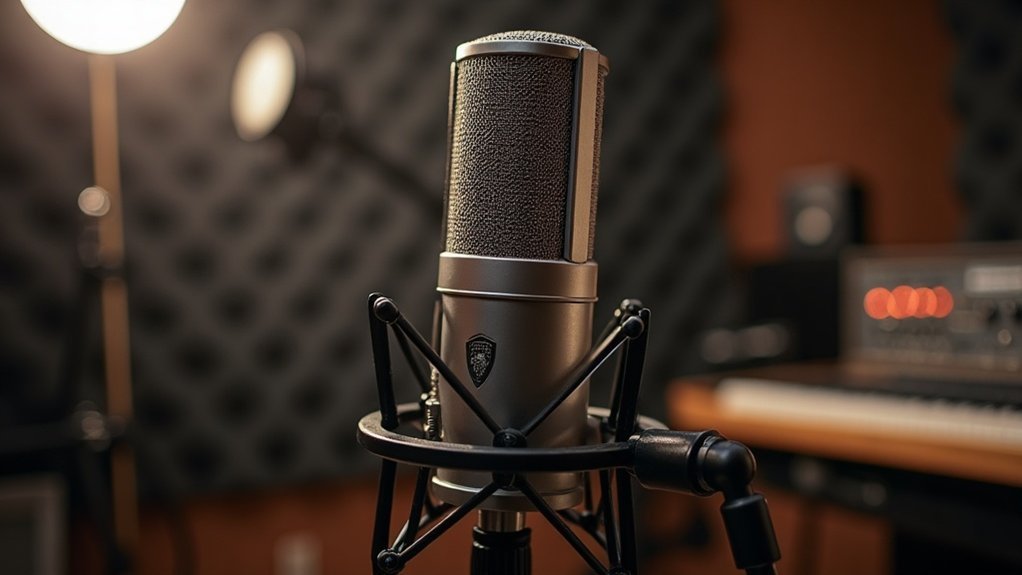
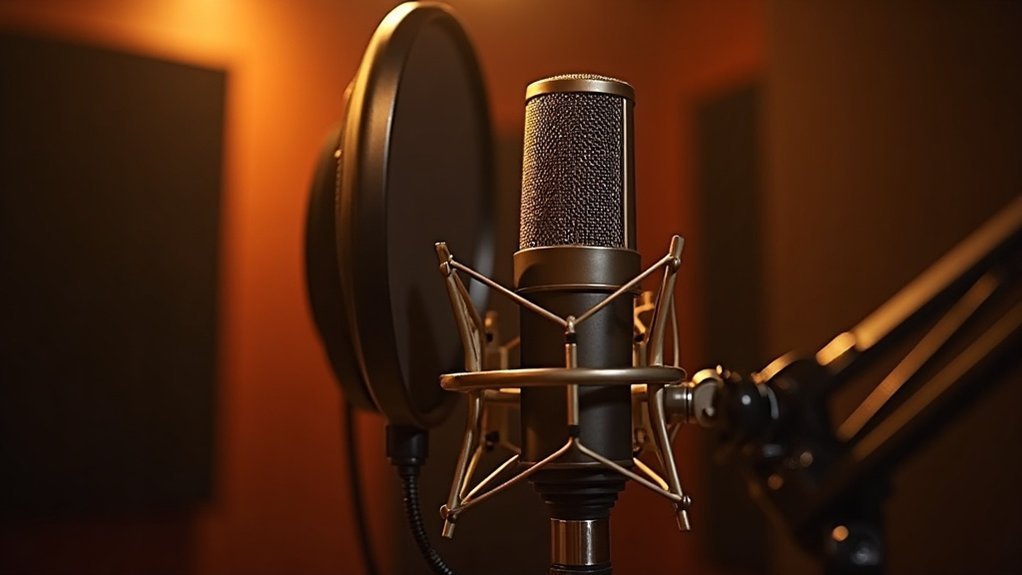
You can absolutely record vocals with a dynamic microphone and achieve professional results. They’re excellent for capturing clean performances in untreated rooms since their lower sensitivity naturally rejects background noise—a key advantage when learning how to record vocals with a dynamic microphone on a budget.
When recording vocals with a dynamic microphone, position the mic 3–6 inches from your mouth at a 45-degree angle to minimize plosives while maximizing clarity. Dynamic mics do require EQ compensation—particularly in the 4–8 kHz range to recover brightness—and a quality preamp delivering 50–60 dB gain.
The process of recording vocals using a dynamic microphone differs from condensers, but understanding these specific strengths reveals how to access studio-quality results without expensive gear. Whether you’re podcasting, streaming, or music production, dynamic microphones for recording vocals offer affordable solutions that don’t compromise on quality when properly positioned and processed.
Key Takeaways
- Yes, dynamic microphones can record vocals effectively, especially for loud singers and intense performances without distortion.
- Dynamic mics reduce room noise naturally due to lower sensitivity, making them suitable for untreated recording spaces.
- Positioning the mic 3–6 inches away at a 45-degree angle optimizes vocal capture and minimizes plosives.
- EQ compensation in the 4–8 kHz range and preamp gain of 50–60 dB recover lost vocal clarity.
- Dynamic mics offer affordable, reliable vocal recording alternatives to condensers when properly positioned and processed.
Yes, You Can Record Studio Vocals With a Dynamic Mic
Their vocal genre compatibility extends to loud singers and screaming styles that benefit from reduced sensitivity. Dynamic microphones also reduce room noise in larger live rooms, making them excellent for vocal recording environments where acoustic treatment is limited. The electromagnetism-based conversion process in dynamic microphones enables them to handle high sound pressure levels, which is crucial for capturing intense vocal performances without distortion. Dynamic microphones use electromagnetic induction principles to convert sound waves into electrical signals, making them uniquely suited for demanding vocal applications.
Recording studio vocals using dynamic microphones opens up creative possibilities for producers who’ve successfully tracked lead vocals on well-known albums. When considering whether you can use a dynamic mic for studio vocals, the answer is a resounding yes—especially for specific vocal needs where condenser setups aren’t available or preferred.
Studio vocal recording with dynamic mics works exceptionally well when you understand their strengths. Rather than treating dynamic microphones as solely live sound tools, professionals recognize them as legitimate alternatives for affordable, reliable studio vocal capture.
When you’re building your recording chain for vocal tracking, consider recording vocals with dynamic microphones as a practical solution that delivers impressive results without the cost and sensitivity management of condenser alternatives.
Why Dynamic Mics Capture Clean Vocals Without the Room Noise
Your sensitivity benefits emerge from reduced distant-noise pickup and improved signal-to-noise ratio when you position the mic near your mouth. Off-axis rejection tightens your polar pattern, suppressing room reflections from walls and surfaces. Many dynamics also roll off high frequencies earlier than condensers, softening room brightness perception.
When you’re streaming, podcasting, or recording in a bedroom or home studio, this ability to capture clean vocals in noisy rooms becomes invaluable without requiring expensive acoustic treatment.
You’re not removing room sound—you’re balancing vocal dominance over environment through:
- Lower sensitivity reduces background capture of ambient noise, fan hum, and traffic
- Close positioning favors direct sound over reflected energy
- Cardioid patterns reject off-axis reflections from untreated walls
- High-frequency roll-off masks room character and echo
Cardioid microphones provide superior directional control compared to omnidirectional designs, making them particularly effective at isolating vocals from surrounding room noise and ambient interference.
For musicians, gamers, and professionals on a budget, understanding how to capture clean vocals without room noise using a quality dynamic mic removes a major barrier to producing broadcast-quality content at home. Dynamic microphones are particularly cost-effective, often priced at half the cost of entry-level condenser microphones, allowing you to invest savings in other critical studio equipment. Their warm, polished sound makes them ideal for content creators who want natural-sounding vocals without harshness or unwanted artifacts.
This practical approach to clean vocal recording works across podcasting, streaming, and music production setups without needing treated spaces or premium equipment.
How to Position Your Dynamic Mic for Maximum Clarity
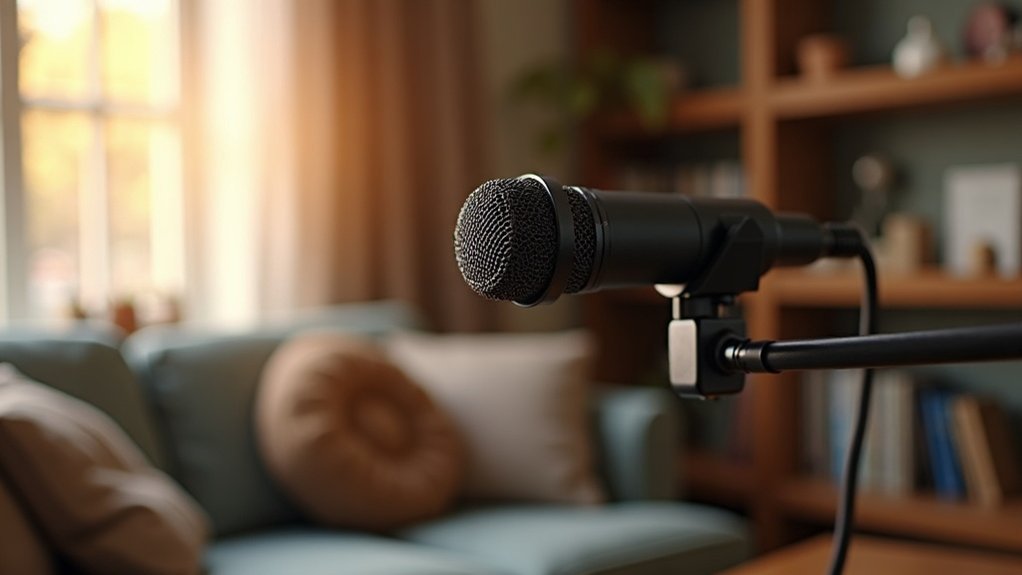
Positioning your dynamic mic for maximum clarity transforms vocal quality from muddy and distant to present and articulate. Start with mic distance of 3–6 inches from your mouth, then adjust your off axis angle to approximately 45 degrees to reduce plosives. Height adjustment matters too—position the capsule slightly above mouth level to minimize breath noise while maintaining vocal presence.
How you position your dynamic microphone directly impacts recording quality, so capsule orientation should aim toward your voice source, ideally at the mouth’s corner. Record a test track with hard consonants to evaluate fullness and plosive control. Fine-tune based on what you hear, moving closer for presence or farther off-axis for harshness reduction. Closer placement results in a bassier sound, which can add warmth to your vocals if you prefer more low-end presence. For even greater control over audio levels, consider using gain boosters like a Cloudlifter to compensate for the low gain nature of dynamic microphones. Setting appropriate microphone gain levels during your initial setup ensures your recordings capture vocal detail without distortion or unwanted noise.
Capsule orientation toward the mouth’s corner directly impacts recording quality—test with hard consonants and adjust distance for your ideal balance of presence and clarity.
For streamers, podcasters, and musicians working with affordable microphones, mastering dynamic mic positioning unlocks professional-sounding results without expensive gear. The positioning technique works across budget and premium models alike—whether you’re gaming, streaming, or recording music, proper dynamic microphone positioning eliminates common issues like proximity effect and sibilance.
Experiment with these positioning adjustments during your setup phase to discover your mic’s sweet spot. Getting your dynamic mic for maximum clarity right at the start saves hours of re-recording and post-production cleanup, making it an essential foundation for any creator’s recording setup.
Where Dynamic Mics Fall Short (And How to Compensate)
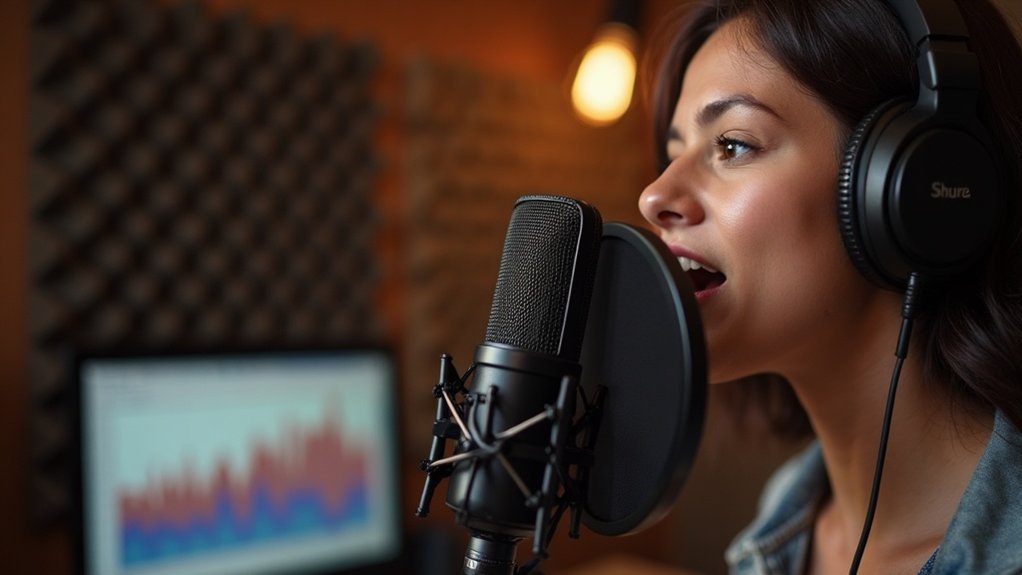
While dynamic microphones excel at rejection and durability, they’re inherently limited in sensitivity, high-frequency capture, and transient response—constraints that directly affect vocal recording quality.
Understanding where dynamic mics fall short is essential for creators, gamers, and musicians working with budget-conscious setups.
These dynamic mic limitations demand strategic compensation:
- Gain staging: Use high-quality preamps delivering 50–60 dB clean gain without introducing hiss. This addresses one of the primary areas where dynamic mics fall short in sensitivity.
- Proximity management: Position 2–4 inches away to minimize bass buildup while capturing articulation—a technique that compensates for reduced transient response. Dynamic microphones also excel at strong sound rejection, which helps isolate vocals from unwanted background noise during close-proximity recording.
- EQ intervention: Boost 4–8 kHz to recover lost brightness and consonant detail, directly tackling where dynamic mics fall short in high-frequency capture. Research by Parsa et al. (2001) documented that dynamic microphones introduced frequency dips of 10 to 20 dB in the critical 400-2000 Hz range, underscoring why EQ intervention is essential for vocal clarity.
- Room treatment: Control ambient noise since higher gain exposure amplifies environmental noise—critical when compensating for dynamic mic weaknesses. Reducing background noise through acoustic treatment directly improves signal to noise ratio, ensuring your vocal recordings remain clean even with elevated preamp settings.
Understanding these vocal recording challenges and recognizing where dynamic mics fall short lets you leverage dynamic microphones effectively for podcasting, streaming, and recording.
Match their strengths to appropriate sources rather than fighting inherent constraints. For affordable setups, strategic compensation transforms dynamic mic limitations from obstacles into manageable trade-offs that deliver professional results without premium pricing.
Mixing and EQ Strategies for Dynamic Vocal Tracks
| Frequency Range | Purpose |
|---|---|
| 80–100 Hz | High-pass filtering |
| 200–500 Hz | Muddy low-mid reduction |
| 2–4 kHz | Harshness control |
| 6–8 kHz | Sibilance management |
| 10–12 kHz | Air and shimmer |
Layer presence shaping with gentle 2–5 kHz boosts for intelligibility, then add high-frequency air subtly. Understanding the differences between condenser and dynamic microphones helps inform your EQ choices, since dynamic mics naturally have proximity effect and presence peaks that require different tonal shaping than condensers. Employ vocal automation before compression for phrase-level consistency, ensuring dynamic vocal track EQ responds predictably to performance variations. This systematic frequency balancing and clarity enhancement preserves natural tone while maximizing translation across playback systems—critical whether you’re monitoring through studio monitors, headphones, or consumer speakers. Mastering these mixing strategies for dynamic vocal tracks ensures your affordable microphone investment yields professional results at every playback destination.