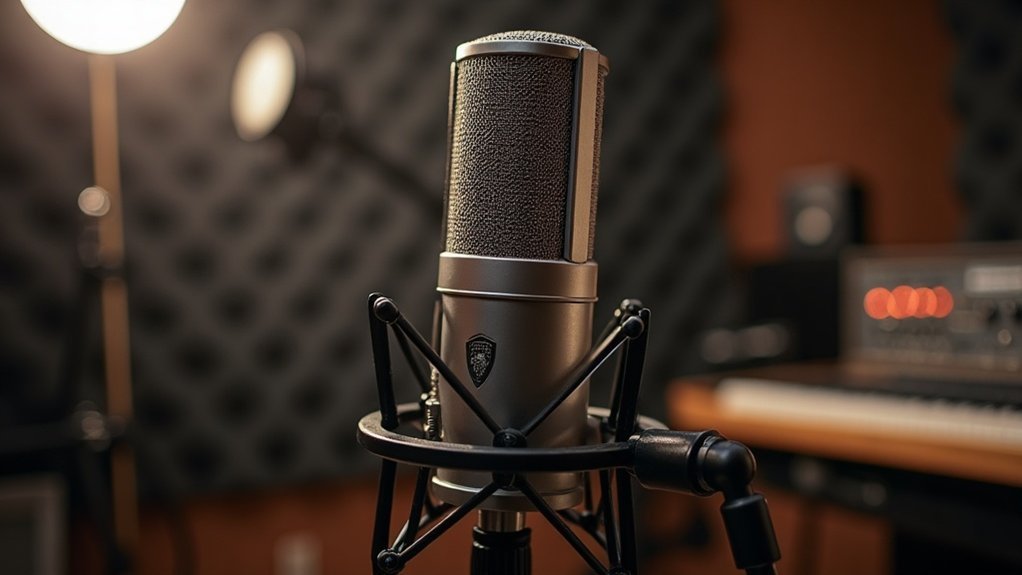

A de-esser is an essential audio tool that targets and reduces harsh sibilance in vocal recordings, specifically addressing high-frequency peaks between 4 kHz and 10 kHz. This vital device operates by applying gain reduction only when sibilance exceeds a set threshold, allowing you to maintain your voice’s natural tone and clarity. In the realm of mixing for vocals and even instruments, understanding how a de-esser works will significantly enhance your production quality. As you explore affordable microphones for podcasting, streaming, gaming, and recording, knowing the role of a de-esser will help you achieve clearer and more professional-sounding audio. There’s much more to discover about its applications and settings in various recording scenarios.
Key Takeaways
- A de-esser is a tool for managing sibilance in vocal recordings by targeting harsh high-frequency peaks between 4 kHz and 10 kHz.
- It applies gain reduction only when sibilance exceeds a set threshold, preserving the natural tone of the voice.
- De-essers enhance vocal clarity and intelligibility, making them essential in vocal mixing and podcast production.
- They can also tame harshness in other instruments, like distorted guitars, improving the overall mix quality.
- Effective use involves careful frequency selection and appropriate settings to avoid over-compression and maintain audio clarity.
What’s a De-Esser and Why Do You Need One?
A de-esser is an essential tool for audio engineers, specifically designed to manage sibilance in vocal recordings. Understanding what a de-esser is and why you need one is crucial for anyone involved in audio production.
This frequency-selective dynamics processor targets harsh high-frequency peaks, typically between 4 kHz and 10 kHz, effectively providing sibilance control. By applying gain reduction only when sibilance exceeds a threshold, it preserves audio clarity and the natural tone of the voice. In particular, high-frequency ranges can enhance vocal presence, making it essential for achieving a rich sound. Additionally, mastering vocal clarity is a significant goal in audio production, emphasizing the importance of de-essers.
Uncontrolled sibilance can lead to listener fatigue and distract from the overall message, which is why knowing how a de-esser works is vital for achieving high-quality sound. Additionally, modern digital de-essers allow for variable frequency selection, enhancing accuracy in managing specific sibilant sounds.
Using a de-esser guarantees smoother vocal tones, consistent dynamics, and improved translation across playback systems. Thus, it becomes indispensable for achieving professional-sounding mixes in modern audio production.
Whether you’re a podcaster, streamer, or musician, understanding what a de-esser is and why you need one can significantly enhance your audio experience.
Common Use Cases for De-Essers
When you mix vocals, a de-esser can be essential for controlling sibilance, ensuring clarity without sacrificing presence. In podcast production, it helps maintain listener engagement by smoothing out harsh peaks that might cause fatigue. Understanding these common use cases allows you to enhance overall audio quality effectively. Additionally, de-essing helps tame harshness in distorted electric guitars, which can improve the overall mix. This technique is particularly effective for targeted attenuation of specific harsh frequencies that might otherwise disrupt the listening experience.
Vocal Mixing Techniques
Though sibilance can enhance vocal clarity, it often becomes problematic, particularly in certain mixing scenarios. Implementing a de-esser for sibilance reduction is vital for frequency balancing in your mixing workflow. This dynamic processor targets harsh “S,” “T,” and “SH” sounds, preserving audio transparency while maintaining tonal consistency. By strategically placing the de-esser after corrective EQ, you ensure that vocal presence isn’t compromised.
When exploring vocal mixing techniques, setting appropriate thresholds and reduction amounts is crucial. A de-esser tames excessive sibilance to achieve effective dynamic processing without introducing artifacts. Such meticulous attention to detail not only enhances the overall vocal clarity but also contributes to a more polished and engaging listening experience.
Podcast Production Enhancements
Sibilance reduction plays a pivotal role in podcast production enhancements, particularly when it comes to achieving professional audio quality. By utilizing de-essers, you can effectively manage harsh “s,” “sh,” and “z” sounds that disrupt voice clarity in podcast audio. This is essential in varied recording environments, especially close-miked situations where the nuances of sound can be amplified. De-Essing is essential for producing high-quality podcasts, allowing for a more enjoyable listening experience.
Implementing techniques for sibilance reduction not only improves sound quality but also heightens listener engagement, ensuring a balanced tonal experience. A common tool in audio mixing, employing editing strategies like post-compression de-essing is crucial in refining audio dynamics, whether you’re working on interviews or voiceovers. Tools for sibilance reduction, such as advanced de-essers, help smooth out these audio elements, significantly enhancing the overall listening experience.
How a De-Esser Works?
A de-esser operates through frequency-selective dynamics processing, specifically designed to target sibilant sounds without affecting the entire audio signal. Understanding how a de-esser works reveals its mechanics for dynamically reducing harshness in the high-frequency range, typically between 4 kHz and 10 kHz.
A de-esser targets sibilant sounds through frequency-selective dynamics processing, enhancing clarity while preserving overall audio quality.
Key functions include:
- A detector circuit that isolates sibilant frequencies effectively.
- Gain reduction that activates only when sibilant energy exceeds a predetermined threshold.
- Fast, short-lived processing that maintains vocal clarity and presence.
- It functions as a hybrid between EQ and compressor, ensuring transparency and maintaining the overall tonal balance. This process aims for a smoother, more polished result while retaining the brightness of the vocals. Additionally, the de-esser’s ability to reduce sibilance without altering vocal timbre is crucial for achieving professional-sounding recordings.
This dynamic processing allows you to control sibilance effectively while preserving audio quality, making it an essential tool for anyone looking to enhance their recordings, whether for podcasting, streaming, or music production.
Understanding how a de-esser works can significantly improve your sound clarity and listener experience.
Essential Controls for Effective De-Essing
When you’re setting up a de-esser, threshold settings and frequency selection are essential for effective sibilance control.
You need to carefully adjust the threshold to target only the problematic peaks, while choosing the right frequency range guarantees you’re addressing the most aggressive sibilance.
Getting these controls right helps maintain the vocal’s natural tone and clarity in the mix.
Threshold Settings Importance
Effective de-essing hinges on properly setting the *threshold settings importance*, as this crucial factor determines the activation point for sibilance reduction. Achieving ideal threshold calibration is essential for effective sibilance control and dynamic response.
Consider the following:
- Monitor meter observation to confirm gain reduction only on harsh sibilance, emphasizing the *importance of threshold settings*.
- Adjust sensitivity for vocal clarity without dulling the overall performance, highlighting how *threshold settings play a critical role*.
- Target frequency ranges specifically associated with problematic “S” sounds, underlining the *significance of properly calibrated thresholds*.
- Maintain a balanced threshold to avoid both under-triggering and over-compression, reinforcing the *key role that threshold settings hold* in achieving optimal sound quality.
Frequency Selection Techniques
Setting the right threshold is only part of the de-essing process; frequency selection techniques play a pivotal role in achieving clear and balanced vocals.
Start by performing frequency sweeps with a parametric EQ, using a high Q boost to locate sibilance hotspots between 4 kHz and 10 kHz. Narrow bandwidth control isolates the offending frequency, ensuring you capture only the harshest consonants.
Utilizing band pass settings for precise targeting is essential, and considering split band de-essing can help maintain vocal warmth.
Adjust Q values carefully—higher values for narrow bands, lower for broader ranges—to avoid overprocessing while preserving the natural brightness in your vocals.
Mastering frequency selection techniques is crucial for any creator, musician, or professional aiming to enhance their audio quality effectively. Additionally, understanding frequency response in your audio gear can further improve your de-essing results.
Benefits of Using a De-Esser in Mixing
Using a de-esser in mixing greatly enhances vocal clarity and intelligibility, especially in complex arrangements. The benefits of using a de-esser in mixing are manifold, making it an indispensable tool for any audio engineer.
Here are several key advantages:
- Dynamic control of sibilance ensures that only problematic frequencies are attenuated, allowing for precise adjustments that enhance vocal clarity.
- Improved listener comfort is achieved by reducing harshness, making vocals easier to digest and more enjoyable for the audience.
- Enhanced mix consistency occurs as controlled sibilance allows vocals to sit well across various playback systems, ensuring a balanced sound regardless of the environment.
- A de-esser provides audio polish without sacrificing brightness, maintaining transient response and frequency precision that elevates your overall mix quality.
Incorporating a de-esser not only elevates your mixes but also fosters a professional sound that resonates with listeners.
Limitations of De-Essers

While the advantages of a de-esser in mixing are significant, it’s important to recognize the limitations of de-essers as well.
Detection challenges arise from frequency detection that often misidentifies sibilance due to bright transients. Additionally, control limitations in attack and release settings restrict adaptation to varied vocal characteristics, which can lead to potential sound artifacts.
Coverage issues mean single de-essers may fail to address all sibilant zones, necessitating manual edits. Workflow constraints can complicate processing chains, as sibilance may re-emerge depending on the order of effects.
Ultimately, maintaining vocal clarity can require supplemental techniques to overcome these inherent limitations of de-essing. Understanding these limitations of de-essers is crucial for creators, gamers, and musicians who rely on clear audio for their projects.
Techniques for Effective De-Essing
Mastering effective de-essing techniques is crucial for enhancing vocal clarity and reducing unwanted sibilance in your mixes. By implementing these strategies, you can achieve a polished sound:
- Utilize frequency targeting for sibilance detection, particularly focusing on the 3–8 kHz range, where sibilance is most pronounced.
- Employ manual gain adjustments to isolate sibilant sounds, allowing for natural attenuation and a smoother vocal presence.
- Leverage dedicated de-esser plugins, beginning with moderate gain reduction settings to effectively control sibilance without compromising vocal quality.
- Consider dynamic processing methods like multiband compression to manage harsh frequencies, ensuring your recordings maintain clarity even in the presence of sibilance.