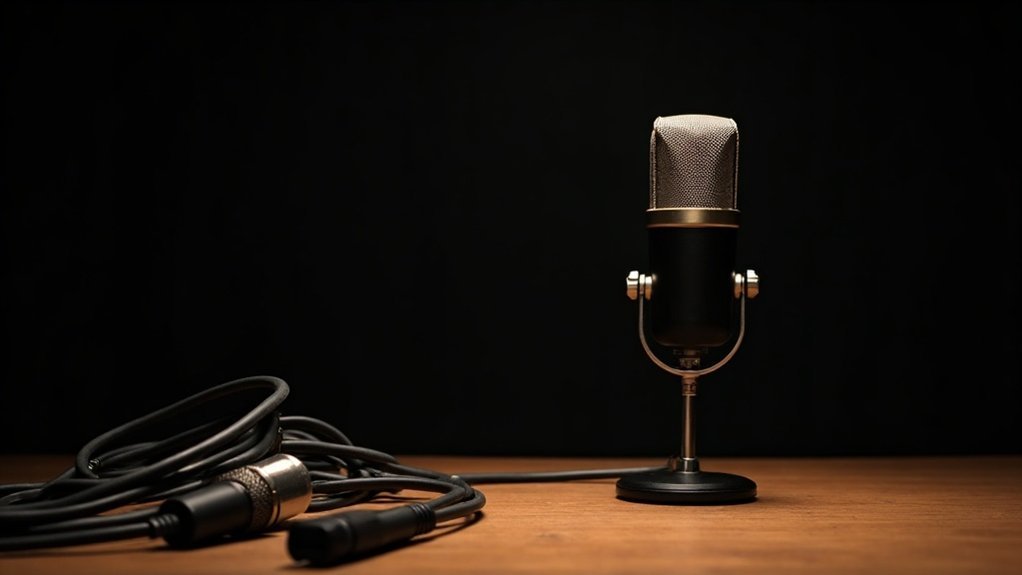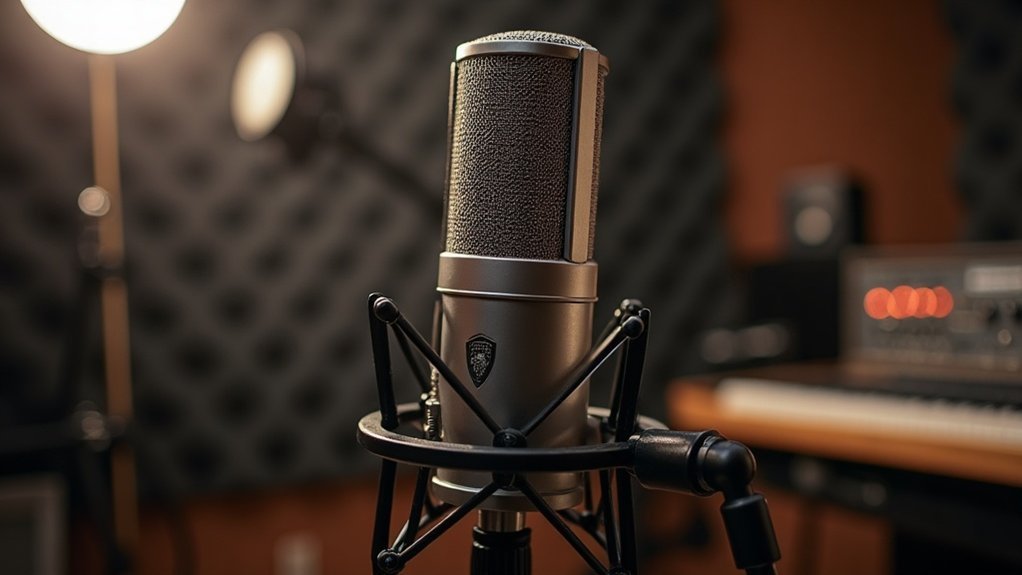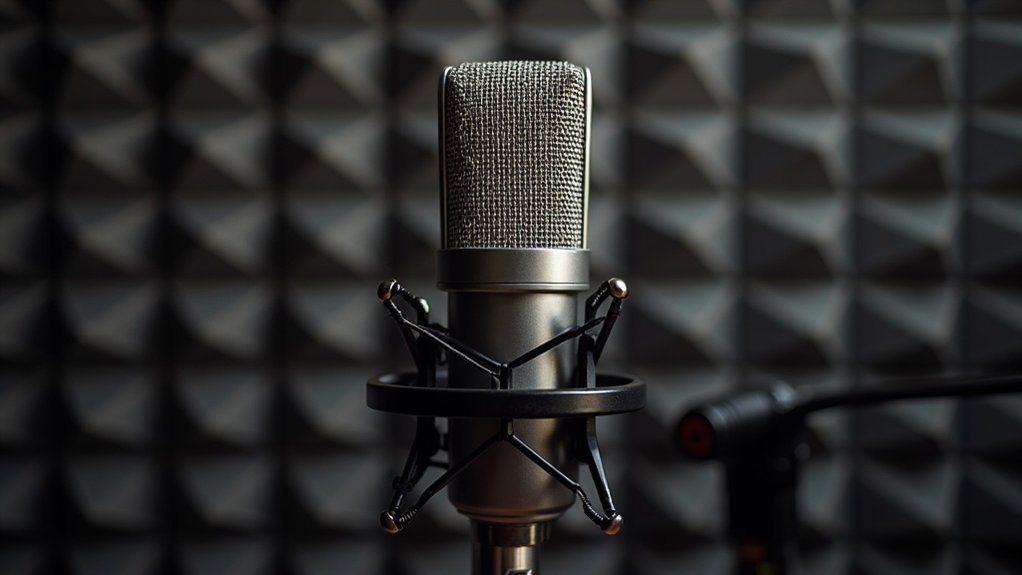
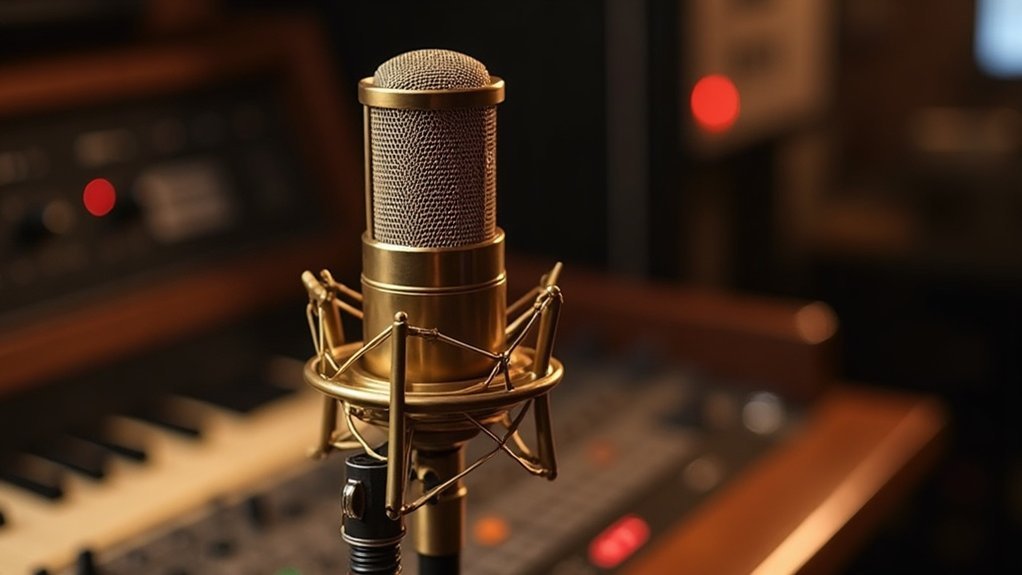
A tube microphone is a professional audio device that employs vacuum tubes for amplification, resulting in rich, warm sound qualities that enhance your recordings. This type of microphone features essential components such as a large-diaphragm condenser capsule, a vacuum tube for signal amplification, and an output transformer that shapes the sound. Tube microphones excel at capturing vocals and acoustic instruments, adding harmonic richness and depth that many creators seek. If you’re interested in understanding how to select the right tube microphone for your needs, you’ll find valuable insights ahead. Whether you’re a musician, podcaster, or gamer, knowing how to choose the best tube microphone can significantly improve your audio quality.
Key Takeaways
- A tube microphone is an active microphone that uses a vacuum tube for amplification, delivering a warm and rich sound quality.
- It features a large-diaphragm condenser capsule, vacuum tube, and output transformer, which shape its tonal characteristics.
- Tube mics are known for their harmonic distortion, providing a vintage sound with smooth highs and enhanced midrange warmth.
- They excel in studio environments, especially for capturing vocals and acoustic instruments, adding depth and texture to recordings.
- Regular maintenance, including tube replacement, is required to keep tube microphones functioning optimally and to ensure sound quality.
What Is a Tube Microphone and How Does It Work?
A tube microphone is an active microphone that incorporates a vacuum tube in its amplification and impedance-conversion circuit, allowing it to capture sound with remarkable fidelity. Understanding what a tube microphone is and how it works can greatly enhance your recording experience.
A tube microphone utilizes a vacuum tube for exceptional sound fidelity, enhancing your recording experience with its unique warmth and richness.
Originating in the early 20th century, tube microphones revolutionized recording techniques by delivering rich tonal characteristics and warmth. The triode within the microphone amplifies the low-level signal from the condenser capsule, converting high impedance to low for effective cable transmission. This process enhances harmonic content, resulting in smooth, natural sound. Tube microphones are known for their distinct tonal characteristics that many recording professionals prefer over solid-state options. Additionally, tube circuits provide a distinct sound character that enriches the overall audio experience.
By requiring external power and warm-up time, tube microphones offer distinctive audio qualities that continue to attract recording professionals seeking that vintage warmth.
If you’re exploring the world of microphones, knowing what a tube microphone is and how it works can help you make informed decisions for your podcasting, streaming, or recording needs. Understanding the unique advantages of tube microphones can be invaluable for creators and musicians looking to achieve high-quality audio.
Essential Components of Tube Microphones
Understanding the essential components of tube microphones is vital for anyone aiming to leverage their distinctive audio qualities.
The capsule design, which is primarily a large-diaphragm condenser, converts sound into electrical signals, with its material and thickness significantly influencing transient response and tonal character.
In the realm of tube microphones, the vacuum tube amplifies this low-level signal, ensuring it matches the output transformer. This transformer plays a crucial role in shaping frequency response and coloration, making the microphone’s signal suitable for typical inputs. The vacuum tube electronics add harmonic saturation and compression, enhancing the microphone’s overall warmth and richness. Notably, the importance of proper handling cannot be overstated, as it prevents damage to these delicate components.
Each component—from the capsule to the transformer—contributes to the overall performance, underscoring the importance of understanding these essential components of tube microphones to achieve exceptional sound quality in your recordings.
Whether you’re a musician, podcaster, or gamer, mastering these elements will enhance your audio experience.
The Role of Vacuum Tubes in Audio Quality
While many factors contribute to audio quality, the role of vacuum tubes in audio quality is essential in shaping the sound of recordings. Their tube characteristics allow for the amplification of weak audio signals, delivering a rich, warm sound. This warmth arises from even-order harmonic distortion effects, creating a musical quality often preferred over the clinical precision of solid-state designs. Tubes also provide soft clipping during overload, rounding off harsh peaks and preserving dynamic range, which enhances the listening experience. Ultimately, the interaction between circuit design and tube behavior is vital, making vacuum tubes a cornerstone in achieving the desired sonic richness in recordings. Understanding how vacuum tubes influence audio quality can help creators and musicians appreciate their unique contributions to the sound of their projects. Additionally, their ability to tolerate large overloads ensures that recordings maintain integrity even in demanding situations.
Tube vs. Solid-State Microphones?
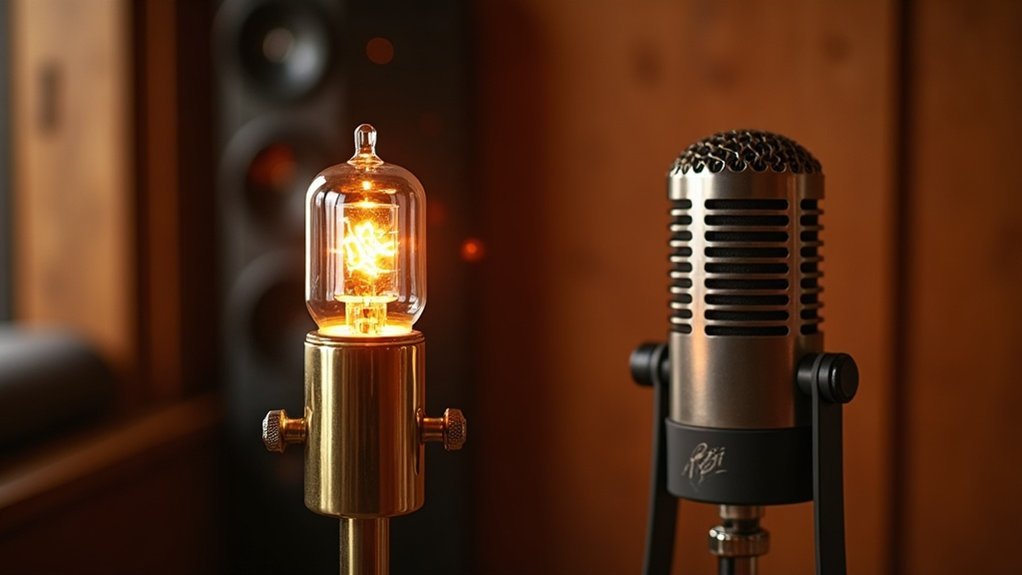
When comparing tube and solid-state microphones, you’ll notice significant differences in their amplification technology and tonal characteristics. Tube microphones tend to deliver a warm, colored sound with unique harmonic distortion, while solid-state models offer a clean, neutral response with faster transient handling. Understanding these distinctions can help you choose the right microphone for your specific recording needs. Additionally, different circuit types yield distinct sonic characters that can further influence your choice. Tube microphones, known for their vintage, saturated tone, excel in studio environments where warmth and detail are paramount.
Amplification Technology Differences
When exploring amplification technology differences, it becomes clear that tube and solid-state microphones utilize fundamentally different amplification methods, each impacting their performance characteristics and applications.
- Tube mics leverage vacuum tubes for impedance matching, while solid-state mics utilize transistors or FETs. These unique functions of each type can significantly influence the overall sound quality.
- Tube designs often incorporate transformer-coupled outputs, which enhance signal integrity and contribute to a distinctive tonal character.
- In contrast, solid-state microphones typically operate on phantom power, simplifying the setup process for users.
- Tube circuits are known for exhibiting higher self-noise and dynamic behavior, which introduces harmonic distortion that can be desirable in certain contexts. Additionally, the interaction between mic and performer is crucial for capturing the right sound in recordings.
- Solid-state designs, on the other hand, prioritize lower noise floors and consistent response, ensuring maximum neutrality in recordings.
These amplification technology differences play a crucial role in your recording choices, influencing everything from setup complexity to the final sound captured.
Understanding these distinctions can help creators, musicians, and professionals select the right microphone for their specific needs, enhancing their overall audio experience.
Tonal Characteristics Comparison
Understanding the tonal characteristics comparison of tube and solid-state microphones is essential for making informed recording choices, as each type imparts distinct sonic qualities.
In this tonal characteristics comparison, tube microphones excel in tone shaping, delivering strong even-order harmonics that create harmonic richness, warmth, and fullness. Their slightly colored frequency response enhances lower mids, while soft compression smooths transients for a vintage feel.
Conversely, in a tonal characteristics comparison, solid-state microphones emphasize odd-order harmonics, resulting in a more clinical, transparent sound. They offer a flat frequency response, preserving transient detail and clarity.
Ultimately, your choice in this tonal characteristics comparison hinges on whether you prioritize warmth and depth or precision and neutrality in your recordings.
Why Use Tube Microphones for Recording?
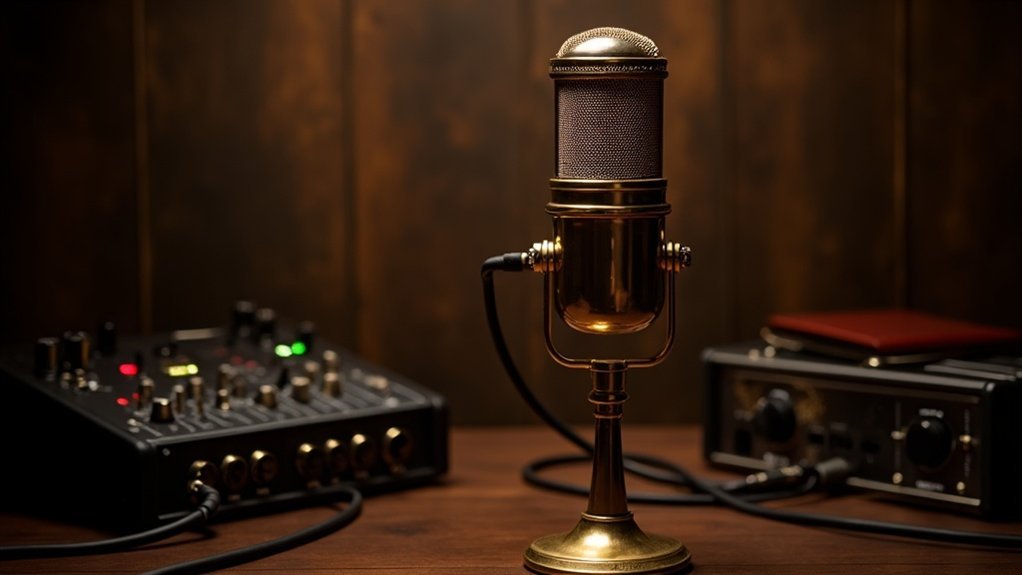
Recording engineers often turn to tube microphones for recording due to their unique tonal characteristics and expressive capabilities.
These mics deliver an enchanting warmth and harmonic richness that can significantly enhance your recordings. Here’s why you might choose them:
These microphones provide captivating warmth and harmonic depth, elevating your recordings to new heights.
- Smooth highs and enhanced midrange warmth add tonal depth, perfect for various recording applications.
- Gentle saturation effects round off harsh transients, providing a pleasing listening experience.
- High sensitivity captures recording nuances and vocal warmth, making them ideal for podcasts and music.
- Dynamic range allows for powerful performances without distortion, ensuring clarity in every recording.
- Vintage appeal brings a classic, three-dimensional sound that many artists strive for, making them particularly valued for classic recordings from the ’50s and ’60s.
By using tube microphones for recording, you embrace a sonic richness that elevates your projects, making them more engaging and memorable.
Whether you’re a musician, podcaster, or content creator, these microphones can help you achieve the quality you desire.
Where to Use Tube Microphones in the Studio?
In the studio, where to use tube microphones in the studio is pivotal for achieving superior sound quality across various applications. Tube microphones excel at capturing vocal performances, delivering rich harmonic content and smooth transients that elevate any recording. Their unique ability to generate even-order harmonics adds a warm richness that is particularly sought after in vocal tracks. They’re also perfect for acoustic instruments like guitar and piano, providing that desirable acoustic warmth essential for many genres. When considering where to use tube microphones in the studio for ensemble recordings, their omnidirectional patterns effectively capture natural ambience with depth. For miking drums, positioning tube mics strategically can emphasize drum texture, creating a cohesive sound that resonates well in any mix. Whether you’re utilizing them in close-mic setups or as room mics, understanding where to use tube microphones in the studio can significantly enhance your recordings, lending a vintage character that enriches everything from jazz to orchestral music.
Key Considerations for Choosing a Tube Microphone
Choosing a tube microphone involves several key considerations that can greatly impact your recording experience. When selecting the right equipment, it’s essential to focus on the following factors related to key considerations for choosing a tube microphone:
- Self noise factors: Look for models with low self-noise to ensure clean, professional recordings.
- Durability concerns: Pay attention to build quality; tube mics can be less robust than their solid-state counterparts.
- Maintenance needs: Be prepared for regular tube replacement as part of the upkeep for your tube microphone.
- Power supply: Verify that you have the correct external power supply compatible with your mic.
- System compatibility: Check that all components match in voltage and configuration to avoid issues during recording.