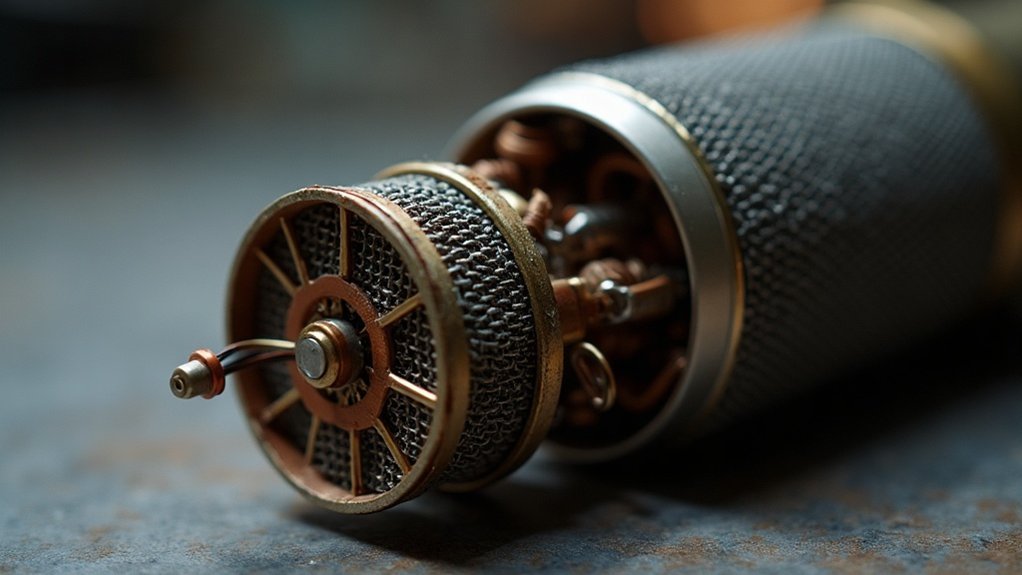
Microphones are fascinating devices made of several key components, each playing a crucial role in their overall function. At the core of microphones are diaphragms crafted from materials like PET, PVC, and polyimide, which significantly influence sensitivity and frequency response. When we delve into how microphones are made, it’s important to note that dynamic mics utilize ferrite or neodymium magnets alongside copper voice coils to effectively convert vibrations into electrical signals.
The housing of microphones, typically constructed from durable metals or hard plastics, ensures longevity and resilience during use. Additionally, the internal electronics are designed to enhance audio quality, making a significant difference in performance. Accessories such as pop filters and shock mounts can also greatly improve the functionality of microphones, helping to eliminate unwanted noise and stabilize sound capture.
If you’re eager to learn more about how microphones are made and the role each component plays, exploring these elements will give you a deeper understanding of their construction and capabilities.
Key Takeaways
- Microphones consist of diaphragms made from materials like PET, PVC, and polyimide, influencing sensitivity and resonance behavior.
- Dynamic microphones use ferrite or neodymium magnets and copper voice coils to convert sound vibrations into electrical signals.
- The housing materials, such as hard plastics and metal mesh, provide protection and impact longevity during transport.
- Transducer technology, including dynamic and condenser types, plays a crucial role in signal conversion and audio quality enhancement.
- Accessories like pop filters and shock mounts improve recording quality by minimizing noise and optimizing sound capture environments.
The Key Materials Behind Microphone Diaphragms
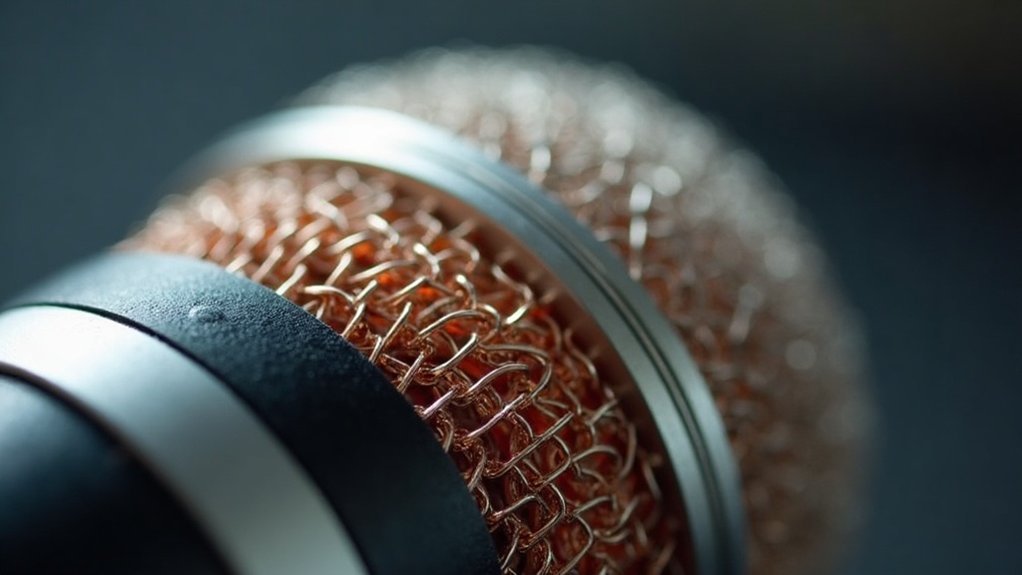
Microphone diaphragms rely on a variety of key materials behind microphone diaphragms to achieve ideal sound performance and durability. Common diaphragm materials like PET and PVC provide distinct acoustic properties. PET, known for its high tensile strength and flexibility, offers excellent high-frequency response, making it a favored choice in many microphones. PVC, though historically significant in the evolution of microphone technology, is prone to aging and can affect long-term performance. Polyimide excels in high-temperature environments, tolerating sound pressure levels up to 145 dB, which is crucial for professional applications. Additionally, diaphragms in microphones function similarly to the human eardrum, converting sound waves with precision. The diaphragm’s ability to convert sound waves is fundamental to the microphone’s overall functionality. Additional materials like polypropylene and polycarbonate cater to specific stiffness requirements, further enhancing the effectiveness of these key materials behind microphone diaphragms. Each diaphragm material influences the microphone’s sensitivity and resonance behavior, ensuring you get the best sound quality and reliability tailored to your audio needs. Understanding the key materials behind microphone diaphragms can help creators, gamers, and musicians make informed decisions when selecting the right microphone for their projects. The diaphragm is essential for converting sound waves into audio signals, directly impacting the overall performance of the microphone.
Key Components: Magnets and Coils in Microphones
While understanding microphone function, it’s essential to recognize the pivotal role of magnets and coils in microphones. In the context of microphone technology, dynamic microphones typically utilize ferrite or neodymium magnets, chosen for their strength and efficiency.
The voice coil, crafted from tightly wound copper wire, interacts with a uniform magnetic field. When sound pressure moves the diaphragm, the coil cuts through magnetic flux, inducing an alternating current. This coil design ensures ideal sensitivity and frequency response, crucial for anyone looking to enhance their audio experience. Loudspeakers and microphones share similar designs, which highlight their roles in sound technology. Additionally, modern sound recording processes rely heavily on these components to convert mechanical vibrations into electrical signals, forming the backbone of microphone technology. Furthermore, the use of condenser microphones often requires a different approach to diaphragm design, which enhances their sensitivity to sound.
The precise geometry of the magnets and pole pieces minimizes field variation, thereby enhancing audio clarity. These components work together seamlessly to convert mechanical vibrations into electrical signals, forming the backbone of microphone technology.
Understanding the significance of magnets and coils in microphones can greatly benefit creators, gamers, and musicians seeking to optimize their setups for podcasting, streaming, and recording.
Microphone Case and Grille Materials
When selecting a microphone case, it’s crucial to consider the various materials available, as each one offers distinct advantages for protection and portability. Understanding the durability of these cases and the design of the grille is essential for choosing the right option for your needs. This knowledge is particularly important when it comes to microphone case and grille materials. Additionally, a high-quality hard shell mic carrying case can significantly enhance the protection of your equipment during travel. A well-designed mic stand can also improve the overall recording experience by providing stability and positioning flexibility. Newerabag specializes in EVA microphone cases designed for various microphone models, ensuring a snug fit and added safety.
| Material Type | Advantages | Common Uses |
|---|---|---|
| Hard Plastics | Crush resistance | Hard-shell cases |
| EVA Foam | Shock absorption | Semi-rigid cases |
| Metal Mesh Grilles | Strength and airflow balance | Protective microphone grilles |
The selection of microphone case and grille materials directly impacts your microphone’s safety during transport, enhancing its longevity and performance. Keep in mind that the right materials not only protect your gear but also contribute to its functionality. Always consider your specific requirements for both durability and functionality when evaluating microphone case and grille materials. This approach will ensure your equipment remains safe, whether you’re podcasting, streaming, gaming, or recording.
How Electronic Parts Work in Microphones

Understanding how electronic parts work in microphones is essential for anyone looking to optimize audio capture. The phrase “how electronic parts work in microphones” encapsulates the core of this technology. Microphones utilize transducer technology to convert acoustic energy into electrical signals, illustrating a fundamental aspect of how electronic components function in these devices. Dynamic microphones are particularly effective in handling high sound pressure levels due to their robust design, making them ideal for live performances.
Understanding electronic components in microphones is key to optimizing audio capture and enhancing sound quality.
In dynamic microphones, a diaphragm vibrates, moving a voice coil within a magnetic field to induce voltage. This process exemplifies how the internal mechanics play a critical role in sound capture. Additionally, the collaboration of various components ensures effective sound capture and transmission.
Conversely, condenser microphones employ a diaphragm and backplate to form a capacitor, where sound-induced movements change capacitance, generating an analog output. The internal circuitry, including FETs and preamplifiers, significantly enhances signal quality and impedance matching, further showcasing the intricacies of how electronic parts work in microphones. Moreover, the types of microphones available, such as dynamic and condenser, each have unique characteristics that affect sound quality.
Each component’s design critically influences performance, ensuring that your audio captures are both clear and precise. Understanding these electronic elements is vital for creators, gamers, and musicians seeking to maximize their audio recording potential.
Accessories That Enhance Microphone Performance
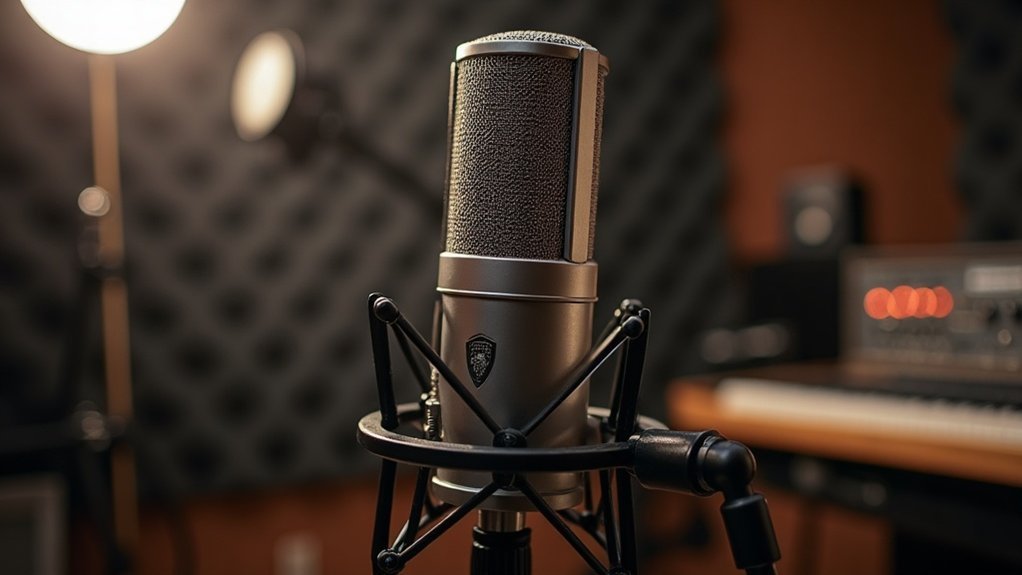
Microphone performance can be significantly enhanced with the right accessories that enhance microphone performance, complementing the electronic components previously discussed. Utilizing pop filters minimizes plosive sounds, ensuring a cleaner vocal delivery. This is particularly important because pop filters effectively reduce unwanted bursts of air that can distort recordings. Acoustic panels improve room acoustics, creating a more professional sound environment. Shock mounts are essential as they reduce handling noise, guaranteeing clarity in recordings. Additionally, audio interfaces provide clean, low-noise signals, elevating your overall sound quality. Incorporating these accessories that enhance microphone performance is vital for achieving optimal results, and audio interfaces are particularly crucial for serious content creators looking to enhance their recording capabilities. Furthermore, using dynamic mics like the SM57 can yield better results in untreated rooms, making accessory choices even more important.
| Accessory | Purpose |
|---|---|
| Pop Filters | Reduces plosive sounds |
| Acoustic Panels | Enhances room acoustics |
| Shock Mounts | Isolates from handling noise |
| Audio Interfaces | Guarantees clean signal transmission |
| Microphone Stands | Stabilizes positioning for peak capture |
Incorporating these accessories that enhance microphone performance will undoubtedly elevate the quality of your recordings, whether you’re a podcaster, gamer, or musician.