How Does Phantom Power Work
Phantom power is essential for supplying electrical energy to condenser microphones via XLR cables, enabling them to operate effectively. Typically adhering to a 48-volt standard, this method energizes the microphone’s sensitive components without the need for a separate power supply. By understanding *how phantom power works*, you can enhance audio quality while simplifying your connections. It’s important to note that dynamic microphones don’t require this type of power, and improper use can damage ribbon mics. For those looking to delve deeper into the nuances of *phantom power operation* and to explore safety practices and troubleshooting tips, continue your journey into mastering this critical aspect of audio technology.
Key Takeaways
- Phantom power provides the necessary voltage, typically 48 volts, to operate condenser microphones by delivering power through standard XLR cables.
- It is essential for professional audio environments, ensuring optimal performance and reliability of microphones during recording and live sound events.
- Proper connection practices, such as engaging phantom power only after connecting microphones, help prevent damage to sensitive components.
- Phantom power utilizes matched resistors to distribute voltage evenly, maintaining stability across connected devices while adhering to current limits.
- Regular troubleshooting, like testing cables and verifying power supply, is crucial to ensure phantom power functions correctly and safely.
What Is Phantom Power and Why Is It Essential?
Additionally, phantom power has its origins in early 1900s telephone wiring, which showcases its long-standing significance in audio technology. Its standardized delivery simplifies connections across devices, making it vital in professional environments like studios and live sound systems. By integrating phantom power, you streamline your setup, enhancing performance and reliability in your audio production, which is especially important for podcasting, streaming, and recording. Knowing what phantom power is and why it’s essential can significantly impact your audio quality and overall production efficiency. This technology is crucial for achieving high-fidelity audio, as it allows microphones to capture sound more accurately and with greater detail.
How Does Phantom Power Work in Microphones?
Condenser microphones often feature sensitive components that enhance their performance, making phantom power even more crucial. While condenser microphones require this power for their operation, dynamic microphones do not, as they’re passive devices.
Proper implementation of phantom power is crucial for safety, as it prevents damage to sensitive components, particularly in ribbon microphones, which can be vulnerable if wired incorrectly.
Understanding how phantom power works in microphones is key for creators, gamers, and musicians looking to get the most out of their audio equipment.
The Role of Balanced Audio Connectors in Phantom Power
Balanced audio connectors are essential for delivering phantom power effectively. They guarantee that equal DC voltage is applied to both signal conductors, allowing for simultaneous audio and power transmission while maintaining signal integrity. This design minimizes noise interference and enables compatibility across various professional audio equipment, streamlining your setup. Additionally, the use of phantom power ensures that dynamic microphones remain safe, as the circuit balance prevents significant DC flow. The 48-volt phantom power standard has become the most commonly used, further enhancing its reliability in professional settings. This balanced approach is crucial for preserving the quality of the microphone signal chain.
Balanced Connector Design
In professional audio systems, balanced connector design is essential for effectively implementing phantom power. These connectors, like the standard three-pin XLR, allow common-mode DC power application while preserving balanced signal integrity. Each pin has a distinct role, with pins 2 and 3 carrying identical phantom voltage but different audio phases. This innovative balanced connector design enables common mode rejection, ensuring that any noise present on both conductors is canceled out. By employing low-impedance, floating outputs, balanced connectors facilitate the simultaneous transmission of differential audio signals and phantom power supply, minimizing interference and enhancing overall performance in phantom-powered systems. Understanding balanced connector design is crucial for creators, gamers, and musicians seeking to optimize their audio setups for podcasting, streaming, gaming, and recording. Additionally, the use of XLR microphones is common in professional settings, further demonstrating the importance of balanced connections.
Voltage Distribution Mechanism
- Matched Resistor: Two 6.81 kΩ resistors ensure voltage stability across both conductors, supporting the overall voltage distribution mechanism.
- Common-Mode Voltage: Phantom power manifests as a common-mode signal, effectively preventing interference and enhancing the voltage distribution process.
- Balanced Operation: The equal voltage maintained keeps both the audio path and DC supply functioning harmoniously, highlighting the importance of a well-designed voltage distribution mechanism. This design is crucial for maintaining XLR microphone performance, ensuring optimal audio quality.
- Compatibility: This innovative design accommodates a variety of professional devices without the need for separate power cables, illustrating the versatility of the voltage distribution mechanism in modern audio equipment. Additionally, using balanced connectors helps to minimize noise and interference, further enhancing audio quality.
Furthermore, it is crucial to ensure that compatible devices have balanced, floating, low-impedance outputs to avoid any potential damage.
By leveraging this voltage distribution mechanism, you can achieve a robust audio experience while ensuring safety and performance across compatible gear. This is particularly beneficial for creators, gamers, and musicians seeking affordable solutions for podcasting, streaming, and recording.
Voltage Standards: P12, P24, and P48
Understanding the voltage standards for phantom power—P12, P24, and P48**—is crucial for achieving peak performance in microphone applications. The characteristics of P12 support battery-powered gear with lower power consumption, making it ideal for mobile setups. While P24 applications are rare and often overlooked, they still hold some relevance in specific scenarios. On the other hand, P48 stands out with remarkable advantages, including a maximum power output** of 240 mW and compatibility for microphones that accept both 12 V and 48 V. Additionally, phantom power is commonly used in professional audio equipment worldwide, emphasizing its importance in high-quality sound production. Notably, most condenser microphones require phantom power to function effectively, highlighting its essential role.
Current limits are important to consider, with P12 capped at 35 mA and P48 at 14 mA, ensuring that devices operate safely within their power ranges. Resistor matching tolerances are essential for maintaining audio integrity, particularly when navigating these voltage standards. Usage trends indicate that P48 has become the global benchmark for phantom power, while legacy formats like P24 are gradually fading in relevance. As creators, gamers, and musicians continue to seek affordable microphones for various applications, understanding these voltage standards for phantom power—P12, P24, and P48 will help them make informed decisions that enhance their audio experiences.
Safe Use of Phantom Power Across Microphone Types
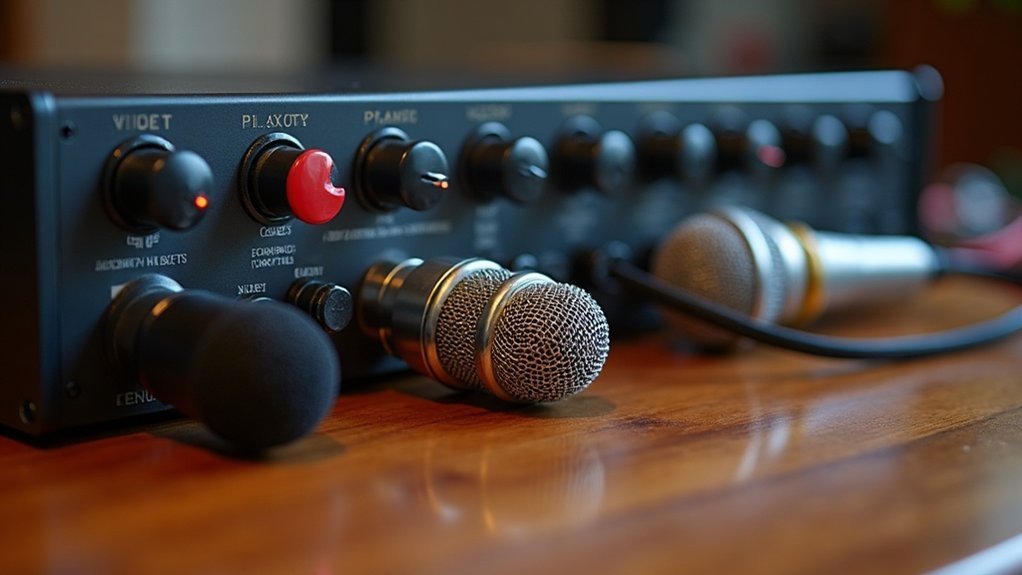
When connecting microphones, understanding phantom power‘s safe use is essential.
While dynamic microphones are generally safe, certain models and wiring configurations can pose risks. Dynamic microphones operate without external power sources, making them versatile in various setups. For condenser and ribbon microphones, following manufacturer guidelines and verifying proper connections can prevent damage and guarantee peak performance.
Connecting Microphones Safely
To ensure safe connections when using phantom power, it’s crucial to understand how different microphone types interact with this supply. Adhering to the guidelines for connecting microphones safely is essential for optimal performance and protection.
Here are some important steps to follow:
- Always connect the microphone to the XLR input before engaging phantom power to guarantee safe connections when using phantom power.
- Remember to turn off phantom power before disconnecting a condenser microphone to maintain safety during the process.
- Utilize high-quality, balanced XLR cables to ensure proper wiring and shielding, which is vital for connecting microphones safely.
- Verify that any inline devices explicitly support phantom power to prevent damage and ensure a safe connection.
Additionally, using a USB audio interface can help streamline your recording setup while managing phantom power effectively.
Risks With Certain Microphones
Phantom power can pose significant risks with certain microphones, particularly passive dynamic and ribbon microphones, if not handled correctly. Understanding these risks will help you protect your gear.
| Microphone Type | Risks |
|---|---|
| Dynamic Microphone | Cable shorting effects |
| Ribbon Microphone | Vulnerabilities to phantom power |
| Vintage Microphones | Unbalanced connection issues |
| Hot Plugging Dangers | Current surge impacts |
| Protection Circuit Importance | Prevents overheating and burnout |
Be particularly cautious with phantom power when dealing with certain microphones, especially vintage models. Always check your connections to minimize potential damage and guarantee safe operation. Recognizing the risks with certain microphones will ensure that you maintain the integrity of your audio equipment while enjoying your creative pursuits. Additionally, using tube microphones can provide a unique sound quality that may be affected by phantom power considerations.
Common Troubleshooting Tips for Phantom Power Issues

While troubleshooting phantom power issues, it’s essential to methodically assess potential causes to restore functionality. Here are some key troubleshooting techniques for addressing phantom power problems:
- Cable Testing: Use a cable tester to check XLR cables for continuity and shorts. Damaged cables often cause microphone failure, which can lead to phantom power issues.
- Interface Check: Verify that the phantom power switch on your audio interface is engaged. Additionally, check voltage levels (44–52 V) at the XLR input to ensure proper operation of your condenser mics.
- Power Limitations: Confirm that your power source can handle multiple condenser microphones without sagging voltage. Insufficient power can lead to significant phantom power issues.
- Signal Integrity: Test the microphone on another interface to rule out internal faults affecting performance. This step is crucial when diagnosing phantom power problems.
Best Practices for Using Phantom Power in Your Setup
Effective use of phantom power in your audio setup hinges on following best practices for using phantom power in your setup that guarantee peak performance and safety.
First, verify microphone compatibility by connecting only appropriate devices, ensuring they’re suited for phantom power. Manage cables carefully to maintain signal clarity, which is crucial for achieving optimal sound quality.
Always adhere to proper power sequencing: mute channels before engaging phantom power and lower the gain to avoid loud pops that could disrupt your recording.
Prioritize gain staging by keeping levels around −12 dBFS for ideal noise reduction, an essential aspect when utilizing phantom power in your setup.
Additionally, avoid hot-plugging and regularly check connection integrity to prevent equipment damage.
Finally, confirm that your setup’s total current draw aligns with your mixer’s capabilities. This step is vital to protect your gear and guarantee reliable performance while leveraging the benefits of phantom power.