A boom pole is an indispensable tool in sound production, specifically designed to hold microphones at ideal positions for clear audio capture. This essential equipment keeps mics out of the camera frame while effectively reducing background noise and enhancing signal quality. Lightweight options, such as carbon fiber boom poles, provide better maneuverability and comfort during extended use, making them a favorite among creators, gamers, and musicians alike. Proper grip and operation techniques are crucial for effective use of a boom pole. Interested in learning more about the different types of boom poles, their features, and best practices for maximizing your audio setup?
Key Takeaways
- A boom pole is a tool used in sound production to hold microphones for optimal audio capture.
- It allows for precise microphone placement while keeping it out of the camera frame.
- Boom poles enhance the signal-to-noise ratio, reducing background interference during recordings.
- They are essential in film, television, and documentary settings for clear dialogue.
- Different types include lightweight film boom poles and heavy-duty tractor boom poles for various applications.
What Is a Boom Pole and Its Purpose?
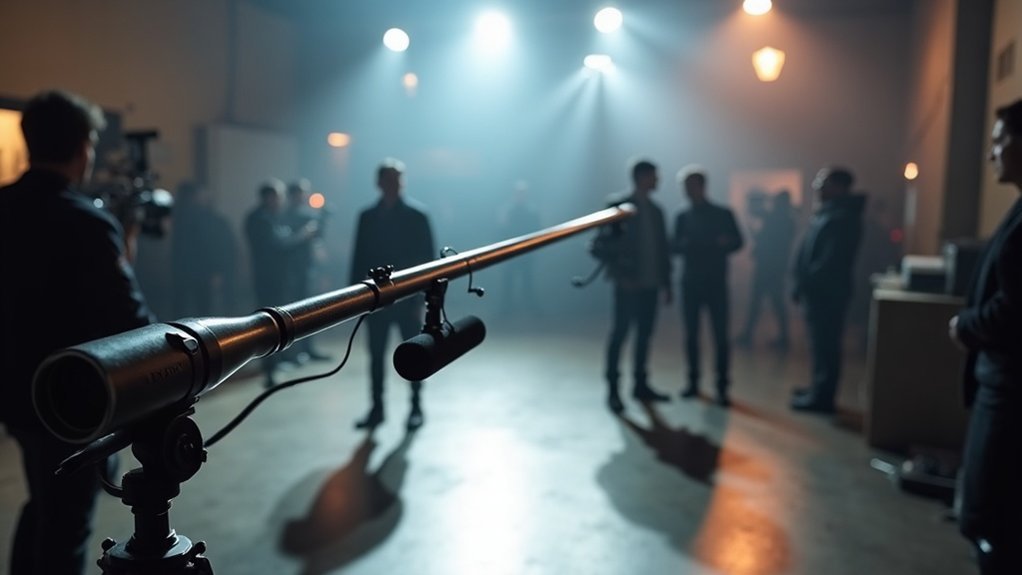
A boom pole is an essential tool in sound production, specifically designed to hold a microphone close to the sound source while keeping it out of the camera frame. The primary purpose of a boom pole is to enhance microphone placement for ideal sound capture, ensuring clear dialogue without visual distractions.
You’ll often see boom poles in film, television, and documentary settings, where high-quality audio is crucial. These boom poles allow for dynamic repositioning, improving the signal-to-noise ratio and minimizing background interference, which is vital for creators, gamers, and musicians seeking professional audio quality. Additionally, the choice of material for a boom pole can significantly affect its performance and usability, making it important to consider based on your needs. The versatility of a boom pole also makes it helpful for lifting heavy equipment in various production scenarios.
Types of Boom Poles: Film vs. Tractor
When you consider boom poles, it’s crucial to differentiate between film and tractor types. Film boom poles are lightweight, designed for precise microphone positioning on set, while tractor boom poles serve as heavy-duty lifting implements for agricultural tasks. Understanding these core differences will help you choose the right tool for your specific needs. Tractor boom poles often feature height adjustment capabilities, which enhance their versatility for various lifting applications. In contrast, film boom poles are engineered for optimal sound capture, making them essential for high-quality audio in film production.
Film Boom Pole Features
Boom poles serve distinct purposes in film and agricultural settings, showcasing their unique designs. Specifically, film boom pole features are engineered for audio isolation, allowing you to capture clear sound while keeping both the microphone and you out of frame. Weighing well under 1 kg, these boom poles prioritize operator comfort, with materials like carbon fiber reducing fatigue. Designed with film boom pole characteristics in mind, they feature twist-lock mechanisms and internal cable routing to minimize handling noise. With lengths ranging from 3 to 20 ft, they offer versatility for various production needs, ensuring precise maneuverability and stability—essential for high-quality audio capture in dynamic filming environments. Additionally, the boom pole is an essential tool for achieving a polished, professional production. Understanding the need to rest the boom between takes can greatly help alleviate arm fatigue during long shooting sessions. Moreover, using a boom pole can significantly enhance the performance of shotgun microphones, as it positions them closer to the sound source while minimizing unwanted noise. Whether you’re a filmmaker or an audio engineer, understanding these film boom pole specifications can significantly enhance your recording experience.
Tractor Boom Pole Uses
While film boom poles excel in capturing high-quality audio, tractor boom poles focus on lifting and moving heavy loads in agricultural settings.
These tractor boom poles, typically mounted on a tractor’s three-point hitch, are ideal for handling logs and transporting equipment. With a reach of 6 to 10 feet, and extending up to 16 feet, tractor boom poles efficiently hoist logs, hay bales, and bulk materials. Additionally, standard boom poles are commonly used for various tasks, making them a practical choice for farmers. Their ability to organize implements of work helps maintain a tidy yard without clutter.
You’ll find these boom poles essential for relocating appliances and building materials onto trailers. Their design, whether standard or heavy-duty, ensures that you can tackle various tasks on the farm, making your operations smoother and more productive.
In the world of agricultural tools, tractor boom poles stand out for their versatility and effectiveness in heavy lifting.
Essential Features of Film and Audio Boom Poles
Understanding the essential features of film and audio boom poles is crucial for achieving high-quality sound capture on set. A telescoping design allows for adjustable reach, making it easier to accommodate various shot sizes. Common materials like carbon fiber and aluminum ensure durability while minimizing weight, enhancing the benefits of boom poles for filmmakers and audio professionals alike. Weights under 1 kg facilitate extended handheld operation, and ergonomic grips improve control, further enhancing the functionality of these audio boom poles. Reliable locking mechanisms secure extensions, while internal cable management reduces clutter, making these boom poles not only practical but also efficient for on-location shoots. Additionally, the evolution to lighter materials has significantly increased their versatility and ease of use for sound departments. The ability to navigate obstacles like lighting fixtures is essential for maintaining sound clarity during filming. Regular maintenance of your film and audio boom poles, such as cleaning and checking locks, is vital for maintaining peak performance. By choosing the right features, you can ensure that you capture pristine audio without compromising your production workflow, making the most of your film and audio boom poles.
How to Choose the Right Boom Pole?
When choosing the right boom pole, consider both length and material type to match your specific shooting needs.
For most dialogue and location work, a reach of 2.7–3.0 m is ideal, while lightweight carbon fiber offers the best strength-to-weight ratio for extended use.
Confirm the pole’s collapsed size fits your transport constraints to maintain efficiency on set.
Length and Height Considerations
Choosing the right boom pole involves considering several key factors, including length and height considerations for optimal performance.
When evaluating length, think about your shooting environment; a 16–20 ft pole is ideal for wide shots, while a 10–12 ft pole works well in tighter spaces.
Height adjustments are crucial; ideally, your boom pole should reach twice your height, ensuring that the microphone stays out of frame.
Keep in mind that the shortest pole that effectively captures sound will help minimize weight and fatigue during long recording sessions.
Additionally, always consider the collapsed length for portability—aim for 65 cm or less for easy transport.
Material Type Selection
Selecting the right material type for your boom pole is essential for achieving ideal audio capture and usability.
When considering material type selection, carbon fiber stands out with benefits such as low weight and superior rigidity, which minimize operator fatigue and enhance mic control. However, its higher cost and brittleness can be concerns.
Conversely, aluminum provides a cost-effective entry point for those exploring material type selection, though it comes with increased handling noise and weight.
For budget-conscious creators, mixed fiber composites offer a balanced option that combines durability with moderate pricing, making them a smart choice in the realm of material type selection.
As you evaluate your typical operating duration and environment, keep these factors in mind to make the best choice for your needs.
Mastering Boom Pole Operation
Mastering boom pole operation is essential for achieving high-quality audio in various creative ventures. To excel in mastering boom pole operation, you need a solid understanding of grip, body mechanics, and positioning techniques.
Utilize advanced grip techniques by maintaining a two-hand hold near the center of gravity, which enhances balance and reduces strain during your recording sessions. Position your front arm as a fulcrum to support the boom’s weight, while your rear arm guides and rotates the pole, ensuring effective cueing strategies.
Keeping your arms close to your body minimizes fatigue, which is crucial when mastering boom pole operation for extended periods. Make sure the boom remains parallel to the floor for optimal microphone placement, which is vital for capturing clear audio.
Additionally, rotating your body for stability helps avoid excessive movement, allowing you to maintain consistent audio quality throughout your takes. By mastering these techniques, you’ll not only improve your boom pole operation but also enhance your overall audio production skills.
Avoid These Common Mistakes With Your Boom Pole
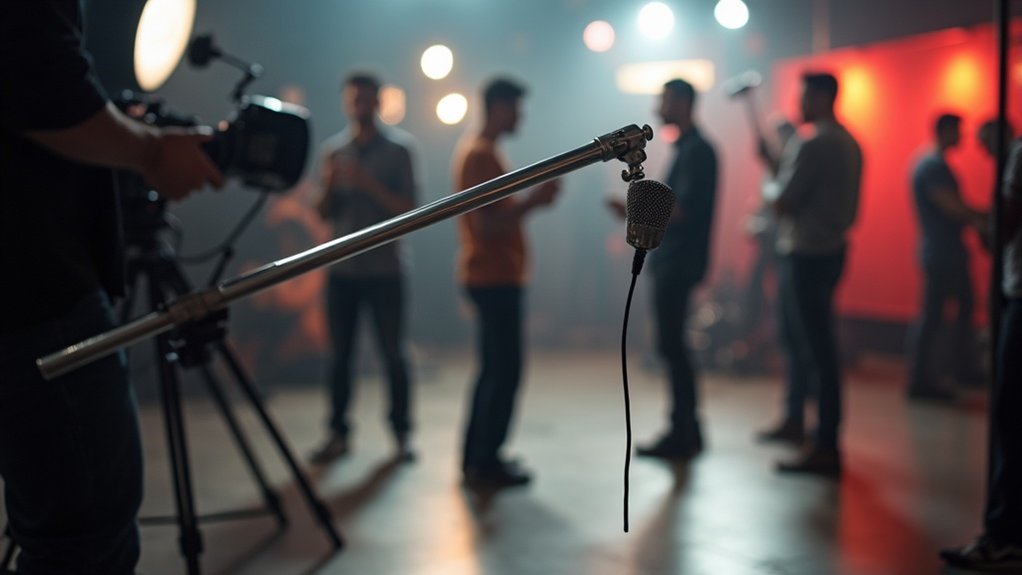
Even with a solid foundation in boom pole operation, it’s crucial to avoid these common mistakes with your boom pole that can undermine your audio quality. Overextending the pole or misadjusting locking sections can lead to mechanical failure and increased wear, so be cautious.
Avoid common boom pole mistakes like overextending or misadjusting sections to ensure optimal audio quality and equipment longevity.
When tightening twist-locks, use relaxed fingertips to prevent damage. Proper grip and cable management are essential to minimize handling noise, and always utilize a shock mount to mitigate vibrations.
To maintain clear dialogue, ensure consistent mic position and distance. Prioritizing ergonomics is vital to prevent fatigue and injury during long recording sessions. Additionally, understanding the importance of mic stands in your setup can further enhance your recording quality.
Regular equipment maintenance, including cleaning collars, can significantly enhance your boom pole performance and reliability. By staying mindful of these tips, you can guarantee peak sound quality and avoid common pitfalls associated with boom pole usage.
Best Accessories for Your Boom Pole
When you’re ready to enhance your boom pole setup, incorporating the best accessories for your boom pole can make a significant difference in audio quality and operator comfort. It’s essential to focus on accessory compatibility for seamless integration. Key items, such as shock mounts for noise isolation, coiled XLR cables for effective cable management, and padded wraps for comfort during long sessions, are essential to optimize your boom pole performance. Additionally, using a noise gate can help further control unwanted audio noise management during recordings.
| Accessory Type | Purpose |
|---|---|
| Shock Mounts | Isolate microphone from noise |
| Coiled XLR Cables | Minimize slack and snagging |
| Grip Sleeves | Improve hand comfort |
These accessories not only enhance your boom pole setup but also elevate your production experience and guarantee efficient workflows. By selecting the best accessories for your boom pole, you’ll ensure that your audio captures are top-notch, making your projects shine.