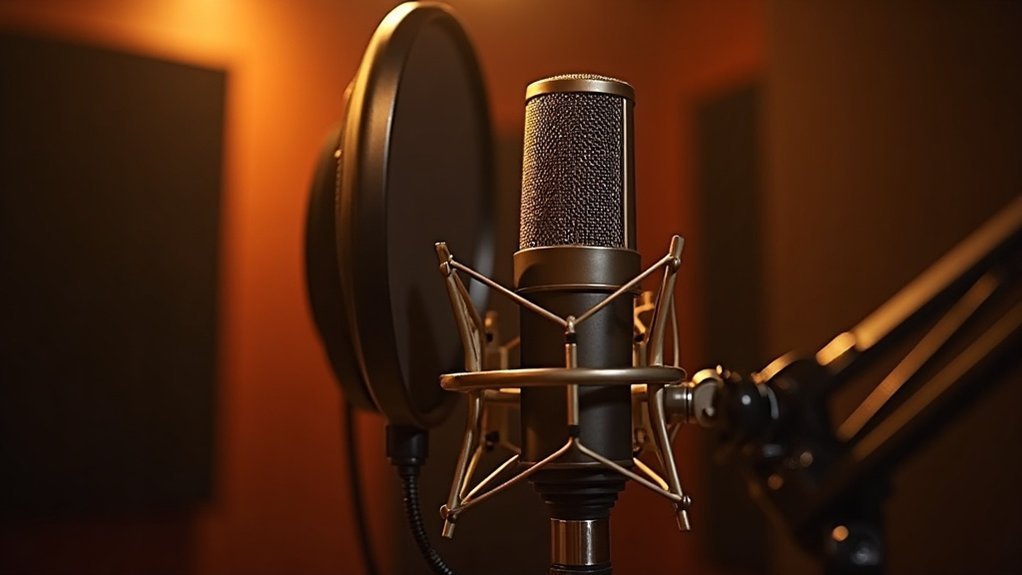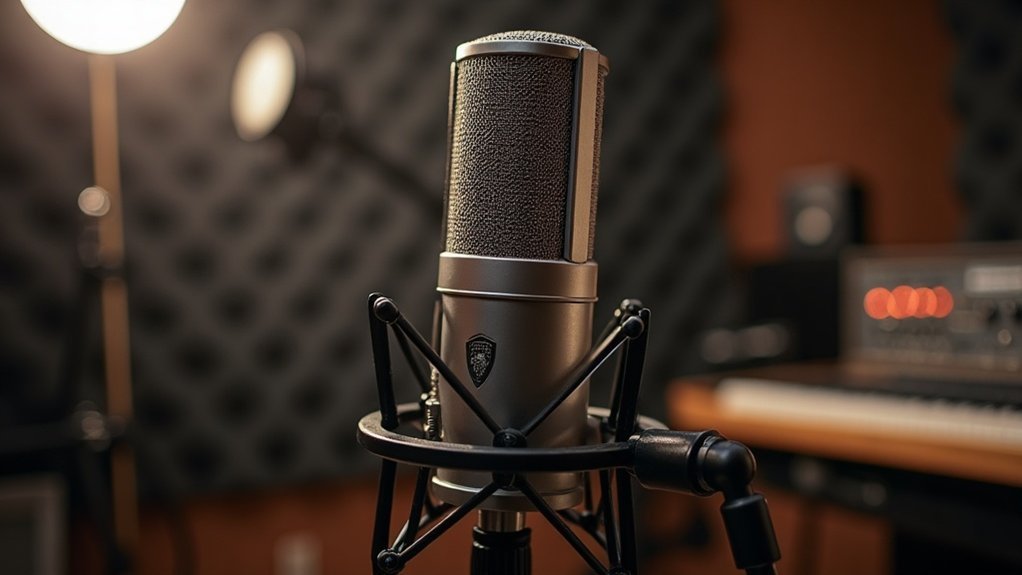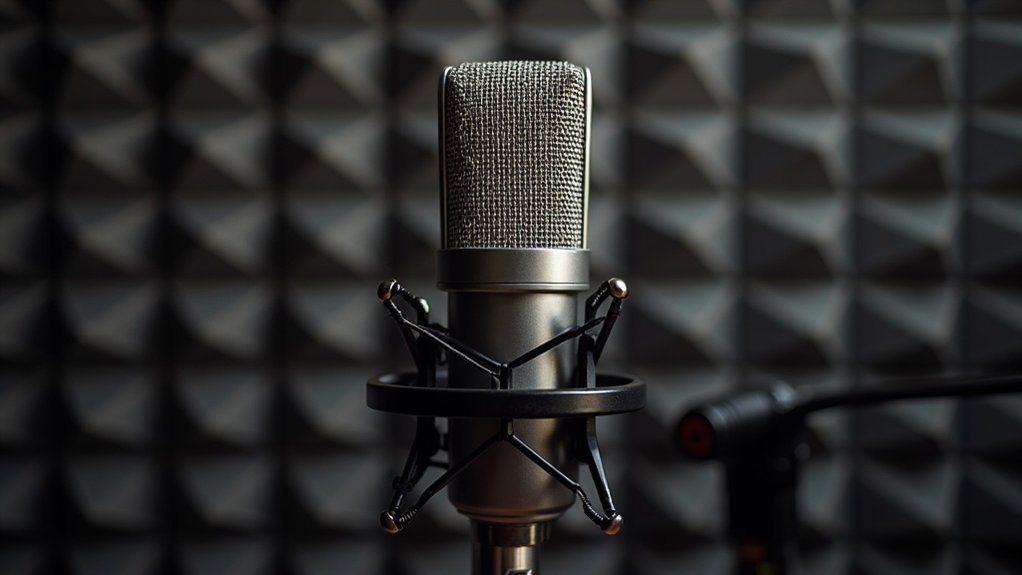
A large diaphragm condenser (LDC) is a studio microphone you’ll recognize by its 1-inch-or-larger membrane that vibrates in response to sound waves, converting acoustic energy into electrical signals through capacitive sensing. Understanding what a large diaphragm condenser microphone is essential for creators, musicians, and professionals investing in quality recording equipment. You’ll need 48V phantom power to operate it.
Large diaphragm condensers capture exceptional clarity and warmth because their larger diaphragm emphasizes low frequencies and body over precision. This makes a large diaphragm condenser ideal for podcasters and streamers seeking professional vocal presence. You’ll find them standard for professional vocal recording, acoustic instruments, and room ambience. Whether you’re building a home studio or upgrading your streaming setup, learning how large diaphragm condenser specifications work reveals why they’re worth your investment for podcasting, recording, and music production across every stage of the buying journey.
Key Takeaways
- Large diaphragm condensers use a thin vibrating membrane (1 inch or larger) that converts sound waves into electrical signals through capacitive sensing.
- They require 48-volt phantom power to operate and deliver higher output voltage, resulting in superior signal-to-noise ratios compared to dynamic microphones.
- LDCs produce warmer, fuller tones with enhanced low-frequency response, making them ideal for lead vocals, voiceovers, and acoustic instruments in studios.
- Their high sensitivity and broad frequency response excel at capturing harmonic detail and room ambience, though they’re less rugged than dynamics.
- Key specifications include self-noise below 15 dBA, sensitivity of 8 mV/Pa or higher, and cardioid polar patterns for directional rejection in untreated spaces.
How Large Diaphragm Condensers Capture Sound
Large diaphragm condensers convert acoustic energy into electrical signals through a remarkably simple yet elegant mechanism that defines how large diaphragm condensers capture sound. An extremely thin membrane suspended parallel to a metal back plate vibrates in response to incoming sound waves, varying the capacitance between the two components.
For creators and musicians seeking affordable options, understanding how large diaphragm condensers capture sound is essential to making informed purchasing decisions.
You’ll find that diaphragm materials—typically specialized polymers or treated fabrics—enable precise vibration while maintaining durability, which is critical for podcasters and streamers relying on consistent performance. As sound strikes the membrane, it moves, altering the electrical relationship between diaphragm and back plate. Large diaphragm condensers exhibit better noise performance compared to small diaphragm models, making them ideal for capturing clean recordings even in less controlled environments. The capacitor design of these microphones allows the diaphragm and back plate to function as a variable capacitor that responds dynamically to sound pressure.
This changing capacitance generates a signal voltage that mirrors incoming acoustic energy, allowing professionals to record with clarity across gaming sessions, vocal recordings, and streaming applications.
The result is a relatively weak output requiring amplification, yet the conversion process that makes large diaphragm condensers capture sound so effectively preserves remarkable detail from your sound source. Large-diaphragm condensers generate higher signal voltage, resulting in lower self-noise during recording sessions.
Whether you’re evaluating budget-friendly options or comparing high-end models, grasping how these microphones capture sound through their capacitive mechanism helps you select the right tool for your recording setup and ensure optimal results across your content creation workflow.
Why They Sound Bigger and Warmer Than Other Mics
Because they employ diaphragms measuring roughly 1 inch or larger, large-diaphragm condensers sound bigger and warmer than other mics through a distinctly fuller, more characterful sound signature. You’ll notice their warm sound perception shifts toward richness through deeper low-frequency response and gentle off-axis rolloff. The diaphragm’s greater mass lowers resonant frequency, emphasizing body over lean precision—a key reason why large-diaphragm condensers sound bigger and warmer in professional recordings.
Higher output voltage improves signal-to-noise ratio, letting detail emerge clearly without the hiss that plagues budget options. Their tonal characteristics reflect less neutral coloration—a signature trait professionals value when selecting mics that sound bigger and warmer. The physics behind why these condensers sound bigger and warmer centers on this combination: enhanced low-end presence, increased output capability, and reduced electrical noise floor working in concert. Large-diaphragm condensers’ larger membrane captures more acoustic energy, which directly contributes to their enhanced electric signal and superior performance in studio environments. The slower transient response of large diaphragm microphones allows them to capture vocals with a more forgiving, rounded character compared to smaller designs. These microphones are particularly effective for capturing vocals and instruments where warmth and presence are desired characteristics.
You’re capturing natural, present vocals with reduced strain, creating that signature “warm and big” reputation that makes large-diaphragm condensers ideal for podcasting, streaming, and professional recording applications.
| Factor | Impact |
|---|---|
| Diaphragm Mass | Lower resonance, body emphasis |
| Output Voltage | Enhanced detail, reduced noise |
| Frequency Response | Warm emphasis, bigger presence |
| Sensitivity | Reduced noise floor, clarity |
| Polar Response | Tonal thickness, character |
Where to Use Them in the Studio
You’ll find large-diaphragm condensers deployed across five primary studio applications, each leveraging their sensitivity and tonal character to capture detail and presence. Understanding where to use them in the studio is essential for maximizing your recording investment.
In vocal booths, you’ll rely on LDCs for lead vocals and voiceover work, where their ability to preserve nuance justifies controlled acoustic environments. This is one of the most common places to use them in the studio for affordable microphones that deliver professional results. Models like the Audio Technica AT4047MP excel in these applications with their transformer-coupled output and low self-noise characteristics ideal for capturing vocal performances.
You’ll place them on acoustic instruments—guitar, piano, strings—for vibrant, present tones that justify their deployment in quality recording setups. Large-diaphragm condensers are particularly effective for singing voice recording due to their sensitivity to vocal nuance and presence.
Drum overheads benefit from their broad frequency response, making strategic placement in the studio critical for capturing kit dynamics. Brass recording capitalizes on their harmonic detail capture, demonstrating why these microphones excel in instrument-specific applications. The cardioid pickup pattern on quality LDCs minimizes background noise while maintaining the warmth needed for brass instruments.
Finally, you’ll position LDCs for room ambience, exploiting their wide sensitivity to environmental character.
For content creators and musicians working with budget-conscious setups, knowing where to use them in the studio helps you maximize limited equipment. This versatility makes LDCs your foundational studio workhorse across diverse recording tasks—from podcasting and streaming to music production—ensuring you’re using the right tool for each specific application in your recording space.
How They Compare to Small Diaphragm and Dynamic Mics

LDC characteristics include higher sensitivity and warmer tone, making them ideal for vocals and intimate sources in controlled studio environments. When comparing LDCs to SDCs and dynamic options, the differences become clear: SDC advantages center on faster transient response and neutral detail capture, excelling on percussion and bright instruments. Large diaphragm condensers generally excel in capturing low frequencies due to their lower resonant frequency, which allows for a flatter low frequency response. Large diaphragm condensers require 48v phantom power to operate properly in studio settings.
Dynamic limitations involve lower sensitivity and reduced detail, yet they dominate live settings where durability and SPL handling matter. Unlike dynamic microphones, condensers use a capacitive sensing design that enables their superior frequency response in studio applications.
Understanding how large diaphragm condensers compare to small diaphragm and dynamic microphones helps you match gear to your specific needs. For podcast recording and streaming, LDCs deliver professional vocal clarity. For gaming setups requiring durability, dynamics provide stage-ready robustness. For precision instrument recording, SDCs capture detail small diaphragm and dynamic mics can’t replicate the same way.
Your microphone applications ultimately determine the best choice: LDCs for controlled studio recording and content creation, SDCs for precision acoustic instrument capture, and dynamics for stage robustness and live streaming.
This comparison between large diaphragm condensers, small diaphragm condensers, and dynamic microphones ensures you select the right tool for your budget and setup at every stage of your buying journey.
What Specs Actually Matter When You’re Buying
Focus on self-noise importance first—target below 15 dBA to preserve detail in quiet passages and maximize your mixing flexibility. This is one of the most important specs that actually matter when making your purchase decision. Self-noise becomes noticeable around 20 dB-A, making lower figures critical for capturing subtle vocal nuances and ambient recordings. Lower self-noise allows more processing flexibility when you’re adding dynamics compression and EQ during the mixing stage. Understanding how self noise affects overall recording quality ensures you capture the cleanest possible source material.
Sensitivity impact directly affects preamp noise; seek 8 mV/Pa or higher to minimize gain demands. This specification is among the key specs that actually matter for affordable microphones designed for home recording, podcasting, and streaming.
Maximum SPL rarely concerns home recordists unless you’re capturing loud sources like drums or amps, though knowing which specs actually matter helps you avoid overpaying for unnecessary headroom.
Polar pattern determines directional rejection and is essential specs that actually matter for content creators working in untreated spaces.
Practical features like phantom power compatibility, shock mounts, and high-pass filters prove essential for professional results and separate budget-friendly options from overpriced alternatives.
When navigating the buying journey, recognizing these actual mattering specs prevents wasted investment and ensures your microphone performs optimally for podcasting, streaming, gaming, and recording applications.