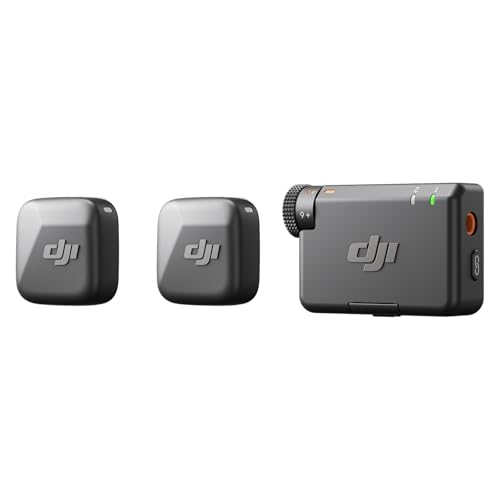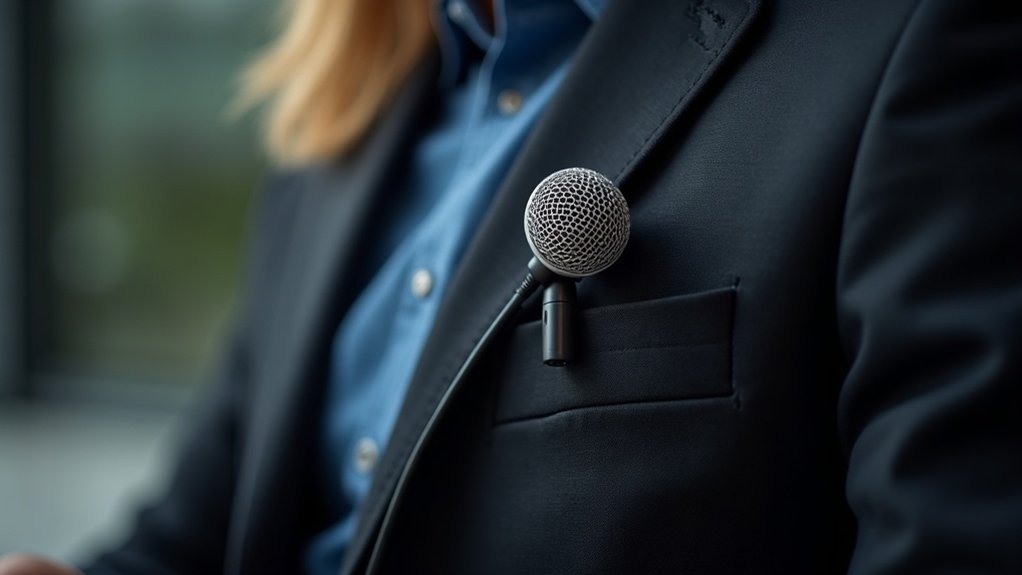
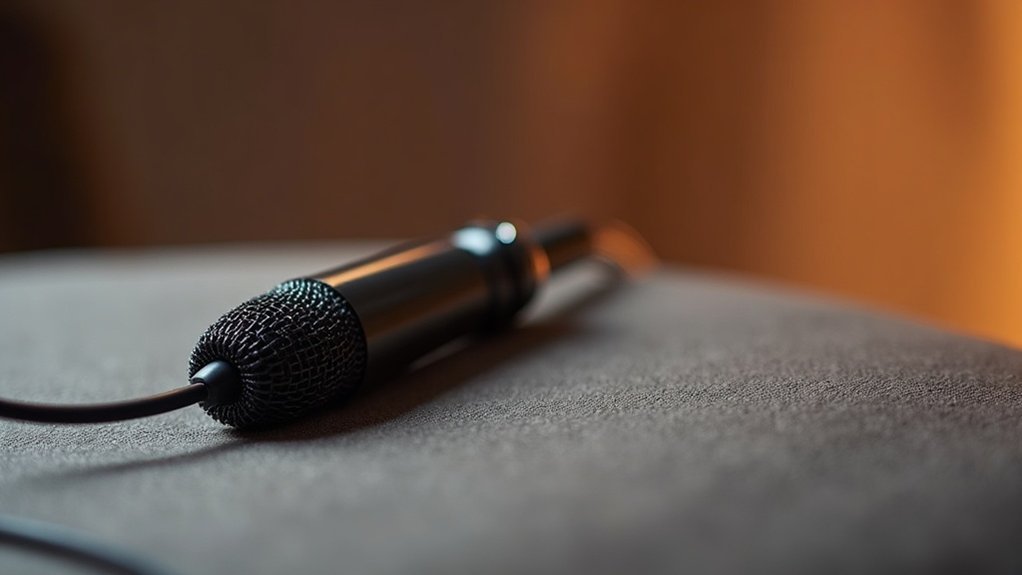
A lavalier microphone is a compact audio device, typically 1–2 cm in size, that attaches to your clothing to capture clear sound while minimizing background noise. This type of microphone is ideal for interviews, broadcasts, and live events, providing both wired and wireless options. By positioning a lavalier mic properly on your chest and ensuring it faces your mouth, you can significantly enhance audio quality. If you’re interested in understanding how to choose the right lavalier microphone for your needs, there’s a wealth of information available to help you navigate your options. Whether you’re a creator, gamer, musician, or professional, finding the perfect lavalier mic can elevate your audio experience.
Key Takeaways
- A lavalier microphone is a small, discreet audio device ideal for capturing speech in various settings like interviews and presentations.
- It enhances audio clarity by minimizing background noise and is available in wired and wireless versions.
- Optimal placement is crucial; position it 6–8 inches below the mouth for the best sound quality.
- Lavalier microphones are versatile, used in media, theater, corporate events, and fitness coaching for hands-free operation.
- Limitations include susceptibility to clothing rustle and environmental noise, impacting audio quality if not placed correctly.
What Is a Lavalier Microphone and How Does It Work?
A lavalier microphone, often referred to as a lapel mic, is a small device designed for discreet audio capture, making it an essential tool for creators, gamers, musicians, and professionals. Its history in broadcasting highlights the importance of clear sound quality. By attaching to clothing, a lavalier microphone ensures proximity to your voice, enhancing clarity and significantly reducing background noise. Lavalier microphones are commonly used in film and television settings, allowing for optimal sound quality while maintaining a clean visual presentation. This makes them particularly ideal for interviews, where clear audio is crucial for effective communication.
A lavalier microphone is a vital tool for clear audio capture, enhancing sound quality for creators and professionals alike.
Key sound quality factors of a lavalier microphone include whether it has an omnidirectional or cardioid design, which influences how it captures audio in various scenarios. Additionally, many lavalier microphones are equipped with a radio transmitter for seamless signal transmission, allowing for greater mobility during use.
Whether you’re participating in an interview, recording a podcast, or performing on stage, this compact solution allows for hands-free operation while maintaining excellent audio fidelity. Understanding how a lavalier microphone works can help you achieve superior sound in various settings, fostering a stronger connection with your audience.
Key Features of Lavalier Microphones
Lavalier microphones come equipped with a variety of key features that enhance their functionality and usability in diverse audio settings. These compact audio solutions, with small capsules measuring under 1–2 cm, guarantee minimal visual presence while lightweight materials ensure secure attachment to clothing.
When exploring the key features of lavalier microphones, you can choose between omnidirectional and cardioid variants, each offering distinct sound characteristics suitable for various environments. Their frequency response typically favors speech clarity, making them ideal for capturing dialogue in both video production and live settings. Additionally, the small size of lavalier microphones allows for discreet placement, making them an excellent choice for applications where visibility is a concern. Moreover, their flexibility in design allows for both wired and wireless options, catering to different recording preferences. The omnidirectional pickup pattern of certain models enables them to capture sound from all directions, enhancing their versatility in dynamic environments.
Integrated clips and accessories provide flexible placement options, further underscoring the importance of these devices. Compatibility with multiple devices assures seamless integration, making lavalier microphones indispensable for creators, gamers, musicians, and professionals aiming to capture high-quality audio.
Whether you’re podcasting, streaming, or recording, understanding the key features of lavalier microphones can help you make informed decisions that elevate your audio experience.
Comparing Wired and Wireless Lavalier Microphones
When deciding between wired and wireless lavalier microphones, it’s essential to evaluate your specific needs and the context in which you’ll be using them.
Comparing wired and wireless lavalier microphones reveals that wired options offer benefits like superior audio quality and signal reliability, making them ideal for controlled environments. They’re also cost-effective for solo projects. Additionally, wired microphones are more durable and affordable, making them a practical choice for consistent usage. In contrast, wireless models provide greater mobility range, which can enhance your performance in dynamic situations.
On the other hand, wireless systems provide flexibility and a greater mobility range, which is perfect for dynamic settings like events or presentations. However, when comparing wired and wireless lavalier microphones, it’s important to note that wireless setups may introduce complexities in setup and ongoing costs.
Ultimately, your choice will depend on your use case, whether you prioritize setup convenience or visual impact during recordings.
Tips for Getting the Most Out of Your Lavalier Microphone
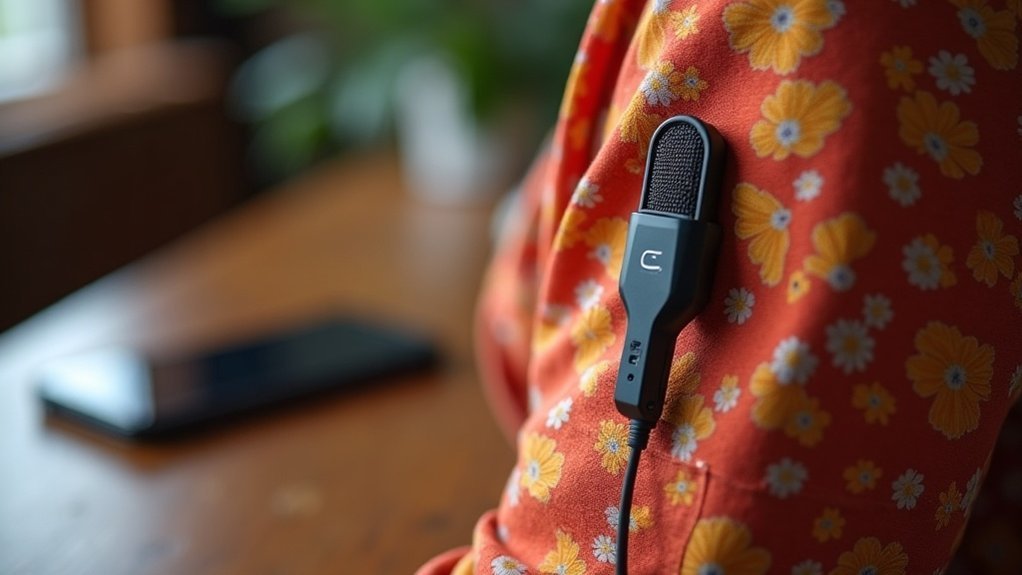
To maximize your lavalier microphone’s performance, focus on ideal placement and effective cable management. Position the mic about 6–8 inches below your mouth on the sternum for balanced audio, and guarantee the cable is secured to prevent unwanted noise. Properly routing the cable and using clips can greatly enhance sound clarity while minimizing distractions. Experimenting with mic placement while the subject speaks naturally can also help achieve the best audio quality. Additionally, maintaining a strong wireless signal is crucial to prevent dropouts and ensure consistent audio performance.
Optimal Placement Techniques
Achieving optimal placement techniques for a lavalier microphone is essential for delivering ideal sound quality. Focus on finding the sweet spot, typically 6–8 inches below your mouth and centered on your chest, to ensure a natural tone. Position the capsule facing your mouth to enhance vocal clarity. For the best quality sound, aim for the ideal microphone positioning that places it in the middle of your chest.
When it comes to clothing types, clip the mic onto button-ups at the center placket, and be cautious to avoid contact with any fabrics to minimize noise interference. During movement, it’s crucial to keep the microphone stable and aligned with your mouth.
Experiment with different placements to determine what works best for your specific voice and wardrobe. By mastering these optimal placement techniques, you’ll guarantee excellent sound quality in any situation, making your content shine whether you’re podcasting, streaming, or recording. Additionally, remember that close microphone placement maximizes audio gain and minimizes noise, enhancing the overall clarity of your recordings.
Cable Management Tips
Effective cable management is essential for maximizing the performance of your lavalier microphone. When it comes to cable management tips, begin by using a broadcast loop at the clip to alleviate cable strain and secure the mic effectively.
Additionally, create a secondary strain-relief loop below the clip—keeping it coin-sized to minimize noise from movement is crucial for optimal audio quality.
To further enhance your cable management strategies, secure the cable inside your clothing with short tape strips, ensuring at least one is placed six inches below the capsule.
If you have excess cable, coil it gently near the transmitter, avoiding tight loops to preserve the longevity of your equipment.
Remember, smooth, untwisted cable runs are vital for noise reduction; this will greatly contribute to clean audio capture during your recordings.
Common Applications and Limitations of Lavalier Microphones

While lavalier microphones are widely recognized for their versatility, they serve distinct applications across various fields, each with unique benefits and challenges. Common uses of lavalier microphones include:
- Broadcasting interviews and live reporting for consistent sound quality.
- Film and theater for hidden dialogue capture without visible microphones.
- Corporate presentations, allowing for hands-free operation.
- Fitness coaching, ensuring clear audio during demonstrations.
However, when considering the common applications and limitations of lavalier microphones, you may encounter placement challenges and clothing interference, which can affect audio clarity.
The choice of microphone and wireless options is crucial, as environmental factors can also impact performance. Additionally, they are similar to boundary microphones in that both are designed to capture sound in specific settings effectively.
Advantages and Limitations of Lavalier Microphones
Lavalier microphones offer a unique combination of advantages and limitations that can considerably impact your audio recording experience. When considering the advantages and limitations of lavalier microphones, it’s essential to recognize their sound isolation and freedom of movement, which enable hands-free operation during presentations. However, keep in mind that wireless reliability can sometimes be compromised by interference.
| Advantages | Limitations |
|---|---|
| Hands-free operation | Susceptible to clothing rustle |
| Discreet placement | Environmental noise sensitivity |
| Consistent audio capture | Potential lower sound quality |
| Simplified setup in tight spaces | Incorrect placement issues |
Understanding the advantages and limitations of lavalier microphones helps you make informed choices for your audio needs in various settings. By weighing these factors carefully, you can optimize your setup for podcasting, streaming, gaming, or any other recording scenario.
How to Choose Your Lavalier Microphone?
Choosing the right lavalier microphone hinges on several key factors, including microphone type, connectivity options, and your budget.
Consider your recording environment and use case to determine whether you need an omnidirectional or cardioid mic. Additionally, verify the connector matches your recording device and evaluate your budget to find a solution that meets your needs without compromising sound quality. Understanding the differences between cardioid and omnidirectional mics can help you make a more informed choice.
Microphone Type Selection
When selecting a lavalier microphone, it’s crucial to take into account several key factors that directly impact audio performance and usability.
Here are some considerations to ensure you choose the best lavalier microphone for your needs:
- Lavalier types (omni vs. cardioid) based on your environment can significantly affect sound quality.
- Usage scenarios (interviews, vlogging) play a vital role in guiding your choice of lavalier microphones.
- Audio quality needs, including frequency response and sensitivity, are essential for achieving professional results.
- Mounting options and placement strategies are critical for ideal sound capture with your lavalier mic.
Evaluate these aspects along with environmental factors and power requirements to guarantee you choose a lavalier microphone that meets your specific needs, whether you’re recording in a controlled studio or a bustling outdoor setting. Additionally, understanding the cardioid pickup pattern can help you make an informed decision about your lavalier microphone to enhance your audio experience, whether you’re a creator, gamer, or musician.
Connectivity Options Available
Understanding the various connectivity options available is crucial for selecting the right microphone for your recording needs.
You’ll encounter analog connections like 3.5 mm TRS and TRRS, suitable for cameras and smartphones, but be mindful of compatibility issues and device limitations.
Digital connections, such as USB-A, USB-C, and Lightning, simplify direct audio transfer for computers and iOS devices, enhancing sound quality.
Wireless systems offer freedom of movement, utilizing transmitters and receivers, but consider portability factors and battery life.
Exploring the connectivity options available ensures seamless integration, aligning connection types with your specific usage scenarios for peak performance.
Budget Considerations Explained
While traversing the diverse landscape of lavalier microphones, it’s essential to keep budget considerations explained in mind to align your budget with specific needs and use cases.
Consider these factors:
- Entry-level options ($15–$30) are great for beginners entering the world of podcasting and streaming.
- Mid-range models ($100–$200) strike a balance between budget performance and quality, ideal for prosumers who want reliable sound without breaking the bank.
- Premium systems ($200+) offer superior audio quality for professionals seeking the best in their recordings.
- Wireless vs. wired can significantly impact your choice based on convenience and sound clarity.
Evaluate your requirements carefully with budget considerations explained.
Higher-priced mics often provide better sound quality, lower noise, and increased reliability, making them worthwhile investments for serious projects in gaming, music, and content creation.