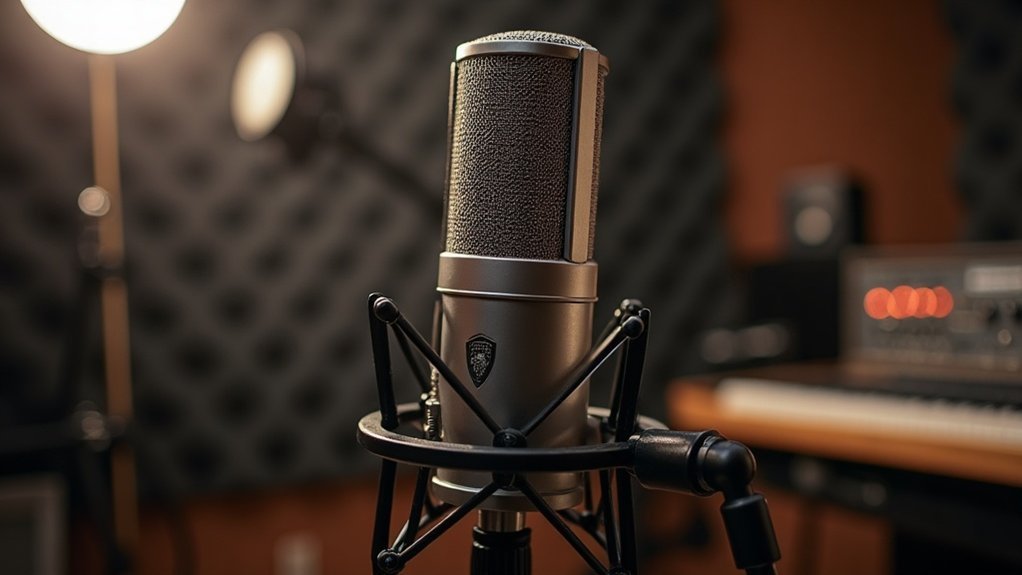

An omnidirectional microphone captures sound equally from all directions, making it ideal for dynamic environments with multiple audio sources. This type of microphone utilizes pressure-type transducers to ensure uniform sensitivity, providing a flat frequency response and minimal distortion. Such design allows for close placement to sound sources without compromising audio quality, which is particularly beneficial for immersive recordings. However, while an omnidirectional microphone excels in versatility, it can also pick up unwanted ambient noise, potentially affecting clarity. If you’re interested in learning more about the specific applications of omnidirectional microphones and how they compare to other types, there’s much more to discover in our comprehensive guides.
Key Takeaways
- Omnidirectional microphones capture sound equally from all directions, making them suitable for varied sound source locations.
- They utilize a pressure-type design for uniform sensitivity and flat frequency response across the audible spectrum.
- Their 360° polar pattern ensures consistent audio fidelity, making them ideal for group recordings and ambient sound capture.
- Omnidirectional microphones excel in applications like podcasting, streaming, and conference setups, enhancing clarity in dynamic environments.
- While effective, they can be sensitive to background noise, complicating the isolation of desired audio in noisy settings.
What Is an Omnidirectional Microphone and How Does It Work?
An omnidirectional microphone captures sound equally from all directions, making it ideal for situations where sound sources vary in location. Understanding what an omnidirectional microphone is and how it works is crucial for anyone involved in audio projects. These microphones are often preferred in situations where ambient sound capture is essential.
This design utilizes a pressure-type transducer, with its diaphragm exposed to sound pressure, ensuring uniform sensitivity across all angles. In sound engineering, omnidirectional microphones are essential for applications like group recordings and ambient sound capture. Omnidirectional microphones are particularly effective in environments where sounds come from multiple angles, such as live performances or orchestral recordings. Their ability to capture sound from all directions enhances the overall auditory experience, especially in dynamic settings.
The diaphragm’s movement, driven by pressure variations, translates to electrical signals through techniques such as capacitance modulation or electromagnetic induction. While omnidirectional microphones provide near-equal sensitivity, practical limitations due to their physical design can affect performance.
Recognizing these dynamics enhances your ability to choose the right microphone for diverse applications, whether you’re podcasting, streaming, or recording music. By grasping what an omnidirectional microphone is and how it operates, you can foster a deeper connection in your audio projects and make informed decisions tailored to your creative needs.
Key Characteristics of Omnidirectional Microphones
Understanding the key characteristics of omnidirectional microphones reveals their unique advantages in various audio applications. Their omnidirectional design guarantees equal sensitivity to sound pressure from all directions, resulting in a spherical pickup pattern without null points. This design leads to a flat frequency response and consistent tonal balance, even at varying distances. Here’s a breakdown of essential features related to the key characteristics of omnidirectional microphones:
| Characteristic | Description |
|---|---|
| Polar Pattern | 360° sensitivity |
| Transducer Principle | Pressure-operated design |
| Frequency Response | Flat across the audible spectrum |
| Proximity Behavior | No low-frequency boost |
| Handling Noise | Reduced susceptibility |
These features make omnidirectional microphones ideal for diverse recording situations, whether you’re podcasting, streaming, or gaming. Additionally, their sensitivity to sound from all directions allows for capturing ambient sounds that enhance the overall audio experience. By understanding the key characteristics of omnidirectional microphones, creators and professionals can make informed decisions that enhance their audio quality. Their ability to provide consistent power regardless of speaker position further solidifies their versatility in collaborative environments.
Why Choose Omnidirectional Microphones?
When you’re considering sound capture, omnidirectional microphones offer consistent and natural tonal balance, making them ideal for various applications. Their ability to pick up sound equally from all directions simplifies placement, allowing for versatile use in dynamic environments. This flexibility not only enhances audio quality but also streamlines your setup process, reducing complexity. Additionally, omnidirectional mics can be placed closer to sources without losing sensitivity, providing greater diaphragm movement in high SPL situations. This characteristic of 360-degree sound pickup allows for an immersive listening experience in recordings, and they can be particularly useful in live sound applications where multiple sources need to be captured simultaneously.
Consistent Sound Capture
Omnidirectional microphones excel in capturing sound consistently across all directions, making them an ideal choice for various recording environments. Their equal sensitivity guarantees consistent audio fidelity, providing uniform gain whether sound comes from the front, sides, or rear. This capability ensures that consistent sound capture is achieved, even when speakers move around the mic, reducing volume fluctuations. With minimal proximity effect, you can place the mic flexibly without sacrificing performance, enhancing the overall experience for creators and professionals alike. This feature is particularly valuable in dynamic settings, such as meetings or performances, where multiple voices or ambient sounds need to be heard clearly. By ensuring consistent sound capture, everyone can feel included in the conversation, making it perfect for podcasters, streamers, and musicians who rely on accurate audio representation. Additionally, their equal sensitivity makes omnidirectional mics effective in environments with varying sound sources, ensuring no important audio is missed. Furthermore, this omnidirectional behavior allows for a more natural representation of the acoustic environment, capturing the essence of the surroundings. Understanding the polar patterns of microphones is crucial for selecting the right one for your needs.
Natural Tonal Balance
Choosing an omnidirectional microphone means benefiting from a natural tonal balance that enhances audio quality across various settings. This design captures sound uniformly, maintaining a consistent off-axis response that closely mirrors the on-axis sound, thereby reducing tonal coloration. With a natural tonal balance, you’ll enjoy:
- Natural timbre preservation, even as sources move or sound arrives from various angles.
- A smooth low-frequency response that avoids “boominess” and enhances clarity.
- An integrated blend of direct sound and room ambience, creating an open, realistic listening experience. Additionally, the polar pattern of omnidirectional microphones ensures that they respond equally to sounds from all directions, providing an accurate representation of the acoustic environment. This makes them particularly effective in capturing environmental ambience] that enriches the overall soundscape.
These features contribute to a more authentic audio capture, ensuring your recordings resonate with depth and accuracy, all while achieving that coveted natural tonal balance that’s essential for creators, gamers, musicians, and professionals alike.
Versatile Placement Options
With an omnidirectional microphone, you can effortlessly adapt to various recording environments, making the most of its versatile placement options. This type of mic features 360° sensitivity, allowing for central placement that effectively captures group discussions and ambient sounds without favoring any direction.
Creative setups, such as ceiling mounts or unconventional placements, enable you to gather clear audio from multiple sources, further highlighting its versatile placement options. This flexibility simplifies arrangements in diverse contexts, whether it’s for podcasting, streaming, or ensemble rehearsals.
Additionally, adjusting the distance provides control over the balance between direct sound and ambient captures, enhancing your recordings while minimizing setup complexity. Embrace the freedom offered by omnidirectional mics and their versatile placement options for your next project. Notably, cardioid microphones are often used in situations where isolating sound sources is crucial.
Key Limitations of Omnidirectional Microphones

While omnidirectional microphones excel in capturing sound from all directions, they also face significant limitations. Their sensitivity to ambient noise makes it challenging to isolate specific sound sources, often leading to background interference. In environments with multiple sound sources, achieving clarity and focus becomes increasingly difficult. Additionally, common causes of background noise can further complicate the recording process, impacting overall sound quality.
Ambient Noise Sensitivity
Ambient noise sensitivity significantly limits the effectiveness of omnidirectional microphones, primarily due to their equal sensitivity to sound from all directions. This inherent characteristic reduces their ability to reject background noise, which negatively impacts sound capture fidelity in various environments.
High ambient noise levels can easily mask quieter desired audio sources.
In noisy settings, omnidirectional mics tend to capture unwanted sounds, such as HVAC hum or crowd chatter, exacerbating the challenges posed by ambient noise sensitivity.
Without any directionality, distant off-axis noise competes with on-axis sources, complicating the recording process.
As a result, these challenges often lead to decreased clarity and intelligibility, making omnidirectional microphones less suitable for environments where background noise is prevalent.
Understanding ambient noise sensitivity is crucial for creators, gamers, musicians, and professionals seeking to optimize their audio quality in diverse recording situations. Additionally, awareness of background noise can help users choose the right microphone for their specific needs.
Limited Source Isolation
Limited source isolation is a significant drawback of omnidirectional microphones, as they capture sound uniformly from all directions. This limited source isolation complicates source clarity, with off-axis sounds being recorded at similar levels as the primary source.
In multi-source environments, the signal-to-noise ratio diminishes, leading to reduced audio fidelity. You’ll notice that conversations and sounds blend, hindering the focus on individual sources.
Additionally, the lack of directionality contributes to channel bleed, complicating post-production tasks. Distance from the source further exacerbates these issues, introducing reverberation that masks the desired audio, ultimately diminishing clarity and control in recordings.
Therefore, when choosing microphones for podcasting, streaming, or recording, it’s essential to consider the implications of limited source isolation to ensure optimal audio quality. Furthermore, selecting a microphone type designed for noisy environments can significantly enhance recording clarity.
Where Do We Use Omnidirectional Microphones?

Where do we use omnidirectional microphones making a significant impact? These versatile mics excel in various settings, optimizing sound capture and enhancing audio quality:
- Conference setups: They guarantee clear communication in boardrooms and hybrid meetings.
- Podcast recordings: Omnis balance voices in roundtable discussions and interviews, fostering natural interaction.
- Field recordings: Capture urban ambience or nature sounds, immersing listeners in the environment.
In classroom environments and training sessions, these mics effectively capture both instructor and student dialogue, facilitating engaging learning experiences.
Their adaptability makes them essential tools across multiple applications, showcasing where omnidirectional microphones can truly shine and build connections through enhanced audio clarity. Additionally, boundary microphones are often used in similar environments to optimize sound quality further.
Whether it’s for podcasting, streaming, or professional use, understanding where to utilize omnidirectional microphones can elevate your audio experience significantly.
Omnidirectional vs. Directional Microphones
Omnidirectional mics capture a 360° sound field, providing uniform frequency response and natural ambience, making them ideal for open environments.
In contrast, directional microphones focus on front-axis sound, effectively rejecting off-axis noise, which enhances isolation in loud settings. This “distance factor” allows them to maintain clarity even from farther away.
Understanding the differences in polar patterns between omnidirectional and directional microphones helps you choose the right mic for your needs, ensuring superior sound quality tailored to your specific audio environment.
Additionally, recognizing how polar patterns influence microphone performance can further enhance your decision-making process.
When navigating the choices between omnidirectional vs. directional microphones, consider how each type can best serve your podcasting, streaming, or recording endeavors.