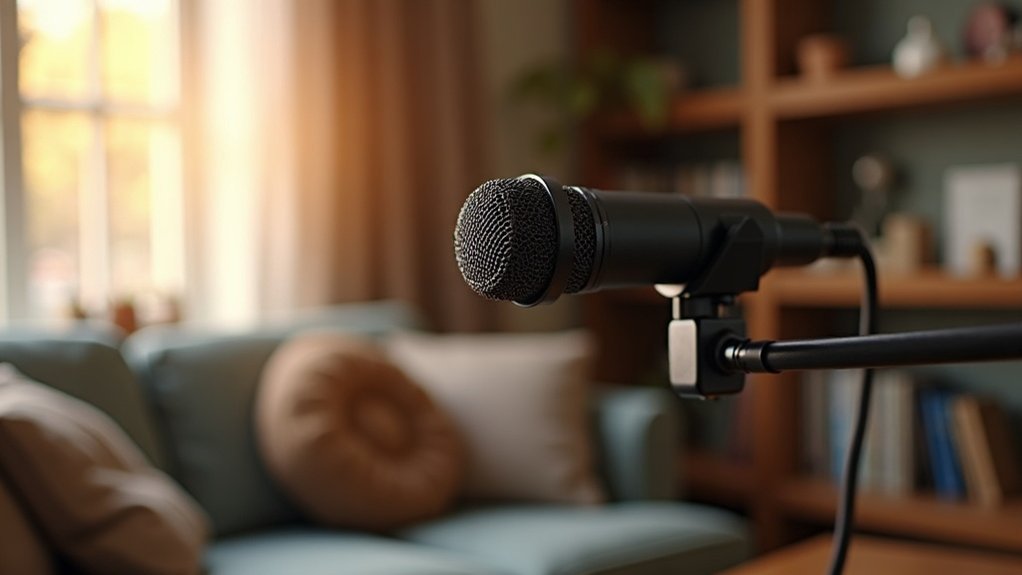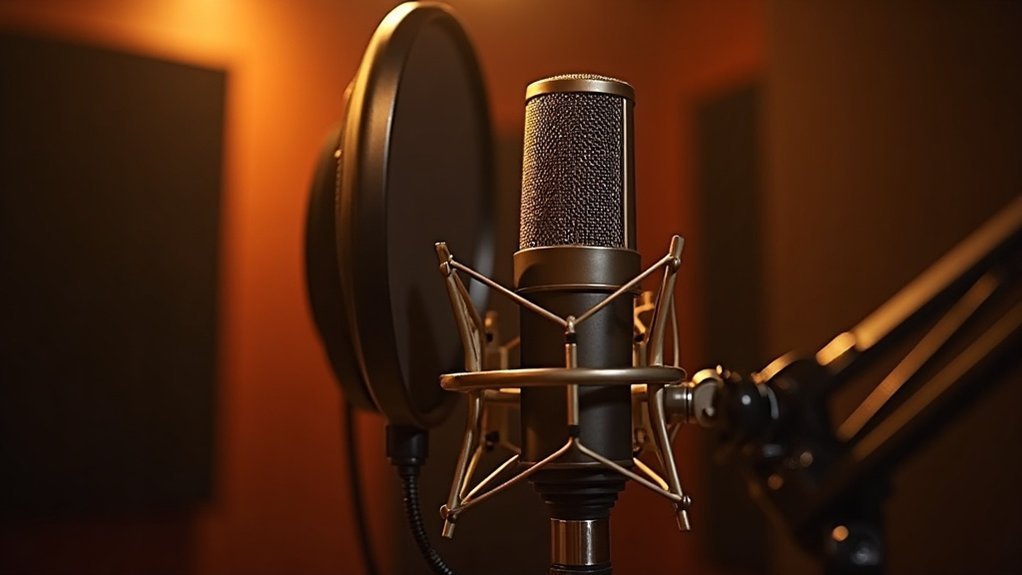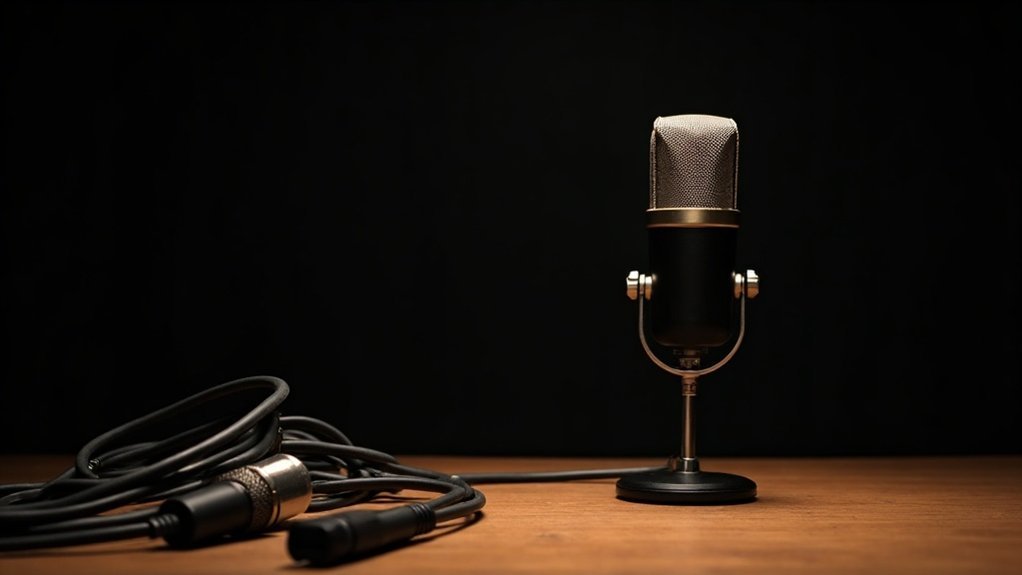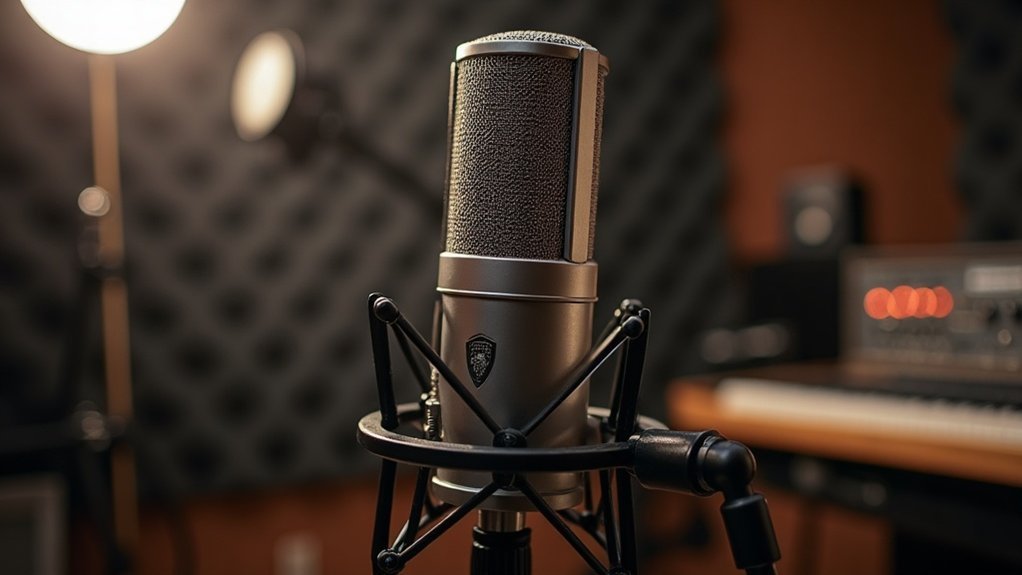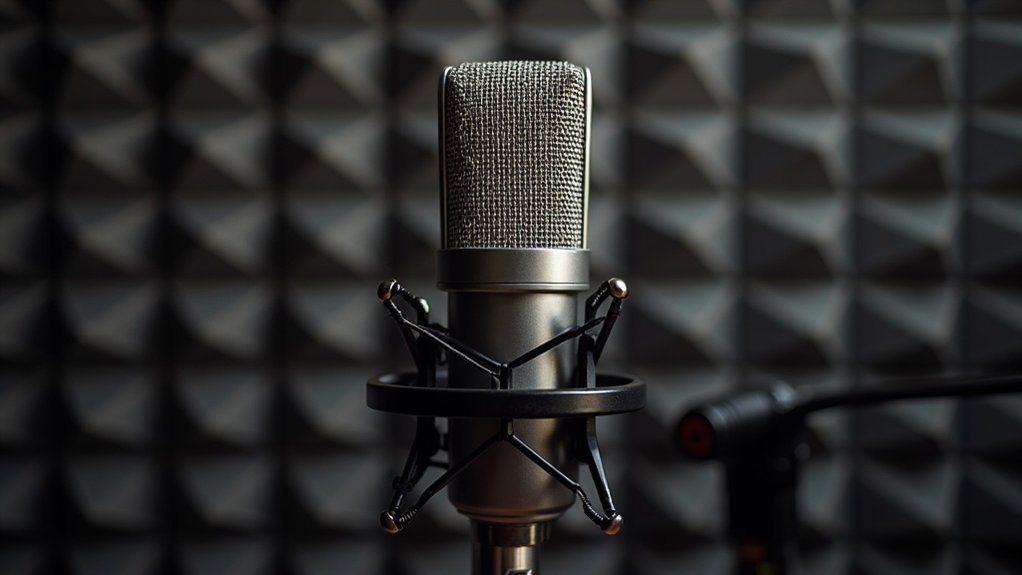
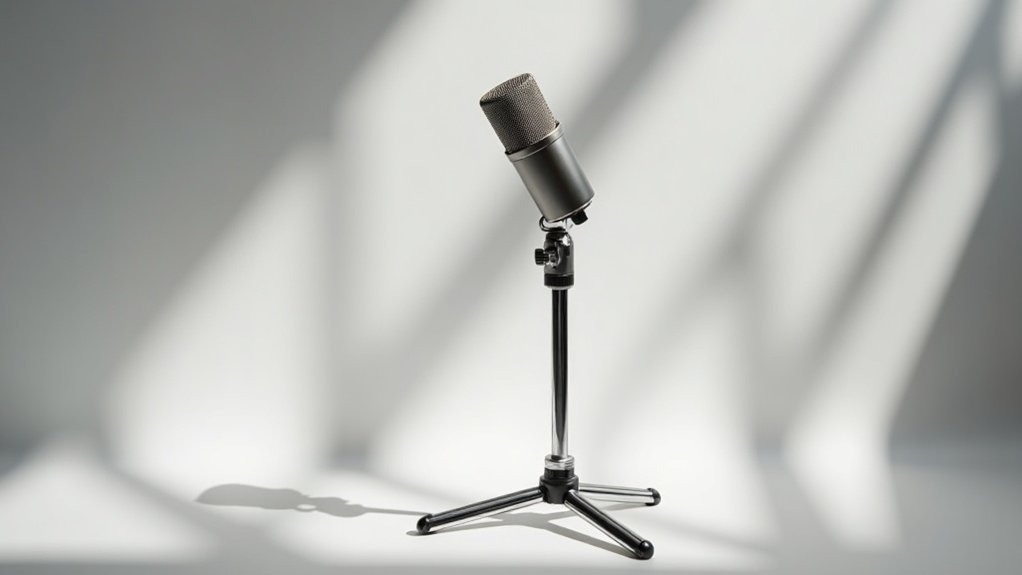
A mic stand is an adjustable support device that holds your microphone in a fixed position, freeing your hands and eliminating handling noise. This essential mic stand equipment maintains consistent microphone-to-mouth distance—typically 4–8 inches—reducing vibrations and enhancing audio clarity for podcasters, streamers, gamers, and recording professionals alike.
Whether you’re setting up a home studio for podcasting, streaming on a budget-friendly platform, or recording music, the right mic stand makes a tangible difference in your audio quality. You’ll find mic stands in professional studios, live stages, and home setups, each requiring different designs: tripod bases for mobility, boom arms for flexible positioning, and clamp stands for space-saving solutions.
A quality mic stand keeps your microphone stable during recording sessions, preventing the unwanted handling noise that can ruin takes. For creators and musicians working with affordable microphones, investing in a proper mic stand transforms your setup from amateur to professional-sounding. Understanding which type of mic stand suits your specific recording environment—whether you’re gaming, podcasting, or performing live—will greatly impact your overall audio quality and streaming experience.
Key Takeaways
- A mic stand provides stable support for microphones, keeping hands free and maintaining consistent microphone-to-mouth distance for professional audio quality.
- Common types include straight stands with round bases, boom stands for flexible positioning, and tripod stands for live performance mobility.
- Key components consist of a base, vertical pole, clutch mechanism, boom arm, and mic holder for secure microphone placement.
- Proper setup involves extending tripod legs fully, positioning microphones 4–8 inches from the sound source at a slight off-axis angle.
- Midrange stands costing $40–$80 offer durability suitable for daily use, while heavy-duty construction prevents sagging during demanding applications like drum recording.
What Is a Mic Stand and Why You Need One?
A mic stand is a physical support structure that holds your microphone in a stable, fixed position without requiring manual handling. Understanding what’s a mic stand and why you need one is essential for anyone serious about audio quality.
You’ll appreciate how a mic stand keeps your hands free during presentations, podcasts, or recording sessions while maintaining consistent microphone-to-mouth distance for superior audio quality.
Why you need a mic stand goes beyond convenience—the benefits of using a mic stand include reduced vibrations, eliminated handling noise, and enhanced sound clarity. These stands, constructed from durable materials like aluminum or steel, provide the stability professionals demand. Mic stands are available in several types, including straight stands with round bases, boom stands for instrumentalists, and specialized overhead supports designed for specific applications. Different stand types such as clamp microphone stands offer space-saving solutions for environments where traditional floor stands aren’t practical. For precision audio work, boom arms for microphone positioning provide flexible placement options that allow you to adjust your mic angle and distance with ease.
Mic stands reduce vibrations, eliminate handling noise, and enhance sound clarity—the stability professionals demand.
Whether you’re streaming, performing live, or recording at home, knowing why you need one becomes clear when you experience precision positioning that separates amateur recordings from polished, professional-quality audio captures.
For creators, gamers, and musicians on a budget, a mic stand represents one of the most affordable yet impactful upgrades to your setup. Discovering what a mic stand can do for your podcast, stream, or recording reveals why audio professionals consistently recommend them.
The reasons why you need a mic stand apply across every stage of your creator journey—from your first home recording session to live performances. Investing in a quality mic stand ensures your microphone placement remains optimal, your audio stays clean, and your content maintains the professional edge that distinguishes successful creators from the rest.
Common Types of Mic Stands and Their Best Uses
You’ll find that your choice between studio and stage setups fundamentally shapes which stand type best serves your needs, as studio environments typically prioritize flexibility and precise positioning while stage setups demand stability and quick deployment.
Your specific microphone placement requirements—whether you’re capturing vocals at a fixed height or repositioning instruments throughout a session—will determine whether you need a simple tripod, an adjustable boom arm, or a specialized overhead design.
Understanding how each stand type balances stability, reach, and footprint lets you match the stand to your exact performance or recording context. Desktop stands are particularly ideal for podcasters and streamers who work in compact spaces and need a reliable, space-efficient solution. Quality stands with higher-end twist clutches can lock microphones into position with minimal motion, ensuring your equipment remains secure during extended recording or performance sessions.
Studio vs. Stage Setup
The environment where you’re recording fundamentally determines which studio vs. stage setup works best for your needs.
Studio setups demand desk-mounted arms that maximize workspace efficiency while keeping your microphone precisely positioned. You’ll appreciate how boom arms and suspension mounts save surface space in tight studio environments. The load capacity and reach of your chosen arm directly impact your ability to position microphones for optimal sound quality without cluttering your workspace. Scissor arm booms are particularly popular in studios because they offer flexible positioning without consuming floor space.
Stage setups require different solutions—tripod stands offer mobility and durability for live performances, while round-base stands reduce trip hazards in crowded venues.
When comparing studio versus stage setups**, you’re ultimately choosing between stability and footprint**: tripods provide broad application but consume floor space; round bases stay compact.
Your studio setup prioritizes accessibility and precise microphone positioning for recording, streaming, and podcasting work.
In contrast, your stage setup prioritizes movement and safety during high-traffic live performance situations.
Understanding this studio vs. stage distinction ensures you select the right mic stand for your specific environment—whether you’re recording affordable microphones for content creation in a bedroom studio or performing live with professional equipment on stage.
Flexibility Meets Placement Needs
Once you’ve identified whether your work demands studio or stage conditions, selecting the right stand type determines how well you’ll capture audio and manage your recording space.
Flexibility meets placement needs**** when you understand your full range of stand options across categories:
- Boom stands offer offset positioning for instruments and tight spaces.
- Tripod bases provide broad stability for general-purpose applications.
- Specialty stands (desktop, overhead, scissor arms) match specific source heights and placements.
How flexibility meets your placement needs depends entirely on your sound source’s location and your venue’s constraints.
Desktop stands suit podcasting and voiceovers, while overhead stands capture drum kit elements. Round-base designs minimize stage clutter for vocalists. Rubber feet with grooves on tripod stands improve stability and prevent unwanted vibrations during recordings. The clutch mechanism on adjustable poles allows you to maintain proper microphone height and balance throughout your recording session. When choosing between boom arms and mic stands, consider whether your setup requires the offset positioning of a boom arm or the stable base support of a traditional stand.
The intersection of placement needs and microphone flexibility means matching your stand’s capabilities directly to your intended position and your environment’s spatial limitations.
This balance—where flexibility meets placement requirements—ensures you achieve ideal results whether you’re recording podcasts, streaming games, capturing live performances, or producing music.
Understanding how flexibility addresses your unique placement needs prevents costly mistakes and maximizes your affordable microphone investment across every recording scenario.
Where Mic Stands Are Used (Studios, Stages, Home Studios)
You’ll find mic stands serve distinct purposes across three primary environments: professional recording studios where precision placement around instruments and vocals demands adjustable boom systems, live performance stages where you need sturdy construction to withstand repeated movement and quick repositioning, and home studios where space constraints and desk-based workflows make compact boom arms and desktop stands your go-to solutions.
Each setting presents unique challenges—studios prioritize flexible reach and stability for extended booms, stages emphasize durability under handling stress, and home setups require stability despite limited square footage. For demanding applications like recording drums, heavy-duty stands become essential to prevent sagging and maintain reliable performance throughout extended sessions. When selecting microphones for these environments, understanding whether you’ll use condenser or dynamic microphones helps determine the stand requirements, as condenser mics often need more delicate handling and precise positioning. Poorly designed stands can introduce unwanted noise that compromises your final recording quality.
Understanding how these environments shape your stand choice guarantees you select equipment that matches your recording or performance context.
Professional Recording Studios
Three stand types dominate professional recording environments: tripod boom stands, floor stands, and round-base models, each engineered to meet distinct stability and positioning demands.
When selecting professional recording studio mic stands, you’ll prioritize stability to protect expensive gear and ensure consistent recordings. Here’s what you’re working with:
- Tripod boom stands offer flexible positioning for drums, vocals, and ensembles, making them ideal professional recording studio microphone stands for dynamic setups.
- Floor stands handle heavy microphones with high load capacity and durability, serving as reliable professional recording studio mic stands for stationary vocal and instrument work.
- Round-base stands provide compact footprints where space matters, functioning as efficient professional recording studio stands for control rooms and tight spaces.
You’ll select steel or alloy construction for long-term durability in your professional recording studio setup.
Weighted bases prevent drift during sessions, while adjustable counterweights balance microphone weight precisely.
Precision hardware—360° horizontal and 180° vertical rotation—supports the critical placement refinements that distinguish professional recording studio results.
Whether upgrading an existing setup or building from scratch, investing in quality professional recording studio mic stands ensures your audio equipment performs at peak capacity across every session type.
Live Performance Stages
Stage environments demand mic stands engineered for the unpredictability of live performance—where stability, durability, and rapid adjustability aren’t luxuries but necessities.
When you’re setting up for live performance stages, you’ll rely on steel or aluminum construction to withstand stage dynamics and repeated setup cycles. Tripod boom stands offer you versatile positioning for vocalists and instruments alike, while round-base designs minimize trip hazards during energetic performances on live performance stages. Dynamic microphones commonly used in these settings require stands that accommodate their specific mounting needs and frequent handling.
Wide bases and secure locking joints protect against toppling when extended boom arms shift your center of gravity—critical considerations for anyone performing on actual live performance stages.
You’ll appreciate foldable designs that streamline transportation between venues, enabling quick changeovers that keep your setup efficient across multiple live performance stage locations.
Whether you’re a musician, streamer, or professional performer, the right stand transforms how you capture audio in dynamic environments.
Performance stability remains non-negotiable—your equipment must support consistent sound capture amid movement and crowd contact.
For creators and gamers expanding into live performance, selecting stands specifically designed for live performance stages ensures your audio remains broadcast-quality regardless of stage demands, movement, or venue changes.
Home Studio Setup
You’ll find three essential advantages:
- Vibration isolation reduces handling noise and unwanted artifacts
- Consistent placement guarantees repeatable takes across sessions
- Hands-free operation frees you for performance or equipment adjustments
Your home studio setup choice depends on desk space, microphone weight, and room dimensions.
Desktop stands work well for compact home studio setups, while boom stands accommodate obstructed instrument layouts.
Whether you’re building a home recording studio setup for podcasting, streaming, gaming, or professional recording, selecting the right stand is crucial.
Proper microphone placement distance significantly impacts your recording quality and ensures optimal sound capture in your space.
Pairing your stand with quality mic stand accessories optimizes your home studio setup acoustics, allowing you to capture professional-grade recordings without extensive equipment investments.
A well-configured home studio setup ensures that creators, gamers, musicians, and professionals can achieve consistent, high-quality audio results across every stage of their recording journey.
How Mic Stands Improve Your Audio Quality
Complementing your mic stand setup with acoustic panels will absorb reflections and room noise, creating an even cleaner recording environment for professional results.
Using quality mic stands** ensures you capture drier, more intelligible recordings suitable for streaming and podcasting. Whether you’re a creator, gamer, musician, or professional, understanding how mic stands improve audio quality** is essential for affordable microphone setups.
Professional microphone stands improve your recording from amateur to broadcast-quality, making them a critical investment for anyone serious about content creation and streaming.
The Main Parts of a Mic Stand
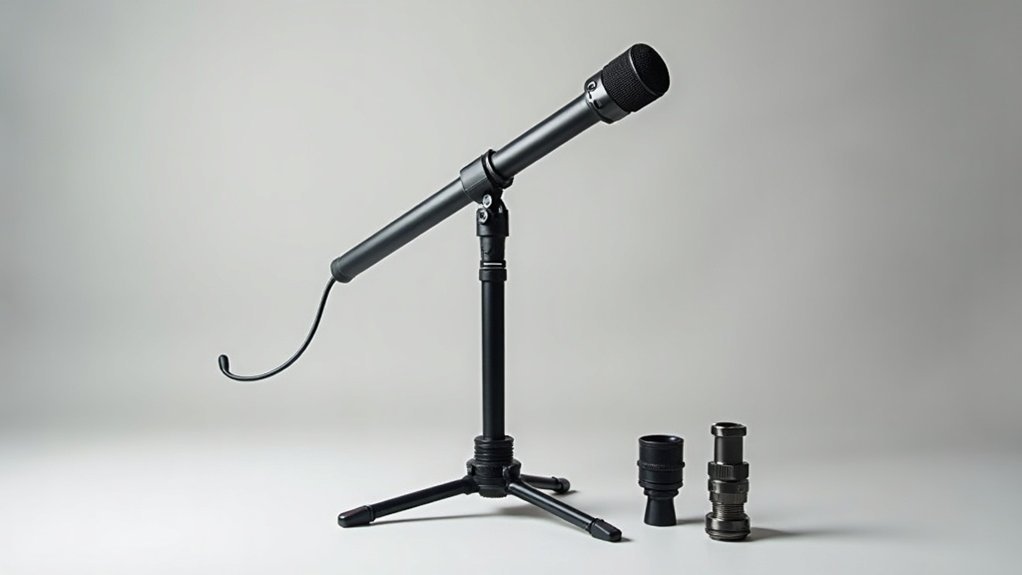
Understanding the main parts of a mic stand is essential for anyone setting up a professional recording space. A mic stand’s effectiveness depends on five core components working together: the base, vertical pole, clutch and height-adjustment system, boom arm and clamp, and mic holder with support hardware.
You’ll find that base stability comes from tripod or round designs with rubber feet that dampen vibration. The main parts of a mic stand begin with this foundation, which determines overall durability.
Pole rigidity determines load capacity and height range through telescoping tubes. Your clutch mechanisms—twist, friction, or cam-lock—prevent slippage during adjustment and are critical parts of a mic stand’s reliability.
Consider these essentials:
- Boom flexibility enables precise mic positioning over instruments.
- Thread standards (3/8″ or 5/8″) guarantee adapter compatibility.
- Shock mount isolation provides superior vibration dampening and support.
When evaluating different mic stand models for your podcasting, streaming, gaming, or recording setup, pay attention to how each part of a mic stand contributes to overall performance.
Quality hardware stability components—collars, clamps, brackets—secure everything together, delivering the professional performance you’ll rely on whether you’re a creator, gamer, musician, or broadcast professional.
Understanding these mic stand parts ensures you invest in equipment that will support your affordable microphone for years of content creation.
How to Choose a Mic Stand by Recording Setting and Budget
Selecting the right mic stand requires matching your setup’s physical constraints, use case, and budget to the stand’s design features. Understanding how to choose a mic stand by recording setting and budget ensures you invest wisely across different scenarios.
For studio desks, boom arms preserve space while maintaining microphone stability—an essential consideration when learning how to choose a mic stand for stationary setups. Vocal tracking demands straight floor stands with weighted bases to prevent tipping, while choosing a mic stand for your recording setting means prioritizing stability over portability.
Boom arms maximize studio desk space while weighted floor stands ensure vocal tracking stability and prevent tipping during stationary recordings.
Drum and amp work benefits from short tripod booms and counterweights on extended arms, making stand selection critical for capturing quality audio. Live band sessions need multiple stands for recording versatility across instruments, demonstrating why choosing the right mic stand by budget and setting varies greatly by application.
Budget-conscious engineers should invest $40–$80 in midrange stands that balance durability and longevity, especially for daily use—a practical approach to choosing a mic stand without overspending.
Portable folds suit mobile recording and streaming setups; stationary recording and podcast configurations prioritize heavy-duty construction when location stability matters most.
Whether you’re gaming, podcasting, or recording professional vocals, matching your mic stand choice to both your recording environment and financial constraints ensures reliable performance without compromise.
Setup, Positioning, and Height Adjustment Tips
Once you’ve picked the right mic stand for your recording environment and budget, you’ll need to master setup, positioning, and height adjustment to achieve stable performance and ideal sound capture.
These setup, positioning, and height adjustment tips are essential for optimal microphone performance.
- Extend tripod legs fully on a stable surface, then secure your microphone clip before adding the mic.
- Loosen the height adjustment knob, position your stand, and tighten firmly—avoiding over-extension that causes sagging. Proper height adjustment prevents microphone sagging and ensures consistent positioning throughout your recording sessions.
- Route cables along the stand’s side, away from performers, using clips to prevent snagging.
Position your microphone 4–8 inches from your sound source at a slight off-axis angle for best tone shaping and clarity.
This positioning strategy works whether you’re podcasting, streaming, gaming, or recording music.
Your audio interface choice and mic stand positioning work together to capture the best possible sound from your microphone. Correct mic stand positioning and height adjustment directly impact your audio quality, so take time to get these fundamentals right before hitting record.