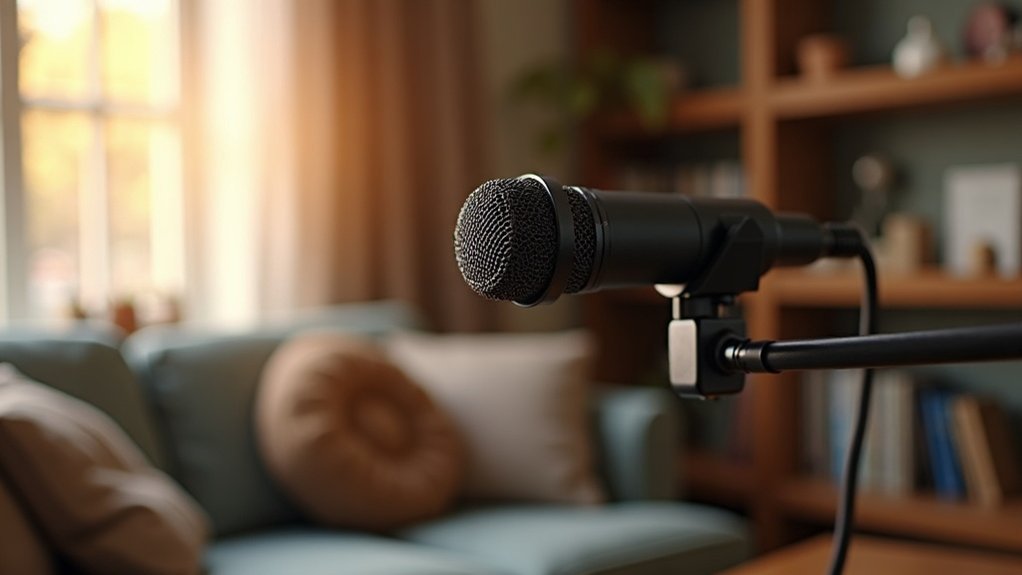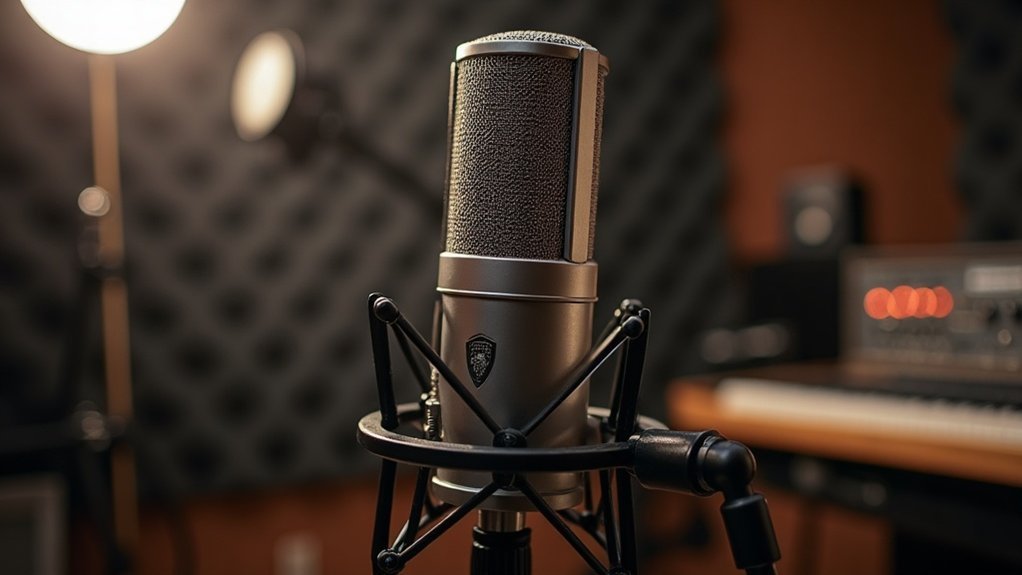

You convert sound waves into electrical signals through three primary mechanisms—a fundamental process at the heart of understanding how microphones convert sound into electricity**. Dynamic microphones use electromagnetic induction—your diaphragm vibrations** move a coil within a magnetic field, generating millivolt-level AC signals. This is one of the most reliable ways microphones convert sound, making dynamic mics popular for podcasting and streaming applications.
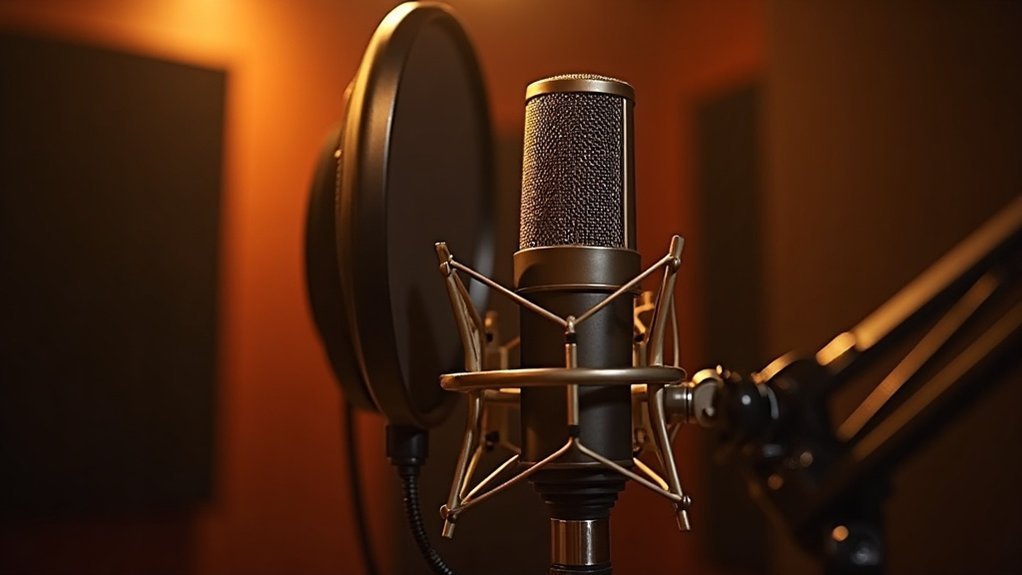
Condenser microphones operate via capacitive variation, where diaphragm movement alters capacitance to produce audio signals. This method of converting sound into electricity offers exceptional sensitivity, which is why many musicians and professionals favor condensers for studio recording and detailed vocal capture.
Piezoelectric designs represent another approach to how sound converts into electrical signals, using specialized materials to convert mechanical stress directly into electrical voltage. Each method’s effectiveness depends on your specific recording environment, sensitivity requirements, and durability needs—understanding these distinctions in sound-to-electricity conversion reveals which microphone type best suits your applications, whether you’re gaming, streaming, podcasting, or recording professional content.
Key Takeaways
- Dynamic microphones convert sound vibrations into electrical signals through electromagnetic induction within a magnetic field.
- Condenser microphones alter capacitance when sound waves move the diaphragm, producing proportional electrical audio signals.
- Piezoelectric microphones generate electrical voltage directly when mechanical stress deforms specialized materials like PZT or PVDF.
- All microphone types convert acoustic energy into millivolt-level AC signals proportional to sound wave intensity and frequency.
- Signal conversion efficiency depends on microphone design, material properties, and mechanical damping across the target bandwidth.
The Diaphragm: Where Sound Becomes Motion
The diaphragm is where sound becomes motion—the critical component that transforms invisible acoustic energy into measurable electrical signals. Microphones rely on this thin, flexible membrane to capture every detail of your voice, instrument, or ambient sound.
The diaphragm transforms invisible acoustic energy into measurable electrical signals, capturing every detail of your sound.
You’ll find that diaphragm materials—plastic, Mylar, or aluminum—are deliberately lightweight to enable rapid vibration dynamics that preserve clarity in podcasts, streams, and recordings. The diaphragm’s vibrations generate an alternating current that directly corresponds to the frequency and amplitude of incoming sound waves.
Sound pressure differences across the diaphragm’s surfaces drive its motion, with amplitude proportional to loudness. This where sound becomes motion principle is fundamental to microphone performance, whether you’re recording vocals for a podcast or capturing gaming commentary. The mechanical movement of the diaphragm generates an electrical signal that carries the acoustic information captured by the microphone.
The diaphragm’s frequency tracking capability preserves your sound’s pitch and waveform nuances, capturing transient response and articulation that separates affordable quality microphones from inferior alternatives. The diaphragm’s tension and thickness directly influence its resonant frequency, which determines how the microphone responds to different sound frequencies.
For creators and musicians seeking affordable microphones, understanding how the diaphragm converts acoustic energy is essential. Design optimization balances material stiffness and tension to achieve linear acoustic response across your target bandwidth, ensuring that gaming streams, professional recordings, and music production all benefit from accurate sound reproduction.
Mechanical damping controls resonance, ensuring faithful signal conversion without coloration or distortion before electrical transduction begins—a hallmark of dependable budget microphones that deliver professional results without breaking the bank.
Dynamic Microphones: Electromagnetic Induction
When sound vibrates the diaphragm, you’re triggering an elegant chain of physics central to dynamic microphones: electromagnetic induction**—a moving coil cuts through magnetic field lines, inducing an electrical voltage that mirrors the incoming acoustic waveform**.
Sound pressure variations drive your coil dynamics within a radial magnetic gap, generating millivolt-level AC signals proportional to coil velocity and flux density. This electromagnetic induction process is what makes dynamic microphones work without external power; the motion itself produces the signal through pure physics. The operation of dynamic microphones is the reverse of how a speaker functions, creating a symmetrical relationship between sound conversion and sound reproduction.
Understanding how electromagnetic induction functions in dynamic microphones helps you appreciate why these designs excel in demanding environments. Dynamic microphones are commonly referred to as such by sound engineers due to their moving coil construction and sturdy design. This ability to function without external power sources makes dynamic microphones exceptionally practical for field recording and portable setups where battery management becomes a concern.
Professional dynamic microphone electromagnetic induction implementations deliver balanced output through step-up transformers, enabling robust handling of extreme SPL without distortion. For creators, gamers, musicians, and professionals tackling live performances, streaming sessions, or studio recordings, the passive nature of electromagnetic induction in dynamic microphones means reliable operation even during the most intense sessions.
The electromagnetic induction principle behind dynamic microphones makes them your dependable choice for affordable, high-performance recording across podcasting, streaming, gaming, and studio applications.
This fundamental electromagnetic induction mechanism requires no batteries or phantom power, keeping your setup simple while delivering the consistent, professional-grade results that creators demand without breaking the budget.
Condenser Microphones: The Capacitor Principle
The capsule design in condenser microphones leverages the capacitor principle with four essential components:
- Ultra-thin diaphragm stretched under tension
- Fixed perforated backplate establishing the gap
- Strong electrostatic field maintaining polarization
- Capacitance changes proportional to diaphragm displacement
Understanding how the capacitor principle operates is crucial for anyone selecting a condenser microphone for podcasting, streaming, or recording. Sound pressure moves your diaphragm closer or farther from the backplate, altering plate spacing. This fundamentally changes capacitance, forcing voltage across the plates to modulate while charge remains constant—producing your audio signal.
The capacitor principle explains why condenser microphones deliver the clarity that creators, musicians, and professionals demand. As the diaphragm vibrates in response to sound waves, the capacitor principle governing the relationship between plate spacing and electrical output ensures faithful signal reproduction. The inverse relationship between capacitance and distance is mathematically defined by the capacitance formula, which determines how much the voltage will change for a given diaphragm movement. Most condenser microphones require P48 phantom power supplied through standard microphone cables to maintain the electrostatic field necessary for operation.
This capacitive transduction—the core of how the capacitor principle converts acoustic energy into electrical signals—makes condenser microphones ideal for affordable yet high-quality recording setups across gaming, music production, and professional applications.
Piezoelectric Microphones: Mechanical to Electrical Conversion
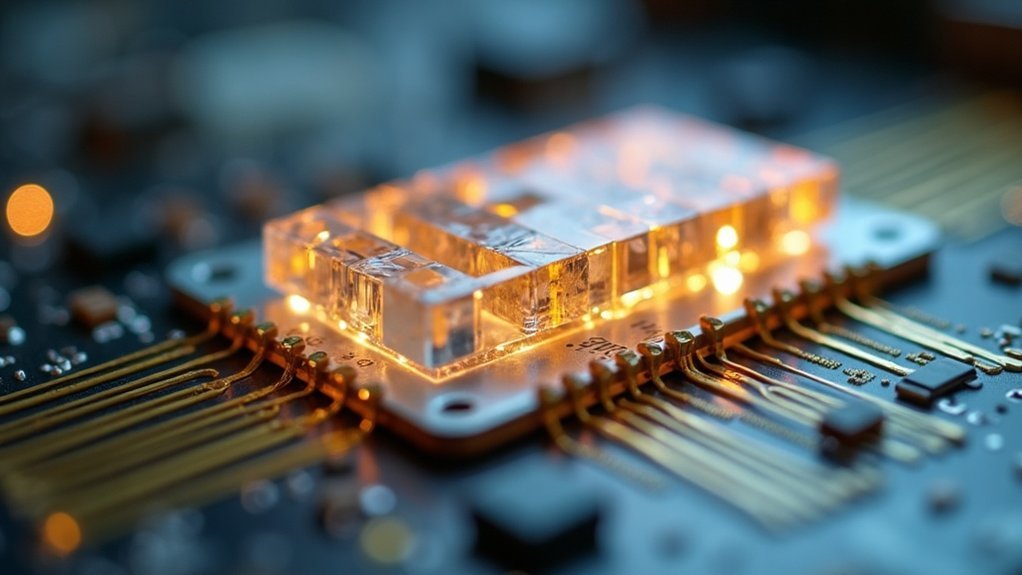
Piezoelectric microphones represent a unique category of mechanical to electrical conversion devices that operate fundamentally differently from traditional condenser designs. Unlike condenser microphones that rely on capacitive transduction, piezoelectric microphones convert mechanical stress directly into electrical voltage through the piezoelectric effect—a phenomenon where certain crystals and ceramics generate charge when deformed.
When evaluating piezoelectric microphones for your recording setup, you’ll find that sound waves vibrate a diaphragm bonded to piezoelectric materials like PZT or PVDF, creating mechanical strain throughout the crystal lattice. This mechanical to electrical conversion process occurs instantly, with the deformation separating charge centers and producing high-impedance analog voltage proportional to incident pressure. Mechanical strain on quartz generates electric charges that reverse polarity when the strain direction changes. These devices are also known as contact microphones due to their reliance on solid objects for signal production.
For podcasters, streamers, and musicians seeking affordable options, this charge generation mechanism makes piezoelectric microphones exceptionally robust and self-powered, requiring no external bias—a significant advantage when building budget-conscious streaming or recording rigs.
The direct mechanical to electrical conversion pathway these devices employ delivers waveforms faithfully matching your original sound, making them suitable for gaming commentary, podcast recording, and professional applications where reliability matters.
Whether you’re comparing microphone technologies for your first setup or upgrading your existing equipment, understanding how piezoelectric microphones achieve this mechanical to electrical energy transformation helps clarify why they’re particularly durable choices for creators operating in demanding environments, from live streaming setups to rugged field recording scenarios.
Comparing Microphone Types: Sensitivity, Durability, and Use Cases
Now that we’ve examined how piezoelectric microphones operate through direct mechanical conversion, it’s valuable to compare them alongside the broader microphone landscape. When comparing microphone types—sensitivity, durability, and use cases—you’ll discover critical distinctions that directly impact your purchasing and setup decisions.
These distinctions matter significantly:
- Microphone sensitivity ranges from −30 dB (condensers) to −54 dB (dynamics), affecting noise floor and amplification needs. Understanding sensitivity across different microphone types helps you select gear matching your recording environment and preamp capabilities. Condenser microphones are generally more sensitive than their dynamic counterparts, making them ideal for capturing subtle audio details in controlled studio environments.
- Microphone durability favors dynamics’ simple moving-coil design over fragile ribbon constructions. When comparing microphone types for long-term reliability, dynamics consistently outperform delicate alternatives in demanding environments.
- Studio work demands condensers’ detail retrieval; live sound requires dynamics’ robustness. Condenser microphones use a capacitor element to achieve their superior sensitivity and detail capture capabilities. Your use case determines whether sensitivity or durability takes priority in your microphone type selection.
- Power requirements and preamp gain demands shift based on output specifications. Comparing microphone types reveals how these technical factors compound—a sensitive condenser demands less gain staging, while low-output dynamics require more amplification overhead. For digital microphones specifically, sensitivity is determined by maximum acoustic input, which means there’s no flexibility to increase output signal without compromising the microphone’s ability to handle loud sound sources.
Understanding these tradeoffs across comparing microphone types—examining sensitivity, durability, and their real-world applications—guides your selection toward ideal performance.
Whether you’re podcasting, streaming, gaming, or recording music, matching the right microphone type to your specific needs ensures you maximize both audio quality and equipment longevity.