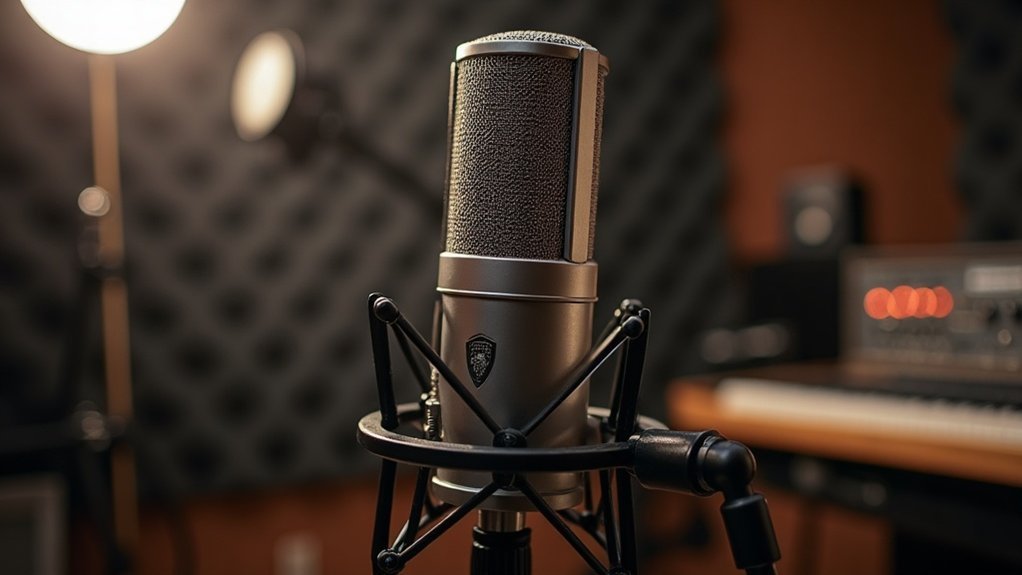

A hypercardioid microphone is designed to capture sound primarily from the front while minimizing unwanted background noise. This type of microphone features a polar pattern with a pickup angle of 105–110°, providing strong side rejection and some rear sensitivity. As a result, hypercardioid microphones are ideal for noisy environments, enhancing dialogue clarity and isolating sound sources effectively.
To maximize the effectiveness of a hypercardioid microphone, proper positioning is essential. Whether you’re podcasting, streaming, or recording music, understanding how to use this versatile tool can significantly improve your audio quality. If you’re interested in exploring the benefits and best practices for hypercardioid microphones, there’s much more to uncover about how this microphone can enhance your projects.
Key Takeaways
- A hypercardioid microphone captures sound primarily from the front while minimizing background noise, making it ideal for noisy environments.
- It features a polar pattern with a front pickup angle of 105–110°, providing strong side rejection and some rear sensitivity.
- This microphone is effective for isolating vocals and instruments in live sound and recording scenarios, enhancing clarity and intelligibility.
- Proximity effect amplifies bass response when the microphone is close to the sound source, ideal for intimate sound capture.
- Proper positioning is crucial to avoid issues with feedback and tonal variability, especially in dynamic performance settings.
Understanding Hypercardioid Microphones: Definition and Functionality
A hypercardioid microphone is a specialized directional microphone that excels in capturing sound directly in front while minimizing ambient noise from the sides and rear. This type of microphone features a hypercardioid polar pattern with a narrow front lobe and a front pickup angle of about 105–110°, providing a tight focus on the desired audio source.
When comparing hypercardioid microphones to cardioid and supercardioid patterns, you’ll find that they offer stronger side rejection along with some rear sensitivity, allowing for controlled pickup behind the microphone. This design prioritizes on-axis sound capture, making hypercardioid microphones particularly effective in noisy environments where clarity is essential. Additionally, they exhibit proximity effect which amplifies bass response when positioned close to the sound source. The hypercardioid polar pattern requires precise positioning to capture audio effectively, ensuring optimal performance in various settings.
Understanding the characteristics of hypercardioid microphones is crucial for creators, gamers, musicians, and professionals looking to enhance their audio quality. By recognizing the unique functionality of these specialized directional microphones, you can choose the right microphone for your specific needs, whether you’re podcasting, streaming, or recording.
Key Benefits of Hypercardioid Microphones for Film and Music Recording
These mics offer focused sound isolation, ensuring you capture a single sound source even in noisy environments. With strong off-axis rejection, you can reduce unwanted ambient noise, which improves dialogue intelligibility and mix control. This tight pickup pattern minimizes bleed from neighboring instruments, resulting in cleaner recordings. Moreover, their ability to handle extreme proximity effects allows for richer, more intimate tones. Additionally, their directional polar pattern ensures maximum rejection of rear sounds, making them ideal for various recording scenarios.
In fact, hypercardioid microphones are particularly effective in live sound situations, where background noise can be a significant challenge.
Additionally, understanding the microphone polar pattern helps in selecting the right mic for your specific recording environment. Whether you’re capturing ADR or live performances, understanding the key benefits of hypercardioid microphones for film and music recording can help you achieve the precision and clarity needed to elevate your audio production.
These specialized microphones are essential tools for creators, musicians, and professionals looking to optimize their sound quality in various recording settings.
Best Uses for Hypercardioid Microphones
Hypercardioid microphones excel in various applications, making them a versatile choice for audio professionals. Their best uses for hypercardioid microphones include live sound, where they’re invaluable for isolating vocals and reducing feedback.
In film recording, these microphones enhance dialogue capture while minimizing ambient noise, proving essential for high-quality audio in cinematic projects. Their directional sensitivity is particularly beneficial in crowded environments, allowing for focused sound capture. For studio isolation, the focused pickup of hypercardioid microphones is perfect for close-miking instruments, allowing for greater separation in dense mixes.
When it comes to podcasting, the best uses for hypercardioid microphones shine through their ability to suppress room reflections, ensuring clear voice pickup. Additionally, these microphones are crucial for precise microphone technique, especially in noisy environments, where controlling off-axis sound is vital for achieving professional-quality audio capture. The design of hypercardioid microphones significantly reduces background noise, making them ideal for capturing clean audio in challenging settings. Furthermore, their highly directional polar pattern allows for effective sound isolation, enhancing the quality of recorded audio even further.
Whether you’re a creator, gamer, or musician, understanding the best uses for hypercardioid microphones can greatly enhance your audio experience.
Practical Tips for Positioning Hypercardioid Microphones

Positioning hypercardioid microphones effectively can markedly enhance audio quality in various environments. To ensure optimal performance, it’s crucial to follow practical tips for positioning hypercardioid microphones. Start by placing the mic 6–12 inches from the sound source, directing it on-axis or slightly off-axis to manage plosives. Align your monitor loudspeakers with the microphone’s null zones for maximum feedback rejection. Understanding microphone polar patterns can also help you choose the best mic for your specific recording needs. Additionally, polar patterns are essential for determining how microphones capture sound in relation to their environment. In addition, hypercardioid microphones are particularly effective in rejecting background noise, making them ideal for challenging acoustic environments.
In noisy environments, keeping the mic close to the source is key to minimizing background noise. When using multiple mics, apply the 3:1 rule, maintaining adequate distance to avoid phase issues. Regularly check your setup with headphones to refine your techniques, ensuring clarity and balance in your recordings.
What Challenges Do You Face With Hypercardioid Microphones?
Effective microphone positioning enhances audio quality, but when it comes to the challenges you face with hypercardioid microphones, unique obstacles arise. Feedback control issues due to rear-lobe sensitivity increase the risk of unwanted sound in live settings, making it crucial to navigate these challenges carefully. Additionally, polar patterns play a significant role in determining how well microphones reject background noise.
Off-axis challenges also emerge, as the narrow pickup angle demands precise positioning; this can lead to tonal variability becoming more pronounced when performers move. Additionally, hypercardioid mics excel in maximum side rejection, which makes them ideal for noisy environments but also increases the difficulty of maintaining consistent audio quality.
Proximity adjustments often result in heavy low-frequency buildup, complicating EQ choices and further illustrating the challenges of using hypercardioid microphones. Handling noise and environmental sensitivity can aggravate sound quality, especially in high-airflow areas. Furthermore, hypercardioid microphones require good mic technique due to their tighter pickup pattern, adding another layer of complexity in live settings.
How to Use Hypercardioid Microphones Effectively
When utilizing hypercardioid microphones effectively, understanding their specific characteristics is essential for achieving ideal sound quality. Here are key strategies to optimize your experience with hypercardioid mics:
- Optimize placement for angle precision and sound clarity, ensuring you take full advantage of the hypercardioid pickup pattern.
- Employ feedback management by positioning monitors away from the rear lobe of the hypercardioid microphone, thus reducing unwanted feedback.
- Use isolation techniques to enhance gain-before-feedback while balancing proximity effects, which is crucial in settings where hypercardioid microphones are used.
- Make incremental mic adjustments during soundchecks to refine tonal character, maximizing the effectiveness of your hypercardioid microphone setup.
- Understanding the differences between cardioid and omnidirectional mics can also help in selecting the right microphone for specific applications.