
A PZM microphone, or Pressure Zone Microphone, captures sound with exceptional clarity using the boundary effect. This type of microphone is typically mounted near a flat reflective surface, which enhances audio quality by ensuring that both direct and reflected sound reach the diaphragm simultaneously. By employing this design, a PZM microphone minimizes off-axis coloration and significantly boosts the signal-to-noise ratio. This makes it ideal for a variety of applications, ranging from recording instruments to improving communication in conferences. For creators, gamers, musicians, and professionals looking to optimize their audio experience, understanding the unique features and best practices of a PZM microphone can be incredibly beneficial. If you’re eager to dive deeper into how a PZM microphone can elevate your sound quality, there’s a wealth of information to discover.
Key Takeaways
- A PZM microphone, or Pressure Zone Microphone, captures sound with high clarity and minimal coloration using a specialized capsule and flat reflective surface.
- It leverages the boundary effect, enhancing sound capture by combining direct and reflected sound for improved signal-to-noise ratios.
- With a hemispherical pickup pattern, it maintains sensitivity to sound from all directions while minimizing off-axis coloration.
- Commonly used for recording grand pianos, lectures, and audience reactions, it excels in various audio environments.
- Key considerations include selecting appropriate boundary surfaces and understanding polar patterns for optimal sound capture.
What Is a PZM Microphone?
A PZM microphone, or Pressure Zone Microphone, is a specialized condenser microphone designed to capture sound with exceptional clarity and minimal coloration.
This innovative microphone technology features a miniature condenser capsule positioned just above a flat reflective surface, creating a pressure zone that enhances sound capture. The design includes a 15 cm diameter parabolic reflector that directs sound waves towards the capsule, resulting in improved audio quality. This unique design aims to reduce off-axis coloration, ensuring that the sound captured is as true to the source as possible.
The PZM microphone’s hemispherical pickup pattern and wide frequency response ensure high sensitivity and clear audio, making it an excellent choice for various applications.
Crown International holds the trademarks associated with this technology, underscoring its significance in the realm of PZM microphones.
Whether you’re in a studio or at a live performance, the PZM microphone showcases advancements that cater to the audio needs of creators, gamers, and musicians alike, ensuring you get the most out of your recordings and performances.
How Do PZM Microphones Capture Sound?
PZM microphones capture sound using the boundary effect, where sound waves interact with a nearby reflective surface to create a pressure zone. This design allows direct and reflected sound to arrive at the diaphragm nearly simultaneously, enhancing phase coherence and minimizing issues like comb filtering. The result is a clearer, more accurate audio output with improved low-frequency response and consistent tonal balance across various angles. This unique design, characterized by a flat metal surface, helps to further optimize the capture of ambient sound. Additionally, the sonic characteristic of PZM microphones contributes to their ability to provide open, roomy, and crystal clear drum and percussion tones.
Boundary Effect Mechanics
Understanding the boundary effect mechanics is essential to grasping how microphones capture sound effectively. PZM microphones utilize pressure zones, where direct sound interacts with boundary reflections, creating a localized high-pressure area. This setup results in a sound pressure level increase of around +3 to +6 dB compared to free-field conditions.
The small gap between the capsule and the boundary guarantees that incoming sound waves arrive in phase, enhancing sensitivity. By prioritizing direct sound, PZM microphones reduce diffuse-field energy, which is a key aspect of boundary effect mechanics, thus improving signal-to-noise ratios and providing a clearer, more accurate representation of the audio source, especially in challenging acoustic environments. Theoretical sound increases of 6 dB are often observed in controlled settings, showcasing the effectiveness of this design. Additionally, the placement of mics on surfaces enhances their performance by maximizing the benefits of the pressure zone.
For creators and musicians looking to optimize their audio setup, understanding the nuances of boundary effect mechanics can lead to significant improvements in sound quality during recording sessions. This knowledge is particularly valuable for those engaged in podcasting, streaming, or gaming, where clarity and precision are paramount.
Phase Coherence Benefits
4. Accurate representation of acoustic space, preserving room ambience and detail, showcasing how phase coherence can elevate your recording experience. Additionally, the use of small diaphragm condenser elements in PZM microphones contributes significantly to their effectiveness in capturing nuanced sound. This is further enhanced by their pressure zone technology, which minimizes phase cancellation and ensures a clearer audio output.
Essential Features of PZM Microphones
When considering PZM microphones, you’ll find that their design and construction features play an essential role in performance.
Their unique pickup pattern characteristics allow for versatile applications across various environments.
Understanding these essentials will help you maximize their effectiveness in your audio projects.
Design and Construction Features
While PZM microphones are renowned for their unique acoustic properties, their design and construction features are integral to their overall performance. Key elements include:
- Miniature electret condenser capsules mounted face-down near a sound-reflecting plate, enhancing their acoustic capabilities.
- Flat plate geometry that significantly influences sound capture, with sizes ranging from 4″ × 4″ to 12″ × 12″, contributing to versatile application.
- Phase-coherent diaphragm placement ensuring simultaneous wave arrival, which enhances sensitivity and overall sound quality.
- Robust housing that provides physical protection while optimizing acoustic performance.
These essential design and construction features enable effective acoustic optimization, minimizing phase cancellation and delivering a smooth frequency response.
This makes PZM microphones ideal for a variety of applications, from podcasting to gaming, ensuring creators and professionals get the most out of their audio equipment.
Pickup Pattern Characteristics
PZM microphones exhibit unique pickup pattern characteristics that enhance their versatility in various audio applications. These microphones feature a hemispherical (half-omnidirectional) pickup pattern, providing equal sensitivity to sound from any direction above the mounting surface. This configuration minimizes off-axis coloration, ensuring a smooth frequency response, which is crucial for creators and professionals alike. Additionally, omnidirectional microphones are known for their ability to capture sound uniformly, making them suitable for a variety of recording environments.
When mounted on large, rigid surfaces, the polar pattern approaches ideal hemispherical coverage, effectively capturing multiple sources, making them an excellent choice for podcasting and streaming. The pressure-operated design of PZM microphones reduces proximity effect, maintaining tonal stability across distances. These characteristics are particularly beneficial for musicians and gamers who require consistent audio quality. Additionally, the hemispherical pickup pattern ensures that the physical presence of the mic does not influence frequency or phase performance. Moreover, the Tandy PZM microphone is designed to enhance direct sound by reflecting it towards the capsule, further improving recording quality.
Common Applications and Uses
Common Applications and Uses of PZM Microphones****
Commonly recognized for their versatility, PZM microphones find extensive use in a variety of audio settings due to their unique design and characteristics. These microphones are particularly valuable for creators, gamers, musicians, and professionals looking to optimize their audio experiences. Here are some common applications:
- Piano applications: Ideal for grand pianos, PZM microphones capture balanced sound with reduced phase problems, making them a top choice for recording classical and contemporary music.
- Speech clarity: Perfect for conferences and lectures, these microphones ensure clear audio from multiple speakers, enhancing communication in professional settings.
- Stage ambience: Excellent for theater and performance, PZM microphones record audience reactions and enhance drama, making them a staple for live events.
- Creative setups: Employed in studios for percussion capture and room acoustics, PZM microphones provide natural sound in various environments, catering to the needs of podcasters and streamers alike.
These features make PZM microphones essential tools in diverse audio scenarios, helping users maximize their sound quality for podcasts, gaming, and beyond.
Where to Use PZM Microphones
When selecting the ideal location for PZM microphones, it’s essential to consider where to use PZM microphones effectively to maximize their performance.
In live environments, place them at the front edge of the stage or mount them on walls to achieve optimal sound isolation.
For music recording, utilizing floor placement near instruments is key, as this ensures the capture of low frequencies.
In corporate settings, tabletop positions work well for group discussions, while ceiling mounts can enhance overall coverage.
For theatre and performance, consider hidden placements to avoid visual distractions.
Each of these setups not only enhances audio clarity but also minimizes unwanted noise, ultimately fostering a more immersive experience for both performers and audiences.
Recognizing where to use PZM microphones can significantly elevate the quality of your audio projects.
Advantages of PZM Microphones
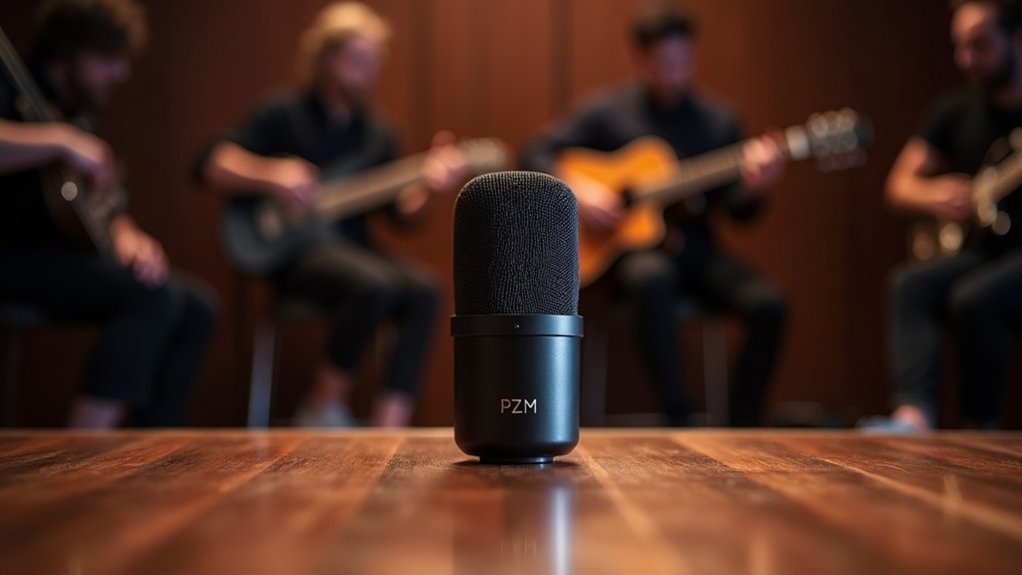
While exploring the advantages of PZM microphones, you’ll discover several key benefits that significantly enhance audio quality for creators, gamers, musicians, and professionals alike:
- Reduced phase cancellation: Direct and reflected waves reach the diaphragm simultaneously, preserving sound integrity—an essential factor when considering the advantages of PZM microphones.
- Increased sensitivity: The unique design allows a combination of sounds to boost acoustic sensitivity by 6 dB, effectively capturing softer sources, further emphasizing the benefits of using PZM microphones.
- Wide frequency response: PZMs deliver a smooth, consistent tonal balance across the audible spectrum, showcasing one of the standout advantages of PZM microphones in various audio applications.
- Natural clarity: By minimizing off-axis coloration, PZM microphones ensure a more realistic spatial sound, reinforcing their reputation for quality and highlighting the advantages of PZM microphones.
These collective advantages of PZM microphones contribute to superior sound quality, making them an excellent choice for various professional audio applications, from podcasting to streaming and recording.
How to Choose the Right PZM Microphone?
Choosing the right PZM microphone involves understanding how specific factors impact audio capture. When considering how to choose the right PZM microphone, focus on selection criteria like boundary surface considerations; aim for a large, hard, flat surface—about 1 meter square. This setup guarantees ideal bass response and tonal balance, crucial when determining how to choose the right PZM microphone for your needs.
Choosing the right PZM microphone requires careful attention to boundary surface and positioning for optimal audio capture.
Position the mic flush against the boundary, ideally facing the sound source at an angle of 30° to 90°. Additionally, consider the recording task: if you’re capturing an ensemble or drum kit, a PZM microphone excels.
Finally, securing the mic to a rigid surface is vital to maintain performance, avoiding soft or uneven mounts that can compromise low-frequency response. Understanding polar patterns is also essential, as they influence how a microphone picks up sound from different directions.