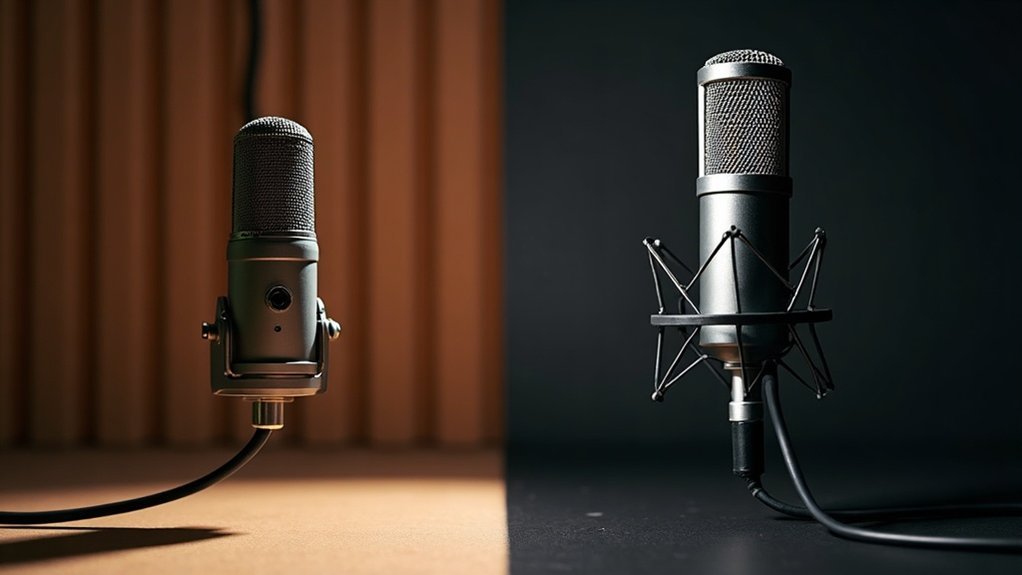
When you record in mono, you’re capturing sound through a single audio channel that collapses everything into one centered signal. With stereo, you’re splitting sound into left and right channels, creating spatial separation and directional awareness. Understanding the difference between mono and stereo recording is essential for creators, gamers, musicians, and professionals selecting the right microphone setup for their needs.
Mono simplifies recording with one microphone and guarantees consistent playback across devices, while stereo enhances clarity through instrument separation and realistic soundstaging. The distinction between mono versus stereo recording fundamentally affects how your audience perceives your content. Mono excels for interviews and vocals where clarity and focus matter most, while stereo recording enhances music production and immersive applications where spatial depth elevates the listening experience.
For podcasters and streamers working with affordable microphones, knowing when to use mono versus stereo recording prevents unnecessary equipment investment while maximizing audio quality. Whether you’re gaming, streaming, or producing music, recognizing these differences between mono and stereo recording reveals how each format shapes your final mix and determines which microphone configuration best suits your budget and creative goals.
Key Takeaways
- Mono uses a single audio channel for centered sound, while stereo uses two channels for left-right spatial separation and immersion.
- Mono recording requires only one microphone and simplifies editing, making it cost-effective for interviews and voice-focused content.
- Stereo recording captures directional sound and instrument separation, enhancing clarity in music production and immersive audio applications.
- Mono playback is consistent across all devices and venues, while stereo demands compatible equipment to preserve spatial detail.
- Converting stereo to mono collapses left-right information and may degrade quality, while mono-to-stereo conversion duplicates signals artificially.
How Mono and Stereo Capture Sound Differently
When you’re setting up a recording session, understanding how mono and stereo capture sound differently is essential to achieving professional results. The fundamental difference between mono and stereo lies in how many audio channels you’re capturing: mono uses a single channel while stereo uses two.
For creators and musicians deciding between these approaches, knowing how mono and stereo capture sound differently helps you match your recording setup to your content. Mono advantages include recording simplicity—you’ll need just one microphone and one input, making it ideal for podcasters and streamers on a budget.
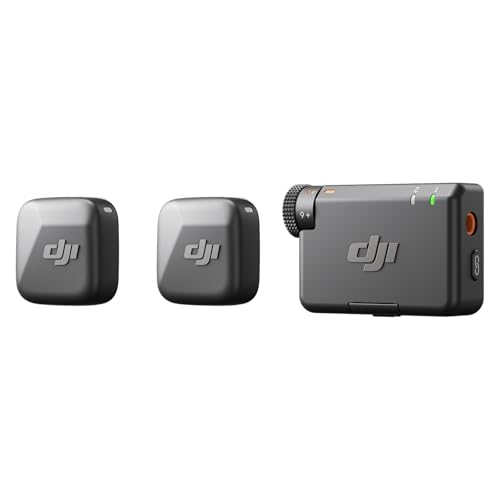
Mono recording simplicity requires just one microphone and input, making it ideal for budget-conscious podcasters and streamers.
Stereo benefits deliver spatial awareness and directional sound through channel separation, enhancing audio clarity and sound immersion for gaming streams, music production, and professional voiceovers. Stereo recordings leverage biological mechanisms of human hearing to create a more immersive listening experience compared to mono. The directional qualities of stereo are further enhanced by considering the polar pattern of your microphones, which determines how they capture sound from different angles and distances.
The way mono and stereo capture sound differently becomes clear when you examine their technical foundation: stereo’s two independent channels preserve left-right information that mono collapses into a centered signal. This distinction matters significantly when you’re reviewing microphones for your specific needs.
You’ll choose mono for single-point sources like interview mics or vocal recording, while stereo excels when capturing real spatial detail across your recording environment—perfect for ambient recording, ASMR content, or orchestral sessions. Recording in mono allows for later placement within the stereo field during your mixing process, giving you flexibility to position your centered audio wherever you need it in the final mix.
Understanding how mono and stereo capture sound differently empowers you to make informed decisions during every stage of your buying journey, whether you’re upgrading from your first affordable microphone or building out a professional streaming setup.
What Creates Stereo’s Wider Spatial Image?
Because your brain perceives stereo width through differences between left and right channels, understanding what creates stereo’s wider spatial image is essential to creating immersive spatial recordings.
You’ll achieve wider stereo through:
- Panning techniques that position sounds left or right within the spectrum
- Timing differences using 10–40 ms delays via the Haas effect
- Mid-side processing that emphasizes side content over mid components
- Perceptual cues like subtle EQ and level variations between channels
- Phase management to maintain mono compatibility while maximizing widening effects
Your brain interprets these channel distinctions as spatial placement.
When recording with affordable microphones for podcasting, streaming, or gaming, delaying one channel or boosting side information creates the spatial immersion that what creates stereo’s wider spatial image demands—without introducing new sounds. Strategic panning for balanced mixes ensures that your spatial elements don’t clash or create phase cancellation issues during playback. Regularly monitoring your mix in mono will help you verify that no elements disappear when played back on single-channel systems.
This leverages your ear’s sensitivity to interaural timing and intensity differences. Proper microphone placement distance during recording can enhance these natural channel distinctions before any processing is applied.
For creators and professionals working with budget-friendly recording setups, understanding stereo’s wider spatial image means you can maximize your microphone’s capabilities during the recording stage.
Even modest equipment benefits from proper application of these spatial techniques.
What creates stereo’s wider spatial image ultimately comes down to exploiting how your brain processes channel differences, making it a critical consideration whether you’re setting up for podcasting, gaming commentary, or music recording.
The wider spatial image you achieve becomes a signature element of your production quality.
Recording Architecture: One Mic vs. Paired Mics
Now that you understand how stereo achieves its spatial character through channel differences, it’s time to examine the foundational recording architecture: one mic vs. paired mics** that makes those differences possible. The choice between one mic recording architecture and paired mic recording architecture** fundamentally shapes your capture strategy.
Mono recording employs a single signal path with one mic type, collapsing all capture into one centered channel—the simplest one mic architecture for affordable recording setups. This approach focuses on mid-range clarity without the complexity of managing multiple channels.
Stereo recording requires paired mics positioned using distinct placement strategies—spaced pairs, coincident pairs, or near-coincident configurations. This paired mics architecture demands more investment but delivers spatial depth. However, many recordings actually consist of point source mono elements that are panned to create a wider stereo experience rather than true stereo capture.
Your choice of mic types and capture techniques directly impacts signal integrity and sound clarity. When comparing one mic vs. paired mics setups, consider that single-mic configurations prioritize budget and simplicity, while paired mics configurations excel at capturing directional information.
Channel balance depends on acoustic considerations specific to your recording environment, and these factors become critical when selecting between one mic recording and paired mic recording approaches.
These architectural choices determine whether you preserve left-right directional information or collapse everything into mono.
For podcasters, streamers, and musicians working with affordable microphones, understanding the differences between recording with one mic versus implementing a paired mics setup ensures you invest in the architecture that matches your creative goals and budget constraints.
When to Choose Mono: Voice, Clarity, and Simplicity
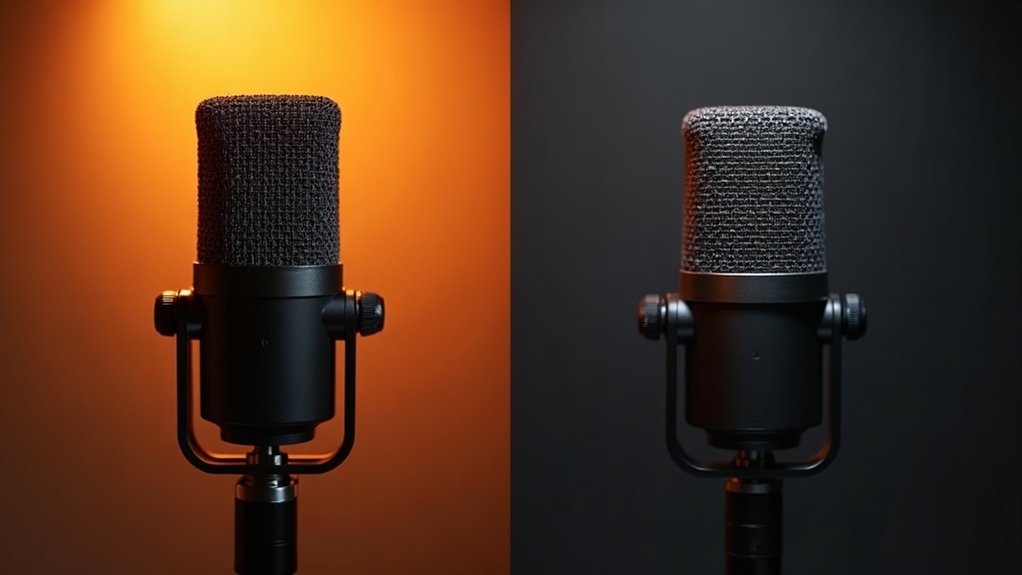
- Voice clarity: Undivided signal preserves intelligibility without channel splitting
- Production simplicity: Single microphone placement eliminates phase complications
- Editing efficiency: Straightforward post-production workflow reduces mixing decisions
- Playback versatility: Consistent translation across mobile devices and limited systems
- Signal integrity: Centered anchor prevents spatial distraction
You’ll appreciate mono’s directness in home studios** and challenging recording environments. This approach prioritizes audience focus on content rather than spatial presentation, making it the professional standard when speech carries your message’s full informational weight. Mono recording** is more forgiving with microphone placement and recording techniques, allowing you to achieve professional results even with less-than-ideal acoustic conditions. Additionally, maintaining adequate microphone volume during recording ensures your mono signal captures speech at optimal levels without introducing unwanted noise. The elimination of phase cancellation ensures your voice maintains consistent quality regardless of playback device.
Choosing mono recording becomes the smart decision for affordable microphone setups, especially when you’re starting your podcast or streaming channel on a budget. Rather than investing in stereo equipment you don’t need, mono voice recording streamlines your entire workflow—from microphone selection through final mixing.
Whether you’re building a home studio setup or upgrading your existing gear, understanding when mono is the right choice helps you allocate resources toward microphone quality and acoustic treatment that actually matter for speech content.
This is why professional podcasters and streamers consistently default to mono: it’s the most cost-effective, reliable foundation for getting your message heard clearly.
When to Choose Stereo: Music, Immersion, and Separation
When you’re mixing dense arrangements, you’ll find that stereo placement helps you distribute instruments across the left-right field, reducing congestion and improving clarity without sacrificing detail.
By panning complementary elements—like drum overheads, piano, or ensemble recordings—you create genuine separation that allows each layer to occupy its own acoustic space.
This spatial separation becomes especially valuable in music production because it leverages the natural width of your sources rather than relying on artificial widening, preserving both the mix’s coherence and its perceived depth. Stereo recordings also provide a realistic soundstage that enhances the immersive listening experience compared to mono alternatives. The XY technique, which uses two directional microphones angled at 90 degrees, delivers a defined stereo image that captures the authentic spatial characteristics of your recording environment. Understanding how frequency response affects microphone selection ensures that your stereo pair captures the full tonal characteristics of your source material.
Music Production And Stereo
You’ll leverage stereo effects and audio layering to shape music dynamics across left-right channels, enhancing spatial awareness throughout your mix. Your production choices determine listener perception through deliberate sound design placement:
- Vocals centered for directional focus
- Guitars panned to create width
- Drums positioned for dimensional impact
- Reverb effects expanding perceived space
- Instruments separated for clarity
Stereo music production** transforms how your audience receives emotional nuance and ensemble balance. These mixing techniques establish professional sonic depth** that mono recordings can’t achieve while maintaining cohesive, intentional arrangements.
When investing in affordable microphones for recording, selecting mics that capture stereo detail becomes crucial—quality music production with stereo capabilities ensures your initial recordings preserve the spatial information needed for effective mixing. Maintaining adequate headroom in recordings allows you to maximize the dynamic range and clarity of your stereo mix without distortion.
Whether you’re streaming, podcasting, or creating music content, understanding how stereo in music production works separates amateur recordings from professional releases. The right recording setup, paired with strategic music production and stereo mixing choices, gives creators the tools to deliver polished audio that engages listeners and showcases ensemble dynamics with authentic spatial presence.
Spatial Separation In Mixing
The stereo field—the perceived left-to-right placement of sounds in your mix—offers you a powerful dimension for creating width and positional contrast between competing elements. Spatial separation in mixing represents one of the most effective techniques for enhancing spatial awareness by strategically panning instruments across the horizontal plane, improving auditory perception and sound localization for your listeners.
These spatial separation mixing techniques reduce frequency overlap when same-range sources compete, expanding your dynamic range without overcrowding the center. When recording with affordable microphones for podcasting or streaming, implementing proper spatial separation becomes crucial for professional-sounding output.
Your stereo imaging decisions directly shape listener experience: center-placing anchors like vocals and bass maintains mono compatibility, while off-center positioning supports secondary elements. This spatial separation approach creates organized, immersive mixes where each element occupies distinct perceptual territory.
Whether you’re using budget-friendly equipment for gaming commentary or professional streaming, separation in mixing ensures your audio stands out clearly. By mastering spatial separation techniques, you maximize the capabilities of even entry-level recording gear, transforming modest setups into productions that rival professional studios.
The strategic use of spatial separation in your mix allows creators and musicians to achieve clarity and depth that compensates for hardware limitations, making it an essential skill regardless of your equipment’s price point.
How Mixing and Playback Behave Differently
When you mix in stereo, you’re distributing instruments across a left-center-right soundstage using panning and width tools that won’t exist once your mix reaches a mono playback system.
You’ll need to understand how your stereo decisions translate during mono summing, where overlapping frequency content from panned sources can mask balance problems that stereo width initially hides.
Your monitoring choice—stereo speakers versus a mono sum—directly determines whether mix issues emerge before or after playback, making mono compatibility checks essential for mixes intended for multiple listening environments.
Mono Consistency Across Speakers
Mono recording’s fundamental advantage lies in how it behaves across different speaker systems and listening positions. When you prioritize mono consistency across speakers, you’ll experience mono playback advantages that stereo simply can’t match:
- Phantom center imaging anchors all content precisely between speakers
- Speaker placement effects diminish dramatically in mono setups
- Off-axis clarity remains consistent whether you’re centered or positioned peripherally
- Sound consistency benefits eliminate the sweet-spot dependency stereo demands
- Audience experience uniformity guarantees everyone perceives identical tonal balance regardless of location
This predictability makes maintaining mono consistency across speakers**** indispensable for clubs, venues, and public spaces where listener position varies constantly.
Your mono mix won’t thin out or collapse when someone shifts position—a reliability stereo monitoring can’t assure. Mono recordings maintain superior performance in these environments because they eliminate the signal interference issues that plague stereo mixes in non-optimal listening positions.
For podcasters, streamers, and content creators working with affordable microphones, achieving mono consistency across speakers ensures your audio translates identically whether your audience listens through laptop speakers, earbuds, or monitor systems.
This cross-speaker mono consistency becomes critical when you’re building an audience across multiple platforms where you can’t control playback conditions.
Unlike stereo monitoring that requires listeners positioned in an optimal sweet spot, consistent mono performance across different speakers guarantees your carefully crafted vocal delivery, gaming commentary, or musical content reaches everyone with uniform clarity and presence.
Stereo Spatial Contrast Creation
Unlike mono’s unified center image, stereo spatial contrast creation leverages two distinct channels—left and right—to distribute sound elements across an acoustic space rather than collapsing them into a single focal point. You create stereo width by positioning instruments at opposite panorama points, generating spatial dynamics that transform flat mixes into dimensional soundscapes. Your mixing techniques—panning, automation, and the Haas effect—establish auditory perception of depth and directionality through intentional stereo spatial contrast.
Sound layering through stereo separation prevents frequency competition, intensifying impact. Strategic stereo effects contrast wide sections against narrow passages, heightening listener engagement through spatial contrast. For optimal results, pairing your stereo techniques with supercardioid and hypercardioid microphone patterns can further enhance directional clarity and spatial definition in your recordings. For creators, musicians, and podcasters working with affordable microphone setups, mastering stereo spatial contrast creation elevates production quality without requiring premium equipment.
| Technique | Effect |
|---|---|
| Panning | Horizontal positioning in stereo spatial contrast |
| Haas Effect | Depth illusion through spatial contrast creation |
| Automation | Dynamic movement and spatial contrast |
| Doubling | Width expansion via stereo separation |
| Frequency Separation | Clarity enhancement through stereo positioning |
Creating effective stereo spatial contrast requires understanding how your microphone placement and channel distribution contribute to dimensional soundscapes. Whether streaming, recording gaming content, or producing podcast episodes, implementing stereo spatial contrast creation techniques ensures your mix translates clearly across all listening environments while maintaining professional spatial dynamics.
Summing Effects And Implications
Your stereo mix behaves fundamentally differently once it’s summed to mono because the two-channel separation that defines spatial contrast collapses into a single-channel output. Understanding summing effects and implications is critical for anyone recording podcasts, streaming, or creating content with affordable microphones, as your final audio must translate across all playback systems.
You’ll encounter several critical challenges:
- Phase cancellation eliminates frequency-dependent content when channels contain opposing waveforms—a core implication of summing effects that can devastate vocal recordings captured on budget mics.
- Level management prevents unwanted boost from in-phase summation, directly addressing the practical effects of summing stereo sources.
- Spatial blending converts stereo positioning into centered, mono-compatible signals, fundamentally changing how dual-mic setups translate to listeners.
- Mixing coherence requires verification that channel differences don’t mask essential elements—particularly important when working with entry-level microphone arrays.
- Playback dynamics shift as mono systems reproduce only unified audio, affecting how your podcast or stream reaches mobile listeners.
Your audio compatibility depends on monitoring mono summing early. The summing effects and implications of stereo collapse are unavoidable, especially when streaming or podcasting where mono playback remains common. Monitoring at an appropriately low level during mixing helps you identify issues before they reach your audience, as excessive noise floor exposure can mask subtle phase problems that emerge during mono summation.
Out-of-phase material causes hollowing or disappearance. Balanced content survives, but stereo effects built on channel differences may translate poorly without strategic level adjustment and phase awareness.
For creators using affordable microphones in home studios, understanding these summing implications means testing your mix on mono speakers, earbuds, and mobile devices before publishing to ensure your recording translates universally.
What Happens When You Convert Between Formats?
Converting audio between mono and stereo formats doesn’t preserve or create spatial information—it simply reorganizes existing channel data. Understanding what happens when you convert between formats is essential for anyone working with audio recordings.
When you convert mono to stereo, you’re duplicating identical signals across channels, creating stereo illusions without authentic spatial depth. This conversion between formats reveals why many creators and musicians investing in affordable microphones for podcasting and streaming choose to capture in their target format from the start rather than rely on post-conversion solutions.
Conversely, stereo-to-mono conversion collapses left-right information into one channel, revealing mixing nuances previously masked by width. What happens when you convert between formats becomes particularly important during fold-down, where you’ll encounter conversion challenges like phase interactions and level shifts. Dynamic microphones and condenser microphones each have different sensitivities to these phase interactions, making the choice of microphone type relevant to how your audio will respond during format conversion.
Understanding these channel interactions helps you anticipate playback differences and spatial compression across different playback systems.
For gaming streamers, podcasters, and recording professionals, recognizing conversion limitations informs better purchasing decisions. True stereo demands dual microphone capture; conversion alone won’t manufacture authentic sound identification or overcome mono limitations in single-source recordings.
This is why setup guidance for affordable microphones emphasizes capturing audio in your intended format rather than converting afterward.
True stereo recording demands understanding what happens when you convert between formats—knowledge that separates amateur setups from professional productions.