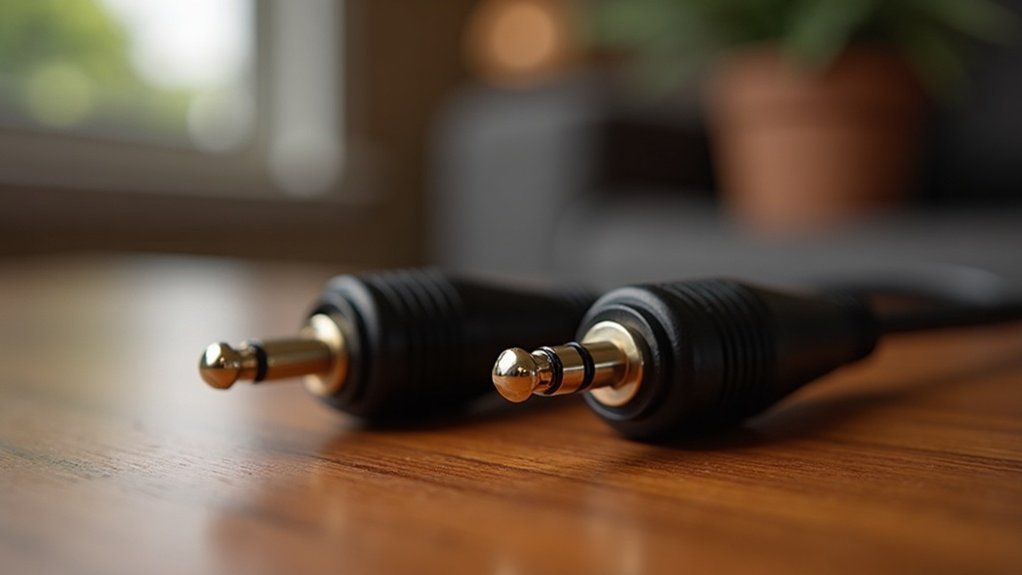
TRS and TRRS connectors have distinct roles in audio applications. TRS connectors feature three conductors, designed for unbalanced stereo audio or balanced mono signals, making them ideal for professional audio gear. In contrast, TRRS connectors add a fourth conductor, enabling stereo sound along with a microphone signal. This makes TRRS perfect for smartphones and gaming headsets. While TRS excels in audio quality and durability, TRRS offers convenience for two-way communication. Understanding the difference between TRS and TRRS can significantly enhance your audio experience, especially for creators, gamers, and musicians seeking the best microphones for podcasting, streaming, and recording. Further insights into these audio connector types await!
Key Takeaways
- Connector Design: TRS connectors have three conductors for audio, while TRRS connectors include four conductors for audio and microphone signals.
- Audio Functionality: TRS supports stereo audio or balanced mono, whereas TRRS enables simultaneous audio playback and microphone capture.
- Common Use Cases: TRS is used in professional settings like mixers, while TRRS is ideal for smartphones and gaming headsets.
- Compatibility Issues: Misconnecting TRS and TRRS can cause microphone failures or audio distortion due to differing wiring standards.
- Audio Quality: TRS typically offers superior audio quality, while TRRS can compromise sound fidelity for convenience in portable setups.
What Are TRS and TRRS Connectors?
TRS and TRRS connectors are essential components in audio technology, each serving distinct purposes. The TRS and TRRS connectors are critical for anyone involved in audio production, whether you’re a creator, gamer, or musician.
The TRS connector, with its three conductors—Tip, Ring, and Sleeve—carries unbalanced stereo audio or balanced mono audio, making it ideal for professional audio gear like mixers and instruments. In contrast, the TRRS connector features four conductors, allowing it to transmit stereo audio plus a microphone signal, perfect for smartphones and gaming consoles. TRS connectors are particularly known for balanced audio applications, which enhances sound quality in professional environments. Notably, the number of metal rings on a TRS connector differentiates it from other types, ensuring clarity in audio transmission.
The TRS connector excels in professional audio, while the TRRS connector seamlessly integrates audio and microphone signals for versatile use.
Understanding the applications of TRS and TRRS connectors can greatly enhance your audio experience, whether you’re recording podcasts, streaming gameplay, or listening to music.
Both types of connectors play crucial roles in modern audio setups, bridging communication and entertainment seamlessly. By grasping the differences between these connectors, you can make informed choices that elevate your audio quality and optimize your setup.
Key Differences Between TRS and TRRS Connectors?
When it comes to audio connectors, understanding the key differences between TRS and TRRS connectors can greatly impact your setup. TRS connectors feature a three-pole design, accommodating two audio channels or one balanced mono signal. In contrast, TRRS connectors have a four-pole design, enabling three separate audio signals: left audio, right audio, and microphone. This additional channel allows for simultaneous playback and capture, making TRRS connectors ideal for modern devices. While both TRS and TRRS connectors share the same dimensions, their internal segmentation differs, affecting compatibility. Being aware of these differences between TRS and TRRS connectors is essential for optimizing your audio experience, whether you’re a creator, gamer, or musician. Additionally, the importance of understanding connector types can help you avoid purchasing errors when selecting equipment for your audio needs. Understanding these distinctions in connector design will help you choose the right equipment for podcasting, streaming, gaming, or recording, ensuring you get the most out of your audio setup. Moreover, using the correct cable type is crucial for maintaining optimal audio quality and preventing potential damage to your devices.
Common Use Cases for TRS and TRRS Connectors
Understanding the various applications of TRS and TRRS connectors can greatly enhance your audio setup.
When it comes to common use cases for TRS and TRRS connectors, TRS applications dominate in consumer audio, including wired headphones, studio monitors, and professional audio gear. You’ll frequently encounter 3.5 mm TRS in laptops, car AUX inputs, and portable speakers. TRS connectors are often used for balanced connections in studio environments to minimize noise interference. Additionally, TRS connectors are widely recognized for their reliability in various audio interfaces and devices. This reliability is essential in professional audio settings, where clarity and sound integrity are paramount.
Conversely, TRRS scenarios are vital for smartphone headsets, gaming headsets, and hands-free kits, as they combine audio and microphone functionality.
Video creators also choose between TRS and TRRS based on their specific audio needs.
Impact of Wiring Standards on TRS and TRRS Compatibility
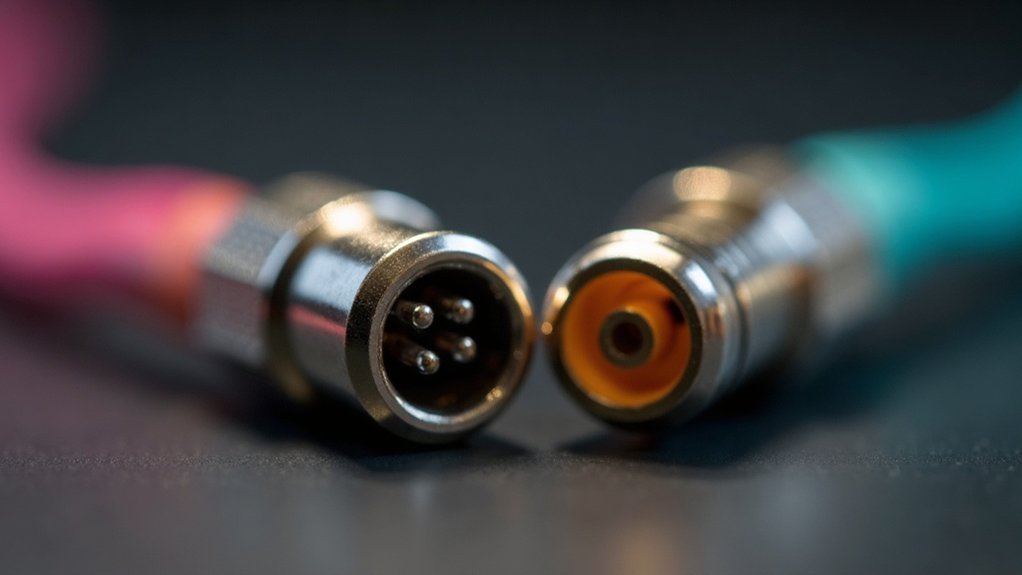
Understanding wiring standards is essential for traversing TRS and TRRS compatibility issues. The lack of a universal TRRS standard leads to significant challenges, especially between CTIA and OMTP configurations. When you connect devices across these standards, you risk losing microphone functionality or experiencing audio distortion due to mismatched pin assignments. Different conductors are critical in determining whether your audio setup will function as intended. Additionally, using a TRRS extension cable can help ensure that both audio and microphone signals are transmitted effectively.
Wiring Standards Overview
While wiring standards overview plays an essential role in the functionality of audio devices, the differences between TRS and TRRS connectors significantly impact their compatibility.
TRS connectors adhere to wiring specifications with three conductors: Tip for the left audio channel, Ring for the right, and Sleeve as ground. In contrast, TRRS connectors introduce a fourth conductor, enabling a mono microphone signal. This distinction in conductor roles highlights that while TRS jacks are prevalent in dedicated audio outputs, TRRS jacks are dominant in modern mobile devices. Understanding these wiring standards overview can help ensure you choose the right connector for your audio needs, whether you’re a creator, gamer, or musician looking to optimize your setup. Additionally, knowing the incompatibility of TRS and TRRS without proper adapters is crucial for maintaining audio quality. The CTIA vs OMTP standards also play a vital role in ensuring compatibility with various devices.
CTIA vs OMTP Differences
One of the key advantages of CTIA is its widespread adoption in modern devices since 2012, making it a preferred standard for creators and gamers alike.
On the other hand, OMTP presents limitations due to compatibility issues with legacy devices. This can lead to non-functional microphones when mismatched, which can be frustrating for musicians and podcasters using older equipment.
Additionally, misalignment in wiring between CTIA and OMTP can cause distorted audio, particularly on the microphone path, impacting the overall quality of recordings and streams.
By understanding these CTIA vs OMTP differences, you can ensure you choose the right headset for your device.
Adopting CTIA standards enhances compatibility, while OMTP’s legacy can hinder functionality in contemporary setups. This knowledge is essential for professionals seeking to optimize their audio experiences. Moreover, XLR microphones are often preferred in professional settings due to their superior audio quality and reliability.
Compatibility Challenges Explained
Compatibility Challenges Explained
Compatibility challenges between TRS and TRRS connectors often stem from their physical similarities, which can mislead users into assuming electrical compatibility. The differing pole counts lead to misconnection consequences, such as a TRS plug in a TRRS jack resulting in no microphone functionality.
Detection mechanisms in devices frequently misidentify the connection type, causing further issues. For instance, TRRS sockets may route contacts differently across devices, leading to partial functionality like non-working microphones or malfunctioning controls.
Understanding these wiring standards is essential when navigating compatibility challenges explained in audio setups. By recognizing the nuances between these connectors, users can avoid frustrating compatibility pitfalls and ensure smooth operation across their audio devices, whether for podcasting, streaming, gaming, or recording.
Being aware of these challenges helps creators, gamers, and musicians make informed decisions, maximizing their equipment’s potential and overall performance.
Advantages and Disadvantages of TRS and TRRS Connectors
Understanding the advantages and disadvantages of TRS and TRRS connectors can greatly influence your choice of audio equipment. Here are some key points to consider:
- TRS connectors are known for their superior audio quality and durability, making them ideal for professional setups. Their robust construction typically leads to a more reliable audio experience.
- On the other hand, TRRS connectors simplify device connections by integrating audio and microphone signals into a single connector. However, this convenience may compromise audio quality due to their unbalanced configurations, which is important to note when assessing the advantages and disadvantages of TRS and TRRS connectors.
- Compatibility issues can also arise, especially with different wiring schemes, potentially leading to failures in microphone functionality. This is a crucial factor to weigh when looking at the advantages and disadvantages of TRS and TRRS connectors.
Choosing the right connector not only impacts performance but also enhances your overall experience when using various audio devices. Understanding these advantages and disadvantages of TRS and TRRS connectors is essential for creators, gamers, musicians, and professionals seeking the best audio solutions.
Choosing the Right Connector: TRS or TRRS?
When choosing the right connector: TRS or TRRS, it’s crucial to consider your specific audio needs and device compatibility.
TRS connectors are ideal for applications requiring high-quality audio monitoring, such as studio headphones and mixers. On the other hand, TRRS connectors are better suited for devices that require two-way communication, like smartphones and gaming headsets.
It’s important to pay close attention to jack labeling—headphone icons typically indicate TRS, while headset icons denote TRRS. For optimal signal quality, ensure proper connector maintenance and use the right adapters when necessary.
Understanding these distinctions in connectors helps you select the right connector for your setup, enhancing your audio experience and ensuring seamless functionality.