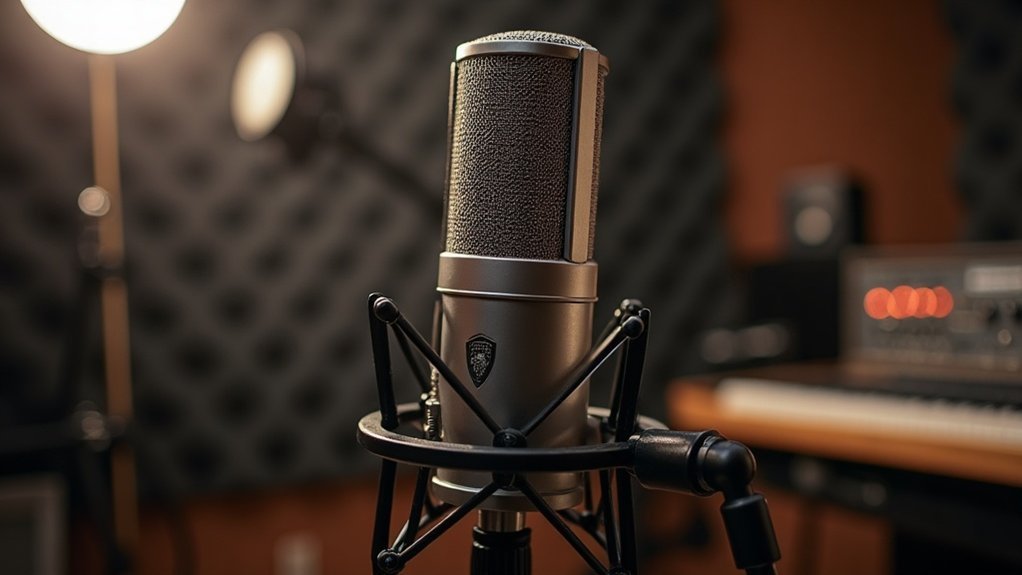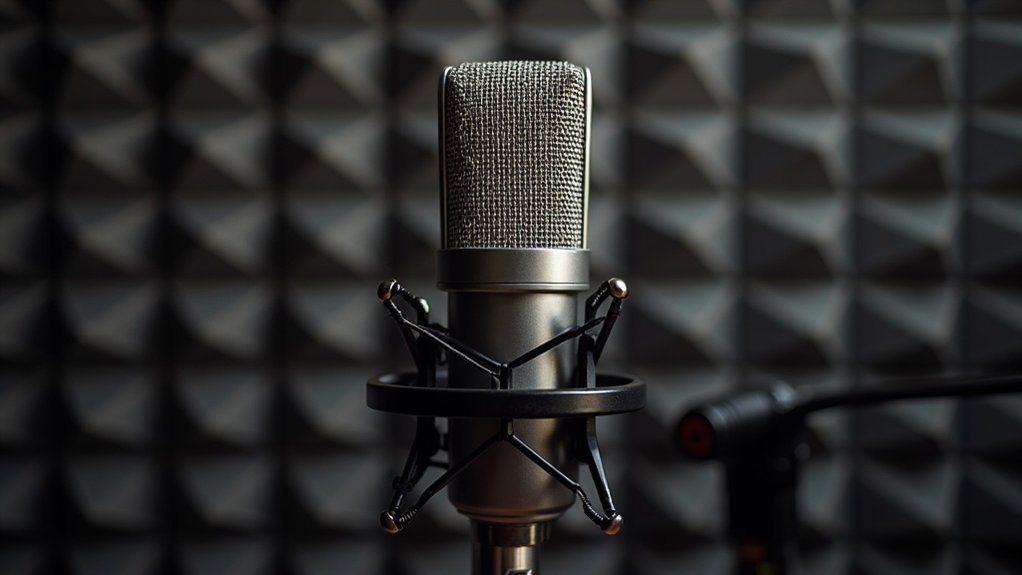

A pop filter is an essential tool for clear audio recordings, specifically designed to eliminate plosive sounds that can distort vocals. This device, often referred to as a pop shield or pop screen, consists of a circular disk with mesh layers that diffuse air pressure from consonants like “p” and “b.” By using a pop filter, you not only protect your microphone from moisture but also enhance sound quality by significantly reducing pops and distortion. This is crucial for anyone looking to achieve professional-level clarity in their recordings, whether for podcasting, streaming, or gaming. Explore how to maximize the benefits of a pop filter and improve your audio setup further to elevate your production quality.
Key Takeaways
- A pop filter is a device used to improve audio clarity by reducing plosive sounds during recording.
- It consists of a circular disk made of mesh (nylon or metal) that dissipates sound waves.
- By minimizing pops and distortion, it enhances the overall quality of vocal recordings.
- Pop filters also protect microphones from moisture, dust, and contaminants.
- Proper positioning of the pop filter is crucial for optimal sound performance and clarity.
What Is a Pop Filter and How Does It Work?
Understanding what a pop filter is and how it works is crucial for anyone involved in recording, whether you’re a podcaster, streamer, or musician. Additionally, it plays a significant role in audio clarity, ensuring that recordings maintain a professional quality.
Understanding pop filters is essential for anyone in recording, be it podcasters, streamers, or musicians.
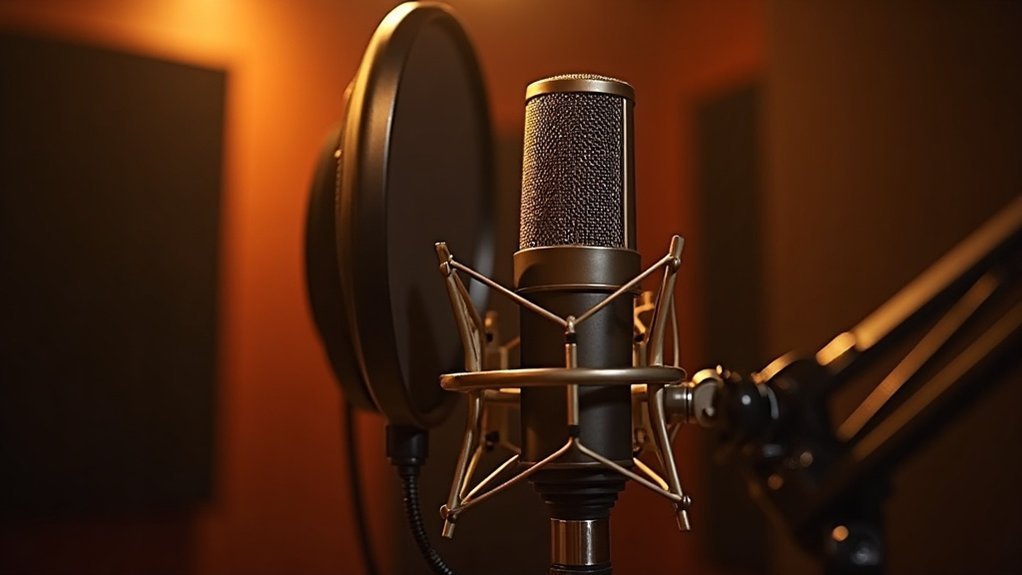
Typically, a pop filter consists of a circular disk made of plastic or metal, featuring one or more layers of mesh, such as nylon or perforated metal. By applying acoustic principles, this filter dissipates and disperses the sound waves generated by explosive consonants, preventing them from directly impacting the microphone diaphragm. This mechanical barrier effectively reduces low-frequency energy, minimizing pops and distortion while allowing vocal content to pass through relatively unimpeded. Additionally, using a pop filter can significantly enhance audio quality during recordings, ensuring a reduction of acoustic impacts.
Why You Need a Pop Filter for Recording
Using a pop filter for recording is essential to enhance audio clarity by minimizing plosive sounds that can muddy your tracks. It also protects your microphone from moisture and saliva, extending its lifespan and maintaining performance. Additionally, a pop filter effectively eliminates popping noises caused by plosives, ensuring that your recordings are crisp and clean. Incorporating a pop filter is particularly important when recording vocals, as it helps to achieve professional-level recordings and reduces the risk of damaging your microphone from excessive moisture. Ultimately, incorporating a pop filter elevates your sound quality, leading to professional-level recordings, making it a crucial tool for achieving clear vocal recordings.
Enhanced Audio Clarity
While recording vocals, enhanced audio clarity is crucial, and incorporating a pop filter markedly contributes to this objective. Acting as a physical barrier, the pop filter diffuses the air pressure from plosive consonants like “p,” “b,” and “t.” This diffusion prevents abrupt bursts from overwhelming the microphone’s diaphragm, which can obscure critical details in your vocal performance. With effective plosive control, you’ll achieve improved tonal balance and sound fidelity, ensuring your vocal dynamics come through clearly. Additionally, a pop filter is a cost-effective solution that provides significant value without a hefty investment, making it ideal for aspiring audio professionals. Moreover, using a pop filter also enhances sound quality by minimizing unwanted noise interference during recordings. This enhancement in audio clarity reduces the need for excessive post-production adjustments, streamlining your recording techniques. Understanding plosives and their impact on recordings further emphasizes the necessity of using a pop filter. Ultimately, using a pop filter elevates the listener experience by delivering polished audio precision and a professional sound, showcasing the true potential of your recordings.
Microphone Longevity Protection
Because microphones are sensitive instruments, protecting them from moisture, saliva, and debris is essential for maintaining their longevity. Microphone longevity protection is crucial for ensuring your gear performs at its best over time.
A pop filter serves as an important tool for microphone maintenance and performance optimization, providing several benefits:
- Moisture Barrier: It prevents corrosive saliva from reaching the microphone capsule, reducing electrical shorts and contributing to overall microphone longevity protection. Using a pop filter can significantly decrease the risk of microphone damage.
- Dust Protection: It keeps contaminants away, preserving frequency response and reducing performance loss, which is essential for maintaining the integrity of your recordings. By reducing plosive energy, a pop filter also helps maintain clear audio quality over time.
- Mechanical Defense: It diffuses air blasts, preventing damage to delicate components, further enhancing microphone longevity protection. Additionally, it reduces moisture-related distortion over time, ensuring your recordings remain clear and professional.
Using a pop filter not only extends your microphone’s operational lifespan but also lowers repair costs, ensuring consistent, high-quality recordings.
Professional Sound Quality
With a pop filter, you can work closely with the microphone, enhancing tonal consistency without introducing harsh artifacts. It also improves the overall frequency response, making your vocals more intelligible and polished. A quality pop filter is especially important for serious vocal recording, as it elevates your production value and ensures your audience remains engaged without distractions. Additionally, using a pop filter can help reduce background noise that might interfere with your recordings.
Professional sound quality relies on these filters to create a smooth listening experience, elevating your production value and ensuring your audience remains engaged without distractions.
Whether you’re a gamer, podcaster, or musician, integrating a pop filter into your setup is key to achieving that sought-after professional sound quality.
Choosing the Right Type of Pop Filter for Your Needs
Choosing the Right Type of Pop Filter for Your Needs is essential for achieving optimal sound quality in your recordings. Here’s what to consider:
- Pop Filter Materials: Nylon mesh pop filters provide effective plosive reduction but may slightly attenuate high frequencies. In contrast, metal mesh options offer durability and clarity, making them ideal for shared spaces and ensuring they do not wear down over time. A well-designed pop filter can significantly enhance your recording setup, just as a shock mount does by reducing unwanted vibrations.
- Single vs. Dual-Layer: When selecting a pop filter, single-layer designs guarantee brightness, while dual-layer models enhance plosive protection but may risk high-frequency loss. Understanding these differences can help you choose the right type of pop filter for your specific recording needs.
- Filter Maintenance: Regular cleaning is crucial for any pop filter, particularly metal filters, to prevent buildup and ensure longevity. Proper maintenance will keep your pop filter functioning at its best, contributing to a better recording experience.
Positioning Your Pop Filter for Optimal Results

To achieve best results with your pop filter, you’ll need to take into account its ideal distance from both the microphone and your mouth.
Positioning the filter at the correct angle and orientation guarantees effective plosive control while maintaining vocal clarity.
Ideal Distance Guidelines
When setting up your pop filter, adhering to the ideal distance guidelines can greatly enhance your recording quality. By following these spacing recommendations for maximum pop filter benefits, you can ensure that your recordings are clearer and more professional.
- Mic to Filter: Keep the pop filter 2–4 inches (5–10 cm) from your microphone for optimal performance.
- Mouth to Filter: Position your mouth 3–6 inches behind the pop filter to achieve a balanced tone.
- Adjustments: In untreated rooms, maintain a total distance of 6–12 inches from your mouth to the mic to optimize sound clarity.
These ideal distance guidelines not only help in effective plosive control but also enhance clarity, significantly improving your overall recording experience. Additionally, understanding how noise gates can further manage unwanted audio noise will complement your recording setup.
Angle and Orientation Tips
Positioning your pop filter correctly is crucial for maximizing plosive reduction and guaranteeing clear audio capture.
When exploring angle and orientation tips, it’s essential to make angle adjustments by angling the filter 30–45° off-axis to redirect airflow and minimize direct impact on the microphone. Align the filter at approximately the 2 or 10 o’clock position relative to the mic for ideal airflow management.
Confirm filter stability by securing the clamp and keeping the gooseneck gently arched. For enhanced coverage, position the filter close to the mic diaphragm without touching it, ensuring consistent plosive protection regardless of your recording techniques or microphone type. Additionally, maintaining an optimal microphone placement distance can further enhance sound quality and reduce unwanted noise during recording.
Positioning for Vocal Clarity
3. Center the pop filter over the microphone diaphragm to guarantee full coverage and even airflow interception, ensuring optimal vocal clarity in your recordings.
Implementing these vocal recording techniques not only enhances plosive reduction strategies but also maintains consistent vocal levels, accommodating distance variations for the finest acoustic treatment effects. Additionally, using a microphone pickup pattern that best suits your recording environment can further improve sound quality.
Common Mistakes to Avoid With Your Pop Filter
Although a pop filter is a simple tool, common mistakes to avoid with your pop filter can greatly impact your recordings. Missteps such as incorrect distance and placement—like positioning it too close or too far from the mic—can lead to tonal issues and diminished plosive protection.
A pop filter’s effectiveness hinges on proper distance and placement—avoid common mistakes for clearer recordings.
Additionally, failing to secure the filter can introduce handling noise, disrupting your audio quality.
There are also misconceptions about pop filters, such as the belief that they inherently improve overall sound quality, which can mislead your recording approach.
To ensure you’re sidestepping common mistakes to avoid with your pop filter, always check for cleanliness, stability, and proper alignment to guarantee peak performance.
Don’t rely solely on post-processing to fix plosives; physical setup is essential for achieving clear recordings.
Pop Filter vs. Windscreen: Understanding the Differences?
How do you choose between a pop filter vs. windscreen** for your recordings**? Understanding their distinct functions is essential for achieving optimal sound quality. Here’s a quick comparison of these two vital accessories:
- Pop Filter Applications: Ideal for studio settings, podcasts, and voice-overs, a pop filter effectively reduces plosive sounds without altering the frequency response of your recordings.
- Windscreen Advantages: Best suited for outdoor recordings, a windscreen minimizes wind noise and breath sounds, though it may dampen high frequencies.
- Placement: When using a pop filter, position it a few inches from the mic; the windscreen fits snugly over the mic head for optimal protection against environmental noises.
Choosing between a pop filter vs. windscreen depends on your recording environment and specific needs.
How a Pop Filter Enhances Your Recording Quality

Selecting the right accessory can greatly impact your recording quality, especially when choosing a pop filter. How a Pop Filter Enhances Your Recording Quality** by providing significant plosive consonant control is essential. It reduces unwanted bursts of air that can disrupt your vocal performance, leading to clearer and more intelligible audio**.
This enhancement minimizes low-frequency thumps and harsh sibilance, contributing to a polished, studio-quality sound in your recordings.
Furthermore, by improving tonal balance, a pop filter not only elevates your audio quality but also reduces editing time and reliance on corrective EQ. This streamlines your audio production workflow, making it easier for creators, gamers, musicians, and professionals to achieve optimal results.
By enhancing tonal balance, a pop filter elevates audio quality and simplifies your production workflow for optimal results.
Ultimately, understanding how a pop filter enhances your recording quality ensures that your vocals blend seamlessly into mixes while preserving the integrity of your performance. Using a pop filter is an effective way to elevate your recording techniques and achieve professional-sounding audio.