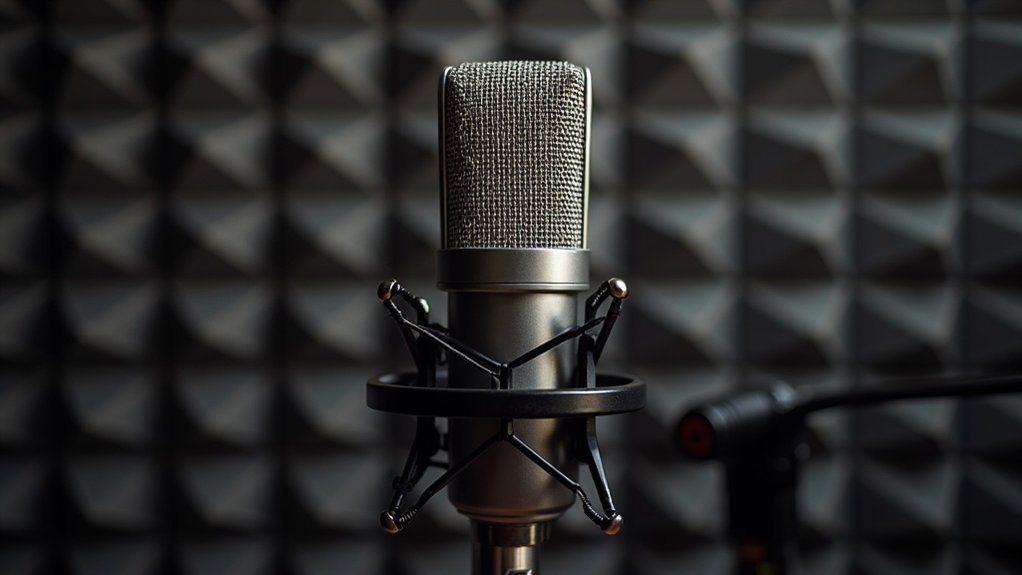
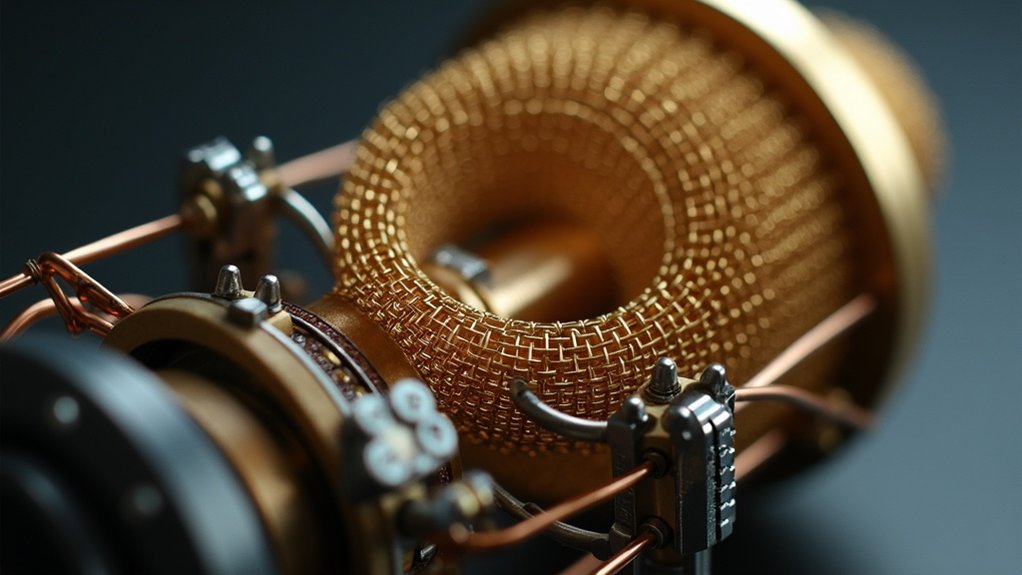
A microphone capsule is the transducer component that converts your sound waves into electrical signals. Understanding what a capsule in a microphone does is essential for any creator, gamer, or musician selecting affordable recording equipment. The capsule is the single most important factor determining your microphone’s tone, sensitivity, and directional characteristics. You’ll find it behind the grille, consisting of a diaphragm and backplate—the core elements that define your microphone’s performance.
Different capsule types—dynamic, condenser, and ribbon—use distinct conversion methods that fundamentally affect sound quality. Knowing what a capsule is in a microphone helps you make informed decisions when comparing budget-friendly options for podcasting, streaming, and gaming setups. A microphone’s capsule design directly impacts how it captures vocals, instruments, and ambient sound during recording sessions.
Dynamic capsules offer durability for live streaming and gaming, while condenser capsules deliver sensitivity ideal for podcasting vocals. Ribbon capsules provide warmth for professional music recording. Understanding how each capsule type operates will help you select the ideal microphone for your specific recording application, whether you’re building an entry-level home studio or upgrading your existing setup. The capsule truly makes the difference between affordable mics that perform exceptionally and those that underdeliver on sound quality.
Key Takeaways
- A capsule is the core component of a microphone that converts sound waves into electrical signals through various transduction methods.
- Capsules consist of a diaphragm and backplate that determine microphone tone, sensitivity, transient response, and polar pattern characteristics.
- Three main capsule types exist: dynamic (using electromagnetic induction), condenser (using capacitive conversion), and ribbon (using thin metal strips).
- Diaphragm size affects frequency response, with larger diaphragms capturing more air movement but risking high-frequency phase cancellation issues.
- Modular capsule designs allow users to swap capsules for different tonal qualities, enabling affordable sound upgrades without replacing entire microphones.
What a Microphone Capsule Is and Why It Matters
The heart of any microphone is its capsule—the internal transducer that converts sound waves into electrical signals. Understanding what a microphone capsule is and why it matters is essential for creators, gamers, musicians, and professionals seeking quality affordable microphones.
The microphone capsule is the internal transducer converting sound waves into electrical signals—essential knowledge for creators seeking quality affordable audio.
You’ll find the capsule nestled behind the grille, where diaphragm and backplate work together to shape your microphone’s sonic character.
What a microphone capsule is determines tone, transient response, sensitivity, and polar pattern—making it the primary sound-character-shaping component. For podcasters and streamers evaluating budget-friendly options, knowing why microphone capsules matter directly impacts your recording quality.
The microphone capsule design influences everything from vocal clarity to instrument capture, which is why this component deserves your attention during the buying journey. Different capsule types—such as dynamic, condenser, electret, and ribbon—each offer distinct sonic characteristics suited to various recording applications. In condenser microphones specifically, the diaphragm and backplate create a capacitor that responds with exceptional sensitivity to sound wave vibrations.
Understanding capsule materials and construction helps you select the right mic for your needs—whether you’re building a gaming setup or professional recording studio.
Because capsules are modular on some systems, you can swap them for different tonal qualities without replacing your entire microphone. This modularity makes affordable microphones even more versatile for creators experimenting with various recording applications.
Proper microphone maintenance protects your capsule’s integrity, ensuring consistent performance and longevity in your professional toolkit.
How a Capsule Converts Sound to Electrical Signal
In dynamic capsules, coil movement within a magnetic field induces voltage via electromagnetic induction—a fundamental mechanism in sound to electrical signal conversion. The conductor’s speed directly determines the proportional electrical voltage generated in this process. The preamplifier then converts the capacitance signal to analog voltage and amplifies it for further processing and transmission.
Condenser capsules employ capacitive sound conversion, where diaphragm motion alters plate spacing, changing capacitance and generating proportional voltage variations. This capsule sound conversion method dominates studio and professional recording applications. The microphone’s recording capability depends on how effectively the capsule maintains signal fidelity throughout this conversion process.
Each capsule functionality relies on this fundamental principle: mechanical diaphragm displacement becomes electrical representation.
The specific how sound converts to electrical signals through your capsule directly impacts microphone performance across podcasting setups, gaming streams, and music recording scenarios.
Understanding these sound conversion to electrical signal mechanisms clarifies why capsule design critically determines your microphone’s sonic character and performance capabilities.
Whether you’re selecting a budget-friendly option for content creation or upgrading your setup, knowing how your capsule converts sound fundamentally influences your purchasing decisions and recording results.
Condenser Capsules: High Sensitivity and Detail
These sensitive condenser capsules reduce your reliance on preamp gain, a critical advantage when recording affordably without investing in premium preamps. The wider frequency response of quality condenser capsules delivers the clarity that professionals demand across podcasting, streaming, and music production applications. For studio-grade applications, aim for capsules with self-noise below 16 dBA to maintain clean audio capture without unwanted hum or hiss. Many professional recording setups incorporate quick view and compare features to evaluate different capsule specifications before purchase.
| Capsule Type | Sensitivity | Best For |
|---|---|---|
| Large-diaphragm | 20–30 mV/Pa | Vocals, solo instruments |
| Small-diaphragm | 25 mV/Pa | Drum overheads, measurement |
| Electret | 8–20 mV/Pa | Compact designs, gaming |
The trade-offs of high sensitivity capsule designs warrant consideration: they require phantom power or batteries for operation, and prove more vulnerable to humidity and dust accumulation than their dynamic counterparts. For creators balancing budget constraints with recording quality, understanding these sensitivity characteristics helps identify the best condenser capsules for your specific setup—whether you’re recording vocals for podcasting, capturing gaming audio, or laying down professional-grade music tracks.
Dynamic Capsules: Passive and Durable
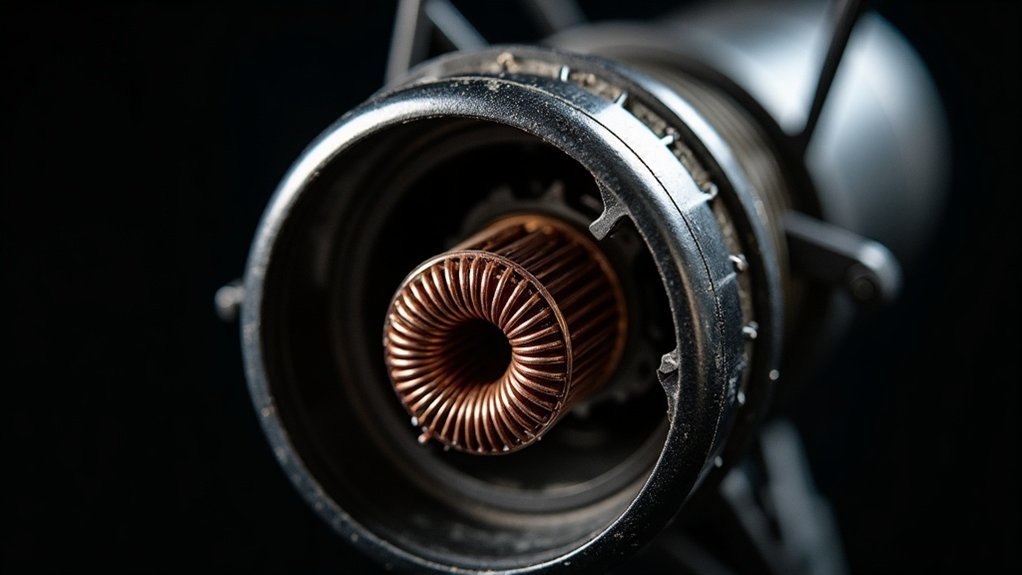
Unlike condenser designs that depend on phantom power and active circuitry, dynamic capsules operate as passive electromechanical transducers, converting sound directly into electrical current through electromagnetic induction.
You’ll appreciate their dynamic durability—a defining characteristic of quality dynamic capsules—where a diaphragm and voice coil move within a permanent magnetic field, generating proportional output without requiring external power. This passive performance eliminates internal electronics complexity, reducing failure points markedly.
For creators and musicians tackling live vocals, drums, and loud instruments, dynamic capsules handle high SPL exceptionally well. Their rugged construction withstands handling, transport, and proximity abuse—essential for streamers and gamers who demand reliability during extended sessions. Common diaphragm materials like gold-sputtered mylar or titanium further enhance their durability and transient response characteristics. When capsules do eventually fail, common failure modes include voice coil deformation and solder joint fatigue, though this typically occurs only after extensive use.
The passive and durable nature of these capsules means you’re investing in equipment built to last through countless recording sessions and live performances.
Dynamic capsules deliver lower output than condenser alternatives, meaning you’ll need more preamp gain during your setup phase. However, their mechanical simplicity makes them dependable across any professional or budget-conscious configuration.
Whether you’re building your first podcast studio or upgrading your gaming streaming setup, the passive design of dynamic capsules offers straightforward reliability that won’t let you down when it matters most.
Ribbon Capsules: Velocity-Based Design
When you move a ribbon element through a magnetic field, you’re creating a velocity transducer where the induced voltage depends on how fast the ribbon cuts magnetic lines of force rather than on static pressure alone.
You’ll find that this pressure-gradient operating principle—driven by the acoustic pressure difference between the ribbon’s front and back surfaces—naturally produces frequency-independent velocity response across a central band because rising acoustic impedance at higher frequencies is offset by the increasing pressure gradient. Built-in transformers provide impedance matching to convert the ribbon’s characteristically low output voltage and impedance to levels suitable for audio equipment and recording interfaces.
Your ribbon’s low mass and edge-on mounting in the high-flux gap establish this elegant electrodynamic behavior, though you’ll notice the output begins rolling off above the mechanical resonance at roughly 6 dB per octave, contributing to the characteristically smooth top-end extension that defines classic ribbon designs. The corrugated ribbon design reduces unwanted resonances and prevents the foil from curling under tension. This unique charm of ribbon microphones comes from their ability to capture sound with a natural warmth that modern designs continue to pursue.
How Ribbon Elements Work
A ribbon capsule operates on a deceptively simple principle that lies at the heart of how ribbon elements work. A thin, corrugated strip of conductive metal—typically aluminum or duralumin—suspends between magnetic poles and moves in response to sound pressure, generating voltage through electromagnetic induction. When sound waves vibrate the ribbon, it cuts magnetic field lines, inducing a small electrical signal across its length.
Understanding how ribbon elements work is essential for musicians, podcasters, and streamers seeking to maximize affordable microphone performance.
The corrugation provides mechanical compliance and elasticity, enabling the lightweight element to respond sensitively to air motion. Since the ribbon functions as both diaphragm and transducer, you’re working with a velocity-based design where output voltage directly correlates to ribbon motion speed, not pressure alone. This velocity-sensitive characteristic is what makes ribbon elements work so effectively for capturing nuanced vocal performances and instruments, making them popular choices among content creators and recording professionals working within budget constraints.
The mechanics of how ribbon elements work also explain their characteristic warmth and natural presence, which appeal to gamers and streamers using affordable microphones for streaming setups. The ribbon element’s ability to respond to motion rather than static pressure means that the way ribbon elements work produces a forgiving, smooth frequency response that complements voice work in podcasting and gaming commentary. Ribbon microphones are commonly used in professional studios because of their exceptional ability to capture detailed audio across a wide frequency spectrum.
For anyone investing in a beginner or mid-range microphone, grasping how ribbon elements work helps you appreciate why these transducers remain a favorite among budget-conscious professionals across streaming, recording, and gaming applications.
Velocity Response Characteristics
The ribbon’s motion through the magnetic field doesn’t simply respond to sound pressure—it tracks the *velocity* of air particles, which is the defining characteristic that sets ribbon capsules apart from pressure-based designs. Understanding velocity response characteristics is essential for creators and recording professionals seeking transparent sound capture.
This velocity tracking delivers superior sound fidelity by capturing transient nuance that condenser or dynamic capsules miss. The velocity response of ribbon microphones produces smoother high-frequency rolloff and natural transient behavior that podcasters, streamers, and musicians consistently prefer for critical recording applications.
Ribbon microphone velocity response characteristics**** directly influence how your voice or instrument translates through your setup, making this technical foundation crucial when evaluating affordable options for streaming, gaming, or professional recording.
The capsule comparison reveals why engineers and content creators prefer ribbons for applications requiring transparent, detailed response. Velocity response characteristics define how ribbon designs capture nuance differently than pressure-based alternatives—a distinction that matters whether you’re recording podcasts, streaming gameplay commentary, or producing music.
Design innovations balance the ribbon’s inherent 6 dB per octave rolloff against electromagnetic generator behavior, enabling flatter response across your working frequency range and delivering the honest, detailed sound quality that distinguishes ribbon microphones in competitive buying scenarios for creators at every stage of their journey.
Magnetic Field Interaction
Because ribbon capsules convert air motion into electrical signals through electromagnetic induction rather than mechanical coupling, understanding magnetic field interaction with the ribbon element becomes essential to grasping ribbon microphone operation.
You’ll find the ribbon suspended between precisely positioned magnet poles, where localized field strength directly determines output sensitivity. This magnetic field interaction is what separates ribbon mics from dynamic or condenser alternatives, making it crucial knowledge for creators and musicians evaluating microphone options.
Stronger fields generate proportionally greater voltage as your ribbon vibrates. The interaction between magnetic fields and your ribbon directly impacts the microphone’s ability to capture clean, detailed recordings for podcasting, streaming, and professional audio work.
Modern designs employ rare-earth magnets for compact, powerful fields that optimize this relationship without requiring bulky housing.
You’ll notice magnetic shielding reduces unwanted electromagnetic pickup, enhancing sound isolation—a key consideration when comparing affordable microphones for home studios.
The field’s localized nature means side-arriving sound doesn’t effectively move the ribbon—pressure equalizes across both surfaces, making directionality inherent to the design’s physics. This how magnetic fields interact with ribbon elements explains why ribbon mics excel at rejecting off-axis noise, a significant advantage for gamers, podcasters, and recording professionals seeking clean audio without expensive acoustic treatment.
Understanding these magnetic field interactions helps you identify which ribbon microphone specifications matter most for your specific recording setup and budget.
Why Capsule Design Determines Frequency Response and Pickup Patterns
You’ll find that your microphone’s frequency response hinges directly on diaphragm diameter—larger surfaces capture shorter wavelengths differently, creating high-frequency emphasis on-axis while smaller diaphragms push resonant peaks above the critical midrange.
The capsule’s geometry simultaneously determines your polar pattern by controlling how sound arriving off-axis gets filtered relative to on-axis signals, with housing diameter fundamentally altering the phase relationship between front and rear sound paths.
Understanding how frequency response affects your choice of microphone ensures you select a capsule design that matches your intended application.
These two design parameters—diaphragm size and geometric layout—aren’t independent choices; they’re coupled decisions that force you to balance low-frequency extension, high-frequency smoothness, and pattern stability against each other.
Diaphragm Size And Frequency
Diaphragm Size and Frequency: How Capsule Dimensions Affect Your Mic’s Sound
Understanding diaphragm size and frequency relationships is essential when choosing a microphone for podcasting, streaming, or music recording. As wavelengths shrink at higher frequencies, diaphragm size becomes increasingly significant to how a capsule responds across the spectrum. You’ll encounter a fundamental diaphragm tradeoff: larger capsules (≥1 inch) capture more air movement but suffer phase cancellation at high frequencies, while smaller capsules (≤1/2 inch) preserve high frequency detail through reduced internal averaging effects.
The impact of diaphragm size and frequency on your recording quality directly influences whether your vocals sound warm or brittle, whether your instruments stay clear or muddy. This relationship matters whether you’re streaming on a budget or investing in professional-grade equipment.
| Frequency | Wavelength | Effect on Large Diaphragms |
|---|---|---|
| 10 kHz | 34 mm | Partial cancellation occurs |
| >10 kHz | <34 mm | Gentler top end response |
| Full spectrum | Variable | More off-axis coloration |
This size-dependent behavior in diaphragm size and frequency response shapes your mic’s tonal character fundamentally. For affordable microphones used in gaming setups or podcast recording, understanding how diaphragm dimensions interact with the frequency spectrum helps you predict whether a capsule will deliver the clarity you need or introduce unwanted coloration that compromises your stream quality.
Geometry Shapes Polar Patterns
A microphone capsule’s physical geometry shapes polar patterns in ways that directly influence your recording capabilities. The arrangement of the diaphragm, chamber design, and acoustic pathways—what we call geometry shapes polar patterns—fundamentally determines the capsule’s directional sensitivity across the frequency spectrum.
You’ll find that capsule design influence directly correlates with how geometry shapes polar patterns in real-world applications. Pressure-operated designs yield omnidirectional pickup, capturing sound from all directions equally. Pressure-gradient capsules produce figure-8 patterns that reject side sources while capturing front and rear. Mixed designs create cardioid variants that emphasize front pickup with side isolation—the industry standard for most affordable podcasting and streaming microphones. Understanding how polar patterns work is essential for recognizing why these geometric variations produce such different pickup behaviors.
Understanding these geometric relationships helps you make informed purchasing decisions. The physical geometry shapes polar patterns in ways that matter for content creators: spherical capsule geometry delivers ambient space capture, forward-focused geometry isolates vocal sources for podcasting, and bidirectional geometry suits instrument recording or interview setups where you need rejection of unwanted noise.
When evaluating microphones for your streaming, gaming, or recording setup, consider how the capsule’s geometry shapes polar patterns at your frequency range of interest. This knowledge enables precise control over source isolation versus environmental ambience—critical for anyone serious about affordable microphone selection.
The interplay between capsule geometry and resulting polar patterns ultimately determines whether you’re capturing pristine vocals, clean gaming commentary, or balanced room tone for your productions.
Match Capsule Type to Your Recording Need
Selecting the right capsule type depends directly on your source material, environment, and tonal priorities—each design excels in specific contexts, and matching capsule type to your recording need is foundational to achieving professional results on any budget.
Large-diaphragm condensers deliver the warmth and sensitivity vocal techniques demand in studio recording environments, making them ideal when your recording need prioritizes rich, present vocals. Condenser microphones use a capacitive design that converts sound vibrations into electrical signals with exceptional sensitivity and frequency response.
Large-diaphragm condensers deliver the warmth and sensitivity that vocal recording demands in professional studio environments.
Small-diaphragm condensers capture transients and frequency accuracy for acoustic instruments, excelling when your need demands precision detail work.
Dynamics handle high-SPL sources and live settings without requiring phantom power, proving essential for stage performers and gaming streamers who need durability.
Ribbons smooth harsh frequencies for brass and cabinets, though they’re fragile and require careful handling—perfect for creators prioritizing character and color in their sound.
Understanding how to match capsule type to your recording need transforms your purchasing decision from guesswork into strategy.
Whether you’re building a podcast setup, streaming gaming commentary, or recording music, matching the capsule type to your recording need ensures every dollar spent on an affordable microphone delivers maximum impact.
Your capsule choice should align with your specific need: warmth for vocals, precision for detail work, durability for stages and live environments, or character for adding professional color to your final output.
How to Upgrade or Swap Capsules for Better Results

When you’re ready to access better sound from your existing microphone, learning how to upgrade or swap capsules for better results offers a direct path to tonal improvements without replacing the entire unit. This capsule upgrade process is particularly valuable for creators, gamers, musicians, and professionals working with affordable microphones who want enhanced performance for podcasting, streaming, gaming, and recording.
Start by verifying capsule compatibility through exact model numbers and mechanical specs—thread, diameter, and mount style must align perfectly. Understanding the microphone capsule components and how each part contributes to sound quality will help you make informed decisions when selecting replacement options. Document your original wiring with photos before removal. Cut rather than desolder old wires when possible to minimize damage. Match polarity carefully during reinstallation, consulting the datasheet if uncertain.
Installation techniques for upgrading capsules vary: direct replacement into existing mounts or epoxy-securing to new supports. When you swap capsules for better results, precision matters at every step.
Test immediately after reassembly to confirm signal quality and wiring correctness before final assembly.
This capsule swapping approach maximizes the value of budget-friendly microphone options, allowing you to upgrade or swap capsules for better results without the expense of purchasing new equipment.
Whether you’re enhancing a streaming setup, improving recording quality for podcasts, or refining your gaming audio, understanding proper capsule replacement techniques ensures you achieve the tonal improvements your content deserves.