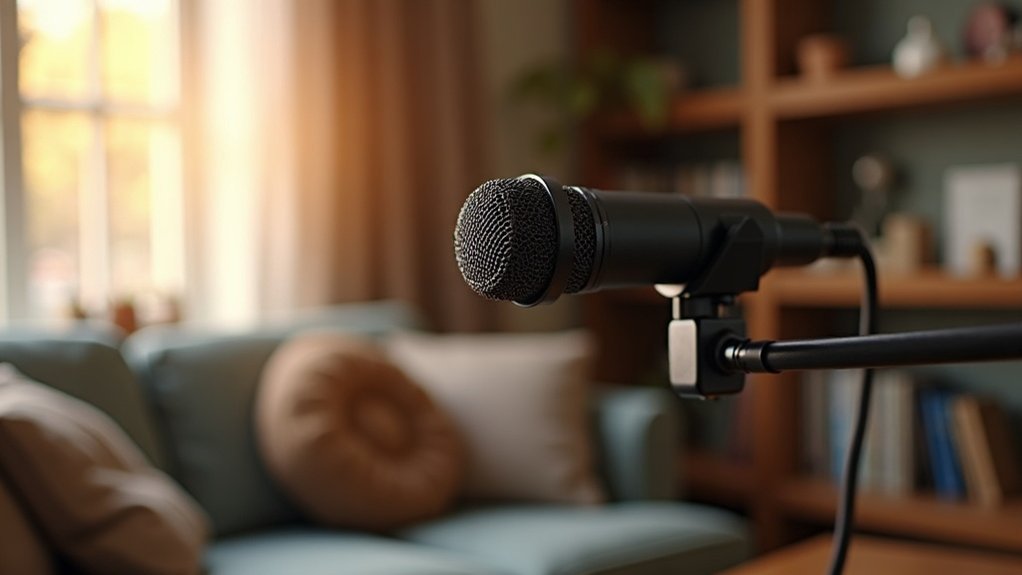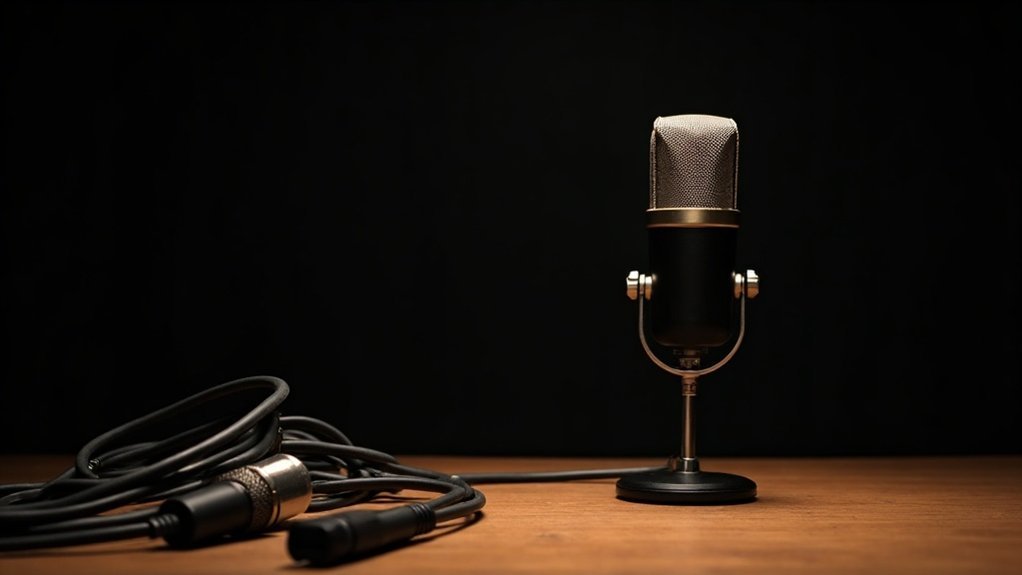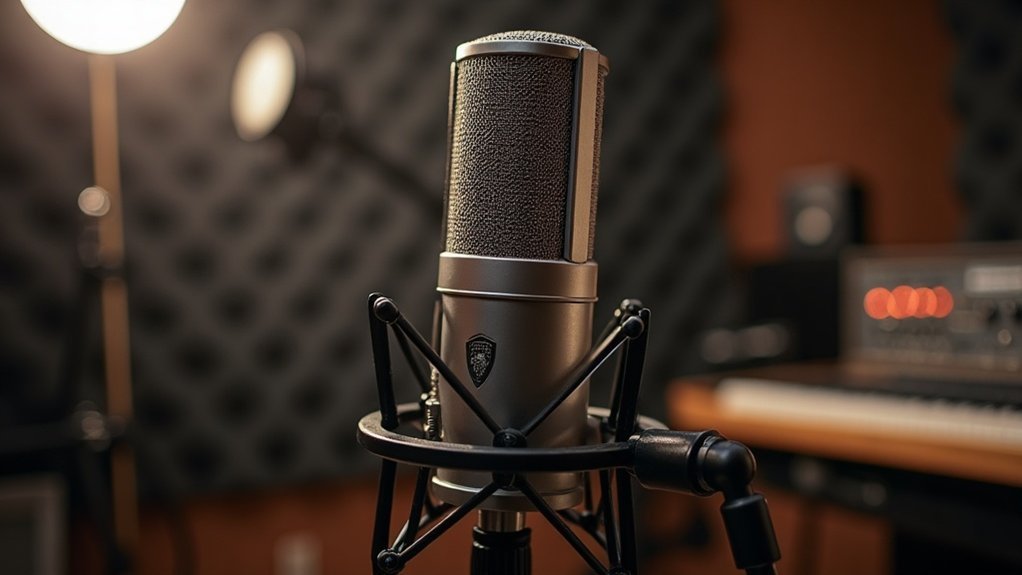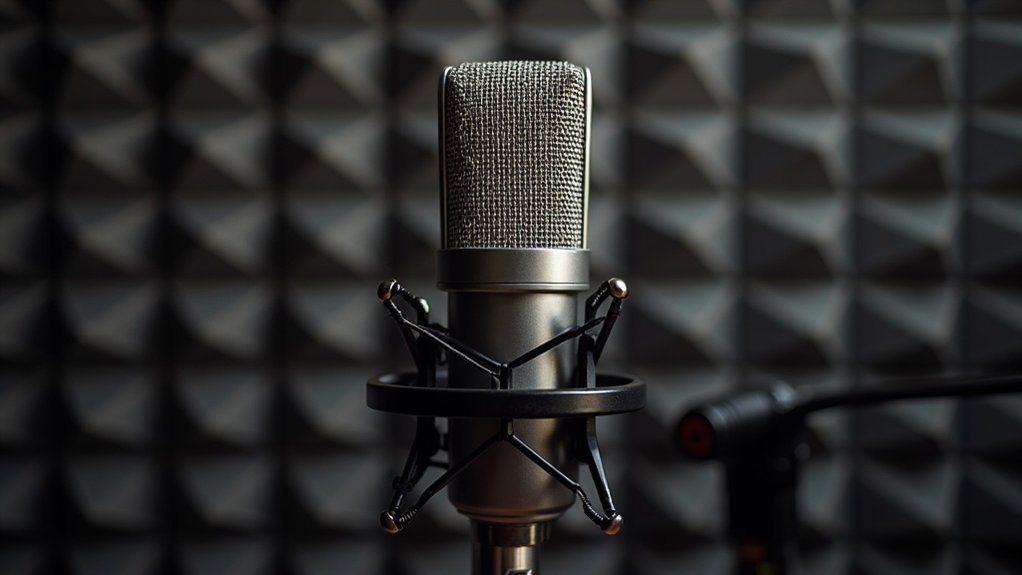
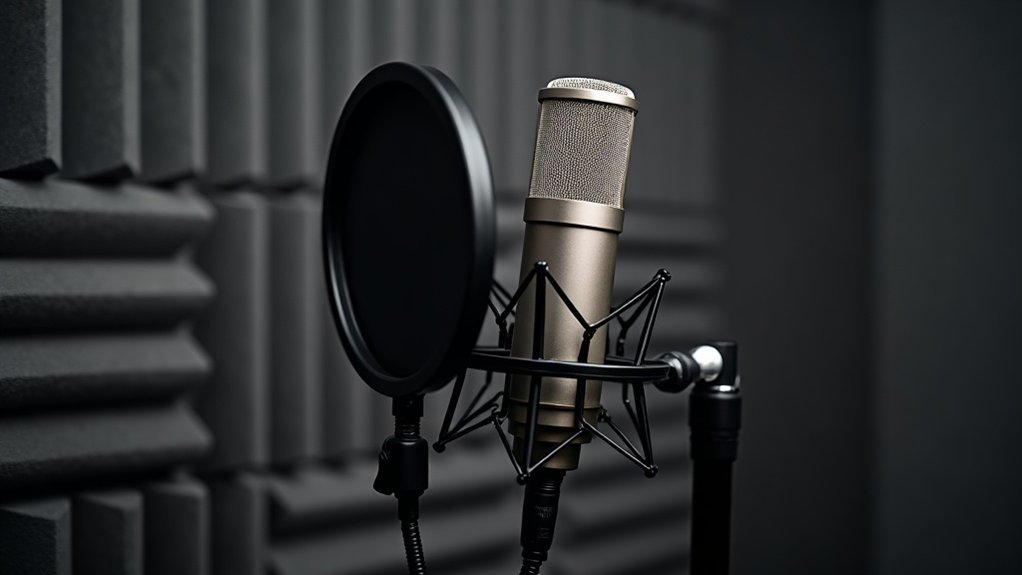
When determining which microphone is good for a noisy room, you’ll want a dynamic microphone with a cardioid pickup pattern. Dynamic mics reject background noise better than condensers because they’re less sensitive and work best at close range (5-15 cm).
For anyone asking “what’s a good microphone for a noisy room,” cardioid patterns are essential—they reduce ambient sound by 20-30 dB, rejecting noise from the rear while capturing your voice clearly. This makes them ideal for creators, gamers, musicians, and professionals working in less-than-ideal acoustic environments.
Position your good microphone for noisy rooms about 6-8 cm from your mouth, angled toward your voice and away from noise sources. This technique maximizes the rejection capabilities that make dynamic cardioid mics the best choice when you need a microphone good for a noisy room on a budget.
Finding the right microphone that is good for a noisy room doesn’t require premium models—affordable options with proper cardioid rejection will handle demanding environments effectively. Understanding mic placement and pattern selection ensures you get professional results regardless of background noise levels in your streaming, podcasting, gaming, or recording space.
Key Takeaways
- Dynamic microphones with cardioid pickup patterns are ideal for noisy rooms due to superior noise rejection capabilities.
- Close placement within 6–8 cm from the mouth maximizes voice strength relative to background noise in untreated spaces.
- Cardioid patterns reject sound from the rear by 20–30 dB, significantly reducing ambient noise interference during recording.
- Budget-friendly options like Shure SM58 and Audio-Technica ATR2100x provide durable, effective noise rejection for noisy environments.
- Strategic positioning with the microphone’s null area aimed away from noise sources enhances isolation of primary audio.
Why Dynamic Microphones Reject Noise Better Than Condensers
For content creators, gamers, and podcasters working in untreated spaces, this noise rejection capability makes a significant difference. You can leverage sound isolation techniques by positioning yourself 5–15 cm from the mic, maximizing your voice’s strength relative to room ambience. However, it’s important to recognize that sound waves do not differentiate between microphone types, so practical advantages come primarily from placement and frequency response characteristics rather than fundamental noise rejection physics.
This close-working distance greatly improves signal-to-noise ratio, making dynamics your preferred choice for untreated spaces where noise control matters most. When comparing dynamic vs. condenser microphones for noise rejection, the physics are clear: dynamics’ design-based noise rejection outperforms condensers’ sensitivity in real-world recording scenarios.
Whether you’re streaming, recording music, or podcasting on a budget, recognizing how and why dynamic microphones reject noise better than condensers helps you choose the right affordable microphone for your specific recording environment.
Cardioid Patterns: How Directionality Cuts Room Noise
When you aim a cardioid microphone‘s front toward your voice and its rear toward unwanted noise sources, you’re leveraging a heart-shaped pickup pattern that rejects sound arriving from 180° off-axis by approximately 20–30 dB.
This directional sensitivity reduces ambient noise by roughly two-thirds compared to omnidirectional mics, allowing you to improve the ratio between your direct signal and reflected room sound without eliminating background noise entirely. The cardioid distance factor of 1.7 means you can work effectively at greater distances in noisy environments compared to omnidirectional microphones, which have a distance factor of only 1.0. Understanding cardioid vs omnidirectional tradeoffs helps you select the right microphone pattern for your specific acoustic environment. For optimal results in untreated rooms, position the microphone to minimize rear reflections while maintaining consistent proximity to your sound source.
How Cardioid Rejection Works
Because a cardioid rejection works by concentrating sensitivity at the front while attenuating sound from the sides and rear, it’s particularly effective at isolating your intended source in a noisy room. You’ll achieve excellent results by positioning the microphone’s rear null toward ambient noise sources like fans or hallways. Understanding how cardioid rejection works helps you leverage cardioid sensitivity to suppress off-axis sound by approximately 67%. The pattern’s gradual rejection—not a hard cutoff—means your positioning flexibility spans roughly 131°.
Mastering cardioid rejection is essential for content creators, gamers, musicians, and professionals who record podcasts, streams, or music in less-than-ideal acoustic environments. When you grasp the mechanics of cardioid rejection, you can strategically position your affordable microphone to eliminate unwanted noise while capturing pristine primary audio. This rejection pattern’s effectiveness depends on proper placement relative to your sound sources. The rear ports introduce delays that create phase cancellation of sound waves arriving from behind the microphone, which is the fundamental mechanism enabling cardioid rejection. In untreated rooms, cardioid microphones are particularly valuable because they minimize reflections that would otherwise degrade recording quality. For enhanced rejection capabilities in challenging environments, consider how supercardioid and hypercardioid patterns offer even tighter pickup zones than standard cardioid designs.
| Angle | Attenuation | Application |
|---|---|---|
| 0° (on-axis) | 0 dB | Primary source |
| 90° (side) | –6 to –7 dB | Side noise reduction via cardioid rejection |
| 180° (rear) | –20 to –30 dB | Rear rejection (cardioid’s strongest feature) |
The principles behind cardioid rejection ensure that whether you’re setting up for podcasting, streaming, gaming, or recording music, your microphone captures only what matters. By understanding these rejection zones and how cardioid rejection functions at different angles, you control what enters your recording and join professionals who master directional recording techniques. This knowledge transforms affordable microphones into studio-quality tools through informed setup and strategic placement that maximizes your mic’s natural rejection capabilities.
Directional Pickup For Isolation
If you’re recording in a noisy room, a dynamic cardioid microphone with directional pickup for isolation**** is your most practical starting point.
You’ll benefit from this directional pickup that focuses sound from the front while rejecting ambient noise from the sides and rear. This microphone type excels at noise control by design, making directional pickup the key feature separating affordable podcasting mics from inadequate budget options.
Position your mic strategically to maximize isolation through directional design:
- Place the microphone 6–8 cm from your mouth
- Aim the rejection zone toward HVAC systems
- Direct dead sides toward windows and doors
- Keep the primary lobe facing your voice source
- Maintain stable positioning to preserve off-axis tone
Understanding directional pickup for isolation helps you choose between microphone types. Dynamic microphones perform better in noisy rooms due to off-axis noise rejection, allowing them to isolate your voice effectively. Consider supercardioid patterns for greater directionality when you need even tighter sound capture in particularly challenging acoustic environments.
When comparing affordable options for gaming, streaming, and professional recording, prioritize models offering strong directional characteristics. The isolation capability of cardioid patterns directly impacts your final audio quality, whether you’re podcasting from a bedroom or recording vocals in an untreated space.
You’re investing in proven directional technology that works.
This approach to microphone isolation ensures that even budget-friendly models deliver broadcast-quality results when positioned correctly.
Master directional pickup techniques and you’ll eliminate the need for expensive acoustic treatment.
Best Dynamic Microphones for Noisy Rooms (Budget to Premium)
Dynamic microphones excel in noisy environments because they’re naturally less sensitive than condensers, which means they reject ambient noise, fan hum, and room reflections while capturing primarily what’s directly in front of the diaphragm.
When selecting the best dynamic microphones for noisy rooms, budget options like the Shure SM58 and Audio-Technica ATR2100x deliver robust noise isolation techniques through cardioid patterns and practical durability—making them ideal for creators, gamers, and streamers working in untreated spaces. Their solid materials ensure they can withstand the demands of frequent use in challenging environments. Dynamic microphones are commonly used in live settings and podcasting where environmental noise control is essential.
Mid-range dynamic microphones for noisy rooms prioritize vocal clarity with enhanced isolation. The Shure MV7+ and Electro-Voice RE320 stand out as excellent choices for podcasters and musicians who need professional performance without breaking the bank.
Premium best dynamic microphones for noisy rooms like the Audix OM7 and Shure SM7B offer maximum feedback rejection and controlled presence peaks, perfect for professionals demanding studio-grade isolation. These premium models typically feature SPL above 120 dB, ensuring they can handle intense sound pressure levels without distortion in demanding recording environments.
These dynamic mic features make them indispensable for untreated rooms where your source demands professional-grade isolation without compromise.
Whether you’re a gamer, podcaster, or recording musician, choosing among the best dynamic microphones for noisy rooms ensures you capture clean audio and minimize environmental interference—critical factors across every stage of the buying journey for affordable, high-performance recording equipment. Direct powered through XLR cables enhances their practicality for immediate setup and reliable connectivity.
Stronger Directional Mics When Cardioid Isn’t Enough
If you’re finding that a standard cardioid pattern doesn’t adequately isolate your voice from persistent side and rear room noise, you’ll want to explore supercardioid mics and shotgun designs, which employ tighter polar patterns to reject off-axis sound more aggressively.
Supercardioid pickups excel in environments where background noise originates mainly from the sides rather than directly behind the mic, while shotgun microphones provide the strongest directional focus through their engineered capsule design—making them particularly effective when you need to isolate a specific source in high-noise settings. Understanding supercardioid polar patterns helps you recognize why these microphones excel at rejecting unwanted sound from certain angles while maintaining excellent on-axis response.
Both options require more precise placement and aiming than cardioid mics, but they’ll deliver noticeably cleaner voice capture in difficult rooms when positioned correctly.
Supercardioid Pickup Pattern Benefits
When cardioid rejection isn’t tight enough for your noisy room, supercardioid microphones narrow the frontal acceptance angle to roughly 100°–115° compared to a cardioid’s ~130°, delivering stronger directional focus on your primary sound source.
Understanding supercardioid pickup pattern benefits is essential for creators, gamers, musicians, and professionals working in challenging acoustic environments.
You’ll experience superior noise isolation through the key supercardioid pickup pattern benefits:
- Exceptional side rejection that eliminates air conditioners and adjacent instruments—a critical advantage for streamers and podcasters in untreated spaces
- Rear lobe sensitivity requiring strategic placement away from noise sources, making microphone positioning crucial for optimal capture
- Increased feedback resistance for live performance environments and streaming setups
- Proximity effect that demands precise on-axis technique for consistent, professional recordings
- Drier recordings with minimal ambient spill in reverberant spaces, perfect for gaming commentary and podcast production
The supercardioid pickup pattern benefits extend beyond simple noise reduction. Unlike omnidirectional microphones that capture sound equally from all directions, supercardioid designs provide focused directional sensitivity that transforms challenging acoustics into controllable capture scenarios, making supercardioid microphones ideal for affordable home studio setups, streaming rigs, and professional recording on a budget.
Whether you’re recording vocals, gaming streams, or podcast content, mastering how to leverage supercardioid pickup pattern benefits ensures cleaner audio and reduced post-production cleanup.
Shotgun Mic Directionality Advantages
While shotgun microphones work indoors, their exceptional directionality makes them particularly effective for controlling room reflections and ambient noise in uncontrolled spaces. This shotgun microphone design excels at rejection, making it an affordable solution for professionals and creators who need studio-quality isolation without investing in treated rooms or expensive equipment.
Shock Mounts, Noise Gates, and Placement Tricks That Actually Work
You’ll find that three practical interventions—shock mounts, noise gates, and placement tricks that actually work—form the foundation of usable recordings in acoustically challenging spaces.
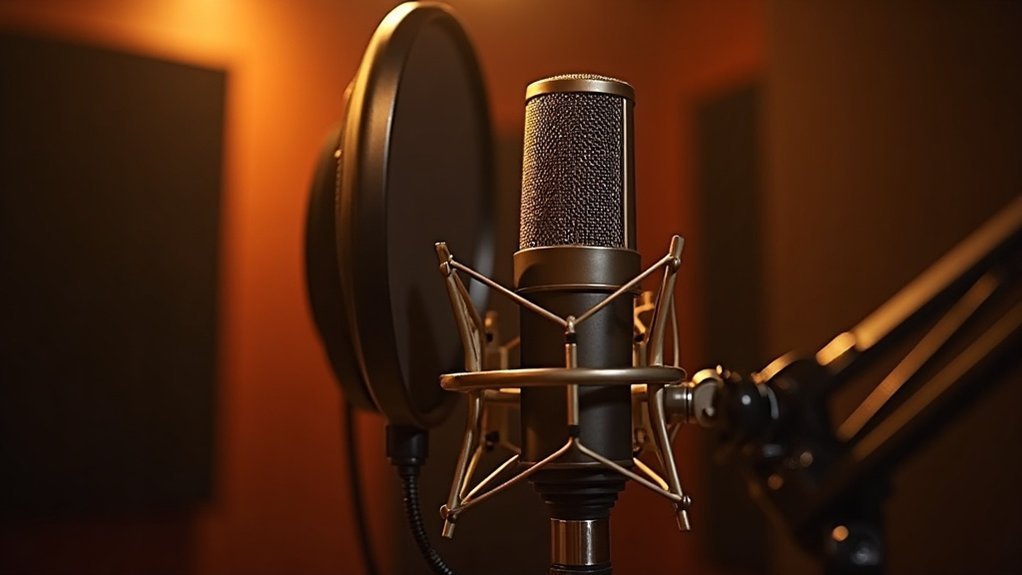
Shock mount benefits isolate mechanical vibration from desk taps and footfalls that rigidly mounted stands transmit directly into your capsule. Shock mounts work by using elastic suspension to decouple the microphone from vibrations traveling through the stand or boom arm.
Noise gate limitations become apparent when you realize gates only mute pauses; they won’t eliminate fan noise or traffic during active speech.
Instead, apply these placement tricks that actually work: position your microphone 10–15 cm from your mouth, aim the rear null toward noise sources, and separate equipment:
- Close placement increases voice-to-noise ratio
- Off-axis rejection strengthens cardioid response
- Boom arms eliminate keyboard bleed
- Rear null positioning targets HVAC vents
- Proper mic height prevents gain compensation
These shock mounts, noise gates, and placement tricks represent affordable solutions that deliver professional results without requiring expensive acoustic treatment.
For streamers, podcasters, and gaming content creators working with budget microphones, mastering shock mount isolation, noise gate setup, and strategic placement separates amateur audio from broadcast-quality recordings.
The combination of mechanical isolation via shock mounts, intelligent use of noise gates during post-production, and these proven placement tricks ensures your affordable microphone performs at its maximum potential, regardless of your recording environment.
When a Condenser Might Work in a Noisy Room

Shock mounts and strategic placement can’t solve every challenge—sometimes the microphone type itself matters.
You’ll find condensers viable in partly controlled recording environments where background noise remains manageable. Understanding when a condenser might work in a noisy room requires honest assessment of your specific setup.
Condensers work in partly controlled environments where you honestly assess background noise and manage your specific setup constraints.
If your space features soft furnishings, limited reflections, and low ambient sound, condenser benefits emerge through superior detail and clarity. Position yourself close to the microphone—distance amplifies room pickup regardless of type. A cardioid condenser helps when you keep noise sources behind it. Condensers utilize capacitor-based transducers that capture sound with exceptional sensitivity, which makes proximity and environmental control especially critical in noisy spaces.
You’re not fighting the room; you’re working within its constraints.
For affordable microphones suitable for podcasting, streaming, gaming, and recording, determining when a condenser might work in a noisy room depends on three factors: environment control, mic placement, and proximity.
Many creators wonder if a condenser can function effectively in less-than-ideal acoustic spaces. The answer lies in recognizing that a condenser might work in a noisy room only when you actively manage those constraints rather than relying on the microphone alone.
Success depends on environment control, mic placement, and proximity, not condenser type alone.
Where to Position Your Microphone for Cleaner Sound
Angle the mic’s sensitive front toward your voice while orienting its null area away from ambient sources like fans. Understanding polar patterns helps you select microphones with rejection characteristics suited to your noisy environment. Match microphone distance and height to mouth level, maintaining 15–30 degrees off-axis placement to reduce sibilance. Position yourself away from corners and reflective surfaces; instead, work near furnishings that absorb sound naturally.
Where to position your microphone determines whether you capture pristine vocal clarity or muddy background interference. Creators, gamers, musicians, and professionals recording podcasts, streams, or music tracks must master these microphone positioning techniques**** for optimal results:
- Close placement within 4–10 cm with pop filtering
- Cardioid rejection facing away from noise sources
- Slight downward angling toward mouth
- Furniture-rich room positioning for natural absorption
- Proper spacing between multiple microphones
The fundamentals of how to position your microphone remain consistent whether you’re using an affordable entry-level setup or professional equipment.