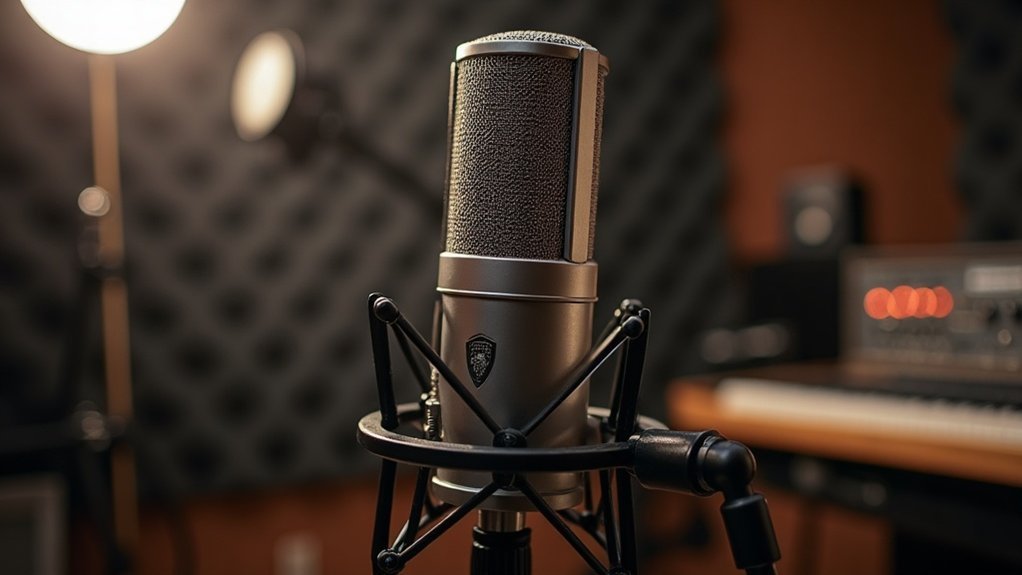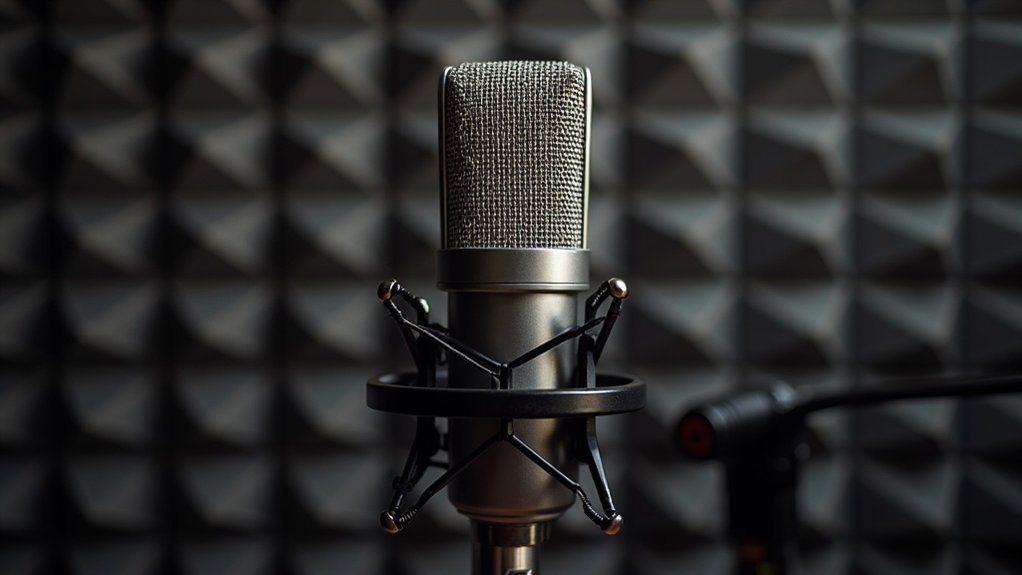

A supercardioid microphone is a specialized audio device designed for highly directional sound capture, featuring a heart-shaped polar pattern. You’ll find that a supercardioid microphone is particularly effective in noisy settings, as it isolates sound from the front while reducing side and rear noise. Its narrow pickup angle enhances audio clarity, making it a great choice for podcasting, streaming, gaming, and recording. However, it requires careful placement to avoid feedback. Understanding the functions of a supercardioid microphone can help you decide if it’s the right choice for your application. Learn more about its advantages and best uses next, and see how this type of microphone can elevate your audio experience.
Key Takeaways
- Supercardioid microphones have a heart-shaped polar pattern, focusing sound capture primarily from the front while minimizing side and rear noise.
- They possess a pickup angle of approximately 115°, allowing for enhanced audio clarity in noisy environments.
- These microphones excel in isolating specific sound sources, making them ideal for dialog recording and live performances.
- Supercardioid mics offer strong side rejection, significantly reducing bleed from adjacent sources and improving overall audio quality.
- Limitations include a narrow pickup angle and increased feedback risk from rear lobe sensitivity, requiring precise mic placement and handling.
Understanding Supercardioid Microphones: Definition and Function
A supercardioid microphone is a specialized audio tool designed for directional sound capture. This unidirectional microphone features a heart-shaped polar pattern, providing approximately 115° of coverage. The supercardioid design uniquely blends omnidirectional and bidirectional components, enhancing front-axis sensitivity while effectively minimizing side and rear noise. With its better directionality towards sound source, it excels at isolating target sources, making it an ideal choice for live reinforcement in noisy environments. Its extremely directional pickup pattern allows for better audio clarity in challenging acoustic situations. Understanding the concept of polar patterns is crucial for selecting the right microphone for specific audio needs.
A supercardioid microphone excels in directional sound capture, blending sensitivity with minimal noise interference for superior audio quality.
In the realm of audio engineering, understanding supercardioid microphones is essential for ensuring clearer sound capture, particularly for vocals or instruments. By concentrating on direct sound, these microphones facilitate a professional audio experience, fostering a sense of belonging in performance settings.
Whether you’re a creator, gamer, or musician, supercardioid microphones can significantly enhance your audio quality, helping you achieve your goals in podcasting, streaming, or recording.
Key Features of Supercardioid Microphones
Supercardioid microphones offer a highly directional pickup pattern that focuses on sound directly in front of the capsule, effectively isolating your desired audio source. This enhanced sound isolation minimizes ambient noise from the sides and rear, making it ideal for noisy environments. Understanding these key features can greatly improve your recording quality in various settings. Additionally, the supercardioid mic’s polar pattern allows for effective sound capture even in challenging acoustic environments. The microphone’s superior off-axis rejection ensures that background noise is further minimized, contributing to clearer audio recordings. In live settings, the superior feedback rejection of supercardioid microphones makes them particularly advantageous for stage performances.
Directional Pickup Pattern
The supercardioid microphone features a narrow polar response, focusing sound primarily from the front. With a primary acceptance angle of 115–150°, it excels in sound quality by minimizing off-axis noise, providing maximum sensitivity at 0° on-axis. This design offers significant side rejection and a rear lobe of sensitivity, allowing for some ambient sound capture without compromising clarity. Additionally, the supercardioid’s stronger proximity effect enhances the warmth of vocals when used at close distances.
Understanding polar patterns is essential for optimizing microphone placement and usage. For peak performance, position your sound source directly in front of the microphone while being mindful of its null points, ensuring minimal interference from unwanted noise. The supercardioid design effectively enhances gain-before-feedback, making it ideal for live sound scenarios.
Enhanced Sound Isolation
Understanding the directional pickup pattern of supercardioid microphones naturally leads to their key feature: enhanced sound isolation.
These microphones excel in noisy environments, utilizing noise reduction techniques to minimize unwanted ambient sounds. Their narrow pickup region allows for strategic microphone placement strategies, effectively isolating vocals and instruments from stage monitors and nearby performers. The strong side rejection—around 10 dB at 90° and 270°—ensures cleaner signals and higher gain-before-feedback. In live settings, this enhanced sound isolation boosts clarity by reducing bleed from adjacent sources, making supercardioid microphones an ideal choice for capturing focused, high-quality audio in challenging acoustic conditions.
This capability is particularly beneficial for creators, gamers, and musicians who rely on precise sound capture in less-than-ideal environments, as polar patterns greatly influence the overall audio quality. Additionally, the best polar pattern for rejecting background noise can significantly enhance the effectiveness of these microphones in various applications.
Key Advantages of Supercardioid Microphones for Audio Professionals
Supercardioid microphones offer enhanced sound isolation, allowing you to capture the target sound source with minimal interference from surrounding noise. Their superior side rejection effectively reduces ambient sounds, making them ideal for dialog recording in challenging environments. This precision not only improves clarity but also supports professional audio production across various settings, making supercardioid microphones essential for maintaining audio clarity in busy homes. Additionally, their increased side rejection helps control feedback, making them a preferred choice in loud environments.
Enhanced Sound Isolation
While many microphone patterns offer varying degrees of sound isolation, the supercardioid microphone stands out by providing enhanced sound isolation, making it the preferred choice for audio professionals. Its tighter frontal focus significantly improves sound clarity, effectively minimizing ambient noise, which is crucial in achieving enhanced sound isolation. You’ll appreciate the higher direct-to-ambient ratio, resulting in a drier signal with less room sound—ideal for capturing pristine audio. This mic’s robust off-axis rejection enables effective placement even in noisy environments, ensuring that only the desired source is captured. With improved gain before feedback, you can maintain stable recordings, even in challenging settings, further supporting the need for enhanced sound isolation. Additionally, understanding polar patterns allows audio professionals to select the best microphone for their specific recording needs. The supercardioid design is particularly advantageous for achieving optimal sound isolation in various recording scenarios.
| Feature | Benefit | Application |
|---|---|---|
| Tighter Frontal Focus | Enhanced sound clarity | Vocals, instruments |
| Strong Off-Axis Attenuation | Reduced ambient noise | Noisy environments |
| Greater Working Distance | Maintains articulation and level | Live performances |
| Improved Gain Before Feedback | Reduced feedback risk | Monitor-heavy setups |
Superior Side Rejection
Their narrower front pickup angle, approximately 115°, enhances on-axis sensitivity while effectively pushing ambient noise into off-axis rejection zones. This design not only allows for higher gain before feedback—a critical factor during live performances—but also exemplifies the benefits of superior side rejection in ensuring clarity.
The strong side rejection capabilities improve sound fidelity and facilitate strategic placement of monitors, keeping stage noise at bay. This ensures your audio capture shines without interference, making the most of the superior side rejection feature that enhances the overall performance experience.
Understanding the difference between cardioid and omnidirectional mics can further inform your selection process.
Whether you’re podcasting, streaming, or recording, understanding these characteristics of superior side rejection can help you make informed decisions about your microphone choices.
Ideal For Dialog Recording
In noisy environments, capturing clear dialog is essential, and supercardioid microphones excel in this area, making them ideal for dialog recording.
With a narrow pickup angle of about 115°, they focus on the dialog source, enhancing clarity in film production. Their first-order pressure-gradient design minimizes unwanted sounds, which is vital on bustling sets.
Strong on-axis response guarantees consistent audio levels, even with moving actors. Supercardioids also allow for effective close-miking, capturing two actors on a single boom while maintaining clarity.
This precision makes them perfect for interior boom work, providing clean, professional tracks that stand out amidst competing noise. Additionally, understanding omnidirectional microphones can help audio professionals choose the best microphone type for various recording scenarios.
For anyone serious about dialog recording, understanding the strengths of supercardioid microphones is crucial for achieving the best results.
Key Limitations of Supercardioid Microphones
Supercardioid microphones, despite their advantages in isolating sound sources, come with several key limitations that can affect their usability in various contexts.
Their narrow pickup angle presents challenges, making them less effective for wider soundstages, such as group performances.
You may encounter proximity effect issues, as strong bass buildup can muddy vocals if distance isn’t managed carefully.
Additionally, the rear lobe sensitivity increases the risk of feedback from stage monitors, complicating placement.
These factors require precise mic techniques, emphasizing the key limitations of supercardioid microphones, which make them less forgiving for inexperienced users or dynamic environments.
This ultimately impacts your audio consistency and overall performance quality. Understanding these limitations is essential for creators, gamers, and musicians looking to optimize their microphone choices.
Moreover, knowing about bidirectional microphones can provide insight into alternative options that may better suit certain recording scenarios.
Supercardioid or Cardioid: Which One’s Right for You?

Choosing the right microphone pattern is crucial for your specific needs: supercardioid or cardioid? Understanding which microphone pattern best suits your requirements can significantly impact your sound quality. In a side-by-side microphone comparison, it’s clear that the supercardioid excels in rejecting side noise, making it ideal for noisy environments. On the other hand, the cardioid captures more room ambiance, which can be beneficial for achieving natural recordings. Additionally, hypercardioid microphones offer even more focused directionality that can be useful in specialized applications.
| Feature | Supercardioid | Cardioid |
|---|---|---|
| Front Pickup Angle | 100–115° | 120–130° |
| Side Rejection | Strong | Moderate |
| Rear Lobe Behavior | Present | None |
When deciding between a supercardioid and cardioid microphone, consider your specific recording situation to achieve the best results. By carefully evaluating these microphone patterns, you can make an informed choice that aligns with your creative needs, whether for podcasting, streaming, or any other audio project.
Best Applications for Supercardioid Microphones
Choosing the right applications for supercardioid microphones can significantly enhance your audio quality in various settings.
When it comes to live performances, these microphones excel at noise reduction, effectively isolating lead vocals from crowd noise and PA spill.
In studio recording, supercardioid microphones capture clear vocals and instruments while minimizing room reflections and bleed, making them a top choice for achieving professional sound.
For podcasting applications, supercardioid microphones are particularly effective at rejecting background sounds, making them ideal for noisy environments.
Whether you’re on stage, in a studio, or creating content, leveraging supercardioid microphones not only guarantees clarity and focus but also allows you to connect authentically with your audience while maintaining high-quality sound.
Ultimately, understanding the best applications for supercardioid microphones is key to optimizing your audio experience across all your creative endeavors, from streaming to recording and everything in between. Additionally, their design is similar to that of dynamic microphones, allowing for versatility in various audio environments.