The Difference Between a Microphone and a Headset
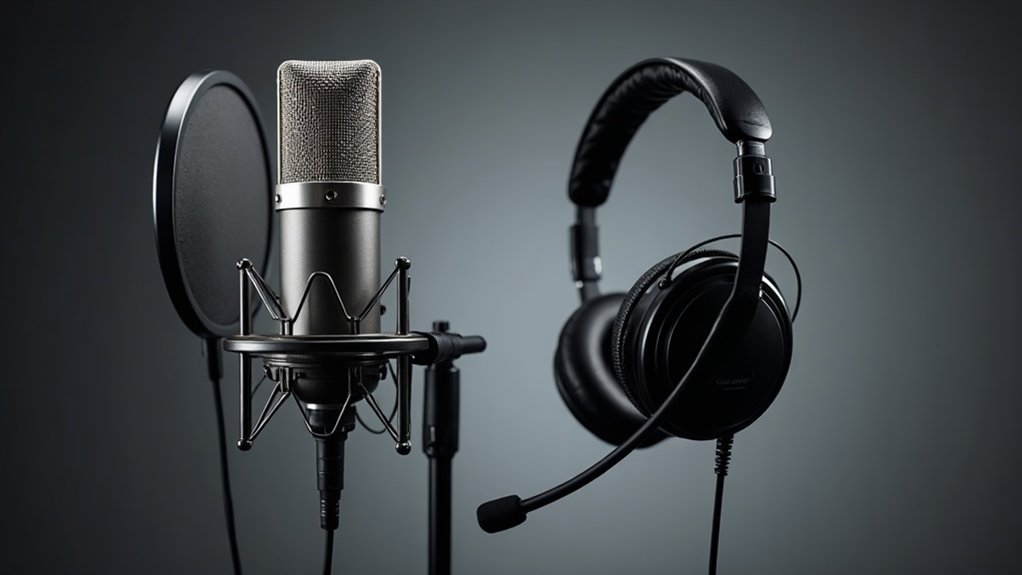
Understanding the difference between a microphone and a headset is crucial for creators, gamers, and professionals choosing the right audio equipment. A headset combines a microphone with speakers for two-way communication, ideal for gaming and calls. You’ll get integrated convenience but sacrifice audio fidelity.
A standalone microphone captures audio exclusively, offering superior frequency response (80 Hz–16 kHz versus 150 Hz–8 kHz) and broader pickup pattern options. This distinction between a microphone and a headset matters significantly when pursuing content creation or professional streaming. The microphone versus headset debate ultimately comes down to your specific needs.
You’re trading portability for quality and versatility when selecting a standalone microphone. Your choice hinges on whether you’re prioritizing real-time interaction or content creation—each demands different capabilities. Gamers may prefer the all-in-one convenience of a headset, while podcasters, musicians, and streamers typically benefit from investing in a dedicated microphone that delivers the audio quality their audience deserves.
Key Takeaways
- Headsets combine microphone and audio output for bidirectional communication, while standalone microphones focus solely on audio input and recording.
- Standalone microphones capture broader frequency ranges (80 Hz–16 kHz) versus headset mics (150 Hz–8 kHz), delivering superior audio quality for content creation.
- Standalone microphones offer diverse polar patterns and microphone types for specialized applications, while headsets provide limited pickup pattern options.
- Headsets eliminate setup costs and driver complexity through integrated design, whereas standalone mic systems require interfaces, software, and additional equipment investment.
- Headsets prioritize comfort and portability for real-time communication, while standalone microphones provide ergonomic advantages during extended recording sessions without head contact.
Microphone vs. Headset: What’s the Real Difference?
A headset, conversely, combines audio reproduction with voice capture, enabling bidirectional communication. The evolution of microphone technology began with Alexander Graham Bell’s electromagnetic microphone in the telephone, which laid the groundwork for modern audio input devices.
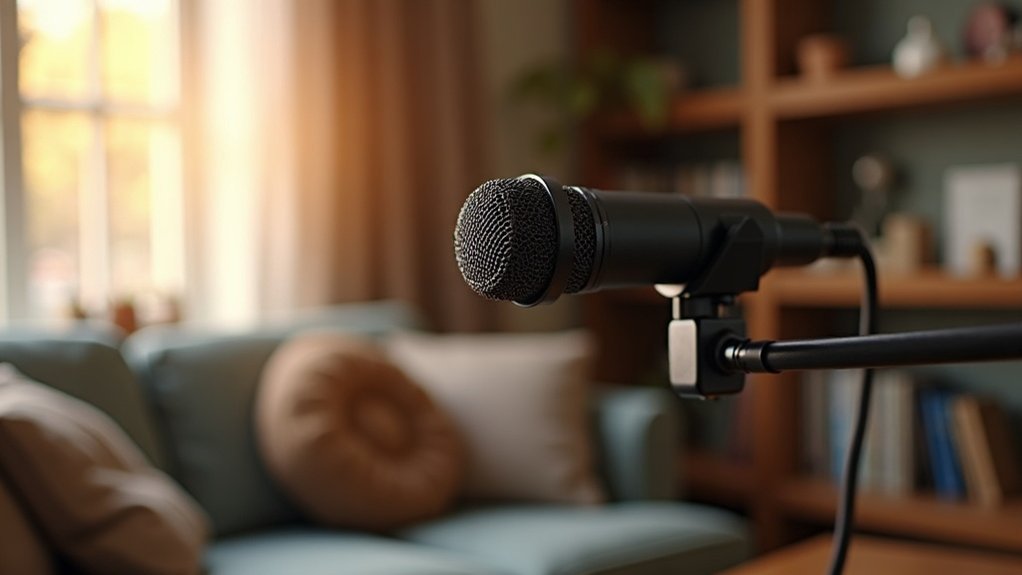
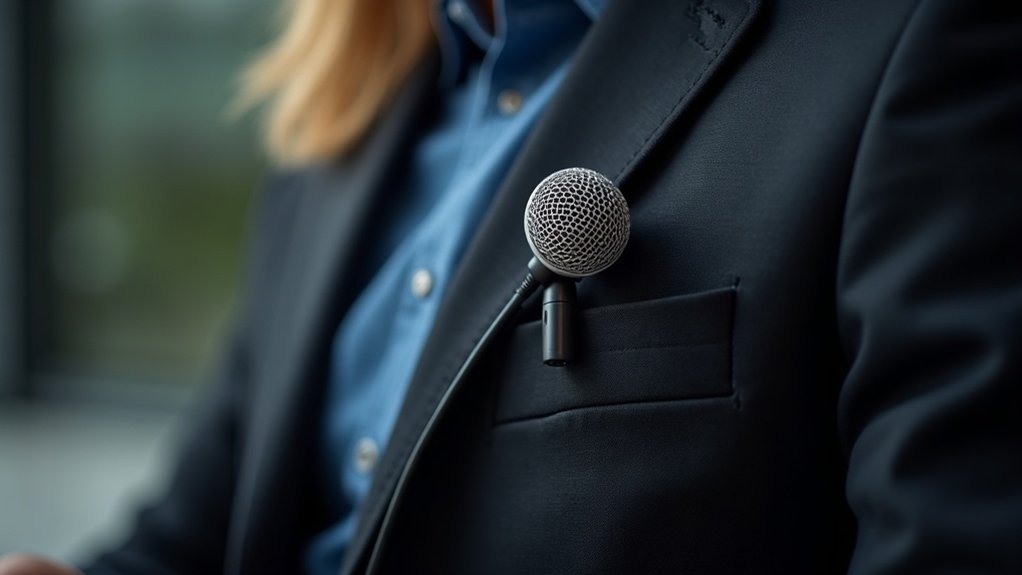
For creators, gamers, musicians, and professionals evaluating microphone versus headset options, the applications matter significantly. You’ll find microphone types ranging from omnidirectional to directional variants, each suited for specific use cases like podcasting, streaming, gaming, and recording. Dynamic microphones are particularly popular in live settings and podcasting due to their durability and ability to reject ambient noise.
Headset features typically include integrated speakers, auriculars, and strategically positioned microphone types—often boom mics for superior voice clarity.
The real difference between a microphone and headset comes down to functionality and purpose. When comparing a microphone to a headset, consider whether you need single-function audio input for dedicated recording sessions, or an all-encompassing communication system that listens and transmits simultaneously.
Content creators focused on podcast production or music recording often prefer standalone microphones for superior audio quality, while gamers and professionals requiring real-time communication lean toward integrated headsets.
This microphone vs. headset comparison ultimately depends on your specific workflow and budget requirements.
Choosing Your Device: Gaming, Streaming, or Calls?
Gaming preferences demand integrated headset features like voice mixing and directional pickup. Streaming essentials require standalone mics for superior audio fidelity and consistent mic positioning. Call efficiency prioritizes all-in-one convenience and cardioid rejection of background noise. Audio interfaces can provide cleaner gain and advanced control for streaming setups that demand professional-grade sound quality.
When choosing a device for gaming, streaming, or calls**, competitive players benefit from separate headphones plus microphones for enhanced soundstage and clarity. Content creators leverage USB condenser mics for professional warmth and detail**, particularly when streaming or recording podcasts. Remote workers favor headset simplicity for back-to-back video calls. Console gamers should prioritize headset comfort and convenience since they typically play while relaxing on a couch rather than at a desk setup. Headset microphones offer integrated solutions that combine audio playback with voice capture for seamless gaming experiences.
The decision of which device to choose—gaming, streaming, or calls— depends entirely on your primary use case. Streamers and podcasters should prioritize mic quality over integrated features. Gamers benefit from headset-microphone combinations that balance communication with immersive audio. Those focused on calls need reliable noise rejection and comfortable all-in-one solutions.
Your user experience improves dramatically when equipment matches your workflow demands, whether that’s competitive gaming, professional streaming, music recording, or daily conference calls.
Optimizing your sound mixing capabilities and practical usability means understanding how each device type—gaming headsets, streaming microphones, and call-optimized headsets—serves distinct professional and entertainment needs. The right choice between gaming, streaming, or calls transforms how you communicate, create content, and enjoy your audio experience.
Audio Quality and Sound: Which Setup Sounds Better?
You’ll notice that dedicated microphones typically capture a broader frequency response—often 80 Hz to 16 kHz versus headset mics that roll off below 150 Hz and above 8 kHz—giving you warmer lows and clearer highs that translate to noticeably richer vocal tone.
Your choice between setups also hinges on pickup pattern: headset mics employ tight unidirectional capsules that reject room noise and environmental spill, while standalone mics offer greater versatility but demand acoustic treatment or strategic positioning to avoid picking up keyboard clicks and HVAC rumble. Understanding how microphones respond across the frequency spectrum helps you predict which gear will perform best for your specific content and environment.
Plosive control and transient response further distinguish these approaches—external mics preserve articulation and micro-details in speech, whereas headset booms apply aggressive compression and noise suppression that flattens dynamics in exchange for consistent, intelligible communication. However, dedicated microphones decline in performance with background noise and distance of 3 feet or more, which is a critical limitation for users in dynamic work environments. Viewers consistently report appreciating improved audio quality when streamers transition from headset mics to standalone options.
Frequency Response and Clarity
Frequency Response and Clarity****
Understanding frequency response and clarity is essential when evaluating how different microphones capture and reproduce sound. Frequency response fundamentally shapes microphone performance and is the primary determinant of audio quality when comparing standalone microphones to integrated headset mics—a critical consideration for creators, gamers, musicians, and professionals selecting affordable recording equipment.
Studio microphones deliver broad 20 Hz–20 kHz response with flat curves, preserving tonal balance and voice reproduction accuracy. Headset mics prioritize the 80 Hz–12 kHz voice band, sacrificing sound detail for intelligibility. The differences in frequency response and clarity between these options directly impact your recording quality. Laptop microphones, which use electret condenser technology, extend high-frequency energy to around 12 kHz, while headset microphones typically present high-frequency energy only up to 8 kHz due to telephony bandwidth limiting standards.
Key differences you’ll notice:
- Frequency range: Standalone mics capture full-spectrum detail; headsets compress midrange emphasis, affecting overall frequency response and clarity.
- Tonal accuracy: Flat response guarantees natural reproduction; shaped curves introduce coloration that compromises clarity.
- Audio engineering impact: Linear curves enable clarity comparisons favoring separate microphones over integrated headset limitations, particularly important for podcasting, streaming, and professional recording.
When evaluating frequency response and clarity across microphone options, consider whether you’re recording podcasts, streaming gameplay, or capturing music. Your choice depends on whether you prioritize microphone accuracy for enhanced clarity or practical headset convenience.
For those serious about frequency response and clarity in affordable recording solutions, standalone microphones consistently outperform integrated alternatives.
Pickup Patterns and Versatility
Understanding pickup patterns and versatility** is fundamental to differentiating standalone microphones from headset alternatives**, directly shaping how each captures desired sound while rejecting unwanted noise and room ambience.
Standalone mics deliver superior pickup pattern versatility, offering diverse polar pattern options—omnidirectional, cardioid, shotgun, and multi-pattern designs—that enable creative flexibility across streaming, podcasting, gaming, and recording environments. This versatility in pickup patterns empowers creators and professionals to adapt their setup to any situation, whether recording in treated studios or dynamic live spaces. Cardioid microphones reduce off-axis sound by approximately 67% rejection, making them particularly effective at suppressing unwanted environmental noise. Omnidirectional microphones, by contrast, experience less wind noise in outdoor recording situations, which is an important consideration for field recording scenarios.
Headsets, conversely, face significant pickup pattern limitations, restricted primarily to omnidirectional or cardioid options. These directional differences greatly impact ambient capture: directional patterns minimize room tone and background interference, while omnidirectional mics preserve natural ambience for contextual richness.
The pickup patterns available on standalone mics demand thoughtful selection based on your recording goals. A cardioid pattern isolates vocals for gaming and podcasting, while omnidirectional captures environmental character for musicians.
Your headset’s fixed proximity to your mouth compensates for limited pattern versatility through a favorable direct-to-room sound ratio, whereas standalone mics’ distance from sources requires deliberate pattern selection to achieve desired isolation or environmental character.
For affordable microphone buyers navigating these choices, understanding how pickup patterns affect versatility across different use cases—whether for streaming, recording, or professional applications—proves essential to maximizing your investment.
Noise Isolation and Plosive Control
Closed-back headsets with memory foam cushions minimize sound leakage and reduce ambient noise reaching your ears, improving call focus. Directional microphones reject background interference from sides and rear, enhancing speech intelligibility. Supercardioid and hypercardioid pickup patterns offer varying rejection characteristics depending on your environment and positioning needs.
Strategic microphone positioning near your mouth strengthens plosive reduction by controlling air bursts through proximity filtering—essential aspects of effective noise isolation and plosive control for creators and streamers.
Key Elements for Optimal Noise Isolation and Plosive Control:
- Passive isolation effectiveness depends on earcup materials and clamping force, forming the foundation of noise isolation performance.
- Signal processing in noise-cancelling mics improves clarity with minimal timbre loss, enhancing your plosive control capabilities.
- Boom microphone placement optimizes voice capture while minimizing breath noise, a critical component of plosive reduction.
Implementing Noise Isolation and Plosive Control in Your Setup:
For podcasters, streamers, and gaming professionals, mastering noise isolation and plosive control transforms recording quality without requiring expensive equipment.
The combination of physical isolation from closed-back design, directional microphone technology, and precision mic positioning guarantees clearer communication and professional-sounding audio.
Whether upgrading an affordable streaming microphone or optimizing your current setup, prioritizing noise isolation and plosive control ensures your voice cuts through clearly while background noise and breath artifacts remain minimized.
Comfort, Desk Space, and Ergonomic Trade-Offs
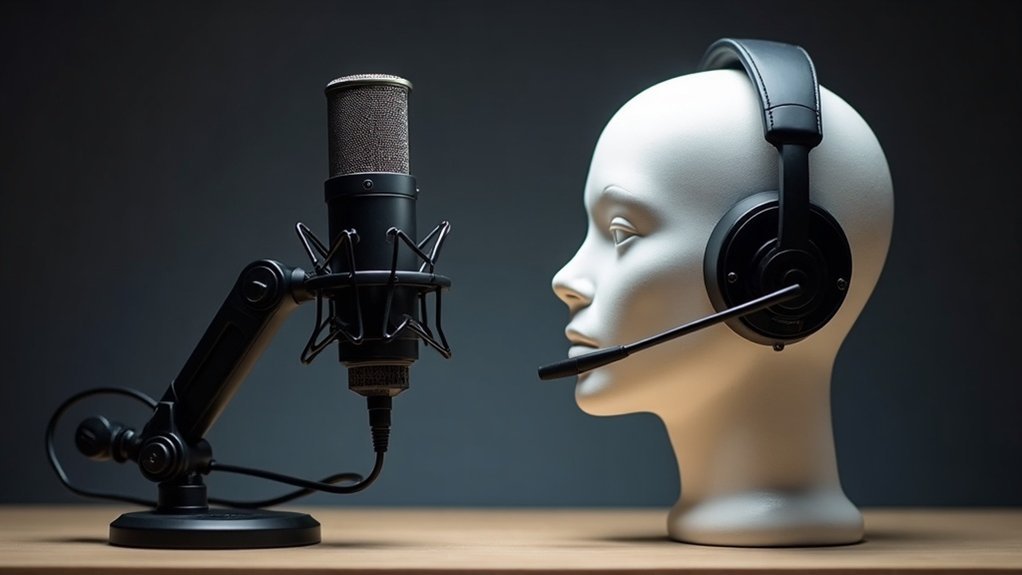
When you’re choosing between a microphone and a headset, three critical factors emerge that directly impact your comfort, desk space requirements, and ergonomic trade-offs: how comfortable the equipment feels during extended use, how much desk real estate it demands, and what physical toll it takes on your body over time.
Understanding these comfort, desk space, and ergonomic trade-offs becomes essential for creators, gamers, and streamers managing long recording sessions. Standalone microphones eliminate head contact entirely, removing clamping force and heat buildup—essential for extended sessions without compromising your physical comfort. Headsets, conversely, create ergonomic load through weight distribution and pressure points on temples and ears, introducing trade-offs that accumulate over hours of use. The absence of ear pressure in desk microphones allows for relaxed posture and movement without the discomfort of prolonged clamping force. Some users wear headsets around their necks for convenience, though this practice can lead to potential audio issues that undermine the communication experience. For podcasting specifically, gaming headset microphones may introduce limitations in audio quality that dedicated podcast microphones overcome through superior frequency response and noise isolation. Boom arms maximize desk organization by reducing clutter while maintaining ideal mic positioning, offering a middle ground in the comfort and desk space equation. Your workspace constraints and session duration directly determine which solution aligns with your comfort features and adjustment options, ultimately shaping your user experience and long-term health during podcasting, streaming, or gaming marathons.
| Factor | Microphone | Headset |
|---|---|---|
| Head Load | Minimal | Significant |
| Heat Management | Superior | Limited |
| Desk Space | Requires Surface | Integrated |
| Pressure Points | None | Temple/Ear |
| Portability Factors | Flexible | Fixed Position |
The ergonomic trade-offs between comfort and desk space considerations remain paramount when selecting equipment that supports your recording goals without physical strain.
Microphone vs. Headset Setup Costs and Compatibility
Beyond the physical comfort and workspace considerations that shape your day-to-day recording experience, the financial investment and technical compatibility of your audio setup fundamentally determine whether you’ll actually deploy and maintain your equipment long-term.
When evaluating microphone vs. headset setup costs and compatibility, your budget considerations shift dramatically between options. Headsets typically cost $80–$150 for solid mid-tier quality, while separate mic-plus-headphone builds start around $80–$100 but escalate quickly with better components. XLR setups exceed $200–$300+ when factoring in interfaces. Understanding the role of audio interfaces in your signal chain helps clarify why professional microphone systems require additional investment compared to all-in-one headset solutions.
Microphone vs. headset compatibility advantages favor integrated headsets:
- Single USB connection eliminates driver complexity
- Modular mic systems require interface software and connector matching
- Wireless headsets introduce dongle and battery dependencies
However, separate microphone and headset systems offer superior hardware longevity and upgrade flexibility. This microphone vs. headset setup distinction matters significantly for long-term value—separate systems enable you to replace individual components without abandoning your entire audio performance investment.
Separate microphone and headset systems enable component replacement without losing your entire audio investment, maximizing long-term value.
For creators, gamers, musicians, and professionals seeking affordable solutions, understanding these microphone vs. headset cost and compatibility trade-offs ensures your recording setup grows with your needs rather than constraining them.
Real-Time Communication vs. Content Creation: Which Matters for You?
For real-time communication, headsets excel because their close-mic placement captures clear voice while rejecting ambient noise, essential when you’re juggling calls across shared spaces. The immediate feedback and noise isolation that headsets provide make them ideal for professionals who prioritize responsiveness in live conversations.
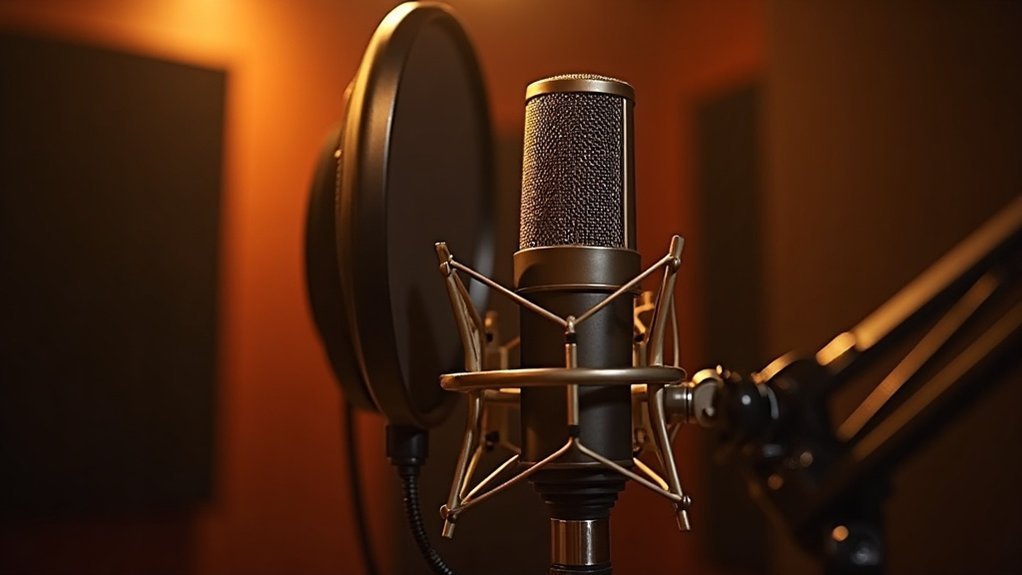
For content creation, USB microphones deliver warmer, fuller sound that elevates presentations and podcasts. You’ll notice the quality difference most in audience-facing work where production value directly impacts listener experience. Condenser microphones are particularly well-suited for podcast production because their sensitivity captures the nuanced vocal tones that resonate with listeners.
When deciding between real-time communication and content creation equipment, consider that content creators benefit from the flexibility and audio fidelity that dedicated microphones provide in controlled recording environments.
The core decision of real-time communication vs. content creation comes down to your primary use case. If you’re primarily doing meetings and two-way conversations, a headset’s consistency and reliability win out.
Your choice hinges on whether you need equipment optimized for live real-time communication** or whether you’re pursuing content creation with higher production standards**.
For those balancing both needs, pursuing higher production value in content creation while maintaining quality real-time communication may require separate tools—a headset for calls and a dedicated microphone in controlled conditions for recorded material.
When to Upgrade vs. When to Switch Devices
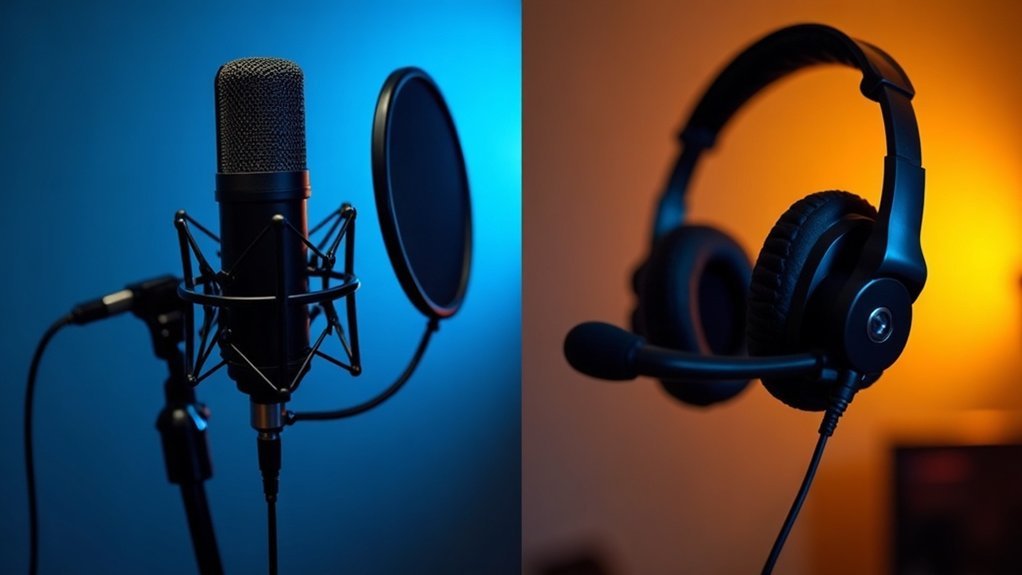
You’ll want to evaluate whether your current setup’s limitations stem from the device itself or from how you’re using it. Upgrading a headset mic makes sense if you need clearer voice pickup for communication, while switching to a standalone mic becomes necessary when audio quality directly affects your audience’s perception.
Your decision hinges on two factors: whether you’re mobile and need integrated hardware, or desk-based and producing content that demands professional sound. For content production, understanding the differences between condenser and dynamic microphones will help you select the right tool for your specific audio needs.
Assessing Your Current Setup
Before deciding whether to upgrade your microphone or switch to an entirely different setup, it’s important to evaluate your current audio performance against your actual needs.
Your microphone evaluation should assess voice clarity, background noise capture, and plosive issues. Conduct a headset analysis by testing listening quality separately from voice pickup.
When assessing your current setup, take time to understand what’s actually working and what isn’t. This foundational evaluation prevents expensive mistakes and helps you make informed decisions about future investments in your audio equipment. If you notice low microphone volume during your tests, this may indicate a simple settings adjustment rather than a need for equipment replacement.
Key evaluation points:
- Isolate the problem: Does poor audio stem from mic capture or overall device performance? Understanding your current setup’s specific weaknesses is essential before upgrading any component.
- Test environment impact: Does background noise increase with standalone placement versus headset proximity? Environmental factors play a crucial role in assessing your current setup’s real-world performance.
- Assess comfort duration: Does extended wear cause fatigue that justifies separate equipment? Sometimes the issue isn’t audio quality but rather ergonomics that impact your workflow.
This diagnostic approach to assessing your current setup prevents unnecessary upgrades while identifying genuine performance gaps.
Whether you’re a podcaster, streamer, gamer, or content creator, understanding your baseline audio quality and equipment limitations is the first step toward building an affordable, effective recording solution tailored to your specific needs.
Switching Based On Needs
If you’re recording podcasts or streaming, a USB microphone delivers superior clarity that justifies the investment. For video calls and gaming, a headset’s integrated design and noise rejection prove more practical. When switching microphone setups based on needs, consider your desk constraints, budget, and upgrade trajectory. Separate setups offer scalability and flexibility; headsets prioritize convenience and all-in-one functionality. Understanding microphone types for podcasting helps you identify which device category aligns with your content creation goals.
The key to switching between devices based on your needs is matching your selection to your primary use case rather than chasing brand reputation alone. Affordable microphones can excel in specific scenarios, and understanding when to switch helps you maximize value across your entire setup.
| Use Case | Best Choice | Key Reason |
|---|---|---|
| Podcasting | USB Microphone | Superior audio quality for professional output |
| Video Conferencing | Headset | Two-way communication and integrated convenience |
| Streaming | USB Microphone | Broadcast-quality capture for audience engagement |
| Gaming | Headset | Noise rejection for competitive performance |
| Multi-speaker Recording | USB Microphone | Scalable setup for growing projects |
Switching based on needs transforms your workflow by ensuring each device serves its intended purpose. Whether you’re a creator, gamer, musician, or professional, this intentional approach to switching your microphone setup based on actual requirements delivers better results than one-size-fits-all solutions.