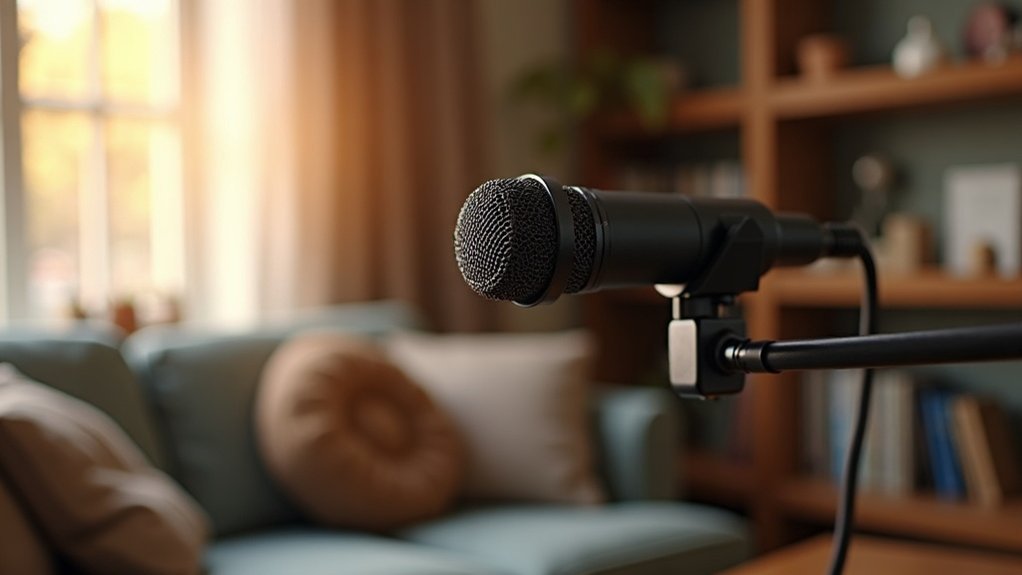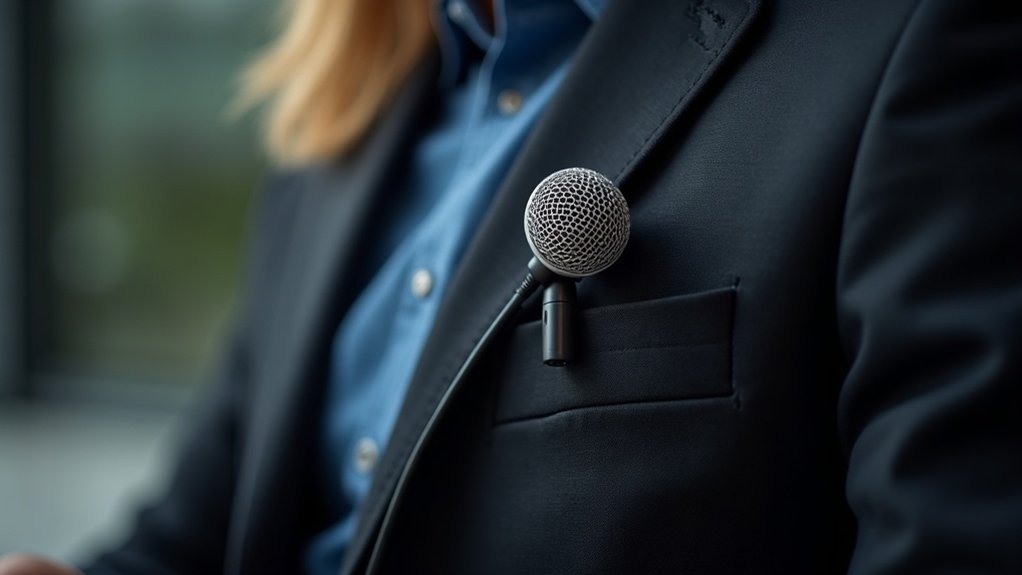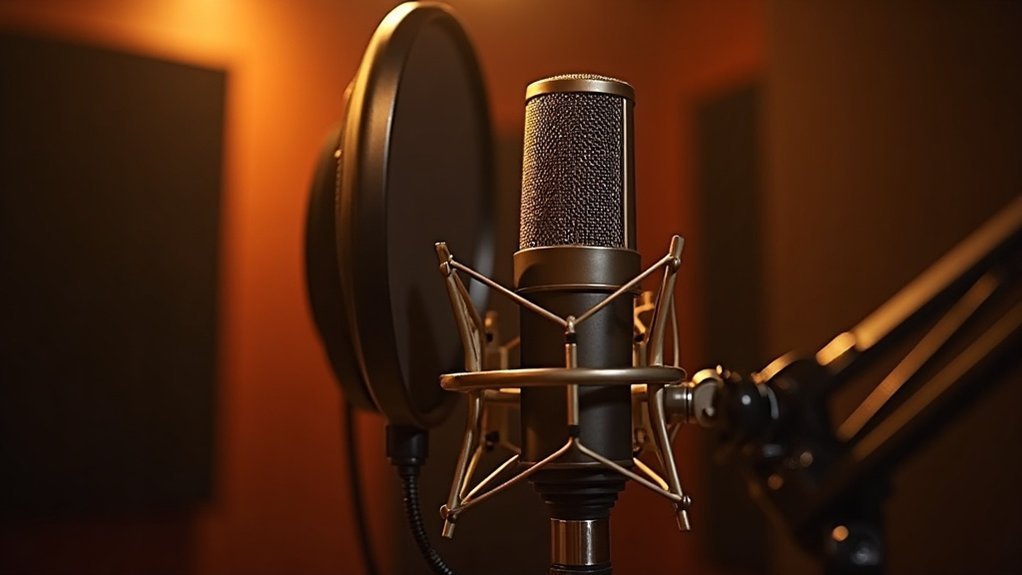

Dynamic microphones are durable and excellent for live performances, requiring no external power, making them great for noisy environments. These microphones handle high sound pressure levels well but have lower sensitivity. Conversely, condenser microphones, known for their ability to capture subtle details with higher sensitivity, require phantom power. They’re perfect for studio settings but can pick up unwanted sounds. Understanding the difference between condenser and dynamic microphones is crucial when choosing the right tool for your needs. Each type has unique applications and considerations, so let’s delve deeper into their features and how they can enhance your podcasting, streaming, or recording experience.
Key Takeaways
- Dynamic microphones are durable and ideal for live performances, while condenser microphones excel in studio settings for capturing detailed audio.
- Condenser microphones require phantom power, whereas dynamic microphones do not, simplifying setups for live use.
- Dynamic microphones handle high sound pressure levels (SPL) well, making them suitable for loud environments; condensers have lower SPL handling.
- Condenser microphones offer higher sensitivity, making them better for quiet sounds, while dynamics are great for rejecting background noise.
- The choice between microphones depends on factors like environment, sound source, durability, and desired sound quality.
Fundamentals of Dynamic and Condenser Microphones: Key Differences
The design of dynamic microphones is simpler, featuring fewer components, while condenser microphones incorporate active electronics for enhanced capabilities. This durability factor makes dynamic microphones particularly suitable for live performances, where they can withstand rough handling. Additionally, dynamic microphones are often perceived to reject background noise better, making them favorable in environments with a lot of ambient sound.
Historically, these fundamental differences significantly influence sound recording applications; dynamic mics thrive in high-SPL environments, making them ideal for live performances, while condensers excel at capturing subtle details with higher sensitivity, perfect for studio settings. Their performance in podcasting scenarios also showcases their versatility beyond just live use.
Recognizing these key differences in the fundamentals of dynamic and condenser microphones helps you select the right microphone for your needs. This knowledge ensures your recordings resonate with clarity and fidelity, rooted in the rich history of microphone technology.
Whether you’re a creator, gamer, musician, or professional, understanding these distinctions will guide you in making informed choices for podcasting, streaming, and recording.
Dynamic Microphones: Key Features and Benefits
Dynamic microphones offer a range of key features and benefits that cater specifically to various audio applications. Their robust construction guarantees durability, making them ideal for live performances and outdoor settings. Additionally, their resistance to moisture makes them highly suitable for unpredictable weather conditions, enhancing their versatility. Moreover, dynamic microphones are characterized as pressure microphones, which allow them to effectively capture sound in diverse environments.
When considering the key features and benefits of dynamic microphones, you’ll appreciate how they handle high sound pressure levels without distortion, making them perfect for loud vocals and amplified instruments. They excel in noisy environments, thanks to their low sensitivity, which minimizes unwanted background noise—a significant advantage for creators and gamers alike. Furthermore, dynamic microphones are designed to function without external power, simplifying setups for podcasting, streaming, and recording.
With their affordability and versatility, the key features and benefits of dynamic microphones make them a go-to choice for many, whether in live shows, podcasting, or streaming.
Condenser Microphones: Principles and Advantages
Condenser microphones excel in sensitivity and frequency response, making them ideal for capturing nuanced audio details. Their design relies on electrostatic principles, requiring external power to maintain peak performance. This combination results in a wider frequency range and improved transient response compared to dynamic microphones. The heart of the mic, the capsule design, plays a crucial role in achieving high fidelity audio reproduction. Additionally, the need for phantom power distinguishes them from dynamic microphones, which operate passively. This electrostatic mechanism enables the condenser microphone to accurately reproduce sound across various frequencies, enhancing overall audio quality.
Sensitivity and Frequency Response
In a sensitivity comparison, condensers typically excel with values around 20–35 mV/Pa, markedly higher than dynamic mics at 1–2 mV/Pa. This higher sensitivity allows for capturing quieter sounds with less gain from the preamp. Additionally, condenser microphones feature a smooth frequency response across a broad range, often from 20 Hz to 20 kHz. This means they reproduce sound more evenly, capturing subtle details and enhancing clarity, making them ideal for vocals and acoustic instruments in studio settings. Understanding the impact of sensitivity and frequency response is crucial for creators, gamers, and musicians seeking the best performance from their microphones. Moreover, their sensitivity levels enable them to excel in capturing nuances that dynamic mics might miss. Condenser microphones are often preferred in professional settings due to their broad frequency range, which allows for more accurate sound reproduction.
When considering sensitivity and frequency response, it’s crucial to understand how these features impact your recording experience, especially for creators, gamers, and musicians seeking the best performance from their microphones.
Power Requirements and Design
- Power Source: Condenser microphones require an external DC voltage, typically phantom power at 48 V, to function optimally.
- Operating Voltages: A voltage range from 12–48 V is standard for achieving full performance in these microphones. This is crucial because inadequate voltage can lead to suboptimal performance and reduced audio quality.
- Electrical Design: These microphones feature high capsule output impedance and internal impedance conversion amplifiers, which are crucial for sound quality.
- Power Delivery: Phantom power not only provides the necessary voltage but also allows simultaneous audio transmission and powering, making it a vital component of their design. Additionally, many condenser mics include a battery holder for power, enhancing their versatility in various setups. Moreover, the high sensitivity of condenser microphones enables them to capture intricate audio details, making them ideal for professional recording environments.
Understanding these power requirements and design features is key for creators, gamers, musicians, and professionals looking to get the most out of their condenser microphones for podcasting, streaming, gaming, and recording.
Comparing Sensitivity and SPL Handling: Dynamic vs. Condenser
When comparing sensitivity and SPL handling between dynamic and condenser microphones, you’ll notice distinct characteristics that influence their applications.
Condenser mics, with higher sensitivity, excel in capturing quiet sounds and fine details, while dynamic mics are better suited for high-SPL sources and noisy environments. Understanding these differences helps you choose the right microphone for specific recording situations. Additionally, dynamic microphones are often preferred for live performances due to their durability and ability to reject background noise.
Sensitivity Levels Explained
- Dynamic Sensitivity: Typically 1–4 mV/Pa (–60 to –48 dB re 1 V/Pa), dynamic microphones are ideal for loud sources, making them a great choice for certain recording environments.
- Condenser Sensitivity: Usually 8–32 mV/Pa (–42 to –30 dB re 1 V/Pa), condenser microphones excel at capturing quieter sources, highlighting the importance of understanding sensitivity levels in microphones for nuanced recordings.
- Output Levels: Condensers generate stronger microphone output, requiring less preamp gain, which is crucial for optimizing your audio setup.
- Detail Capture: The higher sensitivity found in condensers allows them to capture subtle nuances much better than dynamic microphones, reinforcing why sensitivity levels in microphones should be a key consideration in your choice.
Additionally, understanding microphone sensitivity is vital for selecting the right type to suit your recording environment and goals.
Choosing the right microphone based on these sensitivity levels directly impacts your recording quality, whether you’re podcasting, streaming, or creating music.
Understanding sensitivity levels in microphones will empower you to select the best gear for your needs and enhance your overall sound experience.
SPL Handling Capacities
Sensitivity levels play a significant role in microphone selection, particularly when considering SPL handling capacities. Understanding SPL handling capacities is essential for anyone in need of reliable audio equipment.
Dynamic microphones typically handle over 150 dB SPL, thanks to diaphragm excursion, making them ideal for high-pressure environments. In contrast, condenser mics usually top out around 130-140 dB SPL, with SPL limitations often tied to their internal electronics. While dynamics exhibit smooth overload behavior, condensers can suffer from sharp electrical clipping, leading to unpleasant distortion.
For high SPL situations, low-sensitivity designs, like dynamics, minimize the risk of overloading preamps, ensuring clearer sound reproduction even at extreme levels. Additionally, the diaphragm excursion in dynamic microphones contributes significantly to their ability to handle high sound pressure levels effectively.
When evaluating SPL handling capacities, it’s crucial to choose wisely based on your needs—especially if you’re a creator, gamer, or musician looking for the best performance from your microphone.
Application Suitability Differences
Understanding these application suitability differences helps you choose the right mic for your specific needs, whether you’re a creator, gamer, musician, or professional. Additionally, knowing whether dynamic microphones are right for you can significantly enhance your live performances and overall sound quality.
Directionality and Noise Rejection: Which Microphone to Choose?
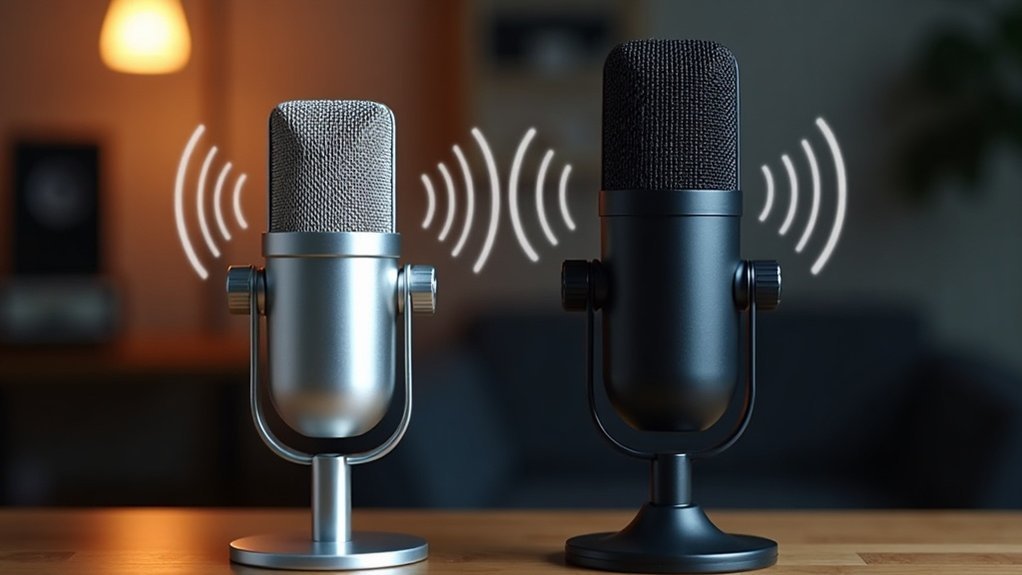
How do you decide between a dynamic and a condenser microphone when it comes to directionality and noise rejection? Your microphone selection hinges on polar patterns, not just type.
When considering directionality and noise rejection, a dynamic cardioid microphone excels in noisy environments, effectively managing background noise due to its lower sensitivity and focused pickup.
Conversely, while condenser microphones capture more detail, they may inadvertently pick up unwanted sounds in untreated spaces. If you choose a condenser mic, ensure it has an appropriate directional pattern for optimal noise rejection.
Ultimately, your decision should reflect your recording environment and the specific noise challenges you face, keeping in mind the importance of directionality and noise rejection when selecting the right microphone. Additionally, understanding polar patterns can significantly influence your choice between microphone types.
Durability and Use Cases of Each Microphone
- Dynamic Microphones: With their rugged construction, dynamic microphones are ideal for live performances and touring, making them a preferred choice for creators and musicians on the go.
- Condenser Microphones: Best suited for studio use, condenser microphones require careful handling and controlled environments to maintain their longevity.
- Humidity Resistance: In terms of durability, dynamics excel in outdoor settings, while condensers falter in damp conditions, highlighting the importance of considering durability and use cases of each microphone for different environments.
- SPL Handling: Dynamics can withstand high sound pressure levels without damage, unlike sensitive condensers, making them an excellent option for podcasting and streaming situations where loud sounds may occur.
- Large Diaphragm Design: Many condenser microphones feature a large diaphragm design, which enhances their sensitivity and frequency response, making them particularly effective for capturing vocals and acoustic instruments.
Choosing wisely, with a focus on the durability and use cases of each microphone, ensures your mic meets your specific needs, enhancing your audio experience in any setting.
Best Applications for Dynamic and Condenser Microphones
Selecting the right microphone for specific applications can greatly enhance audio quality, especially when considering the best applications for dynamic and condenser microphones. Dynamic microphones excel in live performance, effectively handling loud sources and aggressive vocal styles while minimizing background noise. They’re ideal for gaming setups and podcasting trends, where noise reduction is a priority. On the other hand, condenser microphones shine in studio techniques, capturing the nuances of vocals and acoustic instruments, making them perfect for detailed recordings. Additionally, many podcasters find that a condenser microphone can provide a richer sound profile, enhancing the listening experience.
| Application | Microphone Type | Key Features |
|---|---|---|
| Live Performance | Dynamic | High SPL handling, noise rejection |
| Podcasting | Dynamic | Off-axis rejection, warm tone |
| Studio Vocals | Condenser | High sensitivity, detailed sound |
| Instrument Recording | Condenser | Rich tonal capture, nuance |
Understanding the best applications for dynamic and condenser microphones can help creators and professionals make informed decisions, ensuring they select the right microphone type for their needs and enhance their overall audio experience.
How to Choose the Right Microphone for Your Needs?
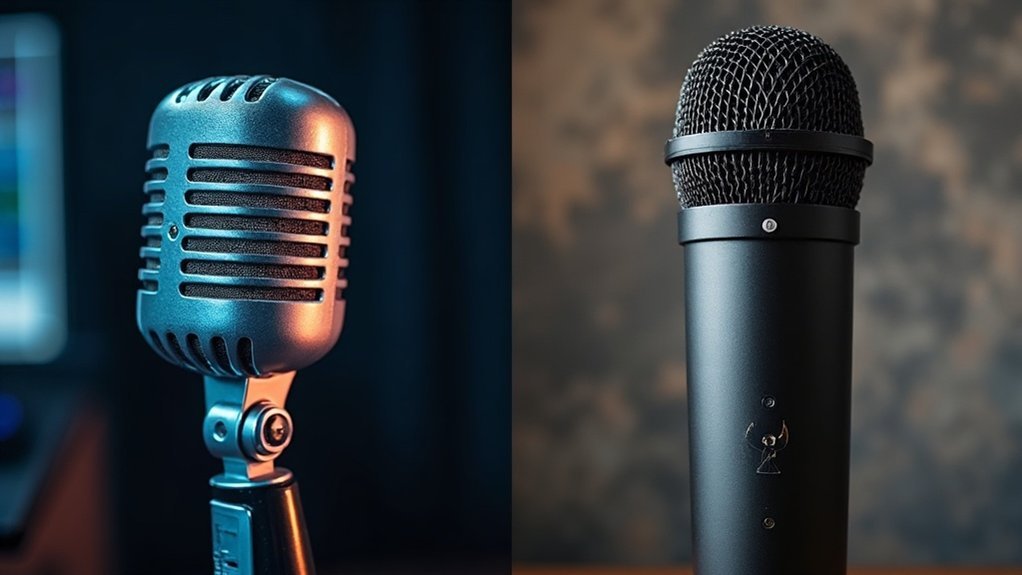
Choosing the right microphone for your needs is essential for achieving the best audio quality in your projects. When considering how to choose the right microphone for your needs, it’s crucial to understand the specific characteristics of sound sources and your intended recording goals. Here are some key factors to keep in mind:
- Sound Source: To effectively choose the right microphone for your needs, match the microphone sensitivity to your sound source. Use dynamic mics for capturing loud sounds and opt for condensers when you require detailed vocal recordings.
- Room Acoustics: When thinking about how to choose the right microphone for your needs, consider the acoustics of your recording environment. Dynamic microphones are typically better suited for untreated spaces, while condensers perform exceptionally well in controlled environments.
- Durability: If you’re focused on how to choose the right microphone for your needs, think about durability. Dynamic mics are designed for rugged use, whereas condensers can be more fragile and sensitive.
- Budget & Tone: Establish a budget that aligns with your goals. When you’re looking at how to choose the right microphone for your needs, prioritize tone accuracy, especially for studio setups and voiceover work. Additionally, consider the choice between USB and XLR microphones, as this can significantly impact your recording setup.
It’s all about balancing your costs with the quality you need.