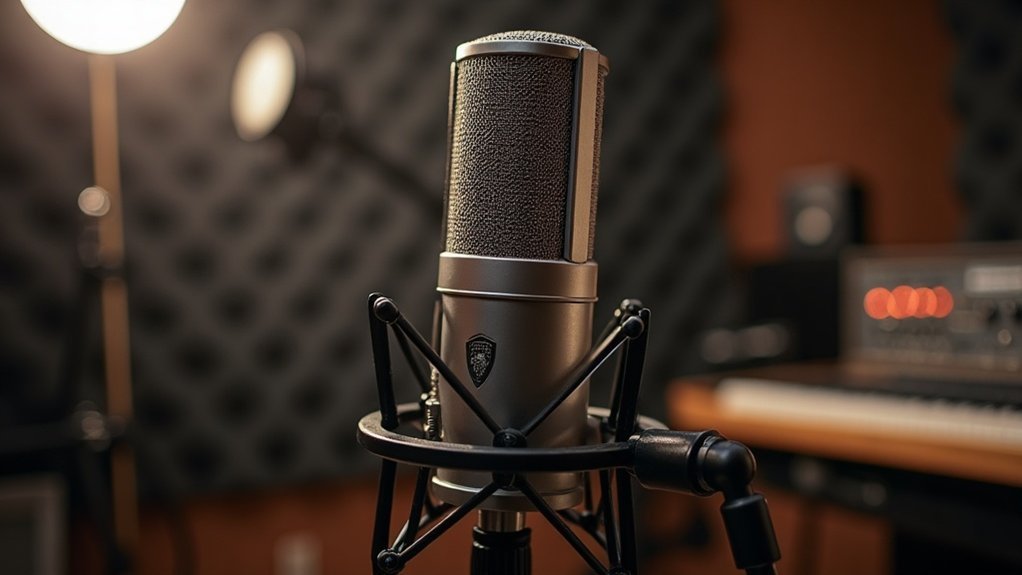
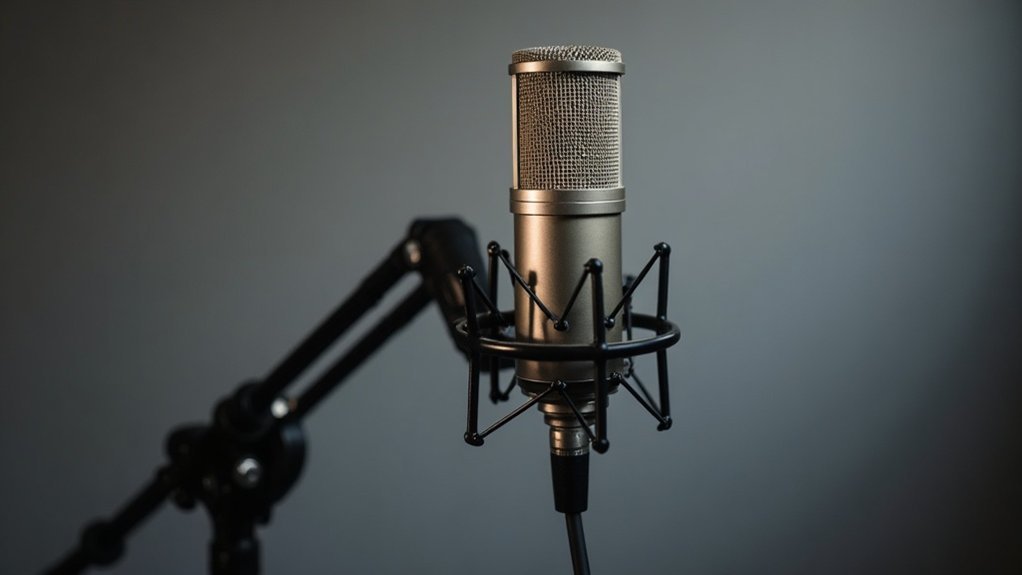
A small diaphragm condenser is a compact, pencil-shaped microphone with a lightweight diaphragm that converts sound into electrical signals through capacitive variation. When you’re evaluating what is a small diaphragm condenser for your recording setup, understanding its core mechanics becomes essential for making informed purchasing decisions. You’ll benefit from its superior transient response—the diaphragm’s reduced mass lets it move faster, capturing the precise leading edge of drum attacks and guitar pick articulation that larger condensers miss.
The definition of a small diaphragm condenser extends beyond its physical form; it encompasses the engineering that makes it indispensable for affordable, professional-quality recordings. Its consistent pickup pattern and extended high-frequency response deliver detailed audio across applications, whether you’re streaming, gaming, podcasting, or producing music. For creators and musicians seeking budget-friendly solutions without compromising quality, understanding small diaphragm condensers reveals why professionals at every stage of the buying journey choose them for drums, strings, and orchestral recordings. The small diaphragm condenser design principles demonstrate how compact doesn’t mean compromised—these microphones punch above their price point, making them ideal for home studios and content creators building their first recording setup.
Key Takeaways
- Small diaphragm condensers are compact, pencil-shaped microphones with superior transient response for detailed audio capture.
- They use a lightweight diaphragm and backplate separated by a plastic spacer to convert sound pressure into electrical signals.
- A bias voltage creates a variable capacitor that changes capacitance when sound deflects the diaphragm, producing voltage fluctuations.
- Their fast diaphragm movement preserves micro-dynamics and leading-edge transients, ideal for percussive and plucked instruments.
- They excel in drum recordings, orchestral work, and stereo applications while requiring neutral frequency response and low self-noise.
What Defines a Small Diaphragm Condenser
This diaphragm size directly influences microphone design, enabling compact, pencil-shaped bodies that excel at capturing detail. The smaller membrane’s reduced mass supports faster transient response and improved high-frequency capture. You’ll recognize these microphones by their slim profile and end-fired operation. Small diaphragm condensers are commonly used in recording studios, live sound, and broadcasting environments. Small diaphragm microphones offer consistent pickup patterns across frequencies, making them reliable tools for various recording applications. Unlike other microphone categorization methods, the diaphragm size remains the primary identifier for this specific type.
Small diaphragm condensers deliver compact, pencil-shaped design with superior transient response and high-frequency clarity for detailed capture.
For creators and musicians exploring affordable recording options, understanding what defines a small diaphragm condenser microphone helps you make informed purchasing decisions.
The defining characteristics of small diaphragm condensers—particularly that compact capsule—make them ideal for podcasting, streaming, and instrument recording without breaking your budget.
While manufacturers don’t always adhere to strict cutoffs, the small diaphragm remains the essential distinguishing feature that shapes both physical form and acoustic behavior, making it the cornerstone of small diaphragm condenser technology and performance across professional and home studio setups.
How the Capsule Converts Sound Into Electrical Signals
When you apply a bias voltage across the diaphragm and backplate, you establish a capacitor whose spacing changes as sound waves push the diaphragm inward and outward.
You’ll find that this mechanical motion directly alters the capacitance—moving closer increases it, moving farther decreases it—which converts acoustic energy into electrical variation.
That capacitance change produces a voltage fluctuation mirroring your original sound waveform, generating the raw signal your preamp then conditions for output. This extremely low mass diaphragm allows the capsule to track even the fastest transients with exceptional accuracy, capturing intricate details that dynamic microphones cannot reproduce. The internal preamplifier boosts this high-impedance signal for clarity and usable output levels. The capacitor design in condenser microphones enables superior frequency response compared to other microphone types because the thin diaphragm and backplate can respond more precisely to acoustic pressure changes across a wider range.
Diaphragm And Backplate
At the heart of every small diaphragm condenser microphone lies a deceptively simple structure: the diaphragm and backplate. These two parallel conductive surfaces are separated by a narrow air gap that forms your capsule’s transducer core. You’ll find the diaphragm—typically crafted from lightweight materials like mylar or aluminum—positioned as the movable element. The stationary backplate, machined from brass or similar conductive metals, remains fixed behind it.
Understanding how the diaphragm and backplate work together is crucial for creators and musicians selecting affordable microphones for recording and streaming. Sound waves drive the diaphragm’s minute vibrations, continuously varying the spacing between plates. This interaction between diaphragm and backplate design, often featuring precision perforations, controls damping and maintains consistent sensitivity across your vocal or instrument recordings. When the capacitor plates shift distance, this alters the capacitance and generates the electrical signals that become your audio. A plastic spacer maintains the necessary distance between these two critical components to prevent unwanted contact.
The backplate itself plays a critical role in the overall performance of your microphone. Its construction and positioning directly influence how the diaphragm responds to acoustic pressure. The diaphragm’s sensitivity to sound pressure depends on its tension and mass characteristics, which determine the microphone’s frequency response and dynamic range. For podcasters and professionals investing in budget-friendly recording solutions, recognizing quality diaphragm and backplate engineering helps distinguish microphones that deliver reliable performance.
You’re witnessing a capacitor in action, where the diaphragm and backplate configuration converts acoustic pressure into measurable electrical signals. This fundamental design principle remains consistent whether you’re upgrading your gaming setup, streaming content, or recording professional-grade audio on a budget.
Capacitance Change Detection
The diaphragm and backplate you’ve just examined don’t simply vibrate passively—they form a variable capacitor that translates acoustic energy into electrical signals through capacitance change detection. When sound pressure deflects your diaphragm, plate spacing changes, shifting capacitance inversely in a process fundamental to how condenser microphones achieve their renowned sensitivity for podcasting, streaming, and professional recording.
Under constant-charge biasing, this capacitance change produces proportional voltage swings across your capsule, enabling the precise signal conversion that creators and musicians depend on. The high-impedance bias network maintains relatively fixed charge at audio frequencies, allowing instantaneous voltage modulation through continuous capacitance detection. At lower frequencies around 20 Hz, the RC circuit time constant determines how quickly the system responds to capacitance shifts in your capsule design. The electret’s embedded charge maintains this constant-charge condition, sustaining the voltage-to-capacitance relationship essential for transduction fidelity.
Charge dynamics within your capsule create minute redistributions that downstream electronics amplify—this is where affordable condenser microphones deliver performance comparable to expensive studio alternatives. Condenser microphones are commonly used in professional settings because of their ability to capture detailed sound with high sensitivity and accuracy.
This faithful mapping of mechanical displacement into electrical variation—where output amplitude tracks both diaphragm motion and bias voltage—enables your condenser’s sensitive signal conversion for gaming commentary, voiceovers, and instrument recording. Understanding how capacitance change translates directly to output level helps you optimize microphone placement and gain settings during setup.
Whether you’re comparing budget-friendly options or fine-tuning your recording chain, recognizing that capacitance modulation is the core mechanism behind every condenser pickup’s responsiveness ensures you get the most out of your affordable microphone investment across every stage of your audio journey.
Electrical Signal Generation
Your small-diaphragm condenser’s capsule converts acoustic vibrations into electrical signals through a precisely engineered electrical signal generation sequence: a bias voltage establishes a static electric field across the diaphragm–backplate gap, sound pressure deflects the diaphragm, capacitance shifts inversely, and—under constant-charge conditions maintained by a high-value bias resistor—the capsule’s instantaneous voltage becomes proportional to diaphragm displacement. This AC voltage, superimposed on DC bias, emerges in the millivolt range. Your capsule construction’s high impedance means minimal current generates substantial voltage variations. This electrostatic charge mechanism is what fundamentally enables the conversion of mechanical vibrations into measurable electrical output without requiring electromagnetic coils. The low diaphragm mass of small-diaphragm condensers allows the capsule to capture transients and high frequencies with exceptional clarity and speed.
Understanding how your microphone generates these electrical signals is critical when selecting affordable options for podcasting, streaming, or gaming setups. Signal integrity depends entirely on this impedance-conversion stage buffering the fragile capsule output before downstream amplification transforms it into usable microphone-level audio. The quality of this signal generation directly impacts whether budget-friendly mics deliver professional results or require extensive post-processing.
| Stage | Function | Output |
|---|---|---|
| Capsule | Converts pressure to voltage (electrical signal generation begins here) | mV range |
| Impedance converter | Buffers high-Z signal, stabilizes electrical output | Low impedance |
| Amplification | Raises signal level to usable microphone standard | Microphone level |
When comparing microphones for your recording needs, pay close attention to how each manufacturer implements this electrical signal generation architecture—superior impedance conversion and buffering at this foundational stage often distinguishes premium budget mics from mediocre alternatives in real-world podcasting and streaming applications.
Why Transient Response Captures Detail Other Mics Miss
You’ll find that an SDC’s smaller diaphragm moves faster than an LDC’s, allowing it to track sudden acoustic events—like a drum stick’s impact or a guitar pick’s attack—with greater precision.
This faster diaphragm movement preserves the micro-dynamics and leading-edge shape of transients that slower microphones tend to smear, giving you clearer articulation and more natural detail in your recordings.
When you need to capture the exact character of percussive or plucked instruments, that speed advantage becomes audible.
Unlike dynamic microphones, which rely on inertia-dependent diaphragms, SDCs use capacitive technology that enables this responsive tracking of fast-moving sound waves.
Fast Diaphragm Movement Matters
Because sound arrives in waves of rapidly shifting pressure, a microphone’s ability to follow those changes determines how much detail it can capture. Fast diaphragm movement matters when you’re serious about capturing audio with precision and clarity.
You’ll find that diaphragm speed directly correlates with transient accuracy—the faster your diaphragm moves, the more faithfully it tracks the waveform’s attack and decay. Lower mass enables quicker response, letting you capture the precise timing information that slower microphones blur.
This principle of fast diaphragm movement matters most when you’re recording sources with sharp, energy-rich impulses: drums, cymbals, plucked strings, and piano.
Whether you’re a podcaster, streamer, gamer, or musician working with affordable microphones, understanding how fast diaphragm movement matters to transient response will transform your recordings.
You’ll hear the difference as enhanced clarity and articulation, revealing the nuance that distinguishes exceptional recordings from ordinary ones.
For creators investing in budget-friendly gear, recognizing that diaphragm movement speed directly impacts your final output helps you make smarter purchasing decisions and get the most from your microphone setup.
Capturing Percussive Attack Precision
The result: clearer separation between repeated hits, tighter articulation in rapid passages, and percussion that sits naturally in your mix without excessive EQ work.
Whether you’re streaming gaming content with background music, podcasting with sound effects, or recording professional music, capturing attack precision in percussion ensures your transients remain crisp and defined.
A microphone’s ability to respond quickly to these rapid sound vibrations depends on how effectively it captures the physical sound waves that make up each percussive moment.
That’s the practical advantage you’re leveraging—and it’s especially valuable when you’re working within a budget-conscious setup where your microphone’s transient response becomes your primary tool for achieving studio-quality percussive attack definition.
Preserving Natural Sound Details
You’ll notice three critical advantages that directly support preserving natural sound details:
- Extended high-frequency capture preserves harmonic overtones and air that establish authentic timbral identity across your entire dynamic range. For podcasters, musicians, and streamers, this means your voice or instruments retain their genuine character without artificial enhancement or reduction. Understanding how frequency response shapes these high-frequency characteristics ensures you select a microphone that captures the full spectrum of your sound.
- Neutral frequency response reveals midrange and presence-band nuances without masking, maintaining sound fidelity through minimal coloration. This commitment to preserving natural sound details ensures your recordings reflect what actually happened in the room—critical for gaming commentary, music production, and professional voiceover work.
- Reduced waveform overshoot eliminates time-smearing that degrades micro-dynamics and articulation clarity, ensuring every nuance of your performance survives the recording process intact.
This combination guarantees you’re recording genuine acoustic character rather than filtered approximations, delivering the transparent sound fidelity professionals demand.
Whether you’re a content creator investing in affordable microphones for the first time or upgrading your setup, understanding how to preserve natural sound details transforms your recordings from serviceable to exceptional—making this the core principle that should guide your microphone selection across podcasting, streaming, gaming, and recording applications.
Small vs. Large Diaphragm Condensers: Which Is Right for You?
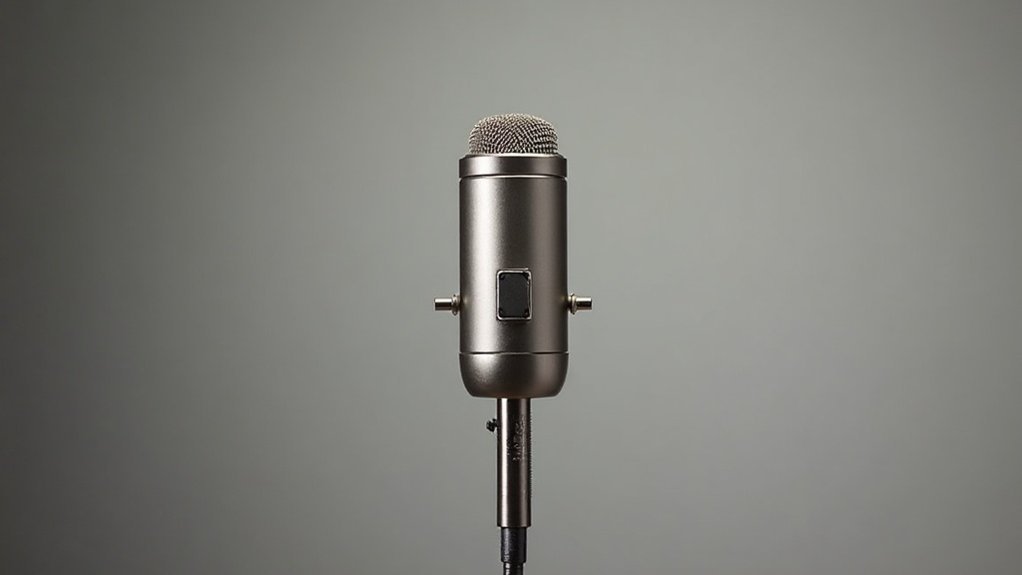
When choosing between small vs. large diaphragm condensers**, understanding their fundamental design differences is crucial for finding the right mic for your needs. Your decision hinges on your sound sources and recording environments**.
Small diaphragm condensers deliver faster transient response and consistent polar patterns, excelling with percussive instruments and stereo techniques. They capture extended high-frequency detail and preserve natural details in treated spaces, making them excellent for creators and musicians working in controlled environments.
Large diaphragm condensers offer higher sensitivity and lower self-noise, making them ideal for quiet vocal recordings and intimate sound sources. They provide warmer, more colored responses with presence peaks that add character in challenging environments—a key advantage for streamers and podcasters recording in less-than-perfect rooms. The larger diaphragm design of these microphones allows them to capture sound with greater sensitivity compared to their smaller counterparts.
The small vs. large diaphragm condenser comparison ultimately depends on your specific use case. For gaming streamers and podcasters on a budget, small diaphragm condensers preserve natural details when your recording space is treated.
Conversely, large diaphragm condensers excel at adding professional character to vocals and intimate recordings, even in less ideal acoustic conditions.
Consider your room acoustics and source material carefully. Whether you’re recording music, streaming gameplay, or capturing podcast dialogue, understanding these small and large diaphragm condenser differences ensures you select an affordable microphone that truly matches your creative needs across every stage of your recording journey.
Where Small Diaphragm Condensers Perform Best
Small diaphragm condensers excel at capturing fast transient sources because their lighter diaphragms respond more quickly to rapid sound pressure changes. Understanding where small diaphragm condensers perform best helps creators and musicians maximize their recording potential. You’ll find them indispensable for:
Small diaphragm condensers excel at capturing fast transients, making them indispensable for precise, detailed recordings across drums, acoustic instruments, and orchestral work.
- Drum recordings and percussion – preserving attack detail and articulation with accuracy large diaphragms can’t match. Small diaphragm condensers perform best in these high-impact scenarios where precision matters.
- Acoustic clarity on instruments – strings, piano, and plucked sources benefit from neutral, extended high-frequency response reaching up to 40 kHz. For affordable microphone solutions in this category, small diaphragm condensers consistently deliver professional results without breaking your budget.
- Stereo and orchestral work – their consistent off-axis pickup patterns reduce diffraction, ensuring natural imaging without coloration. When recording ensembles or spatial arrangements, small diaphragm condensers perform best across various microphone placements and room conditions.
Their tonal neutrality makes them your best choice when faithful reproduction matters more than character enhancement. When selecting microphones for your singing voice, understanding how different microphone types interact with vocal characteristics will help you achieve optimal results.
Whether you’re streaming, recording podcasts, or capturing live performances, learning where small diaphragm condensers perform best ensures you’re using the right tool for each application. This knowledge becomes invaluable across every stage of your buying journey and setup optimization.
How to Choose a Small Diaphragm Condenser for Your Setup
Prioritize neutral frequency response, low self-noise below 15 dB, and SPL handling above 130 dB for demanding microphone applications. Choose cardioid patterns for focused pickup, then verify your audio interface supplies stable 48V phantom power. Understanding how preamp gain quality impacts your signal chain ensures you’re capturing the cleanest possible audio from your condenser microphone.
Before finalizing your small diaphragm condenser choice, confirm preamp gain quality and evaluate physical compatibility with your mounting hardware.
Finally, assess build durability through verified user feedback rather than marketing claims alone—the kind of honest assessment that helps you understand what a small diaphragm condenser for your setup can realistically deliver in streaming, podcasting, gaming, and professional recording scenarios.