
A dynamic microphone works by converting sound waves into electrical signals through the principle of electromagnetic induction. When sound waves vibrate the diaphragm, this movement causes the attached voice coil to shift within a magnetic field, generating an electrical current. The strength of this current corresponds to the frequency and amplitude of the sound waves, ensuring accurate audio capture. With their rugged construction and lower sensitivity, dynamic microphones are particularly effective in noisy environments. If you’re interested in understanding how a dynamic microphone works and the components and advantages that set them apart, there’s much more to explore. These microphones are ideal for creators, gamers, and musicians looking for reliable performance in various settings.
Key Takeaways
- Dynamic microphones operate on electromagnetic induction, generating voltage from diaphragm movement in a magnetic field.
- Sound waves cause diaphragm vibrations, which move the voice coil and produce electrical signals.
- The internal transformer manages impedance and noise isolation for better audio quality.
- Their rugged construction allows for high sound pressure level handling, making them durable for various environments.
- Compared to condenser microphones, dynamic mics are less sensitive but effectively reduce background noise.
Understanding Electromagnetic Induction in Microphones
Understanding electromagnetic induction in microphones is essential for grasping how dynamic microphones operate, as it forms the backbone of their functionality. At the heart of this process lies the induction principles of electromagnetic theory, where voltage generates when a conductor experiences changing magnetic flux.
In dynamic microphones, a stationary magnetic field interacts with a moving coil or ribbon, inducing electromotive force. This interaction relies on the relative motion between the conductor and magnetic field, governed by Faraday’s law. The design of these microphones, whether moving-coil or ribbon, effectively utilizes these principles to convert mechanical motion into electrical signals, ensuring fidelity in sound reproduction. Moreover, the rate of change of magnetic flux is crucial in determining the strength of the induced voltage, which directly impacts sound quality. Additionally, the use of inductors in sound systems further enhances the overall audio quality by improving signal transmission. Dynamic microphones are particularly advantageous because they don’t require external power, making them ideal for various applications.
By understanding electromagnetic induction in microphones, creators, gamers, and musicians can appreciate the technology that powers their audio gear.
Whether you’re podcasting, streaming, or recording, knowing how electromagnetic induction works in dynamic microphones helps you choose the right equipment. This knowledge not only enhances your understanding but also guides you in finding affordable microphones that deliver outstanding performance.
How Do Dynamic Microphones Turn Sound Into Electrical Signals?
As sound waves reach a dynamic microphone, they initiate a process that transforms acoustic energy into electrical signals. This process, fundamental to how dynamic microphones turn sound into electrical signals, begins with diaphragm movement, where pressure variations push and pull the diaphragm, generating mechanical vibrations. These vibrations drive a voice coil within a magnetic field, inducing an electromotive force.
- The diaphragm’s motion accurately reflects sound frequency and amplitude.
- Greater diaphragm displacement results in a stronger output signal.
- This transduction process is essential for capturing sound fidelity. Additionally, dynamic microphones typically have a resistance of around 200 Ohms, which affects their performance in various applications. Dynamic microphones are often characterized as pressure microphones, making them suitable for various environments. They are particularly effective in live settings, where background noise rejection is crucial.
Through this intricate mechanism, dynamic microphones effectively convert sound into a usable electrical signal, ensuring clarity in audio reproduction.
Understanding how dynamic microphones turn sound into electrical signals is crucial for creators, musicians, and professionals seeking high-quality audio in their projects.
Key Components That Make Up a Dynamic Microphone
In a dynamic microphone, the diaphragm and voice coil form the primary transducer mechanism, converting sound waves into electrical signals. The configuration of the permanent magnet creates a stable magnetic field vital for this process. Additionally, the internal transformer plays an important role in managing impedance and ensuring efficient signal output. This design allows for dynamic microphone operation to effectively capture a wide range of vocal nuances. The interaction between the soundwaves and diaphragm is crucial for accurate sound reproduction. Unlike large diaphragm condenser microphones, dynamic microphones are often preferred for live sound applications due to their durability and feedback rejection.
Diaphragm and Voice Coil
The diaphragm and voice coil are essential components that enable a dynamic microphone to capture sound accurately, making them crucial for creators, gamers, musicians, and professionals alike.
- Diaphragm materials like Mylar and lightweight metals minimize mass for better sensitivity, enhancing the microphone’s performance in various applications. Additionally, condenser microphones utilize different principles of sound capture, offering unique characteristics that can complement dynamic models.
- Coil geometry affects the microphone’s impedance and sensitivity, optimizing audio output for podcasting, streaming, and recording purposes.
Together, the diaphragm and voice coil convert acoustic waves into electrical signals, preserving audio integrity for a wide range of uses. Additionally, dynamic microphones are designed with a directional design that allows for sound capture primarily from the front, making them ideal for noisy environments.
The diaphragm vibrates in response to sound pressure, while the voice coil moves through a magnetic field, generating an electrical voltage. This interaction transforms sound energy into a mirrored audio output, reinforcing the importance of the diaphragm and voice coil as critical electromechanical elements in dynamic microphones.
Understanding these components is essential for anyone looking to get the most out of affordable microphones in their creative endeavors. Additionally, dynamic microphones are known for their robustness and moisture resistance, making them ideal for various environments.
Permanent Magnet Configuration
The strategic placement of the magnet and soft iron pole pieces work together to concentrate flux, forming a narrow air gap where the coil moves freely. This thoughtful design enhances flux density, improving sensitivity and output crucial for podcasting, streaming, and recording. Additionally, dynamic microphones became popular in the late 1930s for live performances, showcasing their effectiveness in various settings. This design allows for a strong electromagnetic induction that is essential for capturing sound with clarity.
The radial magnetic field ensures that coil motion effectively interacts with magnetic lines, generating voltage without the need for external power. Proper alignment of the gap and controlled flux paths are indispensable for predictable induction, making the permanent magnet configuration a core component in the electromechanical conversion process of microphones. The conversion process involves the transformation of sound waves into electrical signals, which is crucial for accurate recordings.
This configuration ultimately supports creators, musicians, and professionals in achieving high-quality audio capture.
Internal Transformer Role
- Providing output isolation to reduce noise and ground-loop hum is essential for achieving a clean audio signal.
- Supporting balanced output for effective noise rejection during transmission further enhances audio clarity.
- Enhancing cable robustness ensures stable operation over long distances, which is crucial for various audio applications.
Through these transformer functions, you achieve a stronger output signal while minimizing distortion characteristics, making your dynamic microphone an essential tool in professional audio environments.
By focusing on *internal transformer roles*, you can optimize your microphone’s performance for podcasting, streaming, gaming, and recording.
This attention to the internal transformer role not only elevates your audio quality but also ensures that you maximize your investment in affordable microphones. Additionally, understanding the role of preamps in the signal chain can further improve your overall audio setup.
Key Performance Traits of Dynamic Microphones
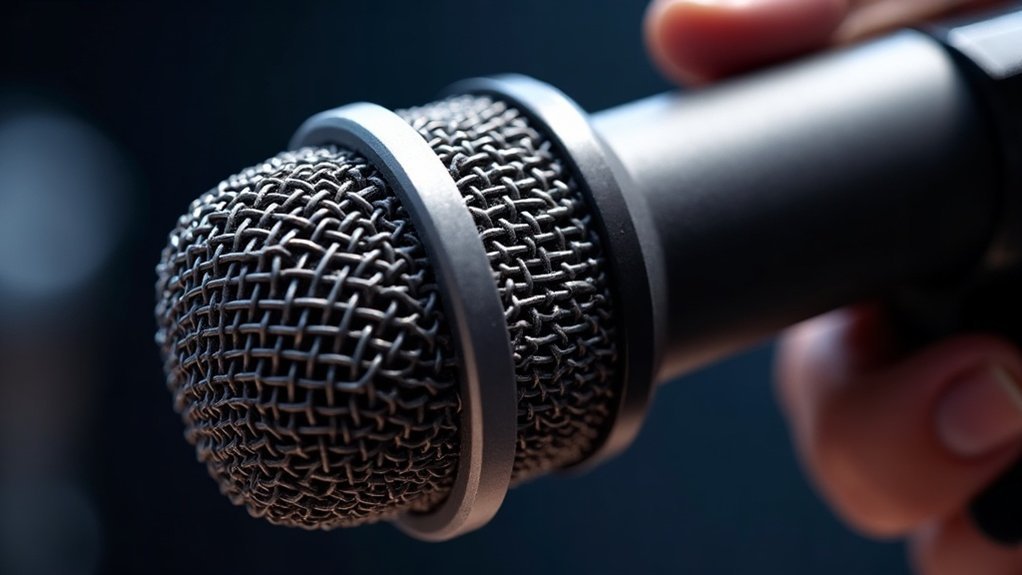
Dynamic microphones excel in various performance traits that make them ideal for live sound applications. Their key performance characteristics include lower sensitivity, which minimizes room noise, and impressive high-SPL handling, perfect for loud sources. Additionally, these microphones feature durable designs that resist environmental stress, ensuring they can withstand the rigors of live performances. Dynamic microphones are particularly favored for their robust construction, which contributes to their longevity in demanding settings.
| Trait | Impact |
|---|---|
| Lower Sensitivity | Reduces background noise |
| High-SPL Handling | Supports loud sound sources |
| Directionality | Enhances source isolation |
| Rugged Construction | Guarantees long-lasting use |
The key performance traits of dynamic microphones truly shine in demanding environments, making them a reliable choice for performers like you. With their ability to handle high sound pressure levels and reduce unwanted background noise, dynamic microphones are an excellent option for creators, gamers, and musicians looking for quality sound without breaking the bank. Whether you’re podcasting, streaming, or recording, these microphones will help you get the most out of your audio experience.
Advantages of Dynamic Microphones Across Different Settings
While considering the advantages of dynamic microphones across different settings, you’ll find they excel in both live and recorded environments. Their robust design makes them ideal for:
- High SPL handling, perfect for loud instruments in live performance.
- Directional pickup, which minimizes handling noise and ambient interference in podcasting applications.
- Cost-effective, providing budget options for studio recording and outdoor recording alike.
These features guarantee reliable performance, whether you’re on stage, in a home studio, or capturing sound outdoors.
The benefits of dynamic microphones make them a versatile and durable choice for various audio needs, ensuring creators, gamers, and musicians can achieve high-quality sound without breaking the bank. Additionally, their suitability for singing further enhances their value for vocalists.
Dynamic microphones offer versatility and durability, empowering creators, gamers, and musicians to achieve high-quality sound affordably.
Embracing the strengths of dynamic microphones can enhance your audio projects, whether you’re streaming, recording, or performing live.
Comparing Dynamic Microphones With Other Types
When comparing dynamic microphones with condensers and ribbons, you’ll notice distinct differences in their operating principles and performance characteristics.
Dynamic microphones rely on moving-coil electromagnetic induction, while condensers operate on electrostatic principles, leading to variations in sensitivity and frequency response.
Ribbon microphones, though more fragile, provide a unique sound profile, contrasting with the robustness and simplicity of dynamic designs. Additionally, microphones capture sound through various mechanisms, affecting their suitability for different applications.
Dynamic Versus Condenser Microphones
Here are key points to evaluate regarding dynamic versus condenser microphones:
- Transducer Mechanism: Dynamic microphones utilize electromagnetic induction, while condenser microphones rely on variable capacitance to capture sound.
- Power Requirements: Dynamic microphones are passive and require no external power, whereas condenser microphones need phantom power or batteries to operate effectively.
- Sound Quality: Condenser microphones capture a wider frequency range, offering greater detail and nuance; dynamic microphones excel in loud environments, making them ideal for certain applications.
Each type has its unique microphone applications, which significantly impact sound quality. Notably, condenser microphones cannot function without phantom power, which is essential for their operation.
Whether you prioritize durability, sensitivity, or tonal character, understanding the distinctions between dynamic microphones and condenser microphones helps you choose the right microphone for your needs.
Ribbon Microphones Overview
Ribbon microphones, often classified as a unique type of dynamic microphone, utilize electromagnetic induction to capture sound through a thin, corrugated ribbon suspended in a magnetic field. This distinctive design allows ribbon microphones to achieve a figure-8 polar pattern, providing a natural off-axis response and excellent rejection of unwanted noise.
Ideal for applications such as brass, woodwinds, and vocals, ribbon microphones deliver a warm, realistic sound that enhances recordings with rich midrange tones. Additionally, their distinctive design contributes to the unique tonal characteristics that many audio professionals seek.
However, it’s important to note the mechanical fragility of these ribbon microphones, which demands careful handling. Overall, ribbon microphones stand out for their distinct sonic character and versatility, making them a valued choice in both studio and live sound environments.
Whether you’re a musician, podcaster, or gamer, understanding the benefits of ribbon microphones can help you make informed decisions when selecting the right microphone for your needs.