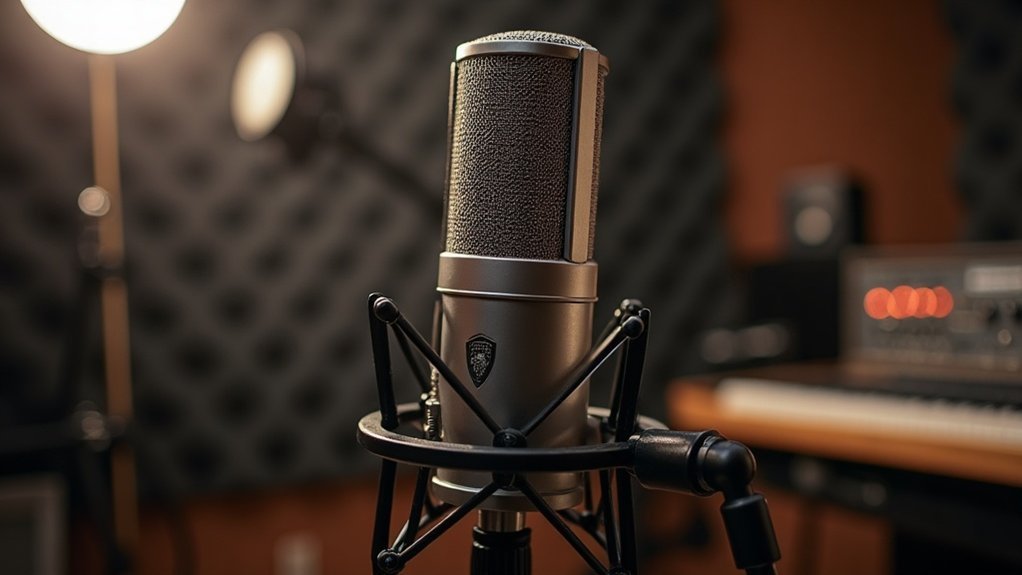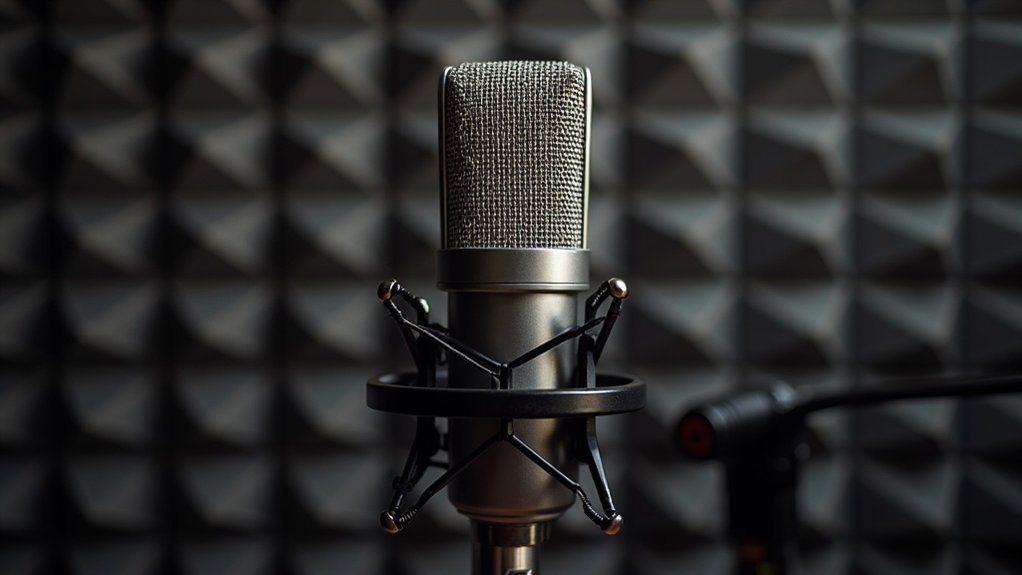

A condenser microphone works by converting sound waves into electrical signals through its diaphragm. When sound hits the diaphragm, it moves, causing pressure variations that change capacitance between the diaphragm and backplate. This movement creates low-level voltage changes that mirror the original sound waveform, which is crucial for achieving high-quality audio. An internal FET preamplifier boosts these signals, making them suitable for further processing, whether for podcasting, streaming, or recording.
By understanding how a condenser microphone works, you can appreciate the intricacies of its design and performance, enhancing your ability to choose the right mic for your needs. The interplay between the diaphragm and backplate is vital in capturing sound accurately, making these microphones a popular choice among creators, gamers, and musicians alike. Dive deeper into the mechanics of how condenser microphones function to maximize your microphone’s potential in your creative projects.
Key Takeaways
- Condenser microphones convert sound waves into electrical signals via diaphragm movement, which alters capacitance between the diaphragm and the backplate.
- The diaphragm’s displacement creates voltage changes that mirror the original sound waveform, producing a low-level electrical output.
- A FET preamplifier amplifies the weak electrical signal, converting high impedance to low impedance for better audio quality and signal integrity.
- Phantom power, typically 48 V DC, is required to operate condenser microphones, supplying necessary voltage for signal processing.
- Condenser microphones excel at capturing detail and clarity, making them ideal for applications like podcasting and studio recording.
How a Condenser Microphone Converts Sound Into Electrical Signals
When sound waves hit a condenser microphone, they create pressure variations that cause the diaphragm to move in response. This mechanical displacement reflects the sound pressure, with larger excursions for louder sounds.
The diaphragm and backplate form a variable capacitor, where the distance between them changes with diaphragm movement. This modulation alters capacitance, leading to voltage changes due to a bias voltage supplied across the plates. These fluctuations generate a low-level electrical signal that mirrors the original sound waveform, illustrating how a condenser microphone converts sound into electrical signals. The heart of the mic is the capsule, which plays a vital role in this conversion process. The capsule functions as a capacitor with conductive plates, allowing it to effectively translate sound into electrical changes. Additionally, condenser microphones require phantom power to operate, supplying the necessary voltage to the capsule.
An internal preamplifier then converts this high-impedance signal into a usable low-impedance output, enabling effective electrical conversion for audio applications.
Understanding this process is crucial for creators, gamers, and musicians who rely on condenser microphones for podcasting, streaming, and recording, as it highlights the significance of how these microphones transform sound into electrical signals.
What’s Inside a Condenser Microphone?
Furthermore, the common uses of condenser microphones in studios and live settings exemplify their versatility and importance in the audio industry. Additionally, microphone shielding protects the internal assembly from interference, further ensuring clear sound capture. This construction is crucial because it allows for superior sound quality, making every recording experience exceptional and invaluable for anyone looking to enhance their audio projects.
The Role of Pressure Variations in Sound Capture
In a condenser microphone, sound waves create pressure variations that directly impact the diaphragm’s movement. As these pressure changes occur, the diaphragm responds by bending, which alters the capacitance between it and the backplate. This process transforms sound pressure into an electrical signal, accurately reflecting the original waveform. Measuring sound pressures is crucial for understanding how well these microphones capture various acoustic signals. The microphone’s high sensitivity allows it to detect even the faintest sounds, making it an essential tool in professional audio recording. Additionally, large diaphragm condensers are particularly valued for their ability to capture vocal nuances that smaller microphones might miss.
Sound Wave Mechanics
As sound wave mechanics dictate, sound waves traveling through the air create alternating pressure variations that are essential for effective sound capture. These pressure waveforms directly influence how microphones operate, allowing them to transform sound wave propagation into electrical signals.
- Sound waves consist of regions of compression and rarefaction, vital in understanding sound wave mechanics.
- The microphone detects instantaneous local air pressure changes, showcasing the principles of sound wave mechanics in action. This process involves the conversion of acoustic energy into electrical energy, which is fundamental to microphone function.
- Larger pressure swings yield stronger electrical outputs, further illustrating the importance of sound wave mechanics. Amplitude is closely related to perceived loudness, making it a key factor in how microphones capture sound intensity.
Understanding these mechanics helps you appreciate how microphones accurately reproduce intricate sound details by measuring acoustic pressure variations, reflecting the true essence of what you hear in any audio experience.
Mastering sound wave mechanics is crucial for creators, gamers, musicians, and professionals seeking to optimize their audio quality through effective microphone use.
Diaphragm Movement Response
While sound waves create pressure variations in the air, the diaphragm movement response in a condenser microphone dynamically reacts to these changes, translating them into electrical signals. This motion is essential for accurately capturing sound and is influenced by the microphone capsule, which houses the diaphragm.
| Aspect | Description |
|---|---|
| Diaphragm Dynamics | Flexes in response to pressure fluctuations |
| Movement Type | Displacement, influenced by waveform |
| Sensitivity | Proportional to diaphragm deflection |
| Directionality | Affected by pressure differences |
The diaphragm’s position directly correlates with local pressure, ensuring that each sound wave is transformed into a precise electrical output. Understanding diaphragm movement response is crucial for creators, gamers, musicians, and professionals who rely on affordable microphones for podcasting, streaming, gaming, and recording. By grasping this concept, you can make informed decisions about the best microphones to enhance your audio experience. Additionally, diaphragm resonance can significantly affect frequency response characteristics, influencing the overall sound quality captured by the microphone. The use of a shallow dish-shaped electrode can further improve sensitivity and reduce harmonic distortion, leading to clearer sound reproduction.
Capacitance Variation Effects
- Higher pressure compresses the gap, increasing capacitance.
- Lower pressure expands the gap, decreasing capacitance.
- The resulting voltage swings accurately reflect sound pressure variations.
These dynamics ensure that even small changes in pressure yield significant voltage outputs, enhancing sensitivity and fidelity in audio capture. The incorporation of tube electronics in tube condenser microphones further enriches the audio quality by adding harmonic saturation to the signal. Additionally, without phantom power, many condenser microphones will not operate effectively, limiting their performance.
By comprehensively understanding the effects of capacitance variation, creators, musicians, and gamers can better utilize their microphones for podcasting, streaming, and recording.
This insight into capacitance variation effects can significantly improve audio quality, making it essential for professionals seeking optimal performance from their equipment.
Power Requirements for Microphones
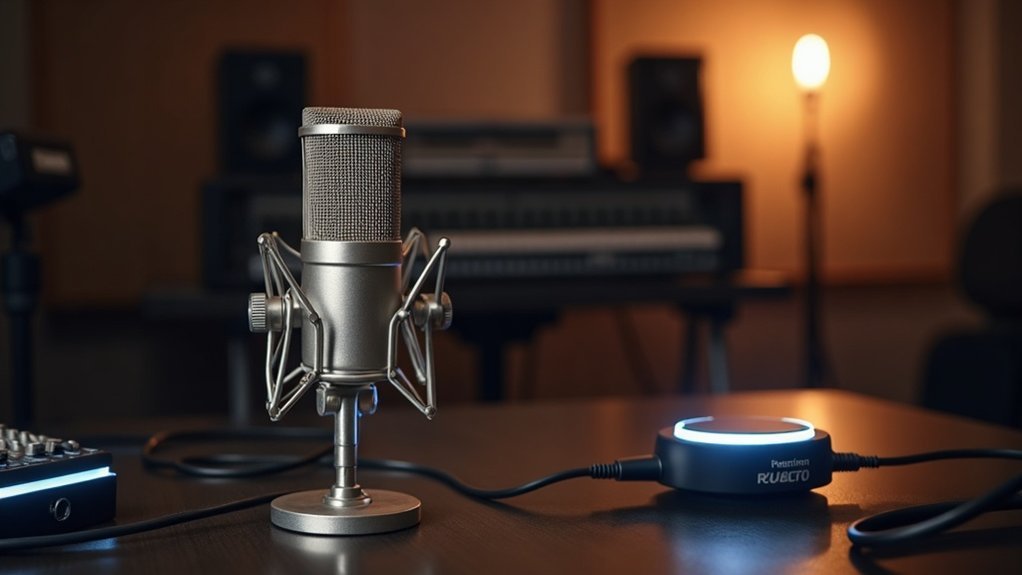
Microphones require specific power to operate effectively, particularly condenser types that rely on phantom power to function. Understanding the power requirements for microphones is crucial for anyone involved in podcasting, streaming, gaming, or recording.
Standard studio condensers typically need 48 V DC, drawing around 0.5–4 mA. Confirming your power supply matches the microphone’s specifications is vital for performance and ensuring microphone compatibility.
Supplying less than the required voltage can lead to increased self-noise and reduced headroom, affecting the overall audio quality. Most professional models are designed to work efficiently at 48 V, while electret capsules function on lower voltages around 1–9 V.
Phantom power is essential for condenser microphones to operate at their optimal level, enhancing the clarity and richness of recorded sound.
Always check manufacturer datasheets to avoid performance degradation and guarantee your setup’s reliability when considering the power requirements for microphones. This attention to detail will help creators, gamers, and musicians maximize their microphone performance for the best results in any recording environment.
How Signal Amplification Works in Condenser Microphones
In a condenser microphone, the raw signal from the capsule is characterized by low voltage and high impedance, making it susceptible to noise.
You’ll find that a FET preamplifier plays an important role by converting this high impedance signal to a lower one, ensuring efficient transmission. Proper signal conditioning is essential to maintain clarity and fidelity as the weak signal is amplified for practical use. Additionally, the use of preamps in signal chains helps further reduce noise and enhance the overall quality of the audio output.
Raw Signal Characteristics
Key aspects of these raw signal characteristics include:
- High output impedance (hundreds of megaohms), necessitating high-input resistance electronics for optimal performance.
- Low energy storage, leading to a high voltage output but extremely low current, which is essential for capturing detailed sound.
- Sensitivity typically around 20–35 mV/Pa, which enhances noise performance by reducing the need for excessive gain from external preamps.
This combination ensures that the voltage signal from the condenser microphone effectively captures sound while preserving high-frequency detail and minimizing distortion. Additionally, condenser microphones often require phantom power to operate, making them compatible with various audio interfaces and mixing consoles.
Understanding the raw signal characteristics of a condenser microphone can significantly enhance your recording quality, making it an essential consideration for creators, gamers, and musicians alike.
Role of FET Preamplifier
While understanding how a condenser microphone operates, recognizing the role of a FET preamplifier is essential for effective signal amplification. The FET preamp functions as an impedance converter, translating the high output impedance of the capsule into a low-impedance signal suitable for audio equipment. This impedance matching minimizes signal loss and enhances voltage transfer.
Utilizing the principles of FET operation, the preamp boosts the weak signal from the capsule, improving the signal-to-noise ratio. By maintaining a high input impedance, it preserves the capsule’s sensitivity and frequency response, ensuring your recordings maintain clarity and depth—vital for achieving professional audio quality.
Understanding the role of FET preamplifiers is crucial, especially when selecting affordable microphones for podcasting, streaming, gaming, and recording. These preamps significantly enhance the performance of condenser microphones, making them indispensable tools for creators and musicians alike. Additionally, condenser microphones are often favored for their sensitivity and ability to capture nuanced sound, further enhancing your audio quality.
Signal Conditioning Essentials
Here are key aspects of signal amplification:
- Voltage Boost: The initial low-voltage output is amplified for practical use, highlighting the importance of proper signal conditioning essentials.
- Signal Integrity: Effective signal conditioning preserves audio fidelity throughout the signal path, ensuring high-quality recordings.
- Power Requirements: External power is necessary for effective signal conversion, a fundamental aspect of signal conditioning essentials.
This conditioning guarantees your recordings maintain clarity and richness, enabling you to capture every detail in your sound. Additionally, understanding the differences between USB and XLR microphones can help you choose the right setup for your recording needs.
Top Benefits of Choosing Condenser Microphones for Recording
Choosing a condenser microphone for your recording needs offers a range of advantages that greatly enhance audio quality.
When considering the top benefits of choosing condenser microphones for recording, their high sensitivity stands out, allowing them to capture subtle nuances, making them ideal for studio applications like voiceovers and acoustic instruments.
You’ll appreciate the wide frequency response, which delivers accurate sound reproduction and clarity, especially in high frequencies.
With low self-noise and efficient gain staging, your recordings maintain pristine sound quality, even at lower volumes.
Additionally, superior transient handling guarantees that dynamic performances are rendered authentically, allowing for flexible post-production.
Ultimately, the top benefits of choosing condenser microphones for recording provide a versatile solution for achieving professional-grade recordings that resonate with your audience, making them an excellent choice for creators, gamers, and musicians alike. Furthermore, condenser microphones are often preferred for studio applications due to their ability to accurately capture sound details.
Comparing Condenser and Dynamic Microphones
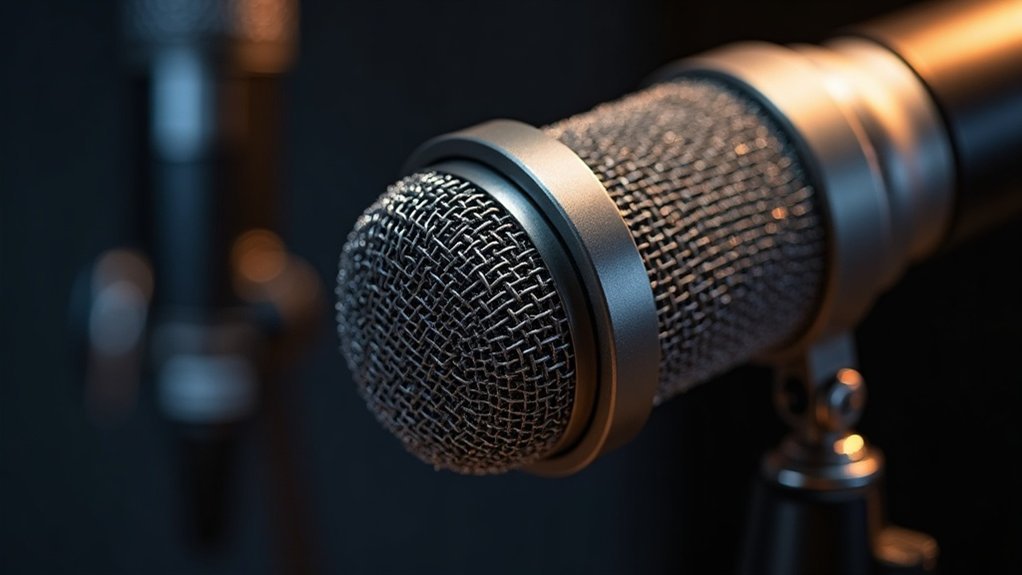
When it comes to selecting the right microphone for your recording needs, comparing condenser and dynamic microphones reveals distinct characteristics that cater to different applications.
- Dynamic microphones excel in durability and handle loud sources well, making them ideal for robust environments such as live performances or loud instruments.
- Condenser microphones, on the other hand, offer superior sound clarity, capturing detailed nuances in quieter environments, which is perfect for studio recordings or vocal work.
Consider your recording environments; dynamic mics are less sensitive to ambient noise, while condensers pick up more detail, which can significantly impact your audio quality. Additionally, dynamic microphones are often favored in live settings due to their reliability and performance in challenging conditions.
Ultimately, your choice in the comparison of condenser and dynamic microphones hinges on the balance between sound clarity and microphone durability.
Understanding these differences ensures you select the best fit for your specific audio needs, whether you’re podcasting, streaming, or recording music.